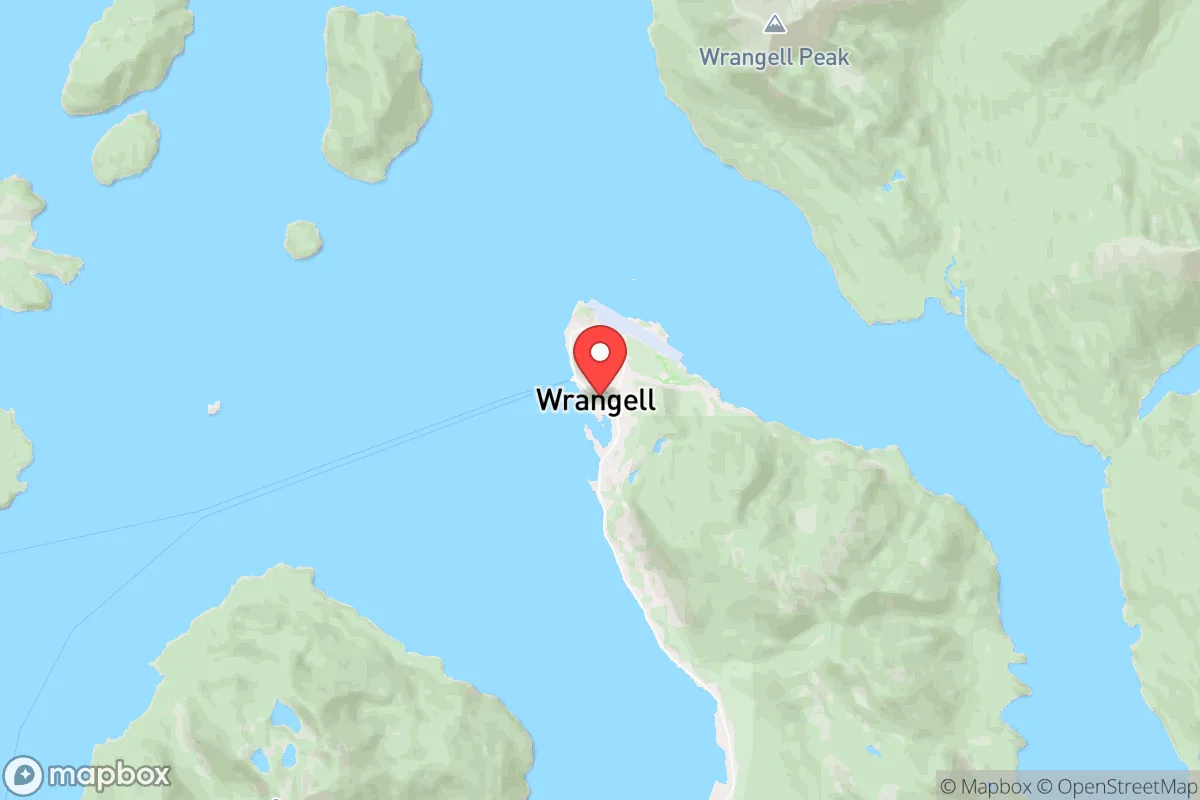
Political ClimatePolitical Climate in Wrangell City And, AK
District shown is the primary district for this city’s centroid. Cities may span multiple districts.
Inherited from parent state — no local data available.
Local Political AnalysisPolitical Analysis of Wrangell City And, AK
Wrangell, Alaska, has long been a place where folks value their independence and don't take kindly to being told how to live their lives. The political climate here leans solidly conservative, with a Cook PVI of R+6, meaning the area votes about six points more Republican than the national average. That’s not just a number on a map—it reflects a deep-seated belief in personal responsibility, limited government, and the right to make your own choices without a bunch of red tape. You can feel it in the air, from the way neighbors handle their own business to the general skepticism of any politician promising to "fix" things from Juneau or Washington.
How it compares
If you look around Southeast Alaska, Wrangell stands out as a conservative anchor compared to some of the more progressive towns nearby. Juneau, about 150 miles to the north, is a whole different animal—it’s the state capital, with all the bureaucracy and liberal leanings that come with it. Sitka, too, has drifted left in recent years, with more emphasis on environmental regulations and social programs that can feel like government overreach. Even Petersburg, just a short hop away, has a more moderate vibe. Wrangell, though, has held the line. The local elections here rarely see a wave of progressive candidates; instead, you get folks who talk about fiscal sanity, protecting the Second Amendment, and keeping the feds out of local land-use decisions. It’s a place where the old-school Alaska spirit—self-reliance and a healthy distrust of authority—is still the norm.
What this means for residents
For those of us living here, the conservative tilt means a few practical things. First, taxes stay low—there’s no state income tax or sales tax in Wrangell, and the local government is generally hesitant to pile on new fees. Second, property rights are taken seriously. You won’t see the kind of zoning battles or environmental restrictions that choke development in places like Juneau or Anchorage. If you want to build a cabin on your land or run a small business out of your garage, the attitude is usually "go for it," as long as you’re not hurting anyone. That said, there’s a growing concern among longtime residents about creeping government overreach, especially from federal agencies like the Forest Service, which controls a huge chunk of the land around here. The push for more "green" policies and restrictions on resource use feels like a direct threat to the way of life that’s kept this community going for generations. It’s not hard to see why folks here are wary of any shift toward progressive ideology—it’s seen as a slippery slope toward losing the freedoms that make Wrangell worth living in.
Culturally, Wrangell is a place where tradition matters. The local economy has always been tied to fishing, logging, and mining—industries that require hard work and a tolerance for risk. There’s a strong sense of community, but it’s not the kind that demands everyone think the same way. Instead, it’s more about mutual respect: you do your thing, I’ll do mine, and we’ll help each other out when times get tough. That’s the Wrangell way. Looking ahead, the biggest challenge is keeping that spirit alive as outside influences—whether from state mandates or federal regulations—try to impose a one-size-fits-all approach. If you’re thinking about moving here, know that you’ll find a place where personal freedom isn’t just a talking point; it’s how people live. Just be ready to pull your own weight and respect the fact that this community doesn’t take kindly to being told what to do.

State Political ClimatePolitical Climate in Alaska
State Political AnalysisPolitical Environment in the State
Alaska has long been a politically unique state, leaning Republican in presidential elections but with a fiercely independent streak that makes it less predictable than many other red states. Over the past 10-20 years, the state has shifted from a reliably red stronghold to a more volatile battleground, with the 2020 presidential election seeing Donald Trump win by about 10 points—a significant drop from his 15-point margin in 2016. The dominant coalition is a mix of rural conservatives, resource-extraction workers, and libertarian-leaning independents, but a growing urban-liberal bloc in Anchorage and Juneau is slowly pulling the state toward the center. For a conservative considering relocation, the key question is whether Alaska’s frontier freedom is holding or eroding.
Urban vs. rural divide
The political map of Alaska is a stark study in contrasts. The Anchorage metro area, home to roughly 40% of the state’s population, is the primary driver of the state’s leftward drift. Anchorage itself has voted Democratic in recent presidential cycles, with its more liberal precincts in neighborhoods like Spenard and downtown pushing the city blue. Meanwhile, the Mat-Su Valley, just north of Anchorage—including towns like Wasilla and Palmer—is a deep-red stronghold, where Trump won by margins exceeding 30 points in 2020. Fairbanks, the second-largest city, is more balanced but leans slightly Republican, while Juneau, the capital, is reliably Democratic due to its large government workforce and environmentalist leanings. Rural areas, from the Bush villages of the Yukon-Kuskokwim Delta to the fishing towns of Kodiak and Homer, are more complex: many Native villages vote Democratic due to federal dependency, while white, resource-dependent communities like Kenai and Soldotna are solidly red. The divide isn’t just urban vs. rural—it’s about who benefits from government spending versus who wants to be left alone.
Policy environment
Alaska’s policy environment is a mixed bag for conservatives. On the plus side, there’s no state income tax and no state sales tax, which is a huge draw for those fleeing high-tax states like California or New York. The state’s regulatory posture on resource extraction—oil, gas, mining, and timber—remains relatively friendly, though federal land ownership (about 60% of the state) creates constant friction. Education policy is decentralized, with local control over schools, but the state has seen a push for more progressive curricula in Anchorage and Juneau, including diversity, equity, and inclusion (DEI) initiatives that concern many parents. Healthcare is a mixed bag: Alaska has a high uninsured rate, but the state expanded Medicaid under the Affordable Care Act in 2015, a move that many conservatives opposed. Election laws are relatively secure—Alaska uses a top-four primary system and ranked-choice voting for general elections, a system passed by ballot initiative in 2020 that has drawn criticism from conservatives who argue it dilutes voter intent. The Permanent Fund Dividend (PFD), an annual oil-revenue check to every resident, is a unique policy lever that keeps many Alaskans engaged in fiscal politics, but its size has fluctuated wildly due to state budget battles.
Trajectory & freedom
Alaska’s trajectory on personal freedom is a tug-of-war. On the positive side, the state remains one of the most gun-friendly in the nation, with no permit required for concealed carry and strong preemption laws that prevent local governments from enacting their own restrictions. In 2022, the legislature passed a law protecting the right to carry firearms in public buildings, including schools, which was a win for Second Amendment advocates. Parental rights are relatively strong, with a 2023 law requiring schools to notify parents of any changes to a student’s health or well-being, including gender identity discussions—a direct response to progressive school board policies in Anchorage. However, the state has seen concerning expansions of government overreach. The ranked-choice voting system, while not a direct freedom issue, has been criticized for making it harder for conservative candidates to win without cross-party appeal. Medical autonomy is a bright spot: Alaska has no vaccine mandates for adults, and the state resisted federal COVID-19 mandates for state employees more than many blue states. Property rights are generally respected, but the vast federal land holdings mean that many residents live under federal regulations on everything from hunting to building. The biggest freedom concern is the state’s fiscal health: without a broad-based tax, the state relies heavily on oil revenue, which is volatile, and the legislature has repeatedly raided the PFD to balance budgets—a de facto tax increase that erodes economic freedom.
Civil unrest & political movements
Alaska has seen relatively little civil unrest compared to the Lower 48, but there have been notable flashpoints. The 2020 Black Lives Matter protests in Anchorage were large by local standards, drawing hundreds of participants and leading to some property damage, but they were far smaller than in Portland or Seattle. On the right, the Alaska Independence Party, which advocates for secession from the United States, remains a fringe but vocal presence, particularly in rural areas like the Kenai Peninsula. Immigration politics are less heated than in border states, but there have been tensions over the state’s role as a resettlement location for refugees, with Anchorage’s Somali and Hmong communities growing. Election integrity controversies have been muted, but the 2020 ranked-choice voting initiative was deeply divisive, with many conservatives viewing it as a power grab by progressives. The most visible flashpoint for a new resident would likely be the annual debate over the PFD: every spring, the legislature fights over whether to pay the full statutory amount or cut it to fund government programs, and this battle often defines the political mood. There’s no sanctuary city policy in Alaska, but Anchorage has a “community safety” ordinance that limits cooperation with federal immigration enforcement, which has drawn criticism from conservatives.
Projection
Over the next 5-10 years, Alaska is likely to become more politically competitive, but not necessarily more liberal. The key demographic shift is in-migration from blue states, particularly retirees and remote workers seeking lower taxes and outdoor lifestyles. These newcomers tend to be more libertarian than progressive, which could actually bolster the conservative vote in places like the Mat-Su Valley and Fairbanks. However, the urban centers—Anchorage, Juneau, and to a lesser extent Fairbanks—will continue to drift left as younger, college-educated residents move in. The biggest wildcard is the state’s fiscal situation: if oil revenues continue to decline, the state may be forced to implement an income or sales tax, which would be a major blow to its freedom-friendly reputation and could trigger a conservative backlash. The ranked-choice voting system may also lead to more moderate candidates winning, which could frustrate hardline conservatives but might also prevent the state from swinging too far left. For someone moving in now, expect to find a state that is still freer than most, but where the battle over that freedom is intensifying, especially in the legislature and local school boards.
For a new resident, the bottom line is that Alaska offers a unique blend of low taxes, gun rights, and personal autonomy that is increasingly rare in the United States. But it’s not a libertarian paradise: the state government is heavily involved in the economy through oil subsidies and the PFD, and the urban areas are becoming more progressive. If you’re looking for a place where you can live largely free from government interference, Alaska is still one of the best bets—but keep an eye on Anchorage and Juneau, because that’s where the fight for the state’s soul is happening. The practical takeaway: move to the Mat-Su Valley or the Kenai Peninsula if you want to maximize your freedom, and get involved in local politics to help keep the state on a conservative track.
* Values derived from national, state, county, city and local statistics and may differ in a specific area. Last updated: 2026-04-19T19:43:40.000Z
Narrative content on this page is AI-generated and may contain mistakes. Verify any details that matter before acting on them.
ReloMaps may earn a commission from affiliate links at no extra cost to you.

