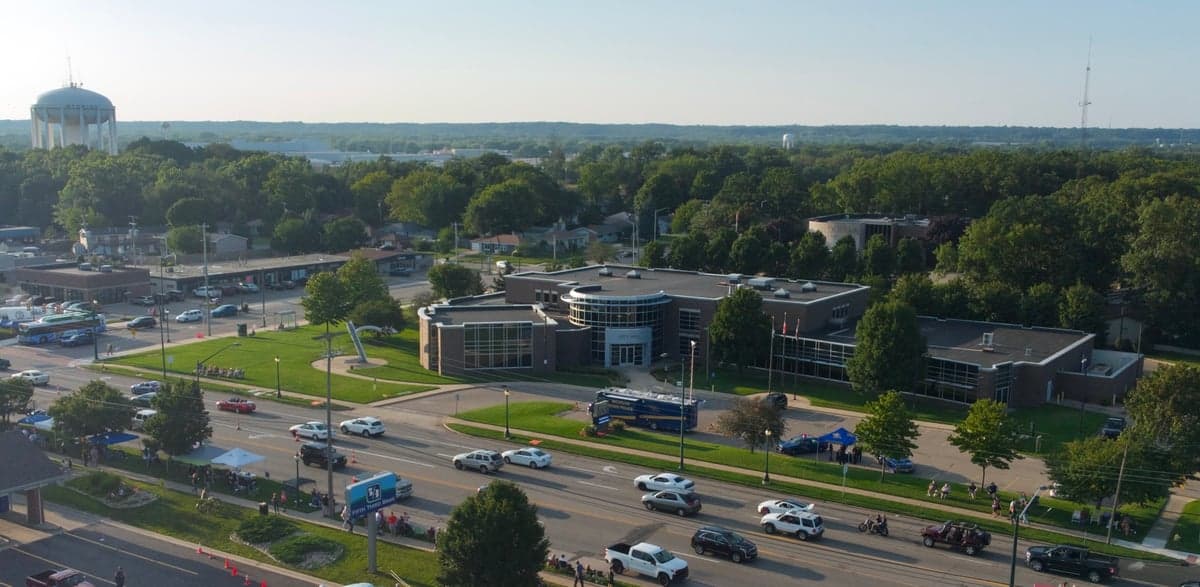
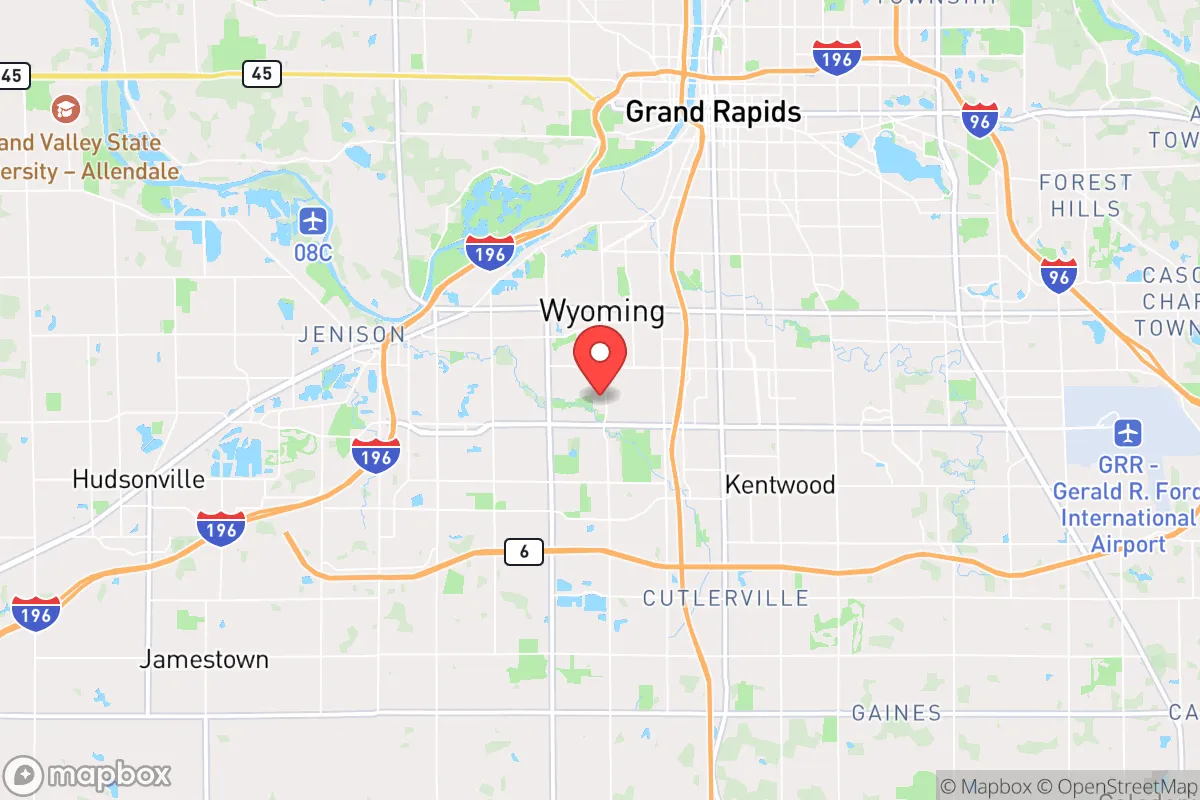
Photo: Wikipedia
Demographics of Wyoming, MI
Affluence Level in Wyoming, MI
A middle-class area roughly in line with national averages across income, home values, education, and employment.
People of Wyoming, MI
The people of Wyoming, Michigan, today form a working- and middle-class community of 76,865 that is notably more diverse than much of West Michigan, with a strong Hispanic plurality reshaping the city’s character. The population is denser than surrounding suburbs, with a median age of 33.6 and a 24.3% college-educated rate that reflects a blue-collar and trades-oriented workforce. Distinctive markers include a large Christian Reformed and Catholic church presence, a growing number of Spanish-language storefronts along 28th Street, and a palpable sense of local pride rooted in the city’s independent identity—Wyoming is a city, not a Grand Rapids bedroom community.
How the city was settled and grew
Wyoming’s human history begins not with a founding charter but with land. The area was originally part of the Grand River Valley, inhabited by the Odawa and Ojibwe peoples until forced cession in the 1830s. European-American settlers—primarily Dutch Calvinists from the Netherlands—arrived in the 1840s and 1850s, drawn by cheap farmland and religious freedom. They established the Bristol and Paris townships, which later became the core of Wyoming. The Dutch built tight-knit farming communities centered on the Christian Reformed Church, with surnames like DeVries, VanDyke, and Kuiper still common in older neighborhoods such as Burton Heights and Godfrey-Lee. The city incorporated in 1959, but its growth surged after World War II when returning veterans and auto-industry workers from nearby Grand Rapids built homes in subdivisions like Rogers Plaza and Plymouth Manor. Steelcase, Amway, and General Motors plants drew a second wave of domestic migrants—Appalachian whites from Kentucky and Tennessee—who settled in the Stocking Avenue corridor and the 36th Street industrial zone. By 1970, Wyoming was overwhelmingly white (over 98%) and Dutch-American in character.
Modern era (post-1965)
The 1965 Hart-Cellar Act opened immigration from Latin America, and Wyoming’s Hispanic population began to grow in the 1980s and 1990s, driven by agricultural and manufacturing jobs. Mexican and Puerto Rican families moved into the Burton Heights and Godfrey-Lee neighborhoods, areas that had seen white flight to farther suburbs like Jenison and Hudsonville. By 2020, the Hispanic share reached 25.1%, making Wyoming one of the most Hispanic cities in Michigan. The Lee High School district (Godfrey-Lee Public Schools) is now majority Hispanic, with Spanish spoken in many homes and storefronts. The Black population (9.1%) grew more slowly, concentrated in the Rogers Plaza area and the 32nd Street corridor, drawn by affordable housing and proximity to Grand Rapids jobs. East/Southeast Asian communities (1.8%) are small but visible in the 28th Street business corridor, with Vietnamese and Filipino families operating restaurants and nail salons. The Indian-subcontinent population (0.2%) is negligible, mostly professionals commuting to Grand Rapids hospitals. The foreign-born share (6.6%) is lower than the national average but rising, driven by Mexican immigration. White non-Hispanic residents (58.6%) remain the largest group but are aging and declining in share, with many younger white families leaving for exurban townships like Byron Center and Caledonia.
The future
Wyoming’s population is heading toward a majority-minority status within the next 10–15 years, driven by Hispanic natural increase and continued immigration. The city is not homogenizing but rather tribalizing into distinct enclaves: the Godfrey-Lee area is solidifying as a Hispanic-majority hub, while Burton Heights is becoming a multiethnic corridor with Black, Hispanic, and white residents. The Rogers Plaza area is seeing a modest Black middle-class expansion, while the 36th Street industrial zone remains a landing pad for new immigrants. The white population is plateauing, not collapsing, but the exodus of young white families to outlying townships will likely continue. The Hispanic community is growing both through immigration and high birth rates, but assimilation is occurring—second-generation Hispanics are increasingly English-dominant and moving into trades and small business ownership. The city’s school system (Wyoming Public Schools) is diversifying rapidly, with over 40% Hispanic enrollment. The next 20 years will likely see Wyoming become a majority-Hispanic city with a significant Black minority and a shrinking but stable white population, resembling cities like Holland or Grand Rapids’ southeast side.
For someone moving in now, Wyoming is a city in transition—still affordable, still safe by West Michigan standards, but with a demographic trajectory that is reshaping its schools, churches, and retail. Conservative-leaning families will find a strong Christian Reformed and Catholic infrastructure, but also a growing Spanish-language presence that may feel unfamiliar. The city is becoming more diverse, more working-class, and more Hispanic—a place where the old Dutch-American identity is giving way to a new, multiethnic one.

* Values derived from national, state, county, city and local statistics and may differ in a specific area. Last updated: 2026-04-30T02:46:51.000Z
Narrative content on this page is AI-generated and may contain mistakes. Verify any details that matter before acting on them.
ReloMaps may earn a commission from affiliate links at no extra cost to you.

