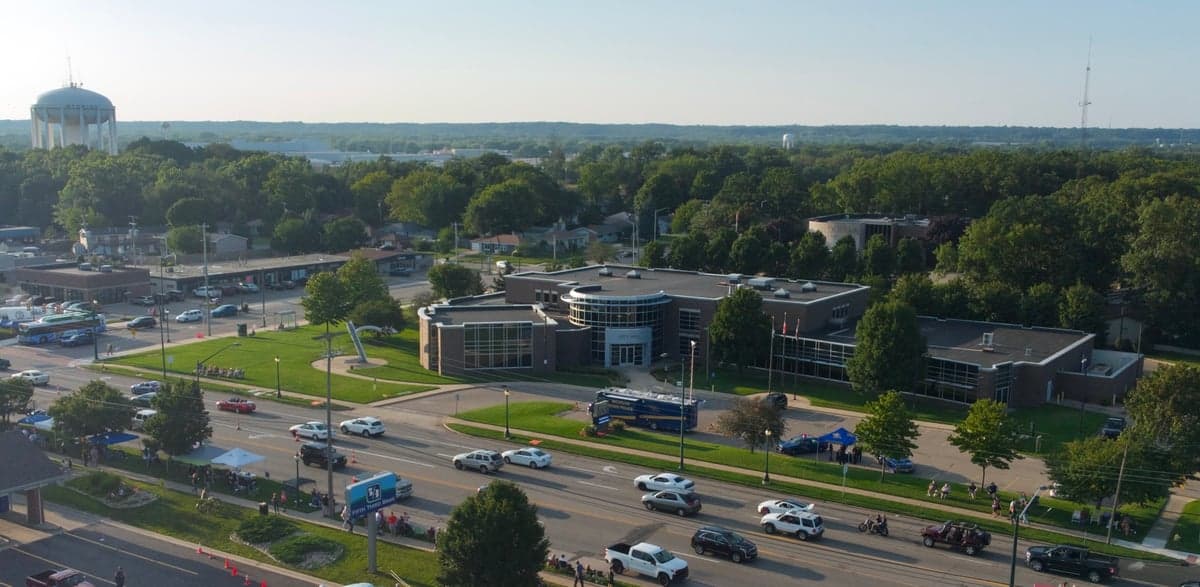
Photo: Wikipedia
Political ClimatePolitical Climate in Wyoming, MI
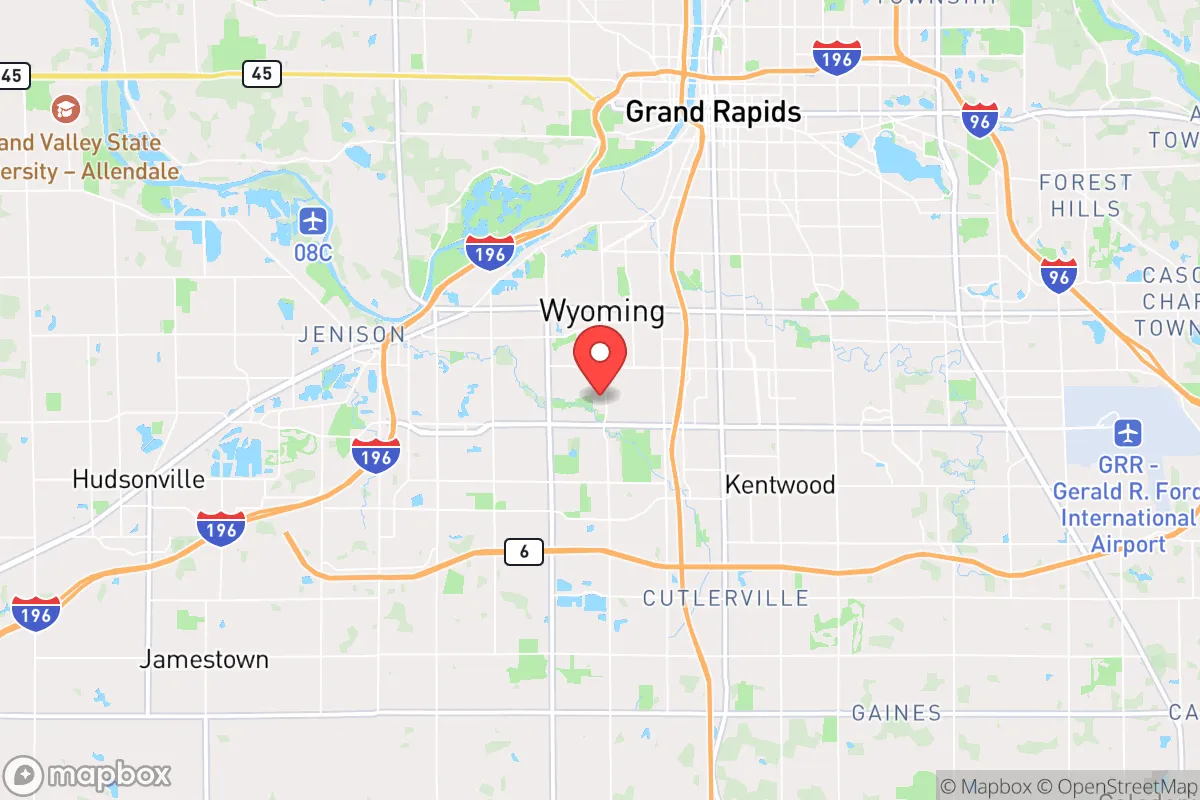
District shown is the primary district for this city’s centroid. Cities may span multiple districts.
Local Political AnalysisPolitical Analysis of Wyoming, MI
Wyoming, Michigan, has a Cook PVI of D+4, meaning it leans slightly more Democratic than the national average, but don't let that number fool you into thinking this is a progressive stronghold. The city sits in Kent County, which has been trending leftward for years, but Wyoming itself still holds a lot of the old-school, blue-collar, live-and-let-live conservatism that used to define West Michigan. The shift you see here isn't a sudden revolution—it's a slow creep, driven by younger transplants from Grand Rapids and a growing population that doesn't always share the traditional values that built this town. If you've been around since the 90s, you remember when this was a reliably red area where folks kept their politics to themselves and expected the same from their government. Now, there's a noticeable push toward more progressive policies, and it's got a lot of long-time residents watching closely.
How it compares
Drive ten minutes north into Grand Rapids proper, and you're in a D+14 area where the city council is openly progressive, pushing things like sanctuary city policies and higher taxes for "equity" programs. Head east to the wealthy, historically Republican enclaves of East Grand Rapids or Ada, and you'll find a different kind of conservatism—more country-club, less blue-collar. But Wyoming sits in a weird middle ground. It's not as red as the rural townships to the south and west, like Byron Center or Hudsonville, where you can still find strong church-based conservative communities that vote reliably Republican. What makes Wyoming unique is its mix: a lot of working-class families, a significant Hispanic population that leans moderate, and a growing number of younger renters who bring their big-city voting habits with them. The D+4 rating reflects that tension—it's a battleground within a battleground county, and every election cycle feels a little more unpredictable.
What this means for residents
For someone who values personal freedom and limited government, the trend here is concerning. The city government has shown a willingness to adopt policies that feel like overreach—things like stricter rental inspection ordinances that sound good on paper but give bureaucrats more control over private property. There's also been pressure to increase local taxes for social programs, which hits the working-class families who make up Wyoming's backbone the hardest. The school board has seen debates over curriculum transparency, with some parents worried that progressive ideology is creeping into classrooms without their input. If you're the kind of person who believes your home, your business, and your family's education should be your own business, not the government's, you're going to feel that squeeze more every year. The silver lining is that Wyoming still has a strong core of residents who show up to city council meetings and push back—it's not a lost cause yet, but it requires staying engaged.
Culturally, Wyoming is still a place where people wave to their neighbors and leave their doors unlocked, but the policy direction is starting to chip away at that. The city has embraced some "progressive" zoning changes aimed at increasing density, which sounds like smart planning until you realize it often comes with more regulations on what you can do with your own land. There's also been a quiet push for things like "equity" training for city employees—a red flag for anyone who's seen how those programs can turn into ideological enforcement. The long-time residents I know are watching the 2026 elections closely, hoping to hold the line against the kind of government overreach that's already taken hold in Grand Rapids. If you're considering moving here, know that the community itself is still solid, but the political winds are shifting in a direction that demands vigilance from anyone who values their freedoms.

State Political ClimatePolitical Climate in Michigan
State Political AnalysisPolitical Environment in the State
Michigan has shifted from a reliably purple battleground to a state where Democrats now hold all three levers of state government, a dramatic change from just a decade ago when Republicans controlled both the legislature and the governor’s office. The state’s overall partisan lean is now a narrow Democratic tilt, with Joe Biden winning by just under 3 points in 2020 and Governor Gretchen Whitmer winning re-election by nearly 11 points in 2022. Over the last 20 years, the state has moved leftward, driven by the collapse of union-aligned conservative Democrats in the Upper Peninsula and the explosive growth of the progressive vote in the Detroit metro area, while the rest of the state has remained reliably red.
Urban vs. rural divide
The political map of Michigan is a stark story of two states. The Democratic stronghold is the southeastern corner, anchored by Detroit, Ann Arbor, and the inner-ring suburbs of Oakland County. Wayne County alone delivered over 600,000 votes for Biden in 2020, more than the entire population of some states. Meanwhile, the rest of the state is deeply red. The western side of the state, including Grand Rapids and Holland, is a conservative bastion, though Grand Rapids itself has become more competitive as young professionals move in. The Upper Peninsula, once a Democratic stronghold due to unionized mining and logging, has flipped hard to the right; in 2020, Trump won every county in the U.P. except for Marquette. The key swing areas are the suburban counties of Macomb and Kent, where working-class voters have trended Republican in recent cycles, but not enough to offset the massive Democratic margins in Detroit and Ann Arbor.
Policy environment
Michigan’s policy environment has shifted sharply left since Democrats took full control in 2023. The state income tax is a flat 4.25%, but a 2023 law tied future tax cuts to state revenue growth, effectively making it harder for rates to drop automatically. Property taxes are high, with an average effective rate of 1.5%, and the state’s Headlee Amendment limits annual assessment increases to 5% or inflation, whichever is lower—a protection for long-time homeowners but a shock for new buyers. The regulatory posture has become more aggressive: the state repealed its right-to-work law in 2023, allowing unions to once again require dues as a condition of employment. Education policy is dominated by the Detroit school system, which remains under state oversight, but the state has expanded early childhood programs and increased per-pupil funding. Healthcare is a major issue: Michigan expanded Medicaid under the Affordable Care Act, and the state has a strong regulatory environment for insurers. Election laws have been loosened significantly: Proposal 2 in 2022 enshrined nine days of early voting, automatic voter registration, and drop boxes in the state constitution. Gun laws have tightened: a 2023 package requires universal background checks, safe storage requirements, and red flag orders, which many conservatives view as an infringement on the Second Amendment.
Trajectory & freedom
Michigan is clearly moving in a less free direction, especially for conservatives. The repeal of right-to-work is the most significant blow to economic freedom in decades, forcing workers in unionized industries to pay dues or lose their jobs. The new gun laws, including the red flag order, allow for temporary seizure of firearms without a criminal conviction, a major concern for gun owners. Parental rights have taken a hit: the state’s 2023 LGBTQ+ nondiscrimination law includes provisions that some parents argue override their authority in school settings, particularly regarding gender identity policies. Medical autonomy has been expanded in one area—the state legalized recreational marijuana in 2018—but the regulatory framework is heavy, with high licensing fees and strict local control that has limited the number of dispensaries in many communities. Property rights are under pressure from the state’s aggressive environmental regulations, including new wetlands protections that restrict development. On the positive side for conservatives, the state has no personal property tax on business equipment, and the corporate income tax is a flat 6%, which is competitive regionally.
Civil unrest & political movements
Michigan has been a flashpoint for political activism on both sides. The 2020 lockdown protests at the state capitol in Lansing, where armed demonstrators entered the building, became a national symbol of resistance to government overreach. The Wolverine Watchmen militia group was later charged in a plot to kidnap Governor Whitmer, a case that remains highly polarizing. On the left, the Detroit area has seen frequent protests over police reform and racial justice, with the 2020 George Floyd protests leading to significant property damage in the city. Immigration politics are relatively quiet compared to border states, but the state has sanctuary policies in place in Ann Arbor and Detroit, where local law enforcement limits cooperation with federal immigration authorities. Election integrity remains a hot-button issue: the 2020 election saw widespread claims of irregularities in Detroit, though multiple audits and court cases found no evidence of widespread fraud. The 2022 Proposal 2, which expanded voting access, was seen by many conservatives as a response to those concerns, not a solution. The state’s political movements are increasingly organized, with groups like the Michigan Conservative Coalition and Moms for Liberty gaining traction in suburban school board races.
Projection
Over the next 5-10 years, Michigan is likely to become more Democratic, not less. The in-migration patterns are telling: people moving into the state are disproportionately coming from blue states like Illinois and California, settling in the Ann Arbor and Grand Rapids areas. The out-migration is largely from rural counties, which are already reliably red. The Democratic trifecta in Lansing is likely to continue for at least the next few cycles, given the structural advantages of the party in the Detroit metro area. Expect further expansions of government programs: a state-level paid family leave program is already being debated, and a carbon-neutral energy mandate by 2035 is on the books. The state’s tax burden is likely to increase, as the 2023 law that froze income tax cuts will eventually lead to higher rates if revenue growth slows. For conservatives, the best-case scenario is a return to divided government, but that would require a significant shift in the Detroit suburbs, which are trending left. The state’s freedom index will continue to decline, particularly on economic and Second Amendment issues.
For a conservative considering a move to Michigan, the bottom line is this: you will find strong communities in the western and northern parts of the state, but you will be swimming against the political tide. The state government is actively hostile to many of the values you hold dear—gun rights, parental authority, and economic freedom. If you are looking for a place where your vote will matter and your values are reflected in policy, you would be better served looking at states like Indiana or Ohio. However, if you have family ties or a job opportunity that makes Michigan unavoidable, focus on counties like Ottawa, Kent (outside Grand Rapids), or Livingston, where local governments are more aligned with conservative principles. Just be prepared for the state-level headwinds.
* Values derived from national, state, county, city and local statistics and may differ in a specific area. Last updated: 2026-04-30T02:46:51.000Z
Narrative content on this page is AI-generated and may contain mistakes. Verify any details that matter before acting on them.
ReloMaps may earn a commission from affiliate links at no extra cost to you.

