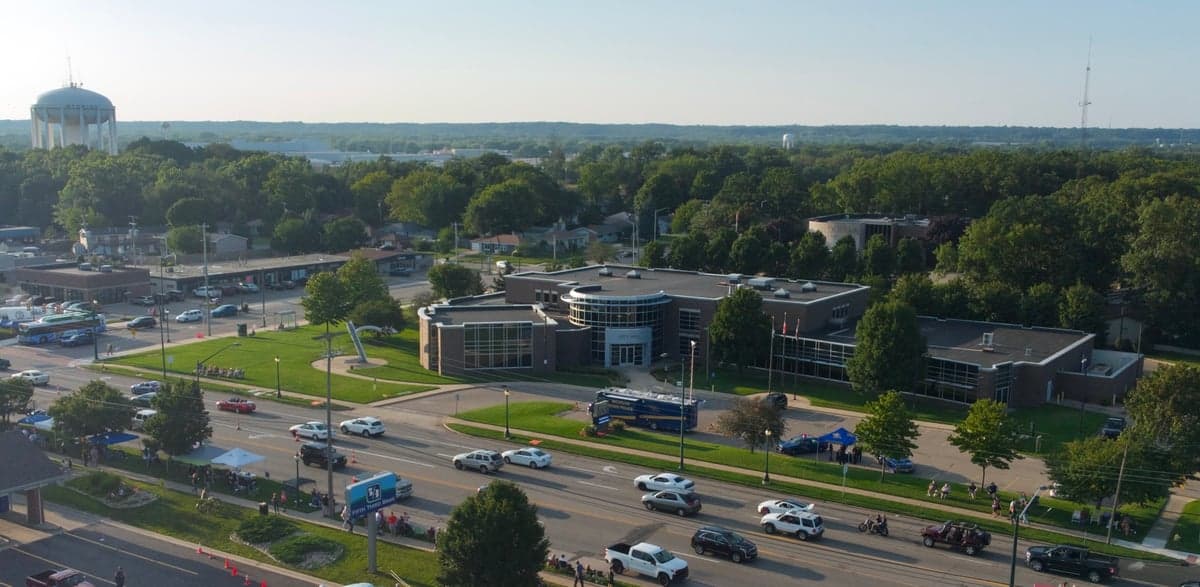
Photo: Wikipedia
Strategic Assessment of Wyoming, MI
Meaningful friction. Expect exposure to either population pressure, blast zones, or natural disaster risk. Consider buying a retreat property.
What does the Strategic Assessment tell us?
Our Strategic Assessment grades tactical survivability of an area. Major population centers, military targets, fallout zones, natural disasters, and border exposure all drive risk — lower exposure means a more defensible position in a crisis.
This is heavily inspired by Joel Skousen's Strategic Relocation book. Highly recommended you checkout the book ($)What does this tell us?
Our Strategic Assessment grades tactical survivability of an area. Major population centers, military targets, fallout zones, natural disasters, and border exposure all drive risk — lower exposure means a more defensible position in a crisis.
This is heavily inspired by Joel Skousen's Strategic Relocation book. Highly recommended you checkout the book ($)Strategic Pillars

Key Distances
Regional Safe Places
Below is our recommended "safe zones" in Michigan and the surrounding area based on our strategic heuristics. For most people, it's unrealistic to live in a “safe zone” full-time due to work, family or other personal reasons. They tend to be more rural. However, many of these areas are perfect for second homes and retreat properties that double as a vacation home or even a short-term rental.


Important Note: For informational purposes only. This does not mean nothing bad ever happens in the green zones. Please use common sense. This is based on public data and modeled with AI. We tried to take a conservative approach but mistakes happen. We update this regularly as new information becomes available.
Solar Generator Recommendations
Backup power matters more here than in safer locations. We've picked three solar generators across budgets and capacity tiers — start with the budget unit if you only need a few essentials, or step up if you want to run a fridge and HVAC for days at a time.

Jackery Portable Power Station Explorer 300
Budget OptionPower on the Go: Weighing only 11 lbs, it's convenient to set up and store with book-sized foldable solar panels

BLUETTI Portable Power Station AC180
Designed for both indoor and outdoor scenarios, AC180 is highly capable as it has a robost capacity and continuous output power.

EF ECOFLOW DELTA Pro Ultra Power Station
Upgraded PickEcoFlow DELTA Pro Ultra is a whole-home energy system designed to grow with your family. Integrated with the Smart Home Panel 2, it scales to meet your evolving energy needs — keeping your home powered, intelligent, and secure through every stage of life.
We earn a commission, at no additional cost to you.
Strategic Assessment Analysis
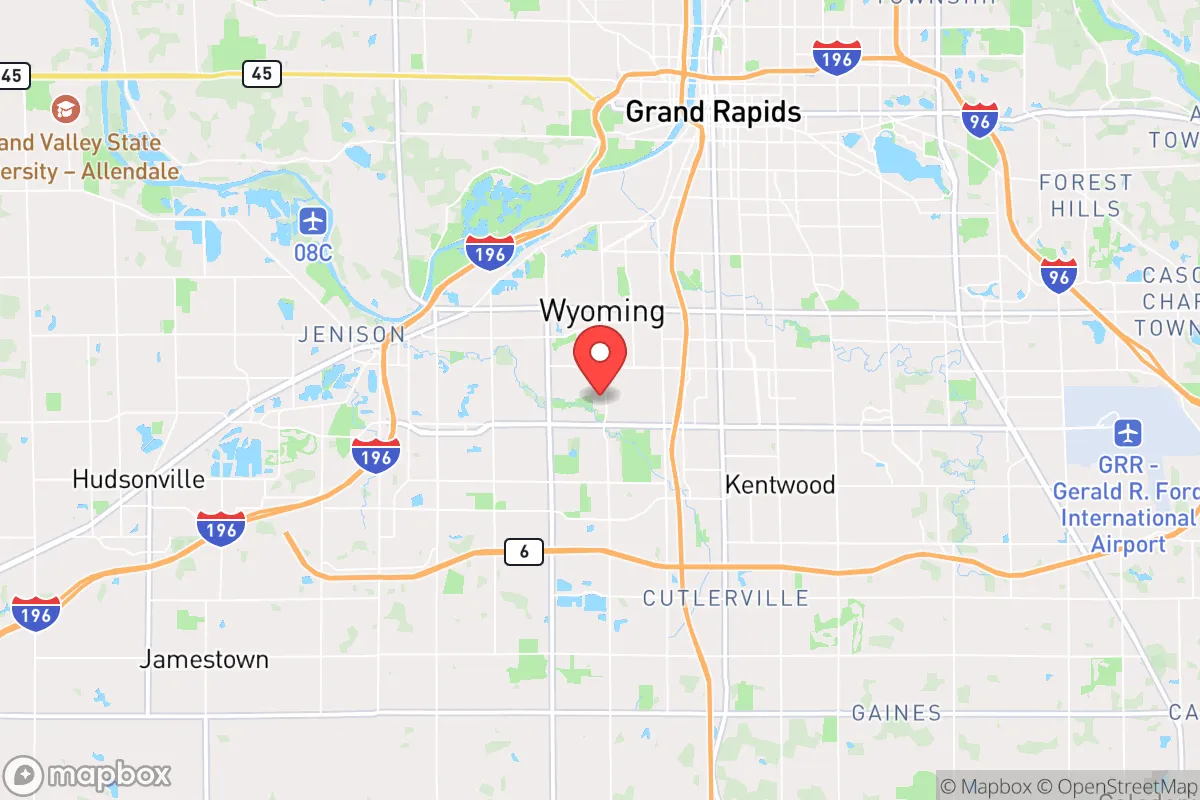
Wyoming, Michigan, offers a surprisingly resilient position for those prioritizing strategic relocation in an uncertain future. Located just southwest of Grand Rapids, this city of roughly 75,000 provides a buffer from the immediate fallout of a major urban collapse while still granting access to critical infrastructure and supply chains. Its position along the Grand River and proximity to Lake Michigan’s eastern shore create natural advantages for water security and defensive positioning, though the area’s closeness to a major metropolitan hub introduces distinct risks that a prepper or survivalist must weigh carefully.
Geographic position and natural advantages for long-term survival
Wyoming sits in a sweet spot for those seeking a balance between isolation and accessibility. The city is roughly 30 miles inland from Lake Michigan, placing it outside the immediate blast or fallout zone of a coastal strike while still allowing quick access to the lake’s vast freshwater resources. The Grand River runs directly through the area, providing a reliable surface water source that could be filtered or diverted in a grid-down scenario. The surrounding terrain is mostly flat to gently rolling, with pockets of hardwood forest and agricultural land that offer cover, foraging, and small-scale farming potential. The region’s temperate climate supports a growing season of roughly 150 days, enough for staple crops like corn, beans, and squash. For a relocator, this means the land itself can sustain life without heavy reliance on external supply chains—a critical advantage when national distribution networks falter. The city’s position also places it within a two-hour drive of multiple smaller towns (like Holland, Muskegon, and Allegan) that could serve as fallback positions if Wyoming itself becomes compromised.
Risks, exposures, and proximity to fallout-relevant landmarks
The primary vulnerability of Wyoming is its proximity to Grand Rapids, a city of roughly 200,000 that sits just 10 miles to the northeast. In a scenario involving civil unrest, mass casualty events, or a coordinated attack, Grand Rapids would be a likely target for disruption—its industrial base, medical centers, and transportation hubs (including Gerald R. Ford International Airport) make it a high-value node. A detonation or dirty bomb at that airport could send fallout drifting southwest directly over Wyoming, depending on wind patterns. Additionally, the region hosts several chemical and manufacturing plants along the Grand River corridor; a failure or attack on these facilities could release toxic plumes. The nearby Lake Michigan shoreline also presents a risk: a maritime incident or sabotage at the Muskegon or Holland harbors could disrupt water quality for miles inland. For the survivalist, the key takeaway is that Wyoming is not a remote bunker—it’s a suburban buffer zone. You’ll need a plan for rapid evacuation east or south (toward rural Barry or Kalamazoo counties) if the urban core destabilizes. The city’s grid layout, with major arteries like 28th Street and M-11, could become choke points during a mass exodus, so alternative routes via backroads and rail lines should be mapped in advance.
Practical resilience for a relocator: food, water, energy, and defensibility
For a single individual or family looking to establish a resilient homestead, Wyoming offers a mixed bag. The city’s water infrastructure is tied to the Grand River and Lake Michigan, but a prolonged power outage would render municipal pumps useless. A well on your property—if you can find a home with one—is a non-negotiable asset. The soil in the area is sandy loam in many spots, which drains well but requires amendment for high-yield gardening; raised beds with compost are the standard workaround. Local zoning is generally permissive for backyard chickens and small livestock, but check city ordinances carefully—some neighborhoods restrict roosters or goats. Energy resilience is achievable: the region gets decent sun (about 160 sunny days per year) for solar panels, and small-scale wind turbines can work in open areas. Natural gas is widely available, but a propane backup generator is more reliable for off-grid scenarios. Defensibility is the weak point. Wyoming’s suburban layout—cul-de-sacs, strip malls, and interconnected neighborhoods—makes it hard to secure a perimeter. A home on a corner lot or near a greenway (like the Buck Creek Trail) offers better sightlines and escape routes. The local police presence is adequate for day-to-day crime, but in a collapse scenario, you’d be relying on your own network. Building relationships with like-minded neighbors—especially those with rural property or farming experience—is as important as stockpiling supplies. The city’s proximity to multiple hospitals (including Spectrum Health’s main campus in Grand Rapids) is a plus for medical emergencies, but those facilities would be overwhelmed in a mass casualty event, so a solid trauma kit and training are essential.
The overall strategic picture for Wyoming, MI, is one of calculated trade-offs. It’s not a remote redoubt, but it’s far from a death trap. The city’s access to water, arable land, and regional infrastructure makes it a viable base for a prepared individual or family—provided you’re willing to invest in off-grid systems and maintain a low profile. The biggest threat is the urban anchor of Grand Rapids, which could draw chaos your way. But if you’ve got a plan to bug out to the surrounding countryside (think Yankee Springs or the Allegan State Game Area) when the SHTF, Wyoming serves as a solid forward operating position. For the conservative-minded relocator who wants to stay connected to work and community while building real resilience, this area deserves a serious look—just don’t mistake its suburban comfort for true security.

* Values derived from national, state, county, city and local statistics and may differ in a specific area. Last updated: 2026-04-30T02:46:51.000Z
Narrative content on this page is AI-generated and may contain mistakes. Verify any details that matter before acting on them.
ReloMaps may earn a commission from affiliate links at no extra cost to you.

