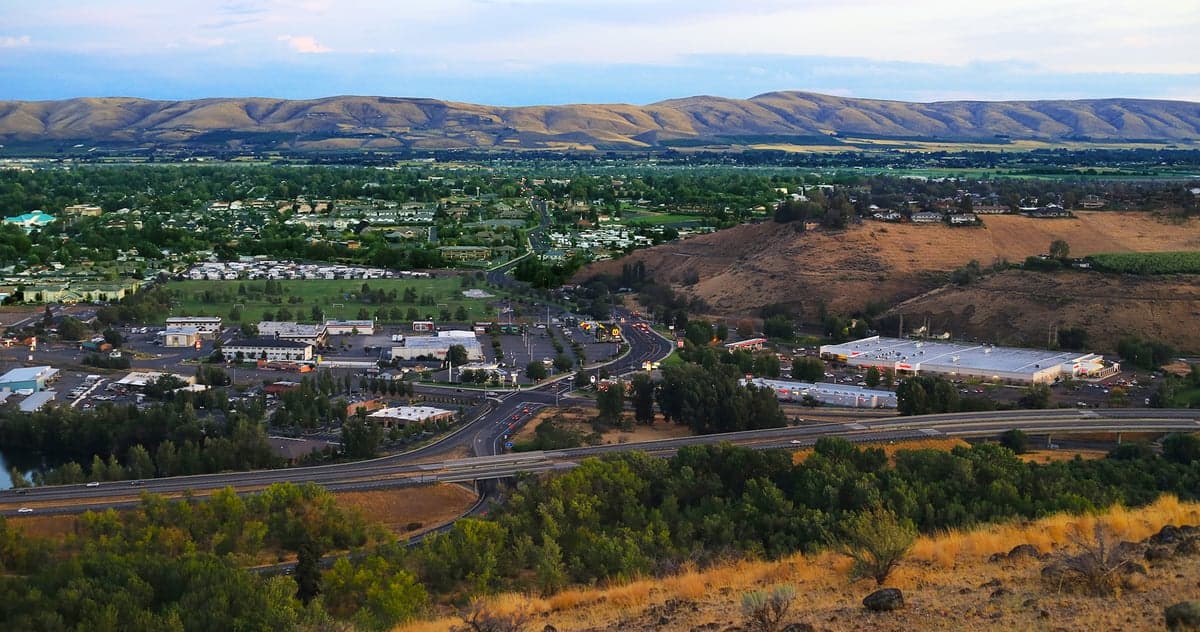
Photo: Wikipedia
Quality of Life in Yakima, WA
A high quality of life with strong walkability, manageable living costs, healthy neighborhood signals, and solid amenity access.
What does Quality of Life tell us?
Quality of Life blends cost of living, nearby amenities, socioeconomic signals, and neighborhood character. City-level scores represent the whole municipality; individual neighborhoods can differ.
What does this tell us?
Quality of Life blends cost of living, nearby amenities, socioeconomic signals, and neighborhood character. City-level scores represent the whole municipality; individual neighborhoods can differ.
Cost of Living
6% below national average
The Real Cost of Living in Yakima, WA for 2026
| Tier | Individual | Family (4) |
|---|---|---|
| Survival | $17k | $32k |
| Comfortable | $53k | $78k |
| Luxury | $101k+ | $156k+ |
| Elite (Top 5%) | $119k+ | $184k+ |
76%
The Area Signal
A metric tracking the socioeconomic signals of the area.
Hobbies
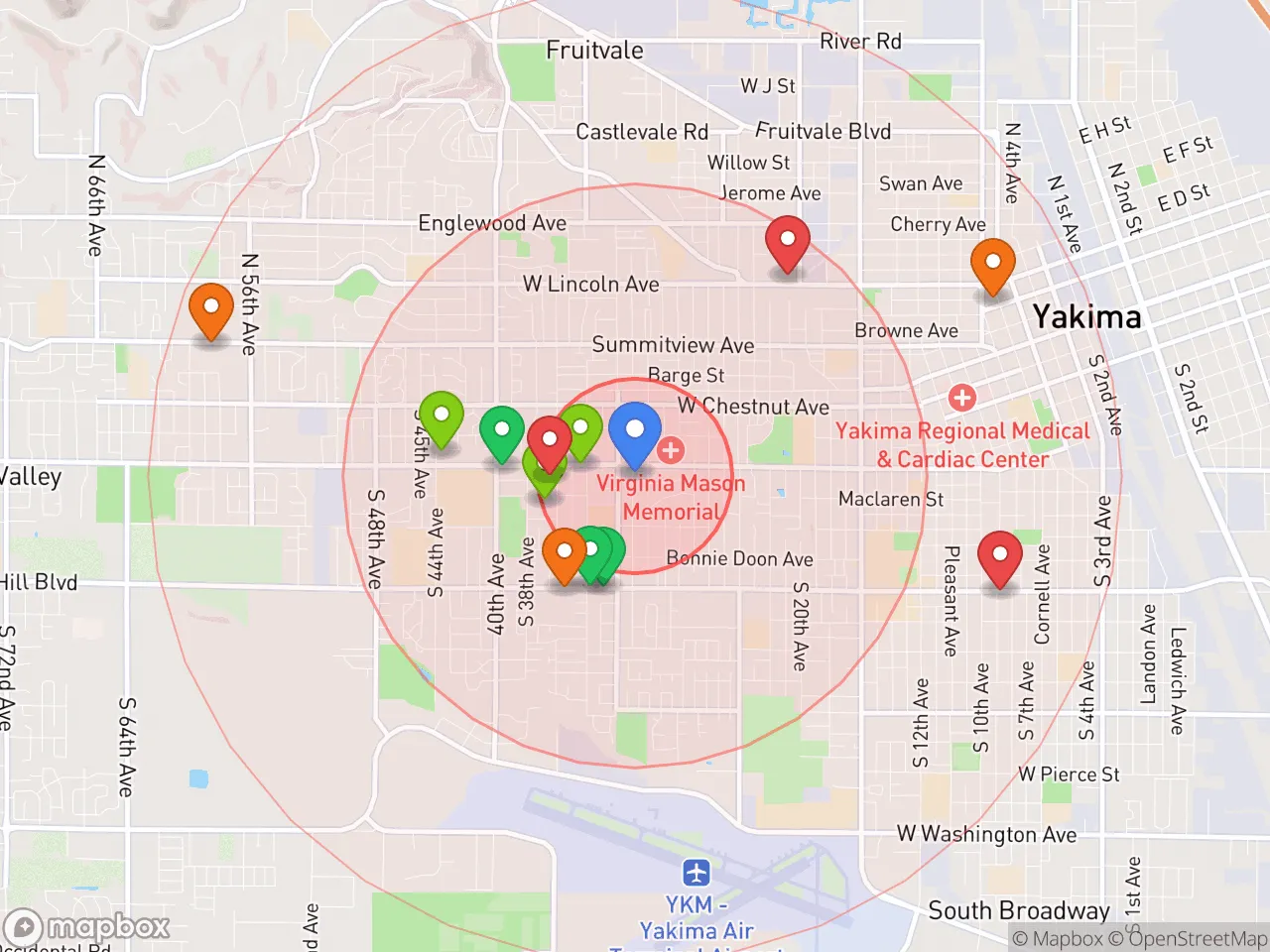
Explore the areaGroceries
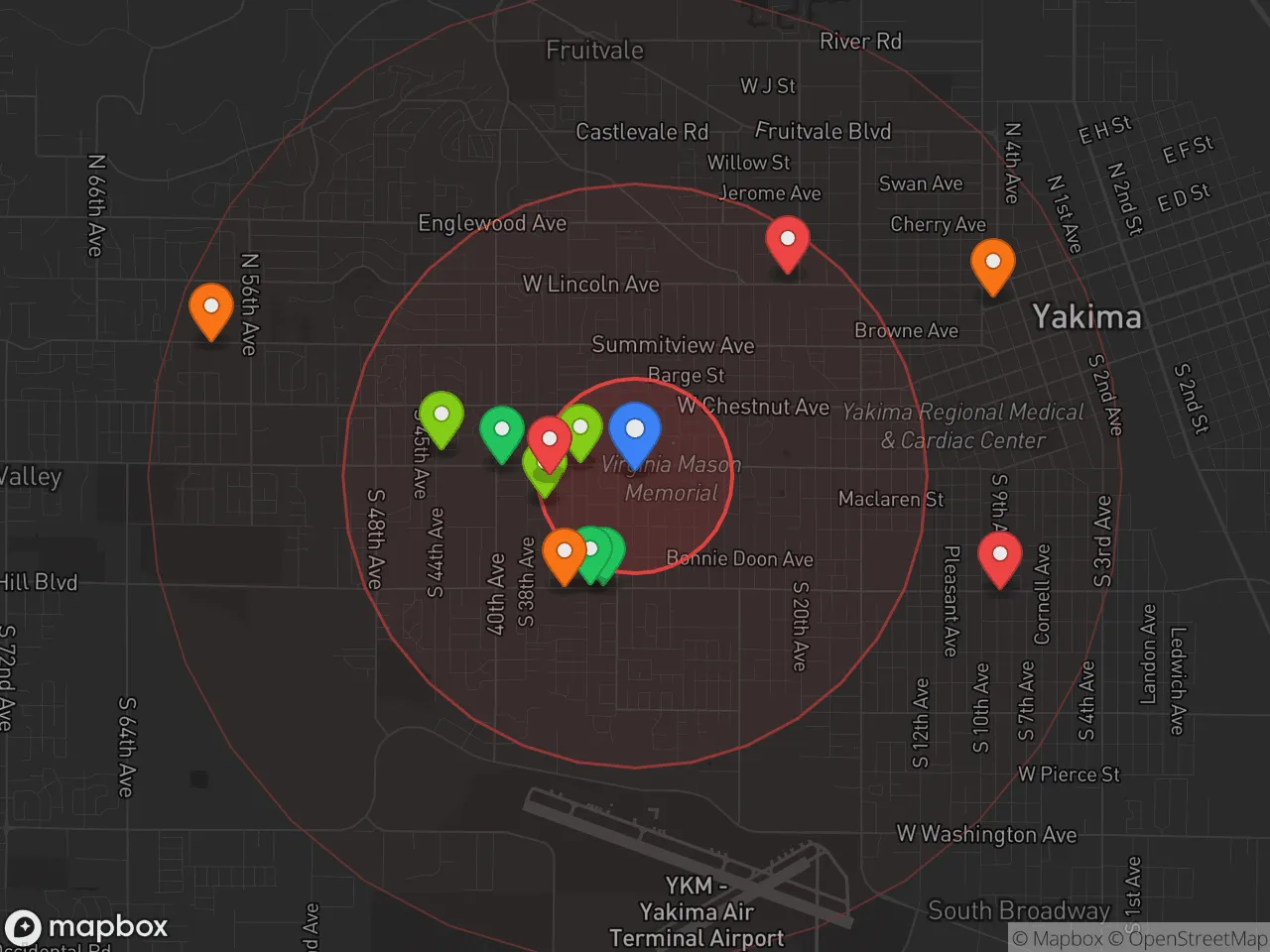
6 within 10 miles
Gas
20 within 10 miles
Hospital
4 within 20 miles
Airport
SEA — Seattle–Tacoma International
Post Office
USPS — Yakima, WA
Critical Amenities
Quality-of-Life Analysis
Yakima, Washington, offers a quality of life defined by its affordability and agricultural heartland character, attracting a diverse population of farmworkers, healthcare professionals, and remote workers seeking lower costs than the Seattle metro. With a cost-of-living index of 94—six points below the national average—the city provides a tangible financial buffer for middle-income families and retirees. The median household income of roughly $53,000, while below the state median, stretches further here than in most of Washington, making Yakima a practical choice for those prioritizing financial stability over urban amenities.
Cost of living, housing, and affordability compared to nearby areas
Housing in Yakima is a standout value relative to the rest of Washington state. The median home value sits at $273,400, less than half the state median of roughly $600,000, and the median rent of $1,075 is similarly accessible. This affordability gap is stark when compared to cities like Ellensburg (30 miles north, median home value ~$420,000) or Wenatchee (80 miles northeast, ~$450,000). The average commute of just 17.5 minutes further reduces living costs, as residents spend less on fuel and vehicle wear than the national average of 26 minutes. However, property taxes in Yakima County average about 1.1% of assessed value—slightly above the state average—and utility costs run roughly 5% higher than the U.S. norm, partially offsetting housing savings. For renters, the market remains tight: vacancy rates hover around 3-4%, meaning desirable units under $1,000 are often snapped up quickly.
What daily life is like for families: schools, amenities, and local rhythm
Daily life in Yakima revolves around its strong agricultural economy and family-oriented pace. The Yakima School District serves roughly 16,000 students, with Eisenhower High School and Davis High School offering dual-language programs and career-technical tracks in viticulture and mechanics—reflecting the local job market. For younger children, the Yakima Valley Libraries system operates six branches with free homework help and summer reading programs. Outdoor amenities are abundant: the 70-mile Yakima Greenway trail system connects parks, playgrounds, and the Yakima River, while the nearby Umtanum Creek Recreation Area provides hiking and birdwatching within a 20-minute drive. The city’s rhythm is shaped by the growing season—farmers markets operate May through October, and the Central Washington State Fair in late September draws over 300,000 visitors annually. Healthcare access is solid, with Yakima Valley Memorial Hospital and Virginia Mason Memorial providing primary and emergency care, though specialists often require a 90-minute drive to Tri-Cities or Seattle.
Yakima is best suited for those who value affordability, outdoor access, and a slower pace over urban nightlife or high-end dining. Remote workers and early retirees will appreciate the low housing costs and short commute, while families benefit from the safe neighborhoods and community-oriented schools. However, those seeking diverse employment beyond agriculture, healthcare, or retail may find the local job market limited—unemployment in Yakima County typically runs 1-2 points above the state average. For anyone willing to embrace a town where the cost of living allows for real financial breathing room, Yakima delivers a grounded, functional quality of life that few Washington cities can match at this price point.

Crime in Yakima, WA
Higher crime rates than 59% of comparable U.S. locations.
Violent CrimeViolent Crime Analysis
Property CrimeProperty Crime Analysis
Crime Analysis
Yakima, Washington, faces a serious public safety challenge, with crime rates that significantly exceed both state and national averages. The city's violent crime rate stands at 452.5 incidents per 100,000 residents, and its property crime rate is 1,765.7 per 100,000, placing it among the more dangerous communities in the Pacific Northwest. These figures reflect a broader trend in many large metro-adjacent areas where progressive justice policies have contributed to elevated crime levels.
Crime in context
Yakima's violent crime rate is roughly 30% higher than the national average and nearly double the Washington state average. Property crime is even more pronounced, with the city's rate exceeding the national average by about 40% and the state average by a similar margin. For context, the national violent crime rate is approximately 380 per 100,000, while Washington's is around 290 per 100,000. The property crime gap is stark: the national average is roughly 1,950 per 100,000, but Yakima's rate of 1,765.7 is still elevated relative to comparable cities in the region. These numbers are not abstract—they represent real risks to residents and businesses, particularly in a city where progressive judicial philosophies have led to lighter sentencing and reduced incarceration for repeat offenders.
What residents experience
For those living in Yakima, the high crime rate translates into tangible daily concerns. Property crimes like vehicle theft, burglary, and vandalism are common, with many residents reporting multiple incidents over a few years. Violent crimes—including aggravated assault, robbery, and homicide—occur with troubling frequency, especially in areas with higher poverty and gang activity. The city's location as a transportation hub along Interstate 82 also contributes to transient criminal activity. Residents often express frustration with a justice system they perceive as lenient, where offenders arrested for serious crimes are quickly released or given minimal consequences. This perception is grounded in the reality of a progressive district attorney's office that prioritizes diversion programs and reduced jail time, which critics argue fails to protect victims or deter repeat offending.
Neighborhood-level safety varies considerably within Yakima. Areas east of 16th Avenue and near the downtown core experience the highest concentrations of both violent and property crime, while neighborhoods like West Valley and parts of the Terrace Heights area report lower incident rates. However, even in safer pockets, residents cannot fully escape the city's overall crime problem, as property crime often spills over from higher-crime zones. Prospective residents should carefully research specific blocks and consider that the city's progressive judicial environment means even lower-crime neighborhoods are not immune to the effects of a system that prioritizes offender rehabilitation over public safety.
* Values derived from national, state, county, city and local statistics and may differ in a specific area. Last updated: 2026-04-21T11:17:58.000Z
Narrative content on this page is AI-generated and may contain mistakes. Verify any details that matter before acting on them.
ReloMaps may earn a commission from affiliate links at no extra cost to you.

