Photo: Wikipedia
Demographics of Yakima, WA
Affluence Level in Yakima, WA
A middle-class area roughly in line with national averages across income, home values, education, and employment.
People of Yakima, WA
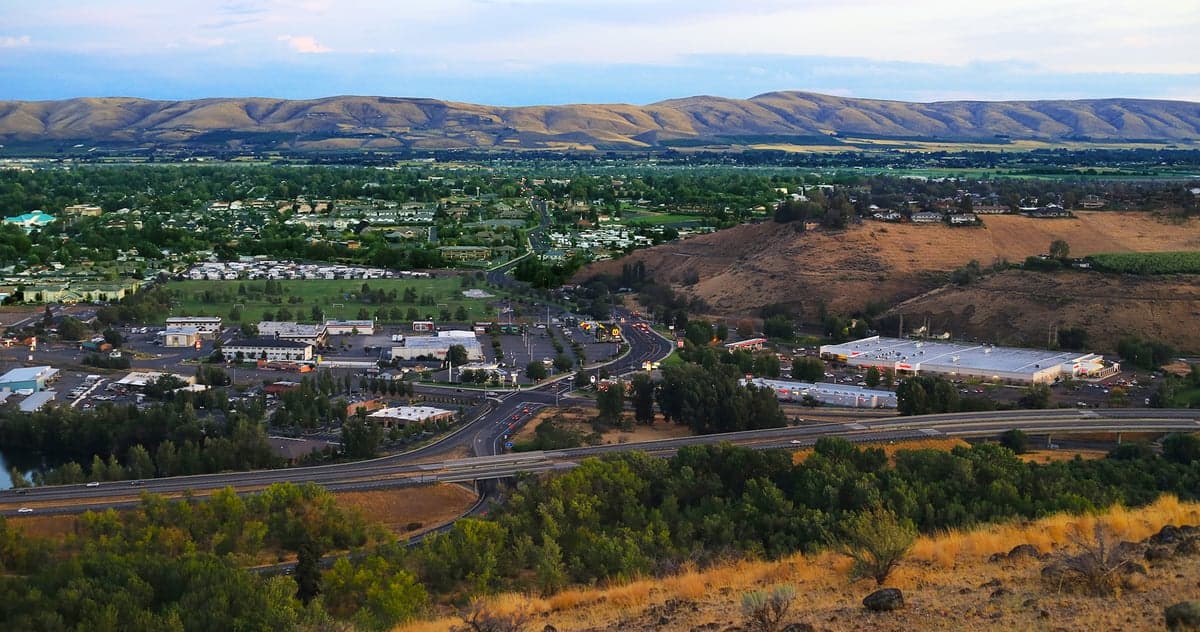
Yakima, Washington, is a city of roughly 96,800 residents defined by a near-even split between its white (43.7%) and Hispanic (47.6%) populations, a demographic balance that makes it one of the most bicultural cities in the Pacific Northwest. Its foreign-born population stands at 11.8%, and the city has a notably low college-attainment rate of 20.8%, reflecting its agricultural and working-class roots. Yakima feels less like a typical Cascadian city and more like a Central Valley town transplanted north, with a strong family-oriented, churchgoing character and a population that is younger and more blue-collar than the state average.
How the city was settled and grew
Yakima’s population history begins with the Yakama Nation, whose ancestral lands cover the region. The modern city was platted in 1885 by the Northern Pacific Railroad, which drew the first permanent white settlers—mostly Anglo-American homesteaders and Midwestern farmers—to what was then a sagebrush plain. The key catalyst was the Yakima Project, a federal irrigation system completed in the early 1900s that turned the arid valley into one of the nation’s most productive agricultural zones. This water infrastructure drew a wave of Japanese and Filipino farm laborers in the 1910s and 1920s, who settled in what became the North Front Street district (now part of downtown) and the Moxee area east of the city. During the Great Depression, Dust Bowl refugees from Oklahoma and Arkansas arrived, many settling in the West Valley neighborhoods and working the hop and apple orchards. By 1950, Yakima was a predominantly white, Protestant, agricultural hub of about 38,000, with small Japanese and Mexican enclaves near the railroad tracks and packing sheds.
Modern era (post-1965)
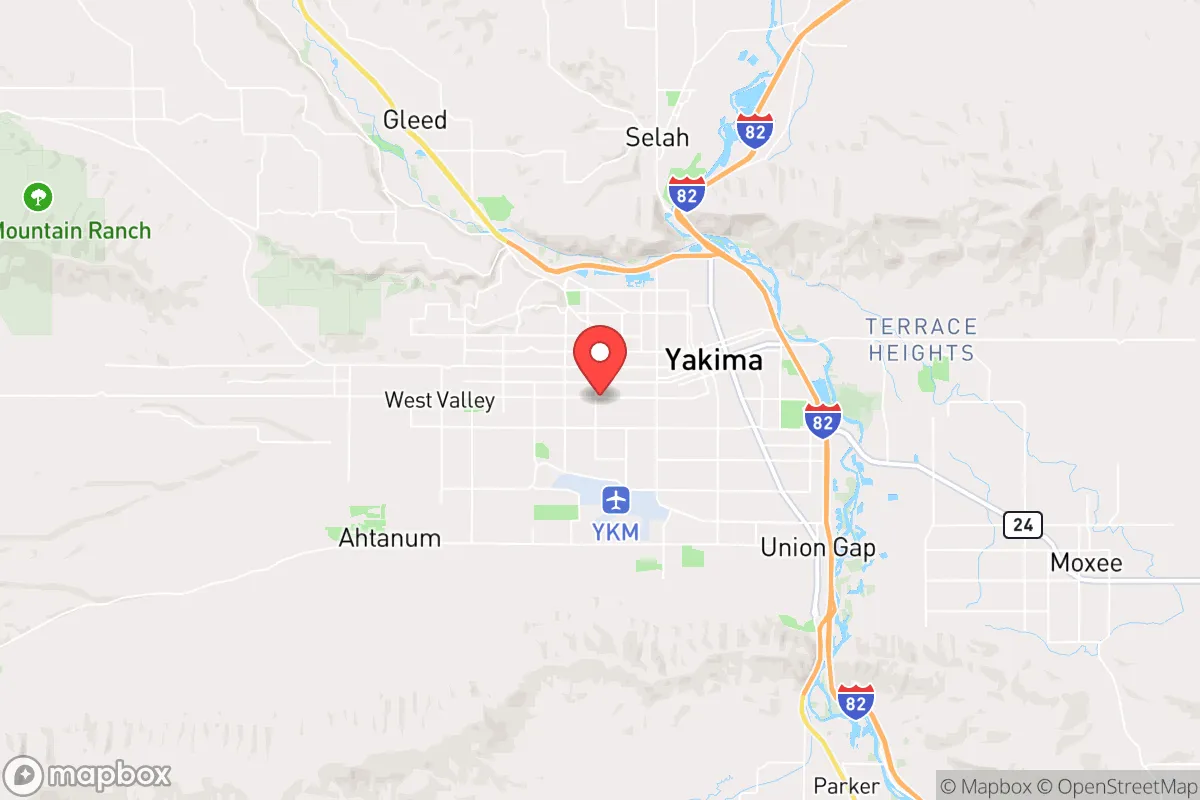
The Immigration and Nationality Act of 1965, combined with the end of the Bracero program in 1964, fundamentally reshaped Yakima’s population. Growers turned to Mexican and Central American laborers, who arrived in large numbers through the 1970s and 1980s. These immigrants initially settled in the South Yakima neighborhoods—roughly bounded by Lincoln Avenue and 16th Avenue—and in the unincorporated community of Parker just south of the city limits. By 1990, the Hispanic share of Yakima’s population had risen to roughly 25%, and it has continued climbing steadily. The white population, meanwhile, has aged and suburbanized, with many non-Hispanic white families moving to the West Valley (outside city limits) or to the newer subdivisions in Terrace Heights east of the river. The city’s small East/Southeast Asian community (1.3%) is largely composed of Vietnamese and Filipino families who arrived as secondary migrants from California and Seattle after 2000, concentrated in the downtown core near the Yakima Valley College campus. The Indian-subcontinent population (0.1%) and Black population (1.4%) remain negligible, with no distinct ethnic enclaves.
The future
Yakima’s demographic trajectory points toward continued Hispanic growth and white out-migration, a pattern that will likely make the city majority-Hispanic within the next 10–15 years. The Hispanic population is younger (median age roughly 26 vs. 42 for whites) and has higher birth rates, while the white population is aging and shrinking. The city is not tribalizing into hostile enclaves—most neighborhoods are mixed, with the exception of the heavily Hispanic South Yakima and the predominantly white West Valley—but economic segregation is deepening. The foreign-born share (11.8%) is stable, not surging, suggesting that future growth will come from U.S.-born Hispanic families rather than new immigration. The low college-attainment rate (20.8%) is a structural concern: Yakima struggles to retain educated young adults, who tend to leave for Seattle or Spokane. The city is becoming more bicultural and working-class, not more diverse in the broad sense—the Asian, Black, and Indian populations are not growing meaningfully.
For a conservative-leaning newcomer, Yakima offers a stable, family-oriented community where church attendance is high, property crime is a real concern (see the crime section), and the cost of living remains below the Washington average. The city is not becoming a progressive enclave; its politics track its demographics, with the Hispanic population leaning moderately Democratic but culturally conservative on social issues. The bottom line: Yakima is a working-class agricultural city that is quietly becoming Hispanic-majority, with a white population that is retreating to the suburbs rather than integrating. A move here means joining a place where the old Anglo-Protestant culture is fading and a newer, family-centric Latino culture is ascendant—a shift that is happening peacefully but palpably.

* Values derived from national, state, county, city and local statistics and may differ in a specific area. Last updated: 2026-04-21T11:17:58.000Z
Narrative content on this page is AI-generated and may contain mistakes. Verify any details that matter before acting on them.
ReloMaps may earn a commission from affiliate links at no extra cost to you.

