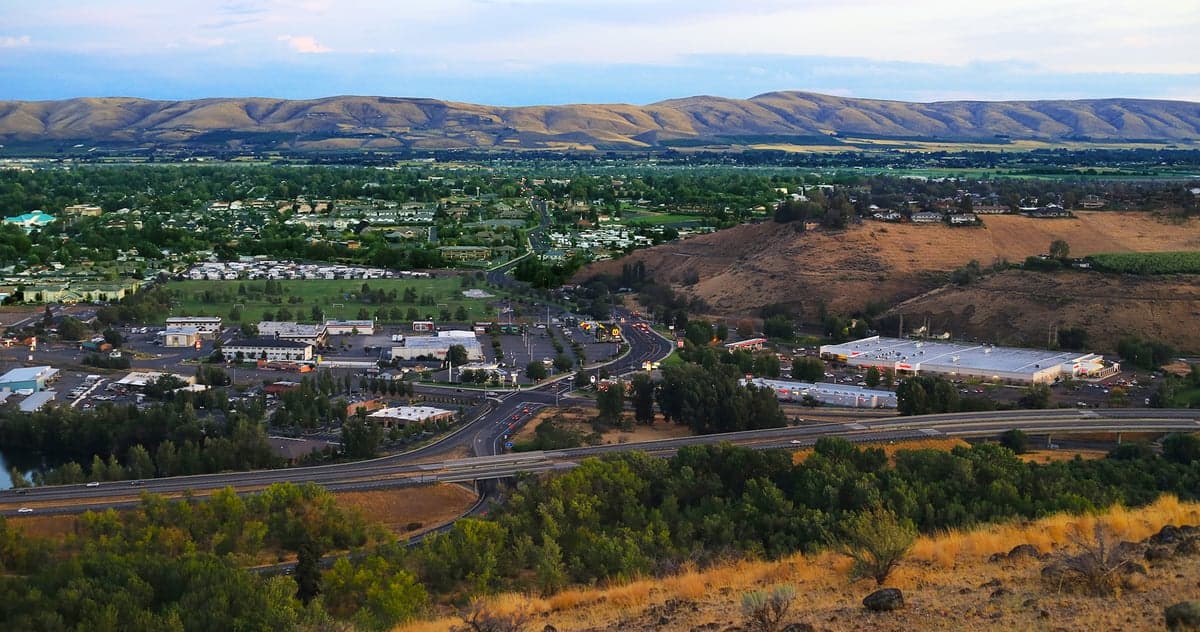
Photo: Wikipedia
Political ClimatePolitical Climate in Yakima, WA
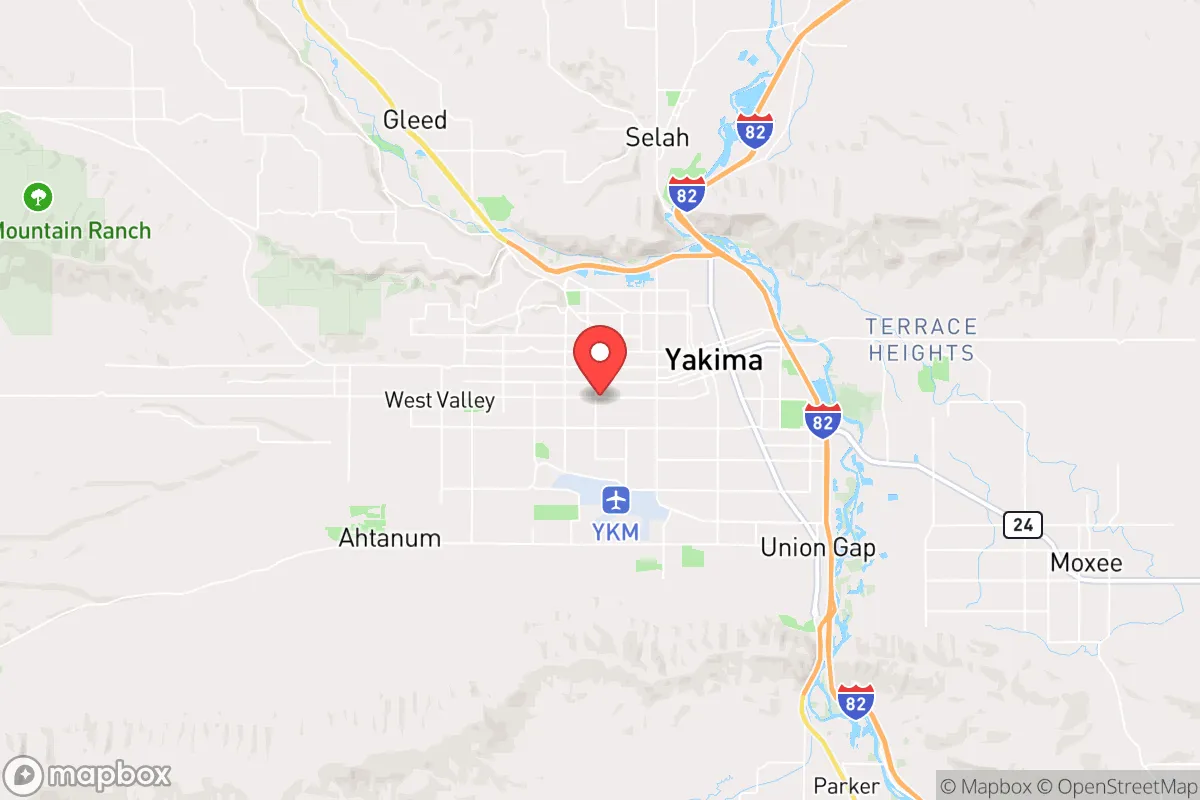
District shown is the primary district for this city’s centroid. Cities may span multiple districts.
Local Political AnalysisPolitical Analysis of Yakima, WA
Yakima has long been a reliably conservative stronghold in central Washington, with a Cook PVI of R+10 that reflects its deep-rooted Republican lean. The city and surrounding Yakima County have voted solidly red in every presidential election since 2008, with margins often exceeding 15 points. But if you’ve lived here as long as I have, you’ve noticed the political winds shifting—slowly, but unmistakably—as newcomers from the west side bring progressive ideas that clash with the area’s traditional values of limited government and personal liberty.
How it compares
Drive 40 miles west to Ellensburg, and you’ll find a college town that’s swung blue in recent cycles, thanks to Central Washington University’s influence. Head north to the Tri-Cities (Kennewick, Pasco, Richland), and you’re still in reliably red territory, though Pasco’s growing Hispanic population has nudged it toward the center. The real contrast is with Seattle, 140 miles northwest—a deep-blue metropolis where government overreach into housing, energy, and even school curriculum is the norm. Yakima feels like a different country in comparison: neighbors still wave from their porches, and the county commission hasn’t caved to the kind of zoning mandates or mask mandates that plague the coast. That said, the city council has seen a few progressive wins in recent years, like a 2023 resolution supporting sanctuary policies, which sparked heated debates about local control versus federal law.
What this means for residents
For folks who value personal freedoms, Yakima remains a decent place to live—but you have to keep an eye on the ballot box. Property taxes are lower than King County’s, and there’s no city income tax, which is a relief. But the creeping influence of state-level policies from Olympia—like the 2021 capital gains tax and the 2023 ban on natural gas in new construction—has some of us worried. The real concern is how these mandates trickle down: small businesses here are already struggling with minimum wage hikes and paid family leave requirements that were designed for Seattle’s economy, not ours. On the plus side, the local school board has held the line on critical race theory and gender ideology in classrooms, thanks to a conservative majority that listens to parents. That’s a big deal for families who don’t want government telling their kids what to think.
Culturally, Yakima is still a place where the Second Amendment is respected—you’ll see gun racks in pickup trucks at the grocery store—and where church attendance on Sunday is the norm, not the exception. The agricultural backbone (apples, hops, wine grapes) keeps the economy grounded in hard work and private property rights. But the long-term trend is concerning: as more people flee Seattle’s high costs and crime, they bring their voting habits with them. If you’re considering a move here, I’d say come for the community and the lower cost of living, but stay engaged locally. The fight to keep Yakima from becoming another Olympia or Bellingham is real, and it starts with showing up at city council meetings and voting in every primary.

State Political ClimatePolitical Climate in Washington
State Political AnalysisPolitical Environment in the State
Washington state has shifted from a purple battleground to a solidly blue stronghold over the past two decades, with Democrats controlling the governorship, both U.S. Senate seats, and both chambers of the legislature since 2017. The state’s overall partisan lean is roughly D+8 in presidential elections, but that number masks a deep and growing urban-rural chasm. The Seattle metro area, home to over 60% of the state’s population, drives the blue wave, while much of Eastern Washington and the rural Olympic Peninsula vote reliably red. For a conservative considering relocation, the key question isn’t whether the state is liberal—it’s whether you can find a pocket of freedom that fits your values.
Urban vs. rural divide
The political map of Washington is a tale of two states. King County (Seattle) alone casts about 30% of the state’s vote and delivers a Democratic margin of roughly 500,000 votes—enough to cancel out every red county east of the Cascades. Pierce County (Tacoma) and Snohomish County (Everett) have trended blue over the last decade, with Snohomish flipping from a swing county to a reliable Democratic stronghold. Meanwhile, the rural east—places like Spokane County, Yakima County, and the Tri-Cities (Kennewick, Pasco, Richland)—vote Republican by margins of 10-20 points. The Spokane metro area is the largest conservative-leaning city in the state, but even there, the city proper has shifted left, with the surrounding suburbs and farmland keeping it red. The Olympic Peninsula and Whatcom County (Bellingham) are mixed: Bellingham is a liberal college town, but the rural parts of Whatcom and Clallam counties lean conservative. The bottom line: if you want a conservative community, look east of the Cascades or to the smaller towns west of the mountains.
Policy environment
Washington’s policy environment is aggressively progressive, with a few bright spots for conservatives. The state has no personal income tax, which is a major draw, but it compensates with high property taxes (averaging 0.93% of home value) and a steep sales tax (state rate 6.5%, but local add-ons push it to 8-10% in many cities). The capital gains tax on high earners, passed in 2021 and upheld by the state Supreme Court in 2023, is a clear step toward a broader income tax. On education, the state has a strong public school system, but parental rights are under pressure: the state’s Healthy Youth Act mandates comprehensive sex ed, and SB 5599 (2023) allows minors to receive gender-affirming care without parental consent, a flashpoint for conservative families. Healthcare is heavily regulated, with a state-run insurance exchange and strict abortion protections codified into law. Election laws are among the most liberal in the nation: universal mail-in voting is the norm, same-day registration is allowed, and voter ID requirements are minimal—no photo ID needed, just a signature match. For a conservative, the policy environment feels like a one-party state with little room for dissent on social issues.
Trajectory & freedom
Washington is becoming less free by almost any measure of personal liberty, especially for conservatives. The 2023 assault weapons ban (HB 1240) prohibits the sale, manufacture, and import of dozens of semi-automatic firearms, including AR-15s and AK-pattern rifles. The 2024 magazine capacity limit (HB 1143) caps magazines at 10 rounds, and a new 10-day waiting period for all gun purchases took effect in 2024. These laws are among the strictest in the nation, and they’ve driven a surge in gun sales and a legal challenge that’s still winding through the courts. On medical freedom, the state’s COVID-19 vaccine mandates for healthcare workers and state employees were among the longest-lasting in the country, only fully lifted in 2023. Parental rights took a hit with SB 5599, which allows minors to consent to gender-affirming care without parental notification, and HB 1608 (2023) expanded access to abortion and contraception for minors. Property rights are under pressure from the Growth Management Act, which heavily restricts rural development and has led to skyrocketing housing costs. The state’s Climate Commitment Act (2021) imposes a cap-and-trade system that raises gas prices by 40-50 cents per gallon, a direct hit on rural and suburban commuters. For a conservative, the trajectory is clear: more regulation, less personal autonomy, and a government that sees itself as the arbiter of your choices.
Civil unrest & political movements
Washington has been a flashpoint for political unrest, particularly in Seattle. The CHOP/CHAZ occupation in 2020—where protesters took over several blocks of Capitol Hill for weeks—was a national symbol of progressive overreach and lawlessness. Since then, the city has seen recurring protests over police funding, homelessness, and immigration. The state is a sanctuary state (since 2019), meaning local law enforcement cannot cooperate with federal immigration authorities, a policy that has drawn both praise and criticism. On the right, the Washington State Republican Party has struggled to gain traction, but grassroots movements like the Spokane County Republican Party and the East King County Republicans are active. There’s been talk of secession in rural counties—the “Liberty State” movement in Eastern Washington gained some steam in 2020-2021, with proposals to split the state along the Cascades, but it’s never gotten serious legislative traction. Election integrity is a hot-button issue: the state’s mail-in system has been criticized for lax signature verification and the lack of voter ID, but no major fraud scandals have emerged. For a new resident, you’ll see the political divide in everyday life—Seattle’s street politics versus the quiet conservatism of Walla Walla or Port Angeles.
Projection
Over the next 5-10 years, Washington will likely get bluer, not redder. In-migration from California and other blue states is accelerating, particularly to the Seattle suburbs and the Vancouver area (just across the Columbia River from Portland). These newcomers tend to be younger, more educated, and more progressive, reinforcing the existing political tilt. The rural east will remain red, but its population is stagnant or shrinking, so its electoral weight will continue to decline. The state’s Democratic supermajority in the legislature is likely to hold, meaning more progressive policies: expect a push for a state income tax (possibly via a graduated income tax on high earners), stricter environmental regulations, and further erosion of gun rights. The capital gains tax is a test case—if it survives legal challenges, it’s a foot in the door for broader taxation. For a conservative moving in now, the realistic outlook is that you’ll be living in a state where your values are increasingly out of step with the majority, but you can still find community in the red pockets. The key is to choose your location carefully—Spokane or the Tri-Cities will feel like a different world from Seattle.
For a conservative considering Washington, the bottom line is this: the state offers stunning natural beauty, a strong economy, and no income tax, but you’ll be living under a government that actively opposes many of your core beliefs on guns, parental rights, and personal freedom. If you’re willing to fight for your values in a blue state, you can find a home in the red islands east of the Cascades or in the rural west. But if you want a state that reflects your politics, you’re better off looking at Idaho or Montana. Washington is a beautiful place to live, but it’s not a friendly place for conservatives—and it’s only getting less so.
* Values derived from national, state, county, city and local statistics and may differ in a specific area. Last updated: 2026-04-21T11:17:58.000Z
Narrative content on this page is AI-generated and may contain mistakes. Verify any details that matter before acting on them.
ReloMaps may earn a commission from affiliate links at no extra cost to you.

