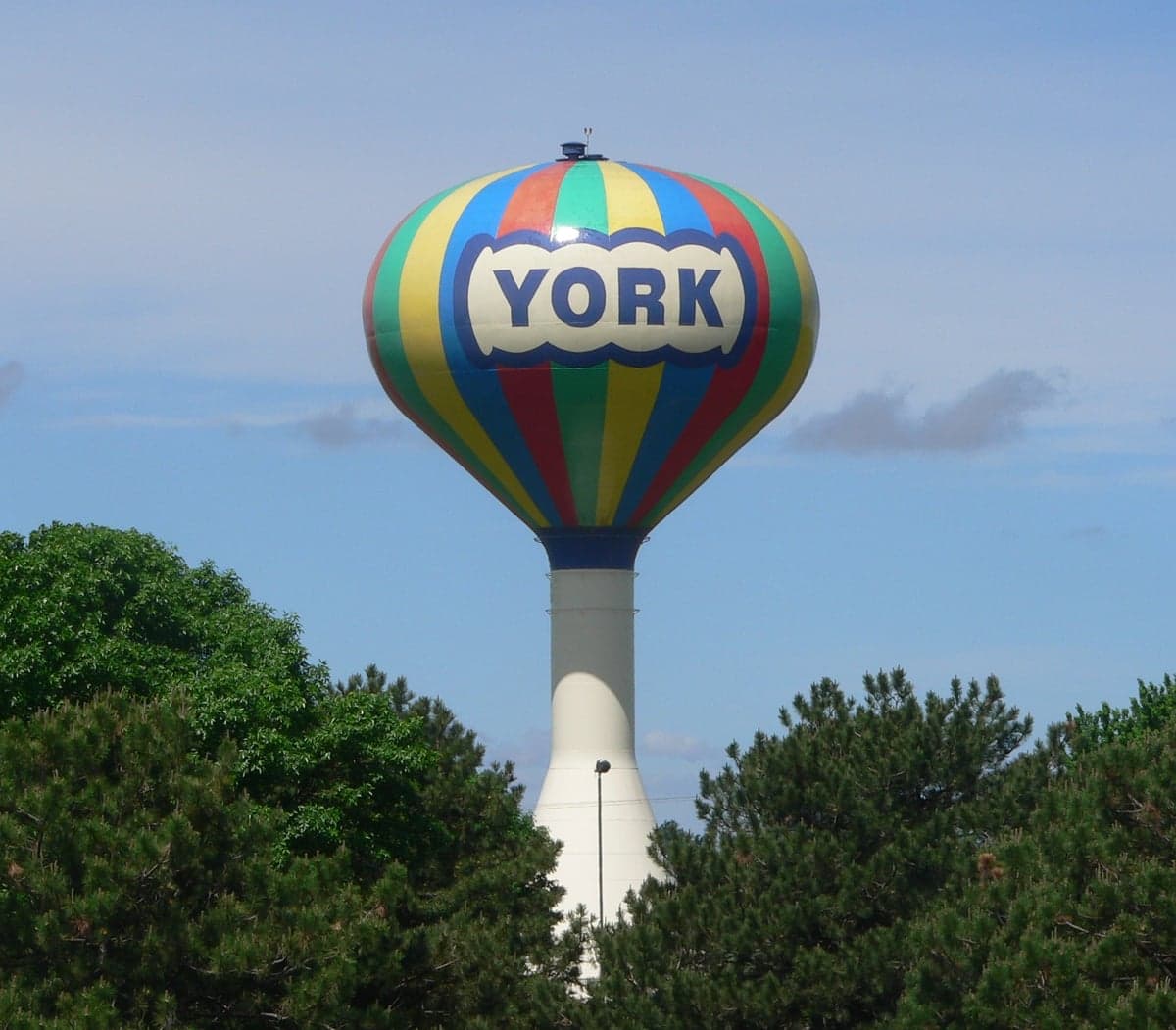
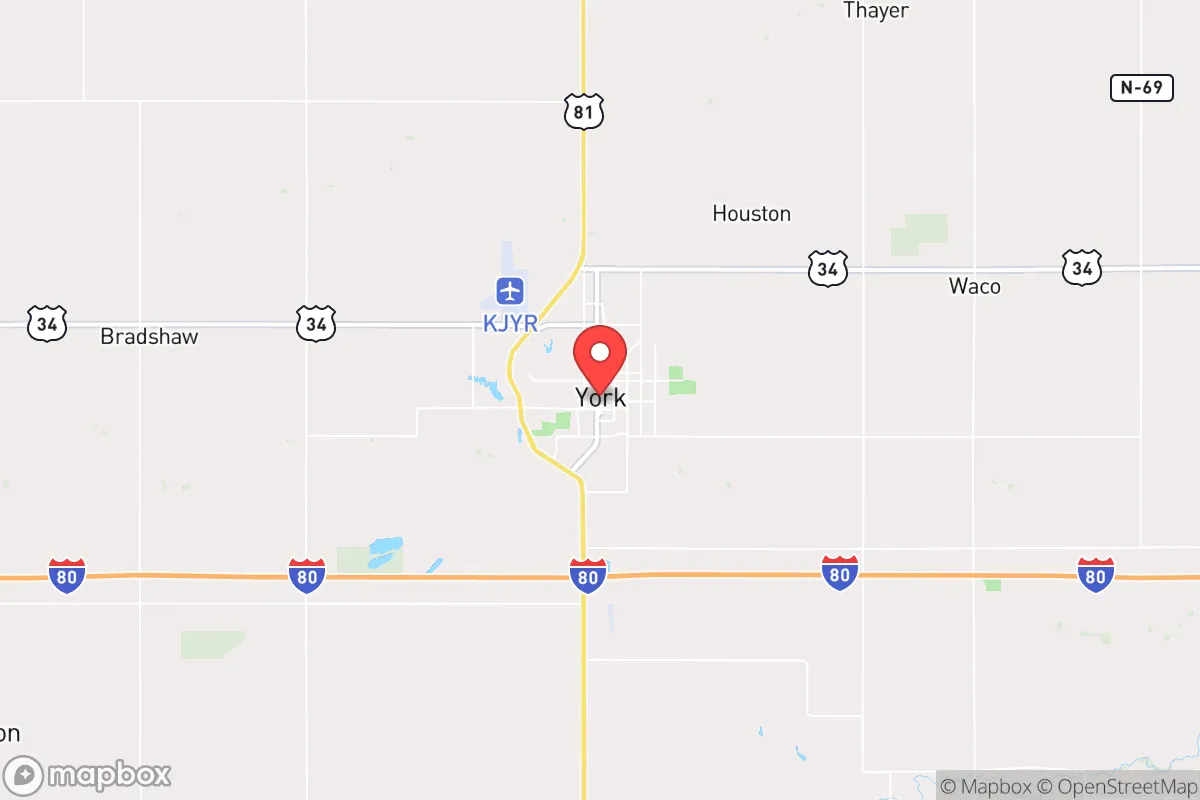
Photo: Wikipedia
Quality of Life in York, NE
A high quality of life with strong walkability, manageable living costs, healthy neighborhood signals, and solid amenity access.
What does Quality of Life tell us?
Quality of Life blends cost of living, nearby amenities, socioeconomic signals, and neighborhood character. City-level scores represent the whole municipality; individual neighborhoods can differ.
What does this tell us?
Quality of Life blends cost of living, nearby amenities, socioeconomic signals, and neighborhood character. City-level scores represent the whole municipality; individual neighborhoods can differ.
Cost of Living
30% below national average
The Real Cost of Living in York, NE for 2026
| Tier | Individual | Family (4) |
|---|---|---|
| Survival | $14k | $27k |
| Comfortable | $33k | $49k |
| Luxury | $101k+ | $157k+ |
| Elite (Top 5%) | $119k+ | $185k+ |
128%
The Area Signal
A metric tracking the socioeconomic signals of the area.


Hobbies
Explore the areaGroceries
4 within 10 miles
Gas
0 within 10 miles
Hospital
3 within 20 miles
Airport
MCI — Kansas City International
Post Office
USPS — York, NE
Critical Amenities
Quality-of-Life Analysis
York, Nebraska, offers a quality of life defined by genuine affordability and a slower, community-focused pace, attracting a mix of young families, retirees, and agricultural professionals. With a cost of living index of 70 (30% below the U.S. average), the area provides significant financial breathing room compared to national norms. The population skews slightly older and more family-oriented than the state average, with a strong base of workers in manufacturing, healthcare, and education anchoring the local economy.
How housing costs and affordability compare to nearby cities
York’s housing market is a primary draw for newcomers. The median home value sits at $170,900, roughly half the national median of around $350,000, and well below the Nebraska state median of approximately $240,000. Median rent is $887 per month, making it one of the most affordable rental markets in the state. Compared to Lincoln (45 minutes east), where median home values exceed $270,000, York offers a clear financial advantage. The average commute of 19 minutes is notably short, reflecting the town’s compact layout and the fact that most residents work locally or within a 20-mile radius. Property taxes in York County are moderate for Nebraska, typically running 1.5% to 1.7% of assessed value, which keeps total monthly housing costs low even for homeowners.
What daily life is like for families and professionals
Daily life in York revolves around a walkable downtown core and a strong network of local institutions. The York Public Schools system serves roughly 1,800 students across four elementary schools, one middle school, and York High School, with a student-teacher ratio near 15:1. For higher education, York College (a private liberal arts college) and the University of Nebraska-Lincoln’s extension campus provide local options. Groceries, healthcare, and retail are concentrated along Lincoln Avenue and Highway 81, with a Super Saver grocery store, a Walmart Supercenter, and York General Hospital (a 50-bed critical access facility) covering essential needs. Dining options lean toward family-owned diners and fast-casual chains, with Chances ‘R’ Restaurant and Rustic Brew Coffee serving as local gathering spots. The city maintains eight public parks, including the 40-acre Harrison Park with a fishing pond and walking trails, and the York County Historical Museum offers a modest cultural anchor. For major shopping or entertainment, residents typically drive 45 minutes to Lincoln or 90 minutes to Omaha.
Who will thrive in York’s environment
York is best suited for those who prioritize financial stability, short commutes, and a close-knit community over urban amenities. Young families benefit from the low cost of housing and the ability to buy a home on a single median income of roughly $60,000. Retirees on fixed incomes find the low rent and property taxes particularly attractive. Professionals in manufacturing, agriculture, or healthcare—especially those employed by major local employers like Becton Dickinson (medical devices) or Chief Industries (manufacturing)—will find the commute negligible and the housing market forgiving. However, residents seeking vibrant nightlife, diverse dining, or extensive cultural offerings will likely find York limited. The trade-off is clear: a lower cost of living and a predictable, safe daily rhythm in exchange for fewer big-city conveniences.

Crime in York, NE
Lower crime rates than 82% of comparable U.S. locations.
Violent CrimeViolent Crime Analysis
Property CrimeProperty Crime Analysis
Crime Analysis
York, Nebraska, reports a violent crime rate of 182.7 per 100,000 residents, which is significantly lower than the national average and places it among the safer communities in the state. Property crime, however, is a more pressing concern at 2,229 per 100,000, a figure that exceeds both the Nebraska state average and the national median. This combination creates a safety profile where residents generally feel secure from violent threats but must remain vigilant against theft and burglary.
Crime in context
York’s violent crime rate of 182.7 per 100,000 is roughly half the U.S. average of 380 per 100,000, and it is well below the Nebraska state average of approximately 280 per 100,000. The city’s property crime rate of 2,229 per 100,000, however, is about 15% higher than the national average of 1,954 per 100,000 and notably above the Nebraska average of roughly 1,800 per 100,000. This disparity means that while York is a low-risk environment for violent offenses like assault or robbery, residents face a higher-than-typical chance of experiencing larceny, motor vehicle theft, or burglary. The city’s location in a conservative, rural-leaning county (York County) means its justice system is not influenced by the progressive prosecutorial policies seen in larger metro areas, which can lead to higher recidivism and reduced public safety. This local judicial approach, focused on accountability rather than offender-centric leniency, helps keep violent crime rates low.
What residents experience
For most residents, daily life in York feels safe, with the primary safety concerns revolving around property crimes like unlocked car break-ins and shed burglaries rather than personal violence. The city’s police department maintains a visible presence, and neighborhood watch programs are active in several subdivisions. The elevated property crime rate is partly driven by opportunistic thefts in commercial areas and near the interstate corridor (U.S. Highway 81 and Nebraska Highway 34). York’s violent crime rate is 52% lower than the national average, while its property crime rate is 14% higher, creating a clear distinction in risk types. Residents are advised to secure vehicles and homes, especially in areas closer to the downtown core and the industrial park.
Neighborhood-level variation
Safety conditions vary noticeably by neighborhood within York. The west side of town, particularly around the newer subdivisions near York College and the hospital, experiences the lowest crime rates, with property crime incidents roughly 30% below the city average. Older neighborhoods east of the railroad tracks and areas immediately surrounding the downtown square report higher property crime numbers, including occasional vandalism and theft from vehicles. The industrial corridor along Highway 81 sees the most commercial burglaries. No neighborhood in York reports violent crime rates above the city average of 182.7 per 100,000, reinforcing the overall safety from serious personal offenses. Prospective residents should focus on block-level conditions and proximity to well-lit, active streets when choosing a home, as the property crime risk is not uniform across the city.
* Values derived from national, state, county, city and local statistics and may differ in a specific area. Last updated: 2026-04-19T08:31:08.000Z
Narrative content on this page is AI-generated and may contain mistakes. Verify any details that matter before acting on them.
ReloMaps may earn a commission from affiliate links at no extra cost to you.

