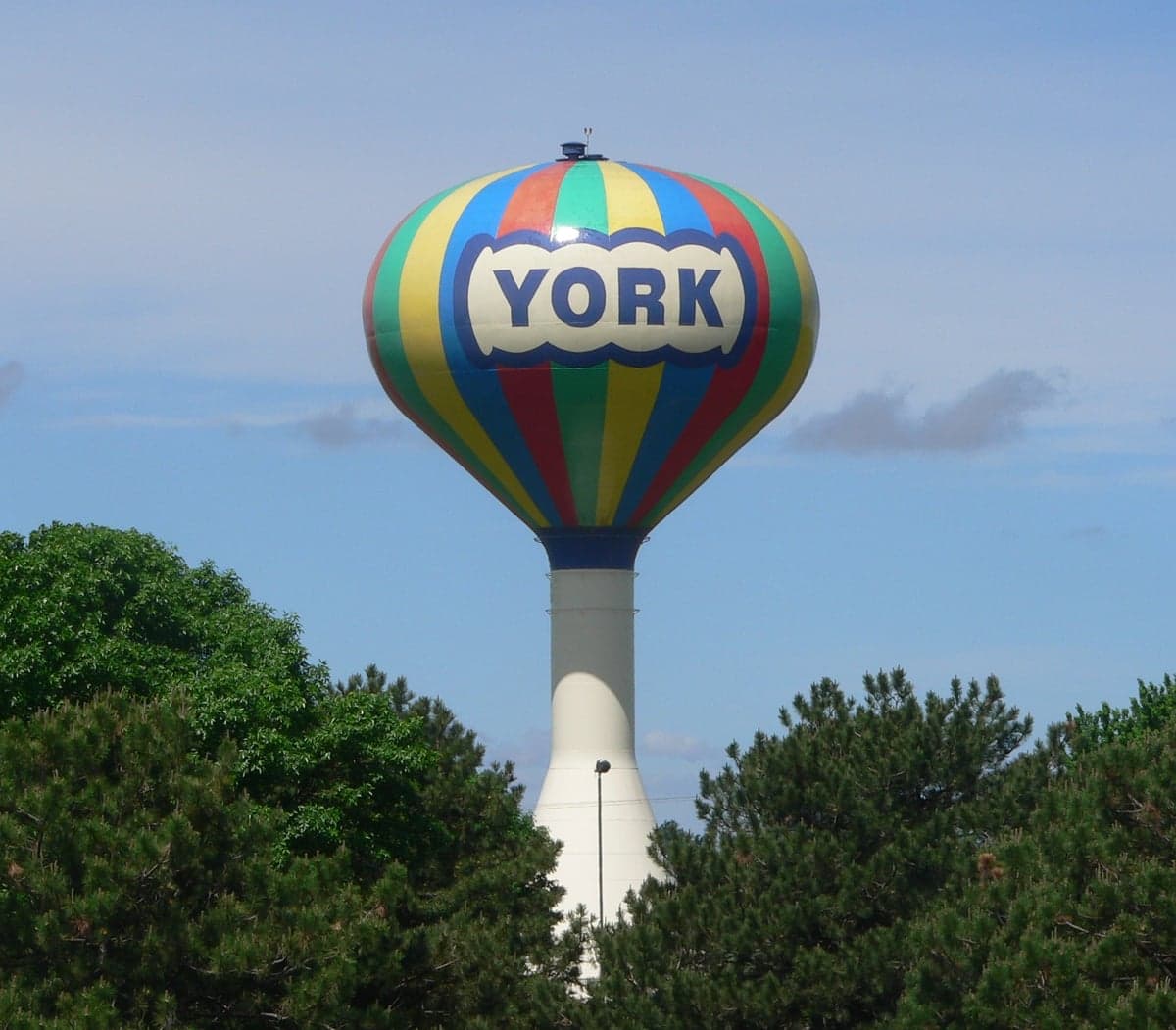
Photo: Wikipedia
Strategic Assessment of York, NE
Workable tactical position. Some exposure to population density or targets, but generally defensible in a crisis.
What does the Strategic Assessment tell us?
Our Strategic Assessment grades tactical survivability of an area. Major population centers, military targets, fallout zones, natural disasters, and border exposure all drive risk — lower exposure means a more defensible position in a crisis.
This is heavily inspired by Joel Skousen's Strategic Relocation book. Highly recommended you checkout the book ($)What does this tell us?
Our Strategic Assessment grades tactical survivability of an area. Major population centers, military targets, fallout zones, natural disasters, and border exposure all drive risk — lower exposure means a more defensible position in a crisis.
This is heavily inspired by Joel Skousen's Strategic Relocation book. Highly recommended you checkout the book ($)Strategic Pillars

Key Distances
Regional Safe Places
Below is our recommended "safe zones" in Nebraska and the surrounding area based on our strategic heuristics. For most people, it's unrealistic to live in a “safe zone” full-time due to work, family or other personal reasons. They tend to be more rural. However, many of these areas are perfect for second homes and retreat properties that double as a vacation home or even a short-term rental.
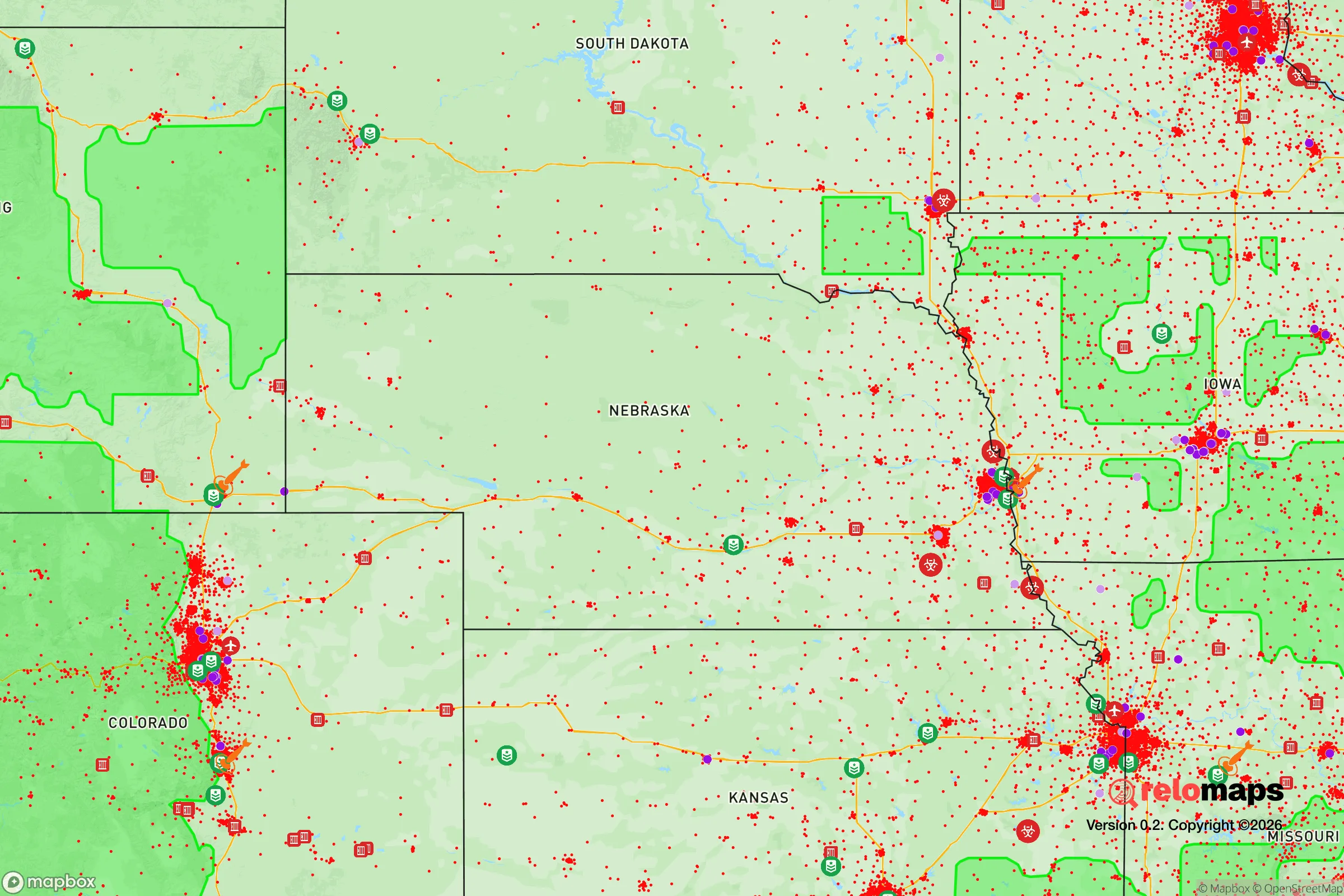
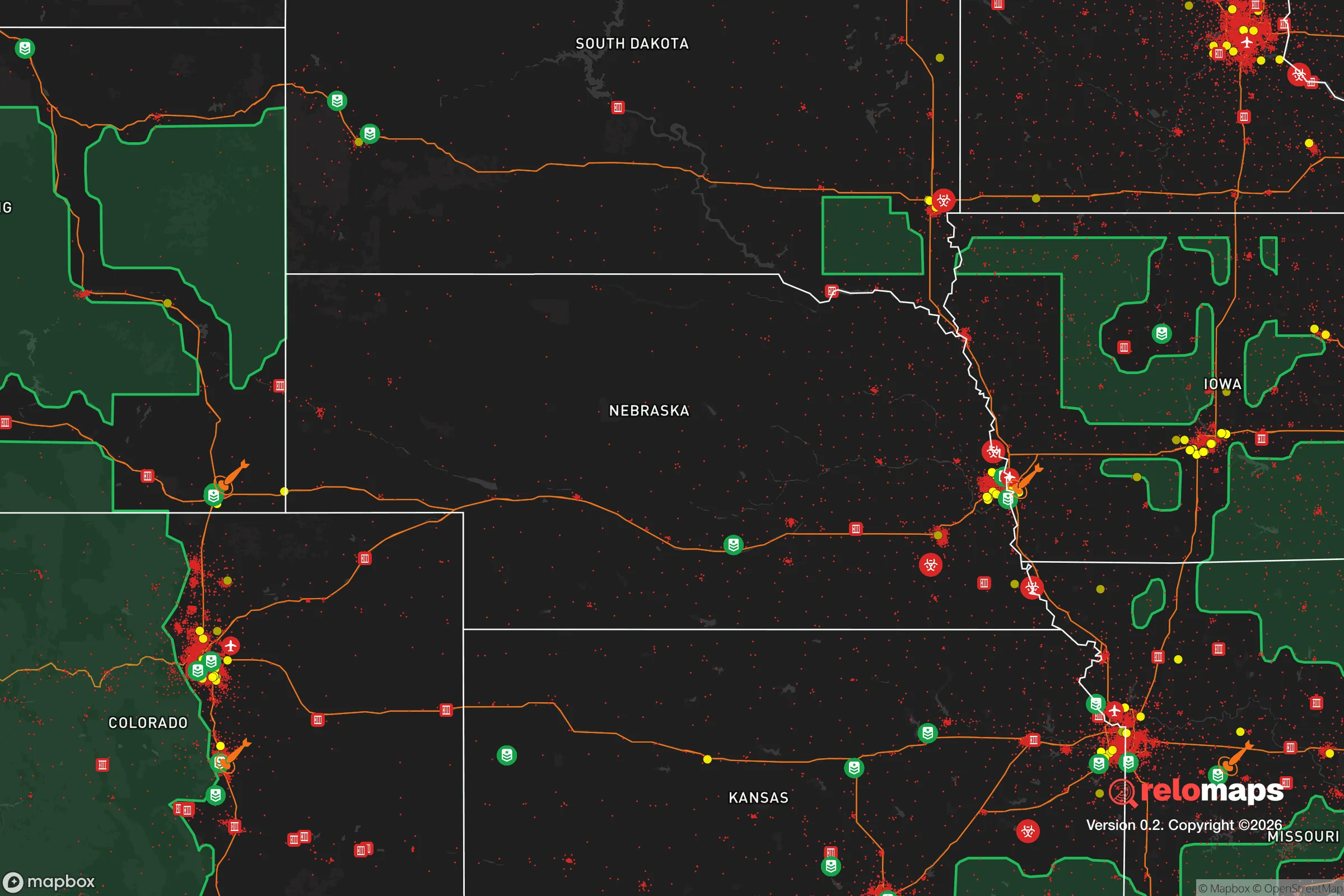


Important Note: For informational purposes only. This does not mean nothing bad ever happens in the green zones. Please use common sense. This is based on public data and modeled with AI. We tried to take a conservative approach but mistakes happen. We update this regularly as new information becomes available.
Solar Generator Recommendations
Backup power matters more here than in safer locations. We've picked three solar generators across budgets and capacity tiers — start with the budget unit if you only need a few essentials, or step up if you want to run a fridge and HVAC for days at a time.

Jackery Portable Power Station Explorer 300
Budget OptionPower on the Go: Weighing only 11 lbs, it's convenient to set up and store with book-sized foldable solar panels

BLUETTI Portable Power Station AC180
Designed for both indoor and outdoor scenarios, AC180 is highly capable as it has a robost capacity and continuous output power.

EF ECOFLOW DELTA Pro Ultra Power Station
Upgraded PickEcoFlow DELTA Pro Ultra is a whole-home energy system designed to grow with your family. Integrated with the Smart Home Panel 2, it scales to meet your evolving energy needs — keeping your home powered, intelligent, and secure through every stage of life.
We earn a commission, at no additional cost to you.
Strategic Assessment Analysis
York, Nebraska, sits in a sweet spot that few relocators fully appreciate: far enough from major metropolitan chaos to offer genuine buffer, yet close enough to arterial transport routes to keep supply lines open when things get tight. For a conservative-leaning individual or family thinking in terms of decades, not election cycles, this town of roughly 8,000 people in the flat, fertile plains of southeastern Nebraska presents a resilience profile worth serious study. Its location along Interstate 80, the Lincoln and Omaha rail corridors, and the Platte River watershed gives it a logistical backbone that many similarly sized towns lack, while its distance from any population center over 100,000 means you are not staring down the barrel of urban spillover when civil order frays.
Geographic position and natural advantages for long-term security
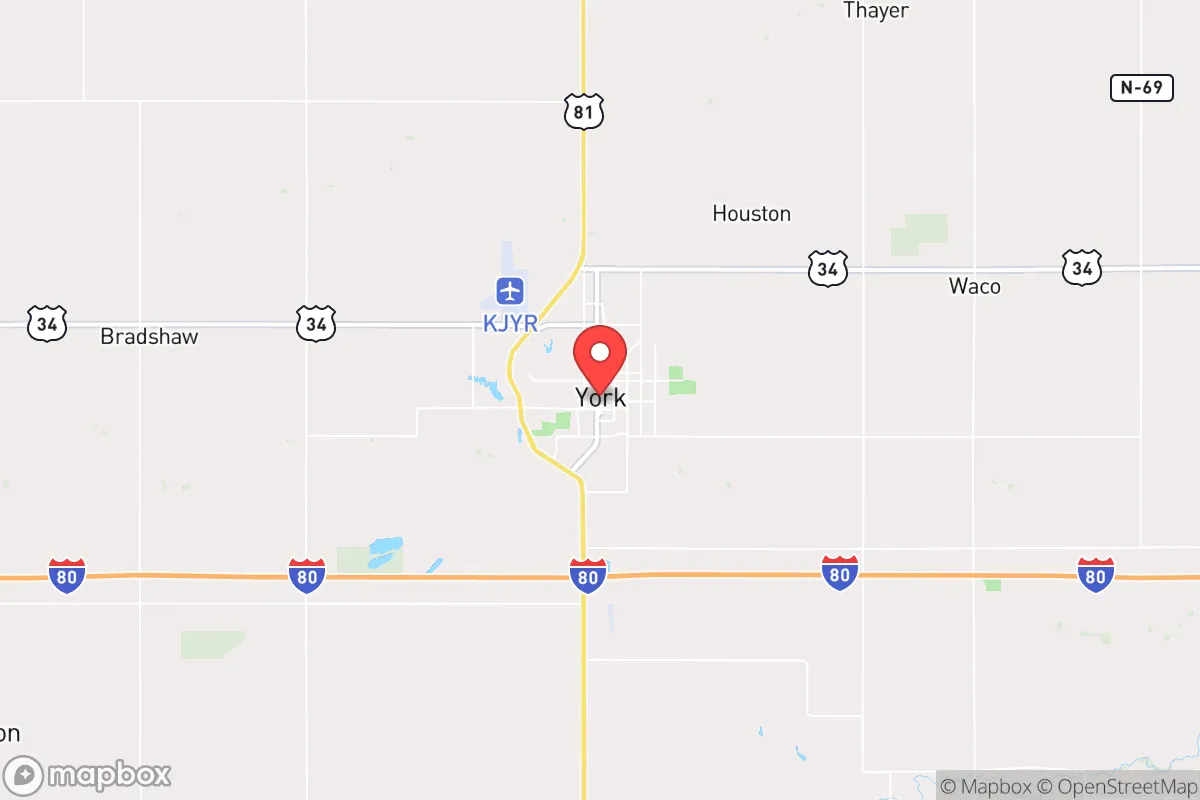
York’s most underrated asset is its position relative to the nation’s critical infrastructure. It sits roughly 50 miles west of Lincoln and 100 miles west of Omaha, placing it outside the immediate blast radius or fallout plume of any plausible nuclear target in those cities, yet close enough that you can still access specialty medical care or industrial supplies within a two-hour drive under normal conditions. The surrounding terrain is open, agricultural, and sparsely populated—ideal for maintaining situational awareness. There are no major military installations, no strategic command centers, no large-scale chemical plants within 30 miles. That absence of high-value targets is itself a strategic advantage. The Platte River aquifer runs beneath much of the region, providing a reliable groundwater source that is less vulnerable to surface contamination than reservoirs near urban centers. The climate is continental, with cold winters and hot summers, but the growing season is long enough for serious food production—corn, soybeans, wheat, and alfalfa dominate the local agriculture, and the soil is among the richest in the country. For someone thinking about food sovereignty, this is not a marginal area; it is a breadbasket.
Risks, exposures, and proximity to fallout-relevant landmarks
No location is without vulnerabilities, and York has a few that demand honest assessment. The most obvious is its proximity to the Interstate 80 corridor, which in a crisis becomes a double-edged sword. While it enables resupply and movement, it also funnels refugees, looters, and displaced populations westward from Lincoln and Omaha. If a mass casualty event or civil unrest empties those cities, I-80 becomes a highway of desperation, and York sits directly in its path. The town’s small police force and volunteer fire department would be overwhelmed within hours if a significant displaced population arrived. There is also the matter of the nearby Nebraska Ordnance Plant—a former World War II munitions facility located about 10 miles east of York, near the town of Waco. While decommissioned and partially remediated, the site still contains unexploded ordnance and contaminated soil. In a societal breakdown scenario, that area becomes a no-go zone unless you have specialized knowledge and equipment. Additionally, the region is prone to severe thunderstorms, tornadoes, and occasional drought. A direct hit from an EF-3 or larger tornado would level much of the town’s older housing stock, and the lack of redundant emergency services means recovery would be slow. Finally, while York is not near any active nuclear power plants—the closest is Fort Calhoun, over 100 miles east—the prevailing westerly winds mean that any fallout from a strike on the Omaha-Lincoln axis would likely blow east, away from York. That is a small but meaningful comfort.
Practical resilience for a relocator: food, water, energy, and defensibility
For a relocator serious about self-sufficiency, York offers a workable baseline. The local water supply comes from the Platte River alluvial aquifer, which is shallow, abundant, and accessible via private wells. Most residential lots in the county are large enough to accommodate a well and septic system, and the water table sits at roughly 30 to 50 feet—drillable with a hand-pump rig if you have the know-how. Municipal water is treated and reliable, but in a prolonged grid-down scenario, a well with a manual backup is your lifeline. Food production is straightforward here. The growing season runs from late April to early October, and the soil requires minimal amendment for staple crops. Local farmers are accustomed to selling direct to consumers, and the York County Fairgrounds hosts regular livestock auctions. Building relationships with area farmers before a crisis is a practical move—they are your supply chain. For energy, the region is served by the Nebraska Public Power District, which draws heavily from coal and nuclear sources. Solar potential is moderate; you will get about 4.5 peak sun hours per day, enough for a modest off-grid system but not for heavy loads like electric heating. Wood is available but not abundant—you would need to plant your own windbreak or negotiate access to timber along the Platte. Defensibility is mixed. The town itself is laid out on a grid with wide streets, which makes it hard to secure a perimeter. A better bet is to locate on the outskirts, where you can control access points and maintain fields of fire if necessary. The local gun culture is strong—Nebraska is a shall-issue state for concealed carry, and York County has a sheriff’s office that is generally supportive of the Second Amendment. That cultural alignment matters when you are thinking about community defense.
The overall strategic picture for York, Nebraska, is one of moderate resilience with clear trade-offs. It is not a hardened bunker or a remote mountain redoubt, but it is also not a suburb of a failing city. For a conservative individual or family who wants to be prepared for civic unrest, supply chain disruptions, or a slow-rolling national decline, York offers a defensible position with good soil, decent water, and a community that still values self-reliance. The risks—primarily the I-80 refugee corridor and the ordnance plant—are manageable with proper planning and a willingness to stay alert. If you are looking for a place to plant roots, build a network, and ride out the coming storms without going completely off-grid, York deserves a spot on your short list. It is not paradise, but it is solid ground.

* Values derived from national, state, county, city and local statistics and may differ in a specific area. Last updated: 2026-04-19T08:31:08.000Z
Narrative content on this page is AI-generated and may contain mistakes. Verify any details that matter before acting on them.
ReloMaps may earn a commission from affiliate links at no extra cost to you.

