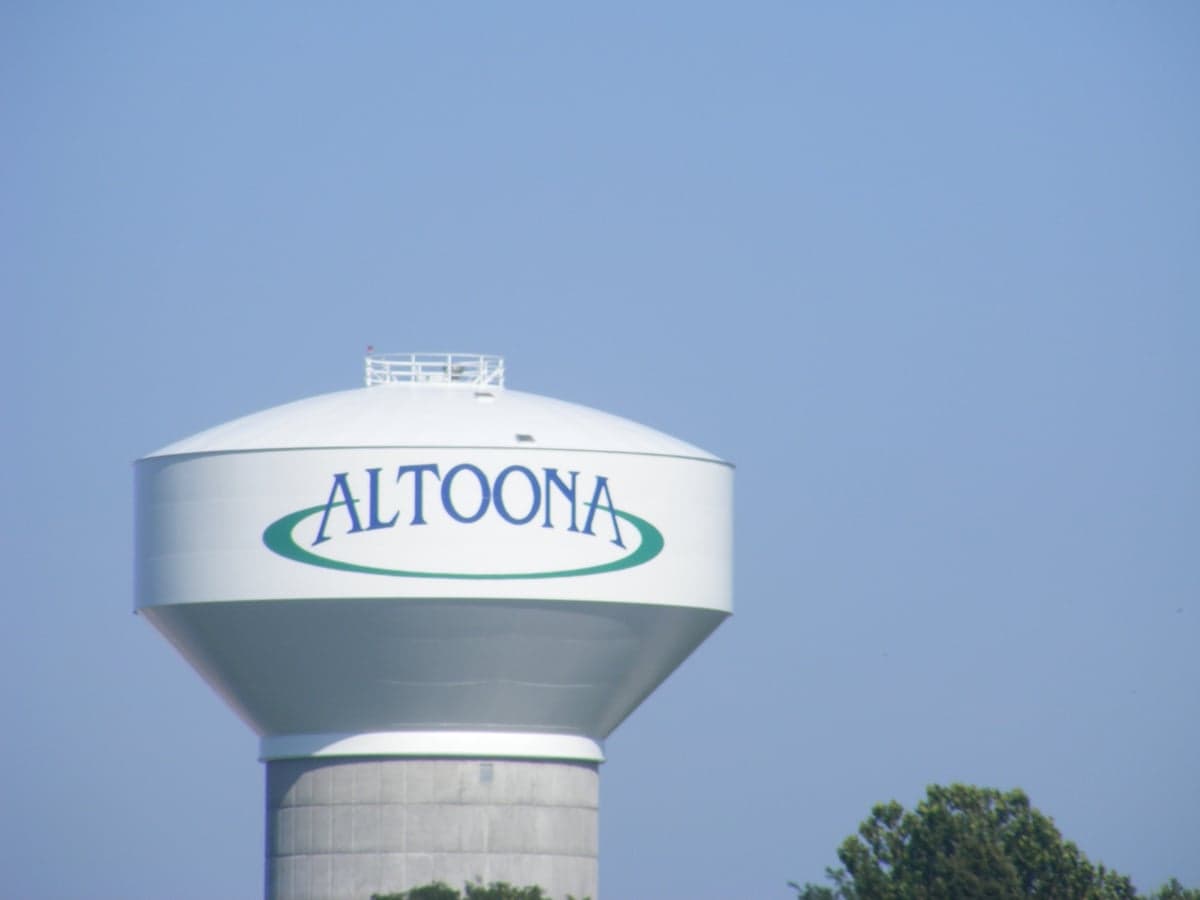
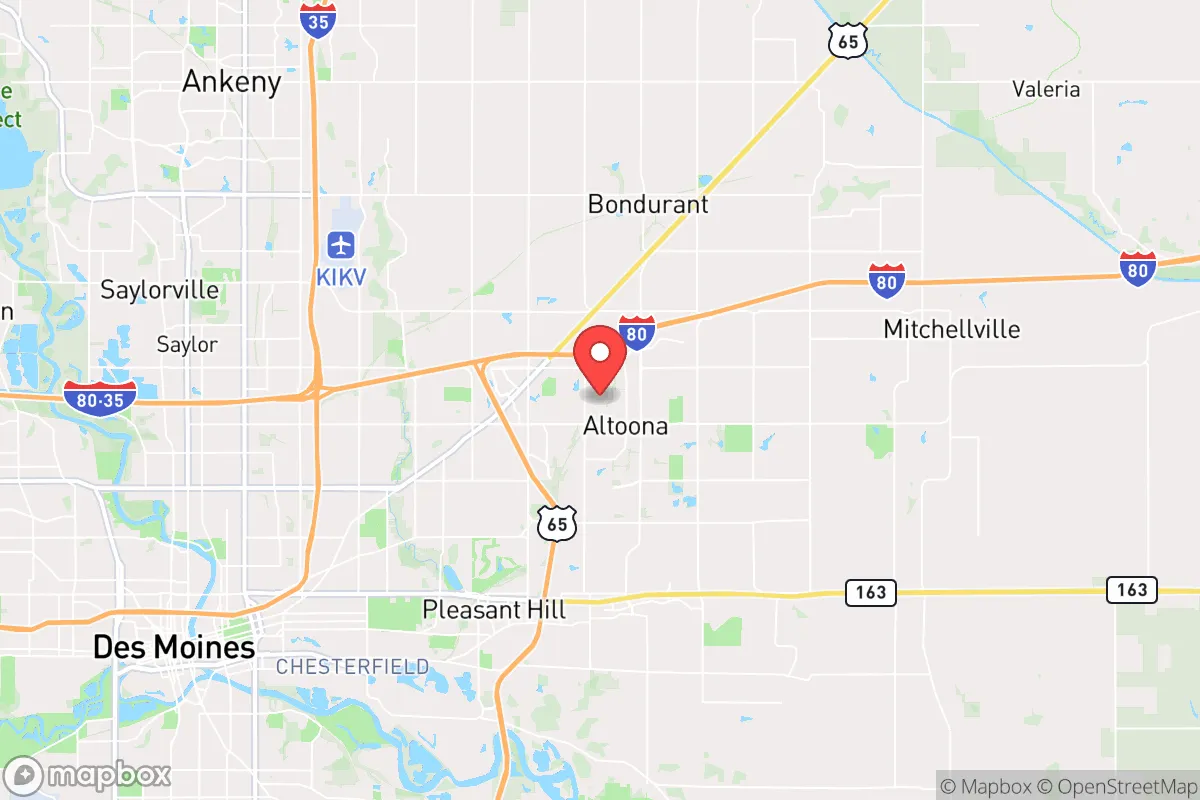
Photo: Wikipedia
Quality of Life in Altoona, IA
A high quality of life with strong walkability, manageable living costs, healthy neighborhood signals, and solid amenity access.
What does Quality of Life tell us?
Quality of Life blends cost of living, nearby amenities, socioeconomic signals, and neighborhood character. City-level scores represent the whole municipality; individual neighborhoods can differ.
What does this tell us?
Quality of Life blends cost of living, nearby amenities, socioeconomic signals, and neighborhood character. City-level scores represent the whole municipality; individual neighborhoods can differ.
Cost of Living
1% below national average
The Real Cost of Living in Altoona, IA for 2026
| Tier | Individual | Family (4) |
|---|---|---|
| Survival | $19k | $36k |
| Comfortable | $50k | $73k |
| Luxury | $131k+ | $204k+ |
| Elite (Top 5%) | $155k+ | $240k+ |
119%
The Area Signal
A metric tracking the socioeconomic signals of the area.
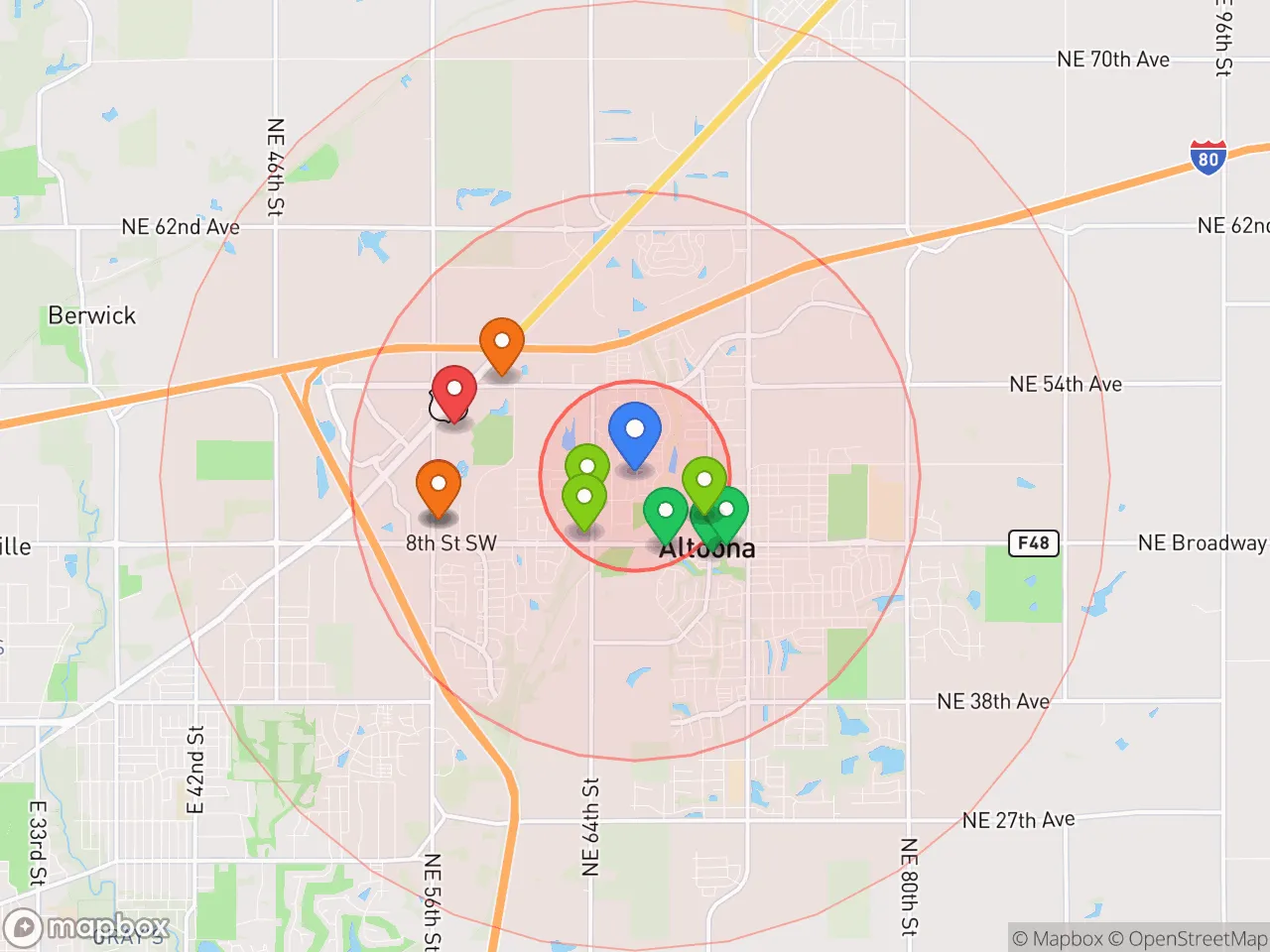
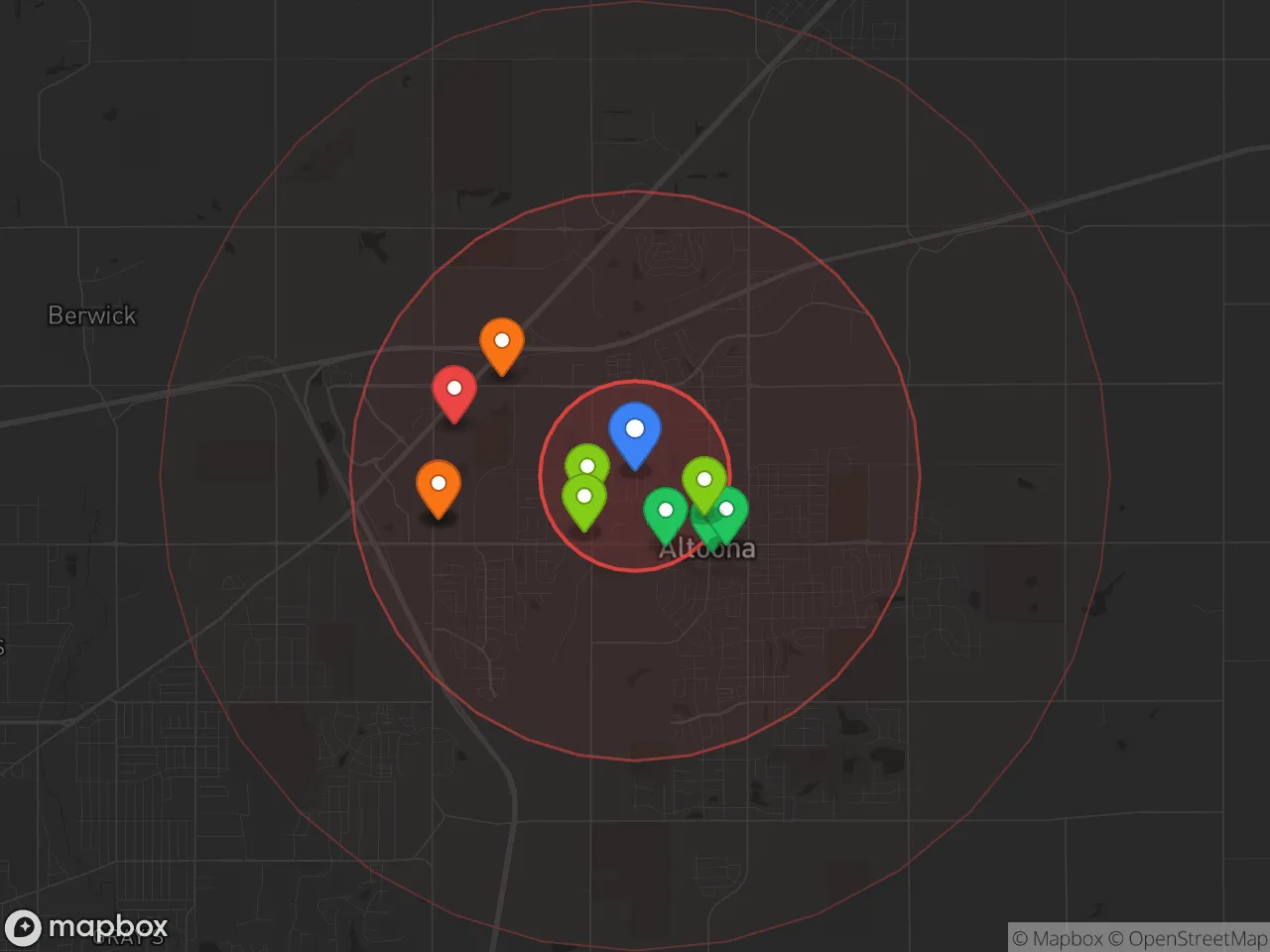
Hobbies
Explore the areaGroceries
5 within 10 miles
Gas
20 within 10 miles
Hospital
9 within 20 miles
Airport
MCI — Kansas City International
Post Office
USPS — Altoona, IA
Critical Amenities
Quality-of-Life Analysis
Altoona, Iowa, presents a quality of life defined by solid middle-class stability, with a cost-of-living index of 99—essentially on par with the national average—and a median home value of $257,300 that undercuts the national median by roughly 15%. The city attracts a mix of families drawn to the Southeast Polk Community School District, commuters who work in Des Moines or Ankeny, and long-term residents who value the town’s balance of suburban convenience and small-town feel. With a median rent of $1,203 and an average commute of just over 23 minutes, Altoona offers an affordable, accessible alternative to pricier metro-area suburbs.
Cost of living, housing affordability, and how Altoona compares to Des Moines and Ankeny
Altoona’s cost-of-living index of 99 means everyday expenses—groceries, utilities, transportation—run slightly below the U.S. average, a notable advantage over nearby Des Moines (index ~102) and Ankeny (index ~105). The median home value of $257,300 is roughly $40,000 less than Ankeny’s median and about $30,000 below Des Moines’ citywide figure, making Altoona one of the more attainable entry points for homebuyers in the Des Moines metropolitan area. Renters also benefit: the median rent of $1,203 is about $150–$200 per month lower than comparable units in Ankeny or West Des Moines. Property taxes in Polk County run around 1.7% of assessed value, slightly above the state average but offset by lower purchase prices. The average commute of 23.5 minutes is realistic for workers heading to downtown Des Moines (via I-80/235) or to major employers like the Prairie Meadows Racetrack & Casino or the Amazon fulfillment center in Bondurant, keeping transportation costs manageable.
Amenities, schools, and what daily life is like for families and commuters
Daily life in Altoona centers on the Southeast Polk Community School District, which serves roughly 7,000 students and consistently earns above-average ratings from the Iowa Department of Education, with Altoona’s elementary schools (e.g., Altoona Elementary, Clay Elementary) posting strong proficiency scores in reading and math. The city’s retail and dining hub is the Adventureland area, anchored by the Adventureland amusement park and the adjacent Prairie Meadows casino and horse track, which together draw regional tourism and provide local jobs. For groceries and errands, residents rely on the Altoona Marketplace shopping center, which includes a Hy-Vee, Target, and several chain restaurants. Parks and recreation are modest but functional: Haines Park offers sports fields and a playground, while the Altoona Aquatic Center provides summer programming. The city lacks a downtown core—most commercial activity is strung along 8th Street SW and Adventureland Drive—so daily errands typically require a short drive. Commuters appreciate the direct access to I-80 and Highway 65, which keeps the trip to Des Moines’ East Village or the Capitol complex under 25 minutes in normal traffic.
Altoona is best suited for families and commuters who want a lower-cost, lower-hassle base within easy reach of Des Moines’ jobs and entertainment, without the premium price tag of Ankeny or Waukee. The city’s housing stock is a mix of 1990s-era subdivisions and newer developments like Prairie Crossing, offering three-bedroom homes in the $250,000–$300,000 range. Retirees on fixed incomes may find the property tax burden slightly high relative to rural Iowa counties, but the proximity to medical services (Broadlawns Medical Center in Des Moines is 15 minutes away) and the low crime rate (violent crime roughly half the national average) make it a practical choice. Those seeking walkable urban amenities or a vibrant nightlife will likely find Altoona too car-dependent and quiet; the city’s strength is its straightforward, affordable suburban rhythm.

Crime in Altoona, IA
Lower crime rates than 78% of comparable U.S. locations.
Violent CrimeViolent Crime Analysis
Property CrimeProperty Crime Analysis
Crime Analysis
Altoona, Iowa, presents a mixed safety profile for prospective residents. The city's violent crime rate of 183.9 per 100,000 residents is notably lower than the national average, but its property crime rate of 1,398.9 per 100,000 is significantly elevated, placing it above both state and national benchmarks. This combination means that while the risk of violent victimization is relatively low, residents face a heightened likelihood of theft, burglary, and other property-related offenses.
Crime in context
To understand Altoona's safety landscape, it is essential to compare its figures to broader averages. The city's violent crime rate of 183.9 per 100,000 is roughly half the U.S. national average of approximately 380 per 100,000, and it also sits below the Iowa state average. However, the property crime rate of 1,398.9 per 100,000 is substantially higher than both the national average (around 1,950 per 100,000) and the Iowa state average (approximately 1,500 per 100,000). This disparity suggests that property crime, not violent crime, is the primary public safety challenge in Altoona. The city's proximity to the Des Moines metro area, a larger urban center, may contribute to this dynamic, as property crime often correlates with population density and regional economic factors.
What residents experience
For those living in Altoona, daily safety concerns are more likely to involve stolen packages, vehicle break-ins, or residential burglaries than physical assaults or robberies. The elevated property crime rate means that basic precautions—such as locking doors and vehicles, using outdoor lighting, and securing valuables—are particularly important. It is also worth noting that the broader political and judicial environment in Iowa, and specifically within Polk County (which includes Altoona), can influence crime trends. Progressive judicial philosophies that prioritize rehabilitation over incarceration can, in practice, lead to shorter sentences and more offenders returning to the community sooner. This approach, while well-intentioned, may contribute to higher recidivism rates and a greater number of active criminals on the streets, directly impacting property crime statistics and the sense of security for law-abiding residents.
Neighborhood-level variation
Safety is not uniform across Altoona. Newer residential developments on the city's western and southern edges, particularly those near the Adventureland amusement park and the Prairie Meadows casino complex, tend to have lower crime rates due to newer housing stock and more active neighborhood watch programs. In contrast, older neighborhoods closer to the city's core and areas with higher rental density may experience more frequent property crimes. Prospective residents should research specific block-level data from the Altoona Police Department or consult local real estate agents familiar with neighborhood trends. Overall, while Altoona is not a high-violence community, its property crime problem—potentially exacerbated by lenient justice policies—demands vigilance from anyone considering a move there.
* Values derived from national, state, county, city and local statistics and may differ in a specific area. Last updated: 2026-04-21T07:16:35.000Z
Narrative content on this page is AI-generated and may contain mistakes. Verify any details that matter before acting on them.
ReloMaps may earn a commission from affiliate links at no extra cost to you.

