
Photo by Evan McNamara on Unsplash
Quality of Life in Amherst Town, MA
Above-average quality of iife. The area offers a reasonable cost of living, decent mobility, and a mix of neighborhood amenities.
What does Quality of Life tell us?
Quality of Life blends cost of living, nearby amenities, socioeconomic signals, and neighborhood character. City-level scores represent the whole municipality; individual neighborhoods can differ.
What does this tell us?
Quality of Life blends cost of living, nearby amenities, socioeconomic signals, and neighborhood character. City-level scores represent the whole municipality; individual neighborhoods can differ.
Cost of Living
45% above national average
The Real Cost of Living in Amherst Town, MA for 2026
| Tier | Individual | Family (4) |
|---|---|---|
| Survival | $25k | $47k |
| Comfortable | $88k | $130k |
| Luxury | $119k+ | $185k+ |
| Elite (Top 5%) | $197k+ | $305k+ |
51%
The Area Signal
A metric tracking the socioeconomic signals of the area.


Hobbies
Explore the areaGroceries
3 within 10 miles
Gas
0 within 10 miles
Hospital
3 within 20 miles
Airport
JFK — John F. Kennedy International
Post Office
USPS — Springfield, MA
Critical Amenities
Quality-of-Life Analysis
Amherst Town, Massachusetts, is a highly educated, affluent college town where the presence of Amherst College, Hampshire College, and the University of Massachusetts Amherst shapes nearly every aspect of daily life. The population skews young and transient due to the student body, but a core of long-term residents, faculty, and professionals creates a stable, progressive community. With a cost of living index of 145 (45% above the U.S. average), Amherst demands a premium for its intellectual atmosphere, walkable village center, and access to the Pioneer Valley’s natural beauty.
Cost of living, housing, and affordability compared to nearby towns
Amherst’s cost of living is significantly higher than the national average, driven primarily by housing. The median home value sits at $454,000, which is steep for Western Massachusetts but notably lower than the Boston metro area (where medians often exceed $700,000). Median rent is $1,570, a figure that strains graduate students and service workers but remains competitive against pricier towns like Northampton (where rents frequently top $1,800). Compared to neighboring Hadley or Sunderland, Amherst is roughly 10–15% more expensive for both rentals and purchases. The average commute is a short 19 minutes, a major advantage for residents who work locally at the colleges or in downtown Northampton. Property taxes in Amherst run about 1.3% of assessed value, slightly above the state average, but the town offers no local sales tax, and income taxes are at the flat Massachusetts rate of 5%.
What daily life is like for families, students, and professionals
Daily life in Amherst revolves around the five-college consortium and the town’s compact, walkable downtown. The Amherst Regional Public Schools are well-regarded, with Amherst Regional High School consistently ranking among the top 10% of Massachusetts high schools for college readiness and AP participation. For families, the town offers extensive public library programming, the Amherst Recreation Department’s youth sports leagues, and easy access to the Norwottuck Rail Trail for biking and walking. Students and faculty dominate the cultural calendar: the Fine Arts Center at UMass hosts concerts and theater, while the Amherst Cinema showcases independent films. The dining scene leans toward farm-to-table and international cuisines, with staples like Antonio’s Pizza and Black Sheep Deli serving as local institutions. The rhythm is academic—quiet summers when enrollment drops, then a vibrant fall and spring semester pulse. Outdoor enthusiasts benefit from the nearby Holyoke Range and Puffer’s Pond for hiking and swimming.
Amherst is best suited for academics, graduate students, and families who prioritize education, progressive values, and a small-town feel with urban cultural amenities. The high cost of living and limited job market outside of education and healthcare make it less ideal for those seeking corporate employment or low housing costs. Retirees and remote workers with flexible incomes often thrive here, drawn by the intellectual community and proximity to the Berkshires. For anyone who values walkability, top-tier public schools, and a politically engaged populace, Amherst offers a quality of life that justifies its premium price tag.

Crime in Amherst Town, MA
Generally safer than 71% of comparable U.S. locations.
Violent CrimeViolent Crime Analysis
Property CrimeProperty Crime Analysis
Crime Analysis
Amherst Town, Massachusetts, presents a mixed safety profile for potential residents. With a violent crime rate of 235.8 incidents per 100,000 people and a property crime rate of 813.5 per 100,000, the town is safer than many national averages but faces specific challenges tied to its status as a college community and its location within a progressive judicial district. These factors create a safety environment that requires careful consideration, particularly regarding property crime and the broader impact of local justice policies.
Crime in context
Amherst’s violent crime rate is notably lower than the national average of roughly 380 per 100,000, but it is elevated compared to the Massachusetts state average of approximately 300 per 100,000. Property crime in Amherst, at 813.5 per 100,000, sits below the national average of about 1,950 per 100,000 but is higher than the Massachusetts average of roughly 1,100 per 100,000. The town’s crime statistics are significantly influenced by its large student population and transient residents. However, a critical factor for readers to weigh is the judicial philosophy prevalent in Hampshire County and the broader Western Massachusetts region. District attorneys and judges in this area are often characterized by progressive, rehabilitative approaches to criminal justice. While intended to reduce incarceration, this ideology can result in shorter sentences, reduced bail requirements, and a higher likelihood of offenders being released back into the community, which directly increases the risk of repeat offenses and undermines public safety for law-abiding residents.
What residents experience
Daily life for Amherst residents is generally peaceful, but property crime—particularly bicycle theft, package theft, and break-ins of parked cars—is a persistent annoyance, especially near the University of Massachusetts Amherst campus and downtown areas. Violent crime is less common but not absent, with incidents often linked to alcohol-fueled altercations or domestic disputes. The progressive justice system’s focus on diversion programs and leniency for non-violent offenders means that many property crimes are treated as low-priority offenses, leading to a sense among long-term residents that the system does not adequately deter or punish criminal behavior. This can foster a feeling of vulnerability, as offenders face few meaningful consequences for repeat property crimes.
Neighborhood-level variation
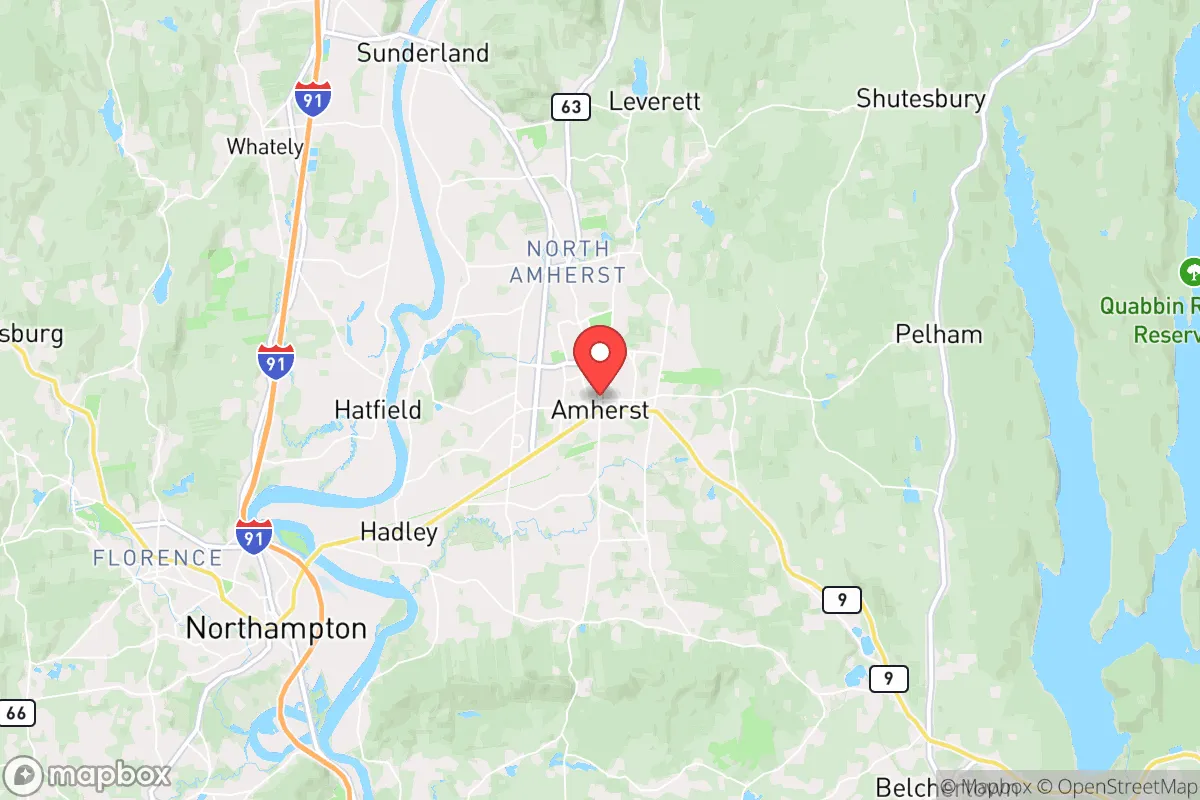
Safety varies noticeably across Amherst. The downtown core and areas immediately surrounding the university see the highest rates of property crime and disorderly conduct. In contrast, quieter residential neighborhoods like Amherst Center, South Amherst, and the rural outskirts near Pelham and Leverett experience significantly fewer incidents. Gated apartment complexes and single-family home districts with active neighborhood watches report lower crime rates. However, the overarching judicial climate means that even in safer neighborhoods, residents cannot fully escape the effects of a system that prioritizes offender rehabilitation over public protection, making Amherst a place where vigilance and property security measures are advisable.
* Values derived from national, state, county, city and local statistics and may differ in a specific area. Last updated: 2026-04-19T07:41:37.000Z
Narrative content on this page is AI-generated and may contain mistakes. Verify any details that matter before acting on them.
ReloMaps may earn a commission from affiliate links at no extra cost to you.

