
Photo by Evan McNamara on Unsplash
Find The Best Places To Live
in Amherst Town
PRO TIP! You can paste a Zillow or Redfin link to get info on that property.
What It's Like Living in Amherst Town, MA
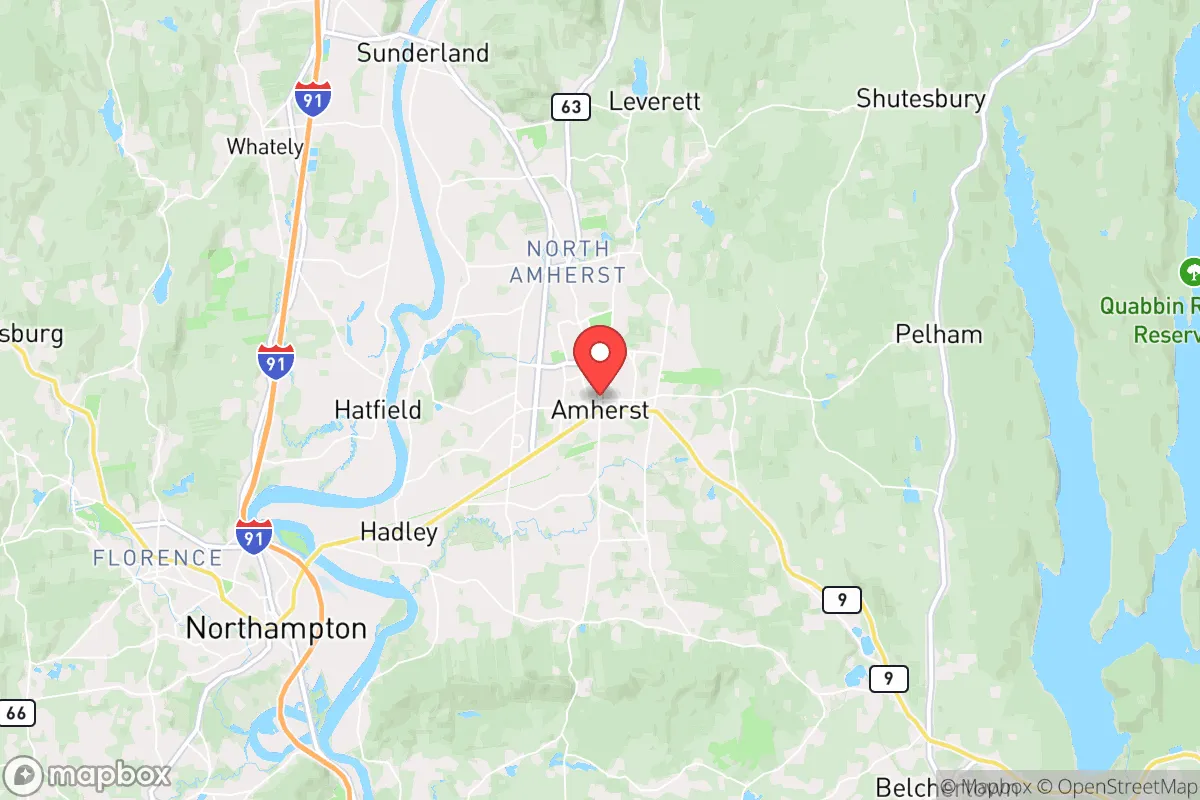
Amherst Town is a place that wears its identity on its sleeve—a small New England college town that’s equal parts intellectual hub, rural escape, and seasonal rollercoaster. With a population hovering around 35,000, it’s dominated by the University of Massachusetts Amherst, Amherst College, and Hampshire College, which together give the town a median age of just 21.3 and a college-educated rate of nearly 74%. That academic pulse shapes everything from the coffee shops on Main Street to the traffic jams on Route 9 when classes let out.
Daily Rhythm: The Academic Tides and Small-Town Pace
Life here moves to the rhythm of the semester calendar. During the school year, the town buzzes with students biking to class, professors grading at Black Sheep Deli, and families grabbing dinner at the Amherst Brewing Company. The summer months, by contrast, feel almost sleepy—parking opens up, the farmers market on the common shrinks, and locals reclaim their favorite hiking trails at the Holyoke Range. The average commute is just 19 minutes, which means most residents can get to work, the grocery store, or a trailhead without much hassle. That short drive is a genuine perk, especially compared to the Boston suburbs where hour-long commutes are the norm.
What people actually do here revolves around the outdoors and the town’s quirky commercial strip. Weekends often start with a walk through the Amherst College wildlife sanctuary or a bike ride on the Norwottuck Rail Trail, which connects to Northampton and beyond. Shopping is mostly local—there’s no sprawling mall, but the downtown has a handful of bookstores, a co-op grocery, and the odd vintage shop. The median household income is $65,938, which is modest for Massachusetts, but that number is pulled down by the student population; many working professionals and faculty earn more, and the cost of living index of 145 means housing eats up a big chunk of that paycheck.
Sports, Festivals, and Where the Town Lets Loose
Sports here are a curious mix. College athletics are the main draw—UMass Amherst’s Minutemen football and basketball games at the Mullins Center draw decent crowds, especially when the team is competitive. But the real energy is around the high school sports scene, where Amherst Regional High School’s soccer and track teams are community events. There’s no pro team within an hour, so locals either adopt the Boston teams or lean into the college rivalries. The biggest annual festival is the Amherst Farmers Market, which runs from spring through fall and feels like a town-wide reunion. The Taste of Amherst in September brings food vendors and live music to the common, and the UMass Fine Arts Center hosts concerts and theater that punch above the town’s weight.
For nightlife, it’s a student-heavy scene. The bars on Main Street—like The Moan and Dove and the Amherst Brewing Company—are packed during the school year but quiet in summer. The town’s cultural quirk is its deep commitment to progressive politics and local food; you’ll find more vegan options than sports bars, and the co-op’s bulk section is a point of pride. That can feel refreshing or exhausting depending on your worldview.
Pros and Cons of Living in Amherst Town
The honest upsides are clear: the natural beauty is stunning, with the Holyoke Range and the Connecticut River Valley providing year-round hiking, kayaking, and leaf-peeping. The schools are excellent—Amherst Regional is consistently ranked among the top in the state, and the town’s investment in education is a major reason families move here. The intellectual energy is real; you can attend a lecture by a Nobel laureate on a Tuesday and a bluegrass concert on Friday. The short commute and walkable downtown are rare luxuries in Massachusetts.
The downsides are equally real. The cost of living is punishing—median home values hit $454,000, and that buys a modest three-bedroom ranch, not a mansion. Rentals are scarce and expensive, especially near campus. The violent crime rate of 235.8 per 100,000 is higher than the national average, though most of that is concentrated in student-heavy areas and involves property crime or alcohol-related incidents rather than random violence. Winters are long and gray, with snow from November through March that can make driving on the hilly roads treacherous. And the town’s political monoculture—overwhelmingly liberal—can feel stifling for conservative-leaning residents who might prefer a more balanced community.
Who Fits In and Who Might Struggle
Amherst works best for people who value education, nature, and a slower pace over career hustle and urban amenities. It’s a natural fit for academics, graduate students, and families who want top-tier schools without the Boston price tag (though it’s still expensive). Single professionals might find the dating pool shallow outside the student population, and the lack of major employers beyond the colleges means career options are limited unless you work in education, healthcare, or remote tech. The town’s identity is proudly quirky—expect bumper stickers for local farms and yard signs for progressive causes—so if that’s not your vibe, you might feel like an outsider. But for those who embrace it, Amherst offers a quality of life that’s hard to replicate: a genuine sense of place, four distinct seasons, and a community that actually knows its neighbors.

Similar towns to Amherst Town
* Values derived from national, state, county, city and local statistics and may differ in a specific area. Last updated: 2026-04-19T07:41:37.000Z
Narrative content on this page is AI-generated and may contain mistakes. Verify any details that matter before acting on them.
ReloMaps may earn a commission from affiliate links at no extra cost to you.

