
Photo by Evan McNamara on Unsplash
Political ClimatePolitical Climate in Amherst Town, MA
District shown is the primary district for this city’s centroid. Cities may span multiple districts.
Local Political AnalysisPolitical Analysis of Amherst Town, MA
Look, I’ve lived in Amherst Town long enough to remember when this place was more of a live-and-let-live college town, not the progressive machine it’s become. Today, Amherst leans hard left, with a Cook PVI of D+13—meaning it votes about 13 points more Democratic than the national average. That’s not just a lean; it’s a lurch. The town has shifted noticeably since the 2010s, and if you value personal freedoms—especially around property rights, school choice, or even how you heat your home—you’ll want to keep your eyes open.
How it compares
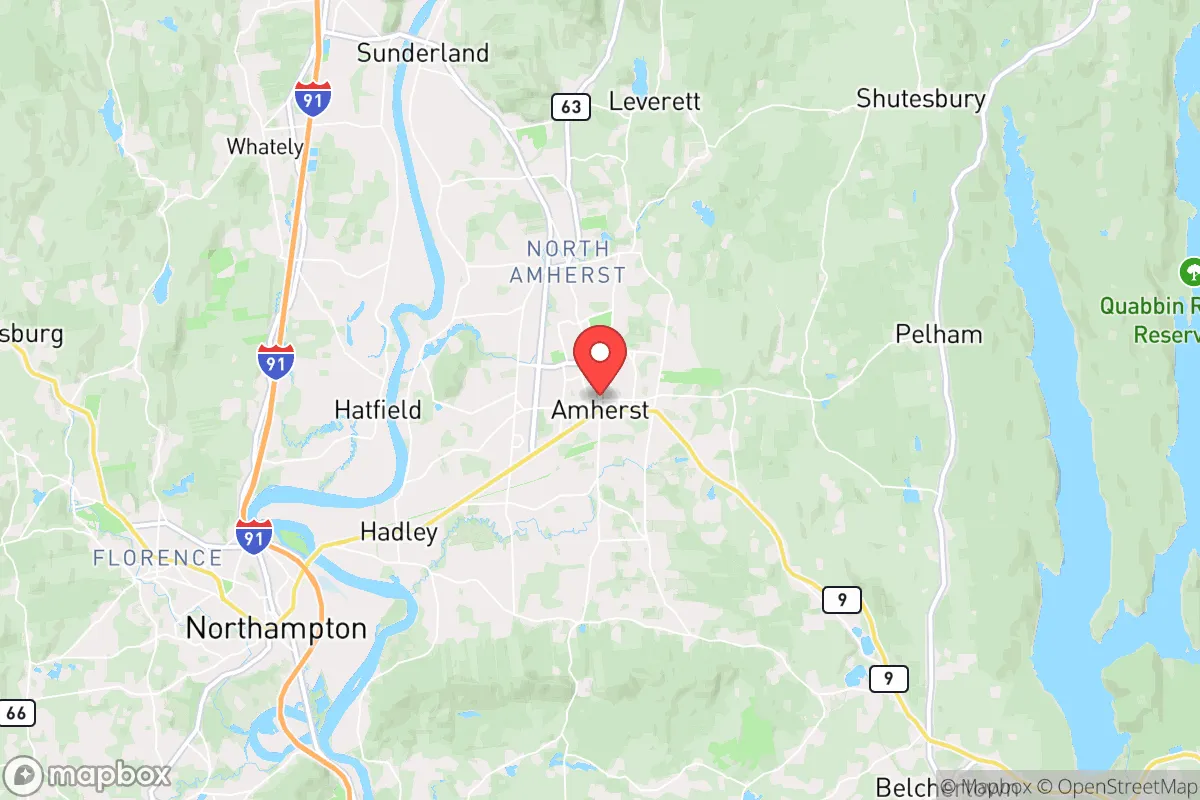
Drive 15 minutes east to Belchertown or 20 minutes north to Sunderland, and you’ll find towns that still vote more purple, with a mix of fiscal conservatives and independents who keep the local government in check. Amherst, by contrast, is surrounded by a bubble of activist energy, largely driven by the University of Massachusetts and Amherst College. The town council has passed ordinances—like the plastic bag ban and the fossil fuel-free building code—that feel less like community consensus and more like top-down social engineering. Compared to neighboring Hadley, which is more business-friendly and tax-pragmatic, Amherst’s policies often prioritize ideology over practicality. It’s a stark contrast: Hadley lets you run a small engine repair shop without a dozen permits; Amherst makes you jump through hoops for a backyard shed.
What this means for residents
For the average homeowner or small business owner, the political climate here means higher taxes and more regulations. The town’s progressive majority has pushed through a 3% local meals tax and a 0.75% room occupancy tax, and there’s constant chatter about a real estate transfer fee to fund affordable housing—which sounds noble until you realize it eats into your property’s resale value. If you’re a parent, you’ll notice the school board has focused heavily on equity initiatives and DEI training, sometimes at the expense of core academics or vocational programs. And if you’re a gun owner or a hunter, well, Amherst passed a safe storage ordinance that goes beyond state law, and the town council has discussed “sensitive places” restrictions that could limit where you can carry. It’s not a place where the town trusts you to make your own choices.
What daily life is like for families
On the ground, this means your neighbor might report you for burning leaves (it’s banned), and your kid’s school might host a climate strike during class time. The town’s zoning board has made it nearly impossible to build a single-family home without a special permit in certain districts, pushing development toward dense, rental-heavy projects that change the character of quiet streets. If you’re a contractor or landscaper, you’ve probably dealt with the town’s strict noise ordinances and composting requirements. It’s a place where the government feels present in your daily life—sometimes helpful, often intrusive. Long-term, I see Amherst doubling down on these policies, especially as younger, more activist residents move in and older, more moderate families move out to places like Whately or Leverett, where the town still respects your right to do what you want on your own land.
Culturally, Amherst is proud of its progressive identity—you’ll see “In This House We Believe” signs on every other lawn, and the town’s annual Pride parade is a big deal. But that pride comes with a price: a loss of political diversity. If you’re a conservative or even a moderate, you’ll find yourself keeping your opinions quiet at the farmers’ market or the town meeting. The town’s policy on short-term rentals, for example, was written to favor long-term tenants over property owners, and the local energy committee has pushed for a municipal aggregation plan that locks you into green energy, whether you want it or not. It’s a friendly place if you fit the mold, but if you value personal freedom and limited government, you’ll feel the squeeze. My advice? Visit for a weekend, talk to a few small business owners, and decide if the trade-offs are worth it for you.

State Political ClimatePolitical Climate in Massachusetts
State Political AnalysisPolitical Environment in the State
Massachusetts has long been one of the most reliably Democratic states in the union, with a partisan lean that has only deepened over the past two decades. In 2024, Kamala Harris carried the state by roughly 25 points, a margin that has held steady since 2016, when Hillary Clinton won by 27 points. The state’s dominant coalition is a blend of urban progressives, suburban moderates, and a shrinking but vocal Republican base concentrated in the central and southeastern regions. Over the last 10-20 years, the GOP has lost nearly all statewide offices, and the state legislature remains a Democratic supermajority, making Massachusetts a one-party state in practice. For a conservative considering relocation, the political climate here is not just blue—it’s a deep, institutionalized blue that shapes nearly every aspect of daily life.
Urban vs. rural divide
The political map of Massachusetts is a classic story of urban dominance versus rural resistance. The Boston metro area—including Cambridge, Somerville, and Brookline—is the engine of the state’s progressive tilt, with precincts routinely voting 80-90% Democratic. These cities drive policy through sheer population density and outsized media influence. In contrast, the western part of the state, particularly Berkshire County, leans left but with a more libertarian, land-use flavor. The real conservative strongholds are in the central and southeastern regions: Worcester County (outside the city itself), Plymouth County, and Bristol County have pockets where Republicans can win local races. For example, Fall River and New Bedford have elected GOP mayors in recent cycles, and Shrewsbury and Holden in central Mass often vote red in state legislative races. But these are islands in a blue sea—rural towns like Charlemont or Sandisfield may vote Republican, but their populations are too small to shift statewide outcomes. The divide is stark: drive 30 minutes west of Boston and you’re in Trump country; drive 30 minutes east and you’re in the People’s Republic of Cambridge.
Policy environment
Massachusetts’ policy environment is a textbook example of progressive governance with a heavy hand. The state has a flat income tax rate of 5% (after a 2022 ballot question raised it from 5% to 9% for income over $1 million, a so-called “millionaire’s tax”), and property taxes are high, averaging 1.2% of home value. Sales tax is 6.25%, but the real cost is in regulatory compliance: the state’s Chapter 40B affordable housing law forces towns to accept dense development, overriding local zoning. Education policy is dominated by the teachers’ union, with Massachusetts Comprehensive Assessment System (MCAS) testing still in place but under constant attack from the left. Healthcare is heavily regulated, with the state’s own MassHealth system covering over 2 million residents, and a 2006 law that served as the model for Obamacare. Election laws are among the most liberal in the nation: no-excuse mail-in voting, same-day registration, and early voting are permanent. For a conservative, the policy environment feels like a slow-motion takeover of local control by state mandates—especially on housing, education, and energy (the state has a net-zero emissions target by 2050).
Trajectory & freedom
On the freedom index, Massachusetts is trending downward, and the trend has accelerated since 2020. The most concerning area for conservatives is Second Amendment rights: in 2024, the legislature passed H.4885, a sweeping gun control bill that bans “ghost guns,” expands the “red flag” law, and requires licensing for ammunition purchases. This came after the Supreme Court’s Bruen decision, which Massachusetts has largely ignored. On parental rights, the state has moved aggressively to protect gender-affirming care for minors, overriding parental notification in some cases. The 2022 Parental Rights in Education bill was defeated, and schools in Lexington and Newton now have policies that allow students to change names and pronouns without parental consent. On medical autonomy, the state expanded abortion access in 2020 with the ROE Act, allowing late-term abortions and removing parental consent for minors. Property rights are under pressure from the MBTA Communities Law, which forces towns near transit to rezone for multi-family housing, overriding local zoning boards. The trajectory is clear: more state control, less local and individual freedom.
Civil unrest & political movements
Massachusetts has a long history of organized activism, but the post-2020 period has seen a sharp uptick in visible political conflict. The Black Lives Matter protests in Boston in 2020 were large and sustained, with some turning violent, leading to property damage in the Downtown Crossing area. On the right, the Massachusetts Fiscal Alliance and Massachusetts Gun Owners Action League are active but outgunned. The state’s sanctuary policy is codified in a 2017 executive order by then-Governor Charlie Baker, limiting cooperation with ICE—a policy that remains in place under Governor Maura Healey. Immigration politics are a flashpoint in cities like Lawrence and Lowell, where the state has placed migrants in hotels and shelters, straining local resources. Election integrity controversies are muted here—the state has universal mail-in voting and no voter ID law, which conservatives view as a vulnerability, but there have been no major fraud scandals. The most visible flashpoint for a new resident would be the constant presence of political signage and activism in liberal towns, and the near-total absence of conservative voices in public discourse.
Projection
Looking ahead 5-10 years, Massachusetts is likely to become even more progressive, driven by demographic trends. The state is losing native-born residents to lower-tax states like Florida and Texas, while gaining international immigrants and domestic migrants from other blue states. The Boston metro area is growing faster than the rest of the state, concentrating progressive power. The Republican Party is in a death spiral—no statewide office, no legislative power, and a base that is aging and shrinking. The next decade will likely see a push for a single-payer healthcare system (already proposed as “Medicare for All Massachusetts”), further gun restrictions (including a potential “assault weapons” ban expansion), and a state-level wealth tax (following the 2022 millionaire’s tax). For a conservative moving in now, expect to live in a state where your vote for governor or senator is essentially symbolic, and where local town meetings are your only real lever of influence—and even that is being eroded by state preemption.
Bottom line for a new resident: If you’re a conservative considering Massachusetts, understand that you are moving into a one-party state with a government that actively works against many of your core values—on guns, taxes, parental rights, and local control. Your best bet is to find a town in Worcester County or Bristol County where local elections still matter, and to join a local Republican town committee if you want any voice. But don’t expect to change the state’s direction—your vote will be a protest vote, and your tax dollars will fund policies you oppose. If you value personal freedom and limited government, Massachusetts is a tough place to call home.
* Values derived from national, state, county, city and local statistics and may differ in a specific area. Last updated: 2026-04-19T07:41:37.000Z
Narrative content on this page is AI-generated and may contain mistakes. Verify any details that matter before acting on them.
ReloMaps may earn a commission from affiliate links at no extra cost to you.

