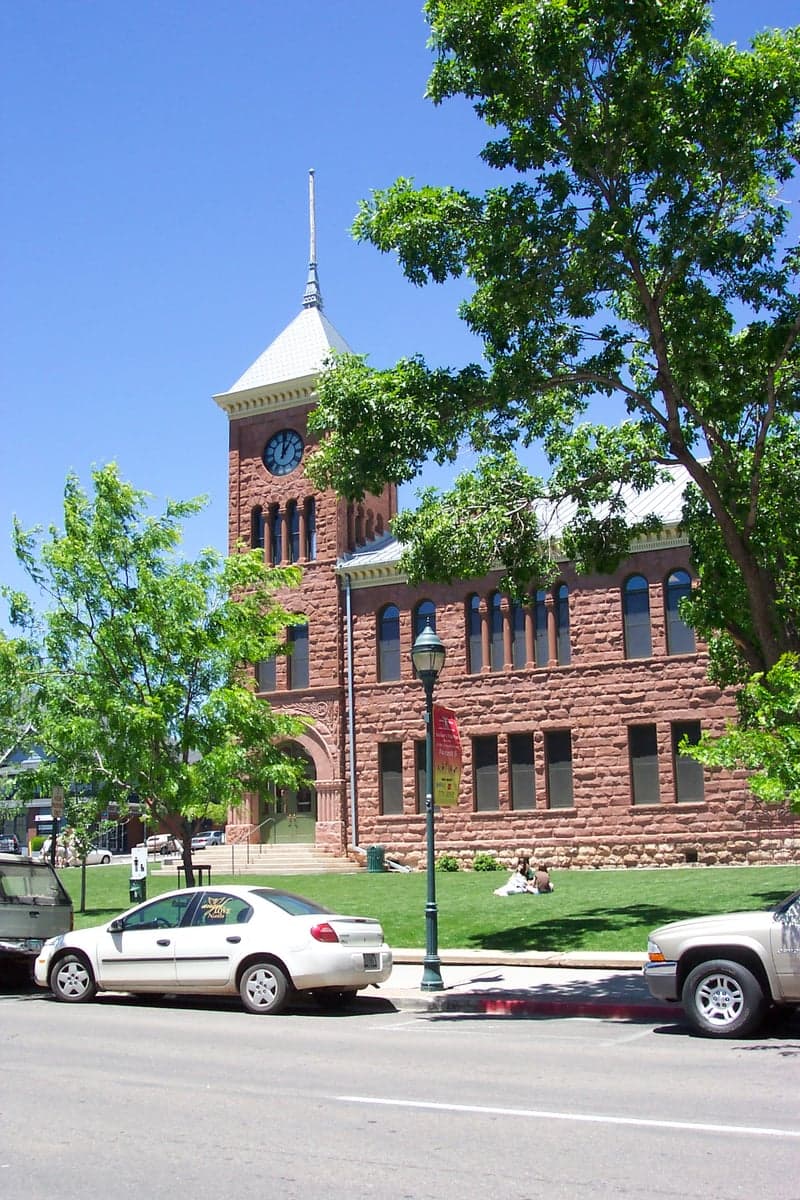
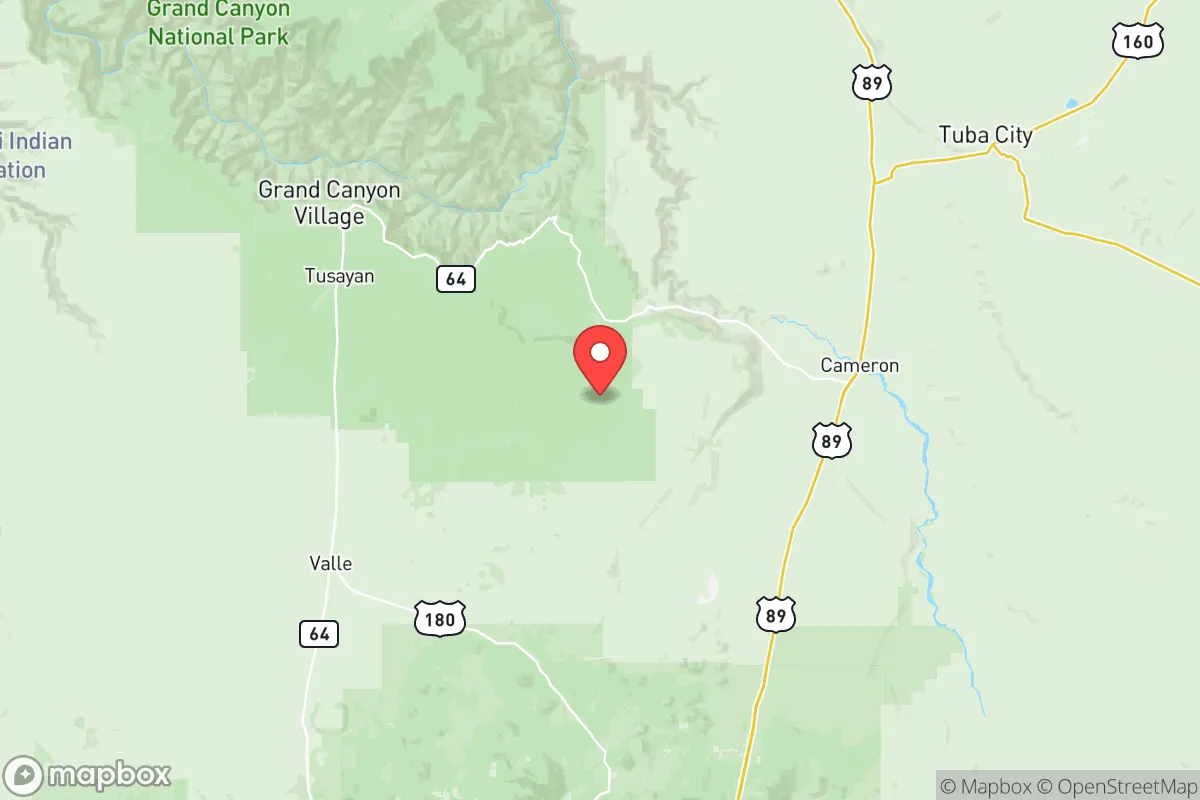
Photo: Wikipedia
Demographics of Coconino County
Affluence Level in Coconino County
A middle-class area roughly in line with national averages across income, home values, education, and employment.
People of Coconino County
Coconino County’s 144,643 residents today form one of the most demographically distinctive populations in Arizona: a majority-white county (52.5%) with a substantial Hispanic minority (15.2%), a significant Native American presence concentrated around the Navajo Nation and Hopi tribal lands, and an unusually low foreign-born share of just 2.5%. The county is vast—spanning the Grand Canyon, the San Francisco Peaks, and the Colorado Plateau—yet its population is heavily clustered in the city of Flagstaff (roughly 77,000), with smaller nodes in Page, Williams, and Fredonia. What defines Coconino’s people is not density but geography: a high-elevation, forested, college-town core surrounded by reservation communities and scattered ranching settlements, creating a cultural mix of university professionals, tribal members, and outdoor-recreation migrants that is unlike the rest of Arizona.
Settlement & growth (pre-1960)
Long before any European or American settlement, Coconino County was the homeland of several Native nations. The Ancestral Puebloans (Anasazi) inhabited the region from roughly 500 to 1300 AD, leaving behind cliff dwellings at what is now Wupatki National Monument near Flagstaff. By the time of European contact, the area was occupied by the Havasupai (in and around the Grand Canyon’s Havasu Canyon), the Hualapai (to the west), the Navajo (Diné), and the Hopi (whose villages on three mesas date back over a millennium). The Spanish never established permanent settlements this far north; the first non-Native presence came with fur trappers and Mormon explorers in the 1820s–1840s.
American settlement began in earnest after the 1863 establishment of the Arizona Territory and the 1868 Navajo Treaty, which created the Navajo Reservation. The first permanent Anglo settlement was Flagstaff, founded in 1876 as a sheep-ranching and lumber-milling outpost along the Atlantic and Pacific Railroad. The railroad’s arrival in 1882 turned Flagstaff into a regional supply hub, drawing Anglo ranchers, Mormon colonists from Utah, and a small number of Mexican laborers who worked on the railroad and in the sawmills. The town of Williams, founded in 1881, grew as a railroad and logging center, while Page did not exist until the 1950s, created as a construction camp for the Glen Canyon Dam. Fredonia, on the Utah border, was settled by Mormon families in the 1880s as part of the Church’s northern Arizona colonization effort.
Through the early 20th century, Coconino’s population remained small and overwhelmingly Anglo and Native. The 1910 census counted just 8,128 people. Lumber, ranching, and the Santa Fe Railroad dominated the economy. The 1930s brought a modest influx of Dust Bowl migrants from Oklahoma and Texas, but nothing like the waves that hit central California. Flagstaff’s 1899 founding of Northern Arizona Normal School (now Northern Arizona University) began a slow shift toward a college-town identity. By 1950, the county’s population had reached 23,910, still heavily Anglo and Native, with a tiny Hispanic minority and virtually no Asian or Black population.
Modern era (post-1965)
The 1965 Hart-Cellar Act had a muted effect on Coconino County compared to Phoenix or Tucson. The foreign-born share today is just 2.5%, far below the national average of 13.7%. The county did not attract the large-scale immigrant flows that reshaped urban Arizona. Instead, the post-1965 demographic story is one of domestic migration and Native American population growth. The Navajo and Hopi populations, concentrated in the eastern half of the county around Kaibeto, Tonalea, and Tuba City, grew through natural increase and improved healthcare access. Flagstaff’s expansion as a university and tourism hub drew educated migrants from across the United States, particularly from California and the Rocky Mountain states, seeking a mountain lifestyle and outdoor recreation.
The Hispanic population grew from a small base—from roughly 5% in 1970 to 15.2% today—driven by both natural increase and migration from Mexico and Central America, primarily for construction, hospitality, and service jobs in Flagstaff and Page. The Asian population (East/Southeast Asian) remains very small at 1.5%, concentrated in Flagstaff’s NAU faculty and medical sectors. The Indian-subcontinent population is negligible at 0.2%. The Black population, at 1.5%, is also tiny and centered in Flagstaff, largely tied to NAU and the military (though there is no major base in the county).
Suburbanization in Coconino is limited by geography and federal land ownership—nearly 70% of the county is federal land (national forest, national park, tribal reservations). The only real suburban-style growth has occurred in Flagstaff’s outlying areas: Kachina Village, Mountainaire, and Doney Park, which are unincorporated bedroom communities for Flagstaff commuters. Page, a company town turned tourism hub for Lake Powell, has seen its population plateau since the 1980s. Williams and Fredonia have remained small, stable communities serving tourism and ranching.
The future
Coconino County’s population is projected to grow slowly, reaching roughly 160,000 by 2040, driven almost entirely by Flagstaff’s expansion. The county is not homogenizing into a single cultural bloc; rather, it is tribalizing into distinct enclaves. Flagstaff is becoming more educated, more liberal, and more white-collar, with a growing Hispanic service class. The Navajo and Hopi reservations remain culturally distinct, with high poverty rates and limited economic integration with the rest of the county. The foreign-born share is likely to remain low, as the county lacks the agricultural and manufacturing jobs that attract immigrants elsewhere. The Hispanic share will continue to rise through natural increase, but assimilation into Flagstaff’s Anglo-dominant culture is already well underway—most Hispanic residents are U.S.-born and English-dominant.
In-migration from California and other high-cost states will continue, but at a slower pace than in the 2010s, as Flagstaff’s housing costs have risen sharply (median home price above $600,000). This will increasingly filter migrants by income, favoring professionals and retirees while pricing out lower-income families. The Native American population is expected to remain stable or grow slightly, but out-migration to Phoenix and Albuquerque for jobs will continue.
What this means for someone moving in now: Coconino County is becoming a two-speed region—a growing, liberal-leaning, college-town core in Flagstaff surrounded by conservative, rural, and tribal communities that are not converging culturally. A new resident will find a place where political and cultural identity is strongly tied to which part of the county you live in, not a single regional character. The low foreign-born share means less ethnic diversity than most of the West, but the Native American presence gives the county a unique cultural texture absent from most of Arizona. For those seeking a high-elevation, outdoor-oriented lifestyle with a stable, educated population, Flagstaff offers that—but at a high cost of living and with limited economic diversity outside of education, tourism, and healthcare.

* Values derived from national, state, county, city and local statistics and may differ in a specific area. Last updated: 2026-05-27T17:34:20.000Z
Narrative content on this page is AI-generated and may contain mistakes. Verify any details that matter before acting on them.
ReloMaps may earn a commission from affiliate links at no extra cost to you.

