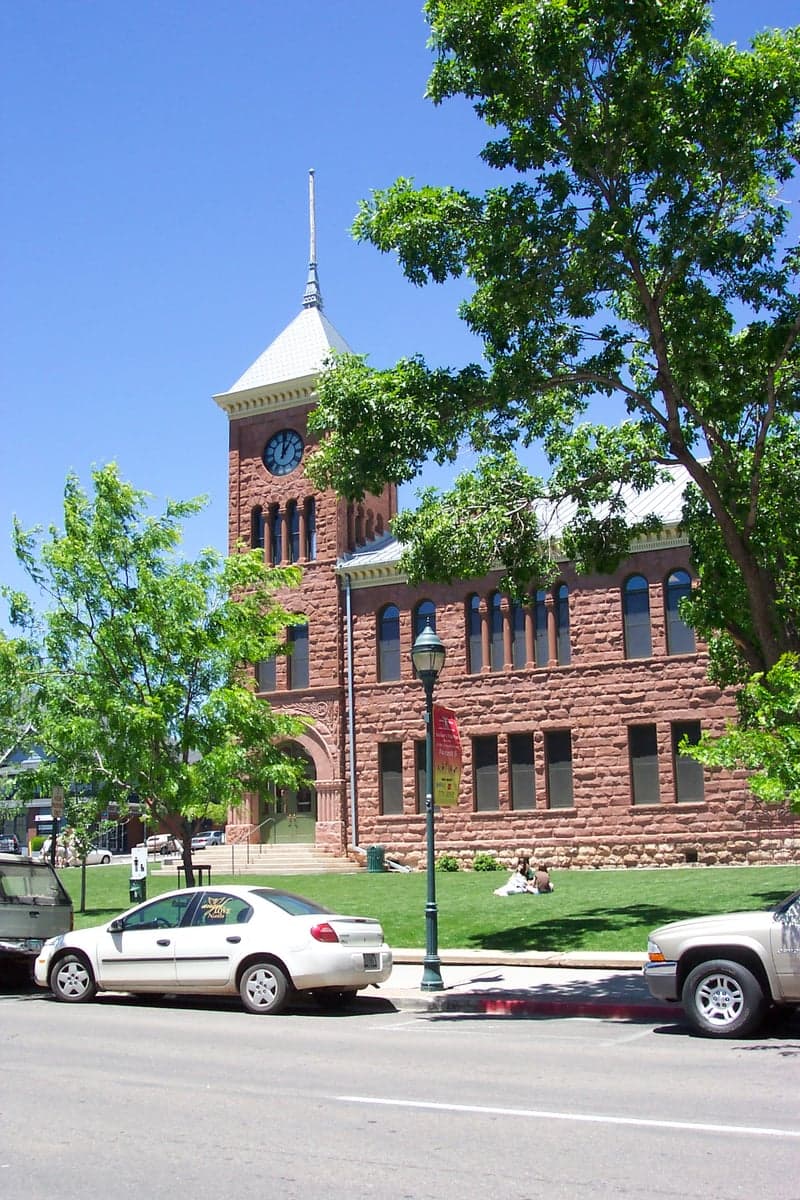
Photo: Wikipedia
Political ClimatePolitical Climate in Coconino County
Showing district-level results — no local-only data available.
Local Political AnalysisPolitical Analysis of Coconino County
Coconino County has a Cook PVI of R+7, meaning it leans 7 points more Republican than the national average, but that number hides a deeply divided county that's been shifting in concerning ways. The state of Arizona as a whole is rated EVEN, making it a true battleground, but Coconino's Republican edge is being eroded by rapid growth in Flagstaff and the surrounding areas. If you've lived here as long as I have, you've watched the political ground shift under your feet, and not always for the better.
How it compares
The R+7 rating puts Coconino County to the right of Arizona's EVEN rating, but that's mostly because of the vast, rural stretches outside Flagstaff. Towns like Page and Fredonia in the northern part of the county are solidly red, with Page voting heavily Republican in recent elections. Williams and Tusayan near the Grand Canyon also lean conservative, driven by tourism and ranching economies. But Flagstaff itself is the real story—it's a blue island in a red county, with its precincts consistently voting Democratic by wide margins. The swing precincts are in places like Munds Park and Kachina Village, where you'll find a mix of retirees, second-home owners, and younger families who can tip an election. The gap between the county's PVI and the state's EVEN rating reflects how Flagstaff's growth is pulling the county leftward, even as the rest of Arizona stays competitive.
What this means for residents
For those of us who value personal freedoms and limited government, the trend is worrying. Flagstaff's city council has pushed progressive policies like strict short-term rental regulations and a plastic bag ban, which feel like government overreach into everyday life. The county's Democratic-leaning board of supervisors has also flirted with land-use restrictions that threaten property rights, especially for ranchers and small landowners outside the city. Meanwhile, the rural towns fight to keep their independence, but they're outnumbered by Flagstaff's growing population. If you're a conservative, you'll find your voice strongest in Page or Williams, but you'll need to stay engaged in county-wide elections to prevent the blue tide from washing over everything.
Cultural and policy distinctions
The cultural divide here is stark. In Flagstaff, you'll see "In This House We Believe" signs and bike lanes funded by tax hikes, while in Fredonia or Valle, it's more about Second Amendment rights and keeping the government out of your business. The county's approach to public health during recent crises was a red flag—mask mandates and business closures hit harder in Flagstaff than in the rural areas, where folks just wanted to get back to work. Property taxes have crept up, and there's talk of a county-wide sales tax increase for transit projects that mostly benefit Flagstaff. If you're moving here, know that your experience will depend heavily on which town you choose. The rural areas still feel like the Arizona I grew up in, but Flagstaff is becoming a different place entirely.

State Political ClimatePolitical Climate in Arizona
State Political AnalysisPolitical Environment in the State
Arizona has transformed from a reliably Republican stronghold into the nation’s premier political battleground, currently rated as a Cook Partisan Voting Index of EVEN. Over the past 20 years, the state has shifted from a solid +7 R lean in 2004 to a dead-even toss-up, driven by explosive growth in Maricopa County’s suburbs and a surge of left-leaning transplants from California and the Midwest. The dominant coalitions are now a razor-thin split between a traditional conservative base rooted in the rural counties and exurbs, and a rapidly growing progressive coalition concentrated in Phoenix, Tucson, and the college towns.
Urban vs. rural divide
The political map of Arizona is a tale of two worlds. Maricopa County, home to Phoenix, Mesa, and Chandler, contains over 60% of the state’s population and has flipped from a reliable red anchor to a purple swing county—Biden won it by 2 points in 2020 after Trump carried it by 3 in 2016. The urban core of Phoenix and Tempe is solidly Democratic, driven by young professionals, university students at Arizona State, and a growing Hispanic electorate. Meanwhile, the rural counties—Yavapai (Prescott), Mohave (Lake Havasu City), and Cochise (Sierra Vista)—vote Republican by 30-40 point margins. The real battleground is the suburban ring: Gilbert, Queen Creek, and Scottsdale are still right-leaning but have seen their margins shrink as new residents bring more moderate or left-leaning views. Pima County, anchored by Tucson, is reliably blue, while the fast-growing exurbs like Marana and Oro Valley are trending redder as conservative families flee the city.
Policy environment
Arizona’s policy landscape is a mixed bag for conservatives. The state has a flat income tax rate of 2.5% (down from 4.5% in 2021 thanks to Republican-led tax cuts), and no estate tax. Property taxes are relatively low, averaging 0.62% of home value. However, the regulatory posture is uneven: the state preempts local gun laws (good), but Phoenix and Tucson have imposed their own minimum wage hikes above the state’s $14.35 floor. Education policy is a flashpoint—the state expanded school choice dramatically in 2022 with universal Empowerment Scholarship Accounts (ESAs), allowing any family to use public funds for private or homeschool expenses. But the teacher unions have fought back, and a 2024 ballot measure to repeal ESAs was narrowly defeated. Healthcare is dominated by a large Medicaid expansion (Arizona Health Care Cost Containment System) under the Affordable Care Act, which conservatives view as a costly entitlement. Election laws have been a rollercoaster: the 2021 audit of Maricopa County ballots fueled national controversy, and the legislature passed stricter voter ID laws in 2022, but mail-in voting remains widespread and popular. Overall, the policy environment is moderately conservative on fiscal and education issues, but increasingly contested on social and election integrity fronts.
Trajectory & freedom
The trajectory of personal freedom in Arizona is a tug-of-war. On the positive side for conservatives, the state has expanded gun rights: in 2021, the legislature passed permitless carry (HB 2578), allowing any law-abiding adult to carry a concealed firearm without a permit. Parental rights were strengthened in 2023 with a law requiring schools to notify parents of any curriculum involving sexual orientation or gender identity (SB 1040). Property rights remain strong, with no statewide rent control and limited zoning restrictions in most counties. However, the picture darkens on medical freedom: in 2020, Arizona voters approved Proposition 207, legalizing recreational marijuana, and the state has a robust medical cannabis program. More concerning for conservatives, the state imposed strict COVID-19 mandates in 2020-2021, including business closures and mask orders in Phoenix and Tucson, though the legislature later banned vaccine mandates for state employees and contractors (SB 1824, 2022). The biggest threat to freedom is the influx of voters from blue states—Maricopa County has added over 400,000 new residents since 2020, many from California and Illinois, who are shifting the electorate leftward. The 2024 election saw Trump lose the state by a narrow margin, and the trend lines suggest Arizona is becoming less conservative with each cycle.
Civil unrest & political movements
Arizona has been a flashpoint for political activism on both sides. The 2020 election aftermath saw massive protests in Phoenix, with Trump supporters rallying at the state capitol and left-wing counter-protests in downtown. The Maricopa County ballot audit in 2021, led by the state Senate, became a national spectacle, drawing both praise from election integrity advocates and condemnation from Democrats. Immigration politics are visceral here: Cochise County and Yuma County are ground zero for border crossings, with the state sending National Guard troops to the border and passing the controversial SB 1070 (2010) that required police to check immigration status. The "sanctuary city" debate is active in Tucson and Phoenix, where city councils have passed resolutions limiting cooperation with ICE. Organized movements include the conservative "Arizona Freedom Caucus" in the legislature, which has pushed for election reform and school choice, and the progressive "Arizona for Abortion Access" coalition, which successfully placed a constitutional amendment on the 2024 ballot to enshrine abortion rights. Election integrity remains the most volatile issue, with ongoing lawsuits over voting machines and signature verification. A new resident will notice the constant political tension—yard signs, bumper stickers, and heated local news coverage are the norm.
Projection
Looking 5-10 years out, Arizona is likely to continue its leftward drift, but not without a fight. Demographic trends are clear: the fastest-growing segments are Hispanic voters (leaning Democratic) and out-of-state transplants from blue states. Maricopa County will remain the decisive battleground, with suburbs like Gilbert and Chandler becoming more competitive as younger families move in. The rural counties will stay deeply red, but they are losing population share. The state legislature is currently Republican-controlled, but the margins are shrinking—the 2024 election saw Democrats flip two state House seats. The 2026 and 2028 cycles could see the legislature turn blue for the first time in decades, which would likely bring progressive policies on taxes, education, and healthcare. However, the conservative base is not retreating: the school choice movement is entrenched, gun rights are popular across party lines, and the border crisis keeps immigration at the top of the agenda. If you move to Arizona now, expect to live in a purple state for the next decade, with the political pendulum swinging election to election. The safest bet for conservatives is to settle in the exurbs—Queen Creek, Marana, or Prescott Valley—where local governance remains red and the culture is more traditional.
For a conservative relocating to Arizona, the bottom line is this: you get low taxes, strong school choice, and solid gun rights, but you must accept that the state is politically contested and becoming more left-leaning with each election cycle. The urban centers of Phoenix and Tucson are increasingly progressive, while the rural areas and exurbs offer a more conservative haven. If you value personal freedom and want to live in a state where your vote still matters, Arizona is a great choice—but be prepared for the fight. The best strategy is to buy in a red-leaning suburb, get involved in local politics, and vote in every election to hold the line.
* Values derived from national, state, county, city and local statistics and may differ in a specific area. Last updated: 2026-05-27T17:34:20.000Z
Narrative content on this page is AI-generated and may contain mistakes. Verify any details that matter before acting on them.
ReloMaps may earn a commission from affiliate links at no extra cost to you.

