 Popular
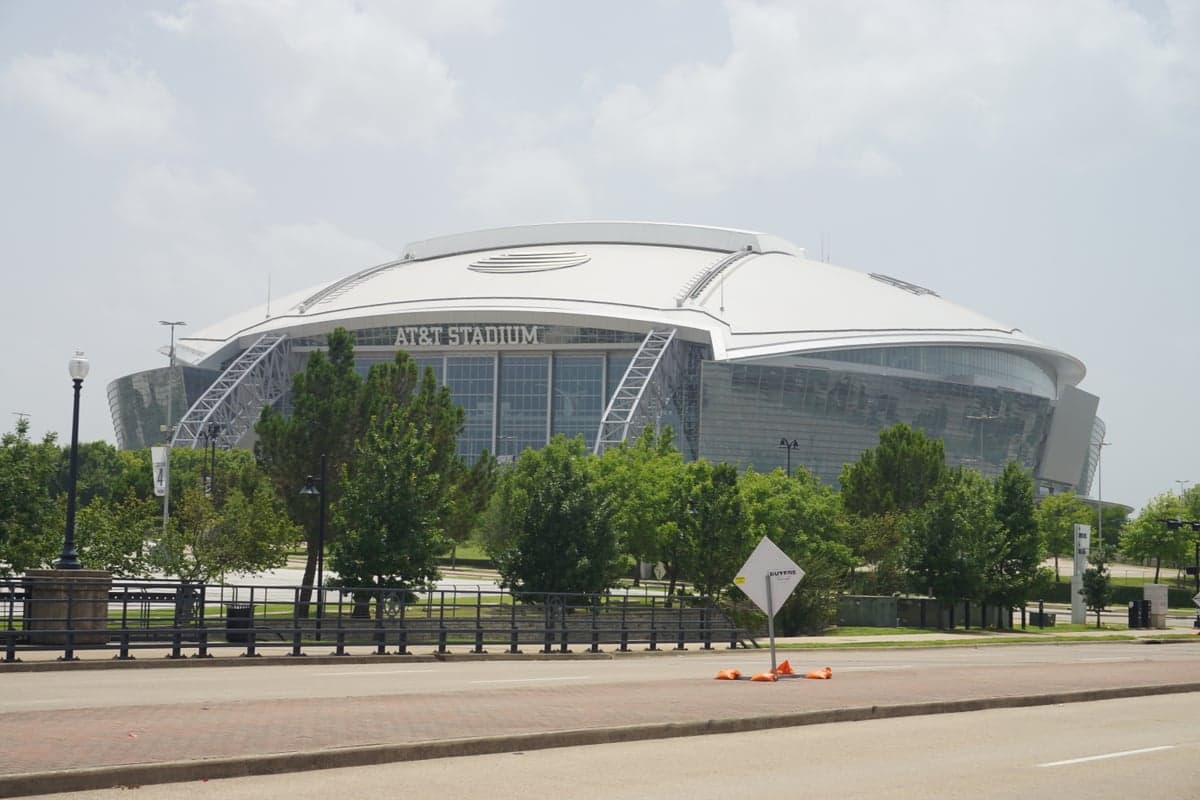
Photo: Wikipedia
Personal Sovereignty in Arlington, TX
Strong independent fundamentals that actively favor personal liberty and low regulation.
What does Personal Sovereignty tell us?
Personal Sovereignty measures your capacity for self-reliance and independence with minimal government friction. Higher scores mean fewer barriers between you and the way you want to live... but it assumes you have the space you need and good neighbors.
What does this tell us?
Personal Sovereignty measures your capacity for self-reliance and independence with minimal government friction. Higher scores mean fewer barriers between you and the way you want to live... but it assumes you have the space you need and good neighbors.
State Policy
Energy independence: Net exporter (220% of energy produced in-state)
Personal Liberty
Homesteading

Personal Liberty Analysis
Arlington, Texas, offers a mixed bag for those prioritizing personal sovereignty, sitting squarely in a state that champions individual rights on paper while grappling with the practical realities of a major metropolitan area. The city’s autonomy environment is shaped by Texas’s strong preemption laws, which limit local government overreach in areas like gun rights and property regulation, but it’s also constrained by the sheer density and infrastructure demands of a city of nearly 400,000 people wedged between Dallas and Fort Worth. For the survivalist or prepper, Arlington provides a solid legal foundation for self-reliance, but the urban setting means you’ll need to navigate zoning codes and HOA restrictions that can clash with a truly independent lifestyle. The key is understanding where Texas law gives you breathing room and where Arlington’s municipal code tightens the screws.
Tax burden and regulatory posture: How Arlington compares to surrounding cities
Texas’s lack of a state income tax is a major win for personal sovereignty, but property taxes in Arlington are a significant counterweight. The combined city and county tax rate hovers around 2.3% of assessed value, which is on par with other Tarrant County suburbs like Fort Worth but slightly higher than rural areas to the west. This means a $300,000 home carries an annual tax bill of roughly $6,900, a fixed cost that eats into your ability to stockpile resources or invest in off-grid infrastructure. Sales tax in Arlington is 8.25%, the state maximum, which adds up on gear and supplies. On the regulatory front, Texas’s strong preemption laws prevent Arlington from enacting its own paid sick leave mandates or rent control, which keeps the business climate relatively free. However, the city does enforce building codes and permit requirements that can frustrate DIY projects—adding a shed or installing a rainwater catchment system may require a permit, and HOAs in newer subdivisions often ban visible solar panels or backyard chickens. Compared to Dallas, which has more aggressive zoning, Arlington’s posture is moderate, but it’s no libertarian paradise.
Self-defense and gun law specifics: What the Second Sanctuary status means for residents
Arlington sits in Tarrant County, which was designated a Second Amendment Sanctuary in 2021, meaning local officials have pledged not to enforce any future state or federal gun laws they deem unconstitutional. This is a concrete win for personal sovereignty, as it signals that law enforcement won’t be used to enforce magazine bans or red flag orders that might pass at the federal level. Texas law already allows permitless carry for anyone 21 or older who can legally possess a firearm, and Arlington’s city council has not passed any local restrictions beyond state mandates. Open carry of handguns is legal with a License to Carry (LTC), and the city’s parks and public spaces are generally gun-friendly, though private businesses can post 30.06 or 30.07 signs to prohibit concealed or open carry. For the prepper, this means you can keep a rifle in your truck or a sidearm on your hip without worrying about local ordinances, but you still need to be aware of prohibited places like schools and government buildings. The Tarrant County Sheriff’s Office processes LTC applications efficiently, and there are numerous gun ranges and training facilities in the area, including the Defender Outdoors range in nearby Fort Worth. The sanctuary status provides a layer of protection against future overreach, but it’s not a guarantee—federal law still trumps local resolutions, so a national ban could still be enforced here, albeit with local resistance.
Self-reliance and homesteading viability: Lot sizes, zoning, and off-grid feasibility
Arlington’s urban density makes traditional homesteading a challenge. Most residential lots in the city are one-quarter acre or smaller, with many newer subdivisions squeezing homes onto 6,000-square-foot plots. Zoning codes restrict livestock to agricultural zones, so chickens, goats, or bees are generally prohibited in standard residential areas unless you’re in an unincorporated pocket or a rare “urban homestead” overlay district. Rainwater harvesting is legal under Texas law, but Arlington’s building codes require a permit for systems over 500 gallons, and HOAs often ban visible barrels or tanks. Solar panels are allowed by state law, but HOAs can impose aesthetic restrictions that make them impractical on small lots. For the serious prepper, the best bet is to look at the southwest edge of the city near Lake Arlington, where some older neighborhoods have larger lots (half-acre to one acre) and fewer HOA restrictions. Even there, going fully off-grid is nearly impossible due to city water and sewer connections being mandatory in most areas. If self-reliance is your primary goal, Arlington is a compromise—you can garden, install a backup generator, and store supplies, but you’ll be doing it within the confines of suburban regulations. Rural Tarrant County or neighboring Johnson County offers far more freedom for homesteading.
Personal liberties: Parental rights, medical autonomy, speech, and property
Texas has strong protections for parental rights, including a law that requires schools to notify parents of any medical or mental health services provided to minors, and Arlington ISD generally follows state guidelines. This means parents have significant control over their children’s education and healthcare decisions, though the district does have a library book review policy that has been controversial among both conservative and liberal parents. Medical autonomy is a mixed bag: Texas banned vaccine passports and prohibits mask mandates in schools, but the state’s medical board has been aggressive in pursuing doctors who promote COVID-19 treatments like ivermectin. For the prepper, this means you can stockpile supplements and over-the-counter medications without fear of state interference, but prescription-level autonomy is limited. Free speech is protected under Texas law, and Arlington has not passed any local ordinances restricting political speech or protest, though the city’s noise ordinances can be used to shut down amplified speech in residential areas. Property rights are strong thanks to Texas’s private property rights laws, which limit eminent domain abuse and require compensation for regulatory takings. However, Arlington’s zoning board has broad discretion to deny variances, so if you want to build a workshop or install a security fence taller than six feet, you’ll need to navigate a bureaucratic process. Overall, personal liberties in Arlington are robust by national standards but constrained by the realities of suburban governance.
Compared to other parts of the country, Arlington offers a solid baseline for personal sovereignty, especially in terms of gun rights, tax structure, and parental control. But it falls short of the freedom found in rural Texas counties or states like Idaho or Montana, where zoning is minimal and off-grid living is straightforward. For the strategic relocator who values autonomy but needs proximity to jobs and infrastructure, Arlington is a reasonable compromise—just know that true self-reliance will require constant vigilance against HOA overreach and municipal code enforcement. If you’re willing to fight for your rights at the local level, this city can work, but it’s not a place where you can simply disappear into the woods and live by your own rules.

* Values derived from national, state, county, city and local statistics and may differ in a specific area. Last updated: 2026-04-21T17:42:34.000Z
Narrative content on this page is AI-generated and may contain mistakes. Verify any details that matter before acting on them.
ReloMaps may earn a commission from affiliate links at no extra cost to you.

