 Popular
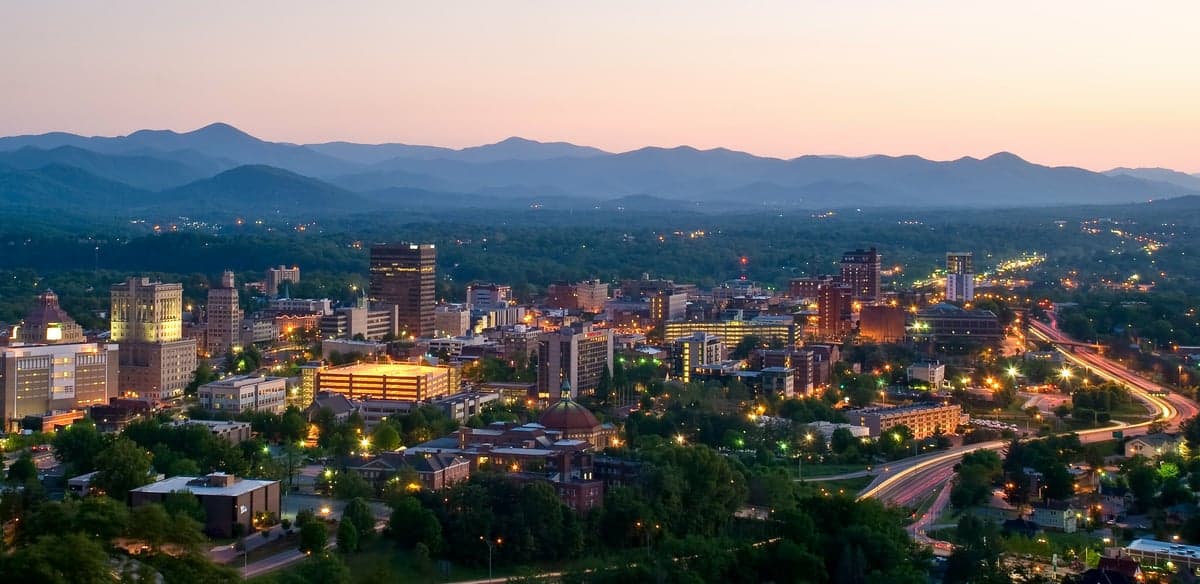
Photo: Wikipedia
Personal Sovereignty in Asheville, NC
Viable for self-reliance. Generally workable, though some barriers may limit total independence.
What does Personal Sovereignty tell us?
Personal Sovereignty measures your capacity for self-reliance and independence with minimal government friction. Higher scores mean fewer barriers between you and the way you want to live... but it assumes you have the space you need and good neighbors.
What does this tell us?
Personal Sovereignty measures your capacity for self-reliance and independence with minimal government friction. Higher scores mean fewer barriers between you and the way you want to live... but it assumes you have the space you need and good neighbors.
State Policy
Energy independence: Importer (15% of energy produced in-state)
Personal Liberty
Homesteading

Personal Liberty Analysis
Asheville, North Carolina, presents a deeply conflicted environment for personal sovereignty. While the state-level framework offers significant advantages in gun rights, property protections, and a flat income tax, the city and surrounding Buncombe County are governed by a progressive local administration that actively pursues policies many conservatives view as encroaching on individual autonomy. For a survivalist or prepper evaluating this area, the analysis requires a clear-eyed separation of state versus local control, as the day-to-day reality in Asheville often feels far removed from the libertarian-leaning laws of Raleigh.
Tax burden and regulatory posture: state advantages vs. local overreach
North Carolina’s state-level tax structure is a clear positive for sovereignty-minded individuals. The state imposes a flat personal income tax rate of 4.75% (scheduled to decline to 3.99% by 2027), and there is no state-level tax on Social Security benefits. Property taxes in Buncombe County hover around 0.62% of assessed value, which is moderate nationally. However, the local regulatory posture is where friction emerges. Asheville has adopted aggressive zoning codes that restrict short-term rentals and impose strict energy-efficiency mandates on new construction, effectively raising the cost of building or modifying a home. The city also enforces a stormwater utility fee and has debated plastic bag bans and other micro-regulations that signal a governing philosophy comfortable with controlling daily choices. For a prepper, the state tax environment is a net positive, but the local bureaucracy is a persistent drag on self-directed living.
Self-defense and gun law specifics: state preemption and local tension
North Carolina is a “shall-issue” state for concealed carry permits, and since 2023, it has operated under permitless (constitutional) carry for adults legally allowed to possess a firearm. This is a bedrock sovereignty win. The state also has strong preemption laws that prevent local governments from enacting their own gun ordinances—meaning Asheville cannot ban firearms in city parks or impose its own waiting periods. However, the cultural friction is real. Buncombe County Sheriff Quentin Miller has publicly stated he will not enforce federal gun laws he deems unconstitutional, which aligns with a pro-sovereignty stance, but the city council has passed symbolic resolutions supporting “red flag” laws and universal background checks. For practical self-defense, the legal framework is solid, but a prepper should expect to live in a community where open carry may draw hostile attention from a significant portion of the population. Stand-your-ground laws apply statewide, but Asheville’s district attorney has a reputation for progressive prosecution priorities.
Self-reliance and homesteading viability: lot sizes, zoning, and off-grid feasibility
This is the most challenging category for Asheville. Within city limits, minimum lot sizes are typically 5,000 to 7,000 square feet, and zoning heavily restricts keeping livestock, building detached workshops, or installing rainwater catchment systems for primary water supply. The city’s building code requires connection to municipal water and sewer where available, effectively killing off-grid aspirations inside the urban growth boundary. Outside city limits but still in Buncombe County, the picture improves modestly. Rural zoning allows for agricultural uses on parcels of 3 acres or more, and chickens, goats, and even a single cow are permissible with proper setbacks. However, the county enforces strict septic and well regulations that can cost $15,000–$30,000 to comply with. For a serious homesteader, the viable land is in the more remote corners of the county—places like Leicester, Alexander, or the Sandy Mush area—where 5- to 10-acre parcels still exist under $15,000 per acre. Even there, the county’s inspection regime for alternative energy systems (solar, wind) adds bureaucratic hurdles. Asheville itself is not a homesteading hub; it’s a city that tolerates backyard gardens but not true self-sufficiency.
Personal liberties: parental rights, medical autonomy, speech, and property
North Carolina’s state-level parental rights are relatively strong. The Parents’ Bill of Rights (enacted 2023) requires school districts to notify parents of medical services offered to minors and to obtain consent for changes to a student’s gender presentation. Buncombe County Schools have largely complied, though the Asheville City Schools district has been more resistant, creating a tension that parents must navigate. Medical autonomy is a mixed bag: the state has no vaccine mandate for adults, but COVID-era emergency orders in Asheville were among the most restrictive in the state, including prolonged mask mandates and business closures. On speech, Asheville is a classic blue city in a purple state—public expression of conservative or libertarian views is legally protected but socially penalized. Property rights are generally strong under state law, but the city’s historic preservation commission has broad authority to block exterior modifications in designated districts, and the city has used eminent domain for redevelopment projects in the past. For a prepper, the property rights framework is adequate if you avoid historic overlay zones, but the local political climate is hostile to visible expressions of self-reliance like storing fuel, building fences, or posting political signs.
Overall sovereignty relative to other areas
Compared to other mid-sized cities in the Southeast, Asheville offers a paradox: state-level sovereignty is above average, but local implementation is below average. A prepper moving here gains constitutional carry, a flat tax, and strong parental rights from the state, but loses ground on zoning freedom, off-grid feasibility, and cultural acceptance of self-reliant lifestyles. For a single individual or family willing to live in the rural fringe of Buncombe County (or neighboring Madison or Yancey counties), the sovereignty calculus improves significantly—lower taxes, fewer inspections, and more land. But inside Asheville proper, the regulatory and social environment is more akin to a progressive coastal city than a mountain libertarian haven. If maximum personal sovereignty is the priority, areas like Polk County or Rutherford County (an hour south) offer lower taxes, fewer zoning restrictions, and a more culturally aligned population. Asheville is a compromise: you get the mountains and the state laws, but you pay for it with local overreach and a community that views your prepper mindset with suspicion.

* Values derived from national, state, county, city and local statistics and may differ in a specific area. Last updated: 2026-04-22T01:51:23.000Z
Narrative content on this page is AI-generated and may contain mistakes. Verify any details that matter before acting on them.
ReloMaps may earn a commission from affiliate links at no extra cost to you.

