 Popular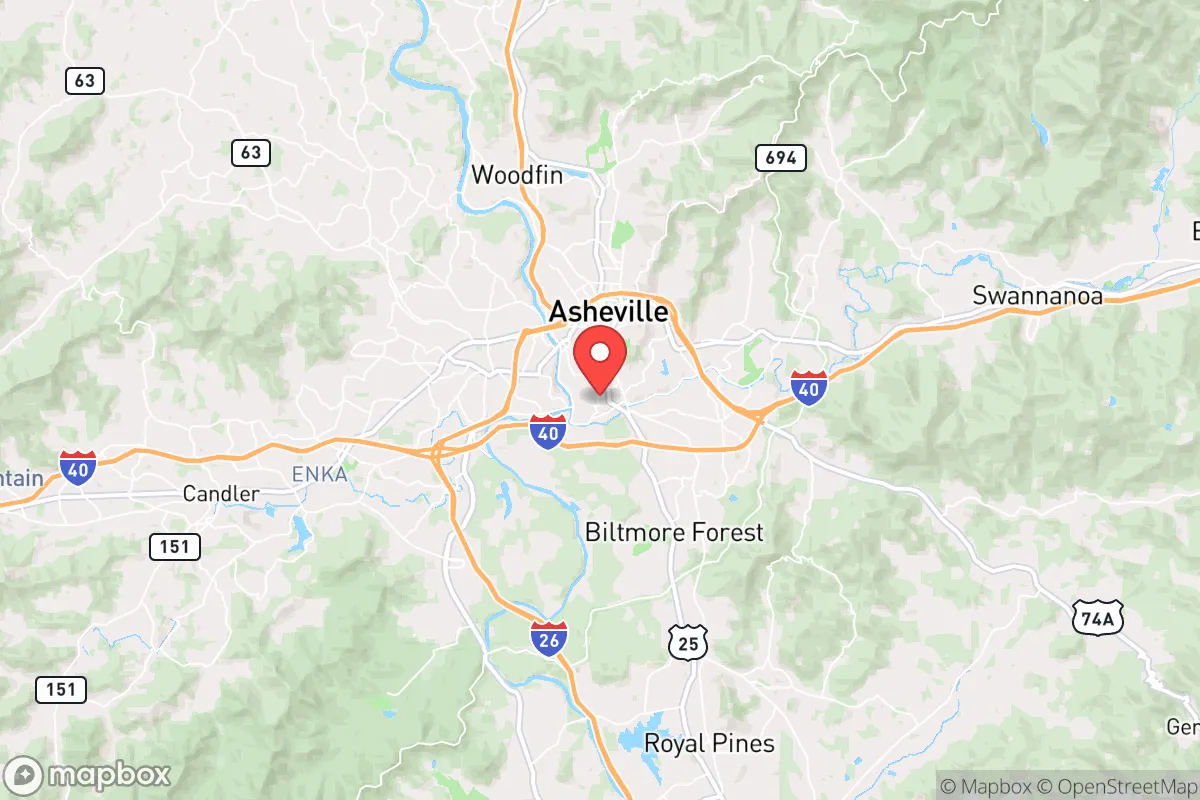
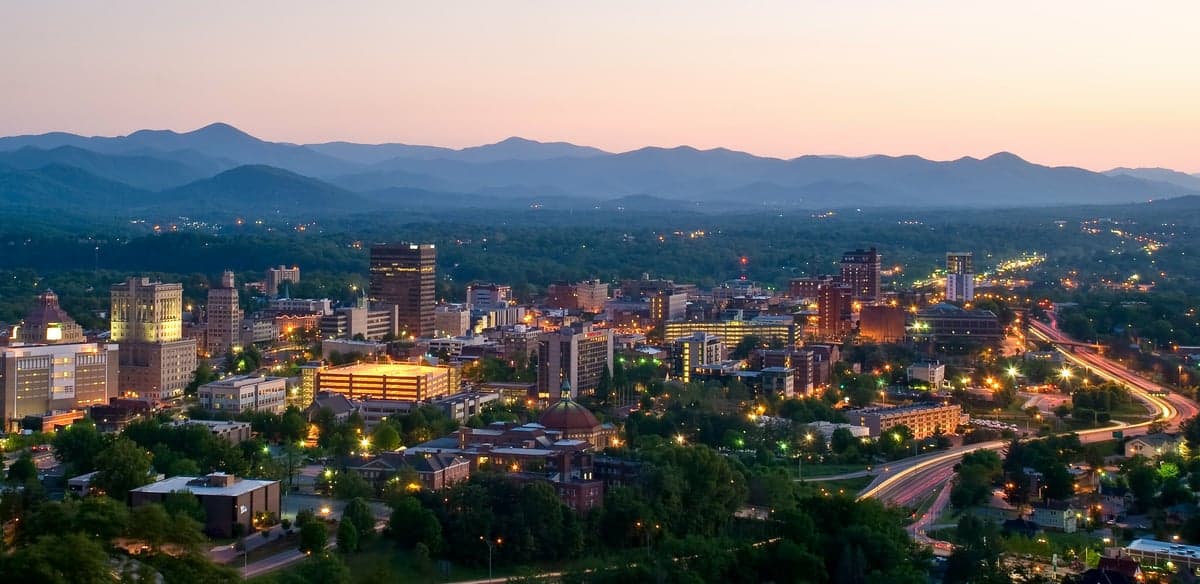
Photo: Wikipedia
Political ClimatePolitical Climate in Asheville, NC
District shown is the primary district for this city’s centroid. Cities may span multiple districts.
Local Political AnalysisPolitical Analysis of Asheville, NC
Asheville’s political climate has shifted dramatically over the past decade, and not in a way that sits well with folks who value personal freedom and limited government. The city itself leans heavily progressive, with local elections often dominated by candidates pushing expansive government programs, strict land-use regulations, and a general distrust of individual decision-making. But here’s the kicker: the surrounding area—Buncombe County as a whole—isn’t nearly as blue as the city’s downtown crowd would have you believe. The Cook Partisan Voting Index (PVI) for the district is R+5, meaning the region as a whole still tilts Republican by a solid margin. That disconnect between Asheville’s city council and the broader county’s values creates constant friction, especially on issues like property rights, business licensing, and public spending. If you’re looking for a place where the government stays out of your way, Asheville proper is becoming a tougher sell every year.
How it compares
Drive just 20 minutes north to Weaverville or 30 minutes east to Black Mountain, and you’ll find communities that feel like a different world politically. Those towns still lean conservative, with lower taxes, fewer zoning hoops, and a general live-and-let-live attitude. The contrast is stark: in Asheville, you’ll see bike lanes replacing car lanes and new affordable housing mandates that drive up costs for everyone; in the surrounding towns, folks are more concerned with keeping the government out of their backyards. Even within Buncombe County, the rural precincts consistently vote red, while Asheville’s urban core votes blue. It’s a classic urban-rural split, but the city’s progressive leadership keeps trying to impose its will on the whole county through regional planning boards and tax policies. If you’re a conservative, you’ll find more like-minded neighbors in the county’s unincorporated areas or in nearby Hendersonville, which has a much more balanced political scene.
What this means for residents
For anyone who values personal freedoms, the practical impact is real. Asheville’s city government has a track record of overreach: strict short-term rental regulations that limit what you can do with your own property, a plastic bag ban that feels more like nanny-state theater than environmental policy, and a growing list of fees and permits for small businesses. The school board has also leaned into progressive curriculum changes that prioritize social agendas over academic basics. If you’re a parent, you might find yourself driving your kids to a charter school or a private option just to get a traditional education. Property taxes have crept up as the city expands its budget for social programs and green initiatives, and the cost of living has skyrocketed—partly due to the very regulations that were supposed to keep things “affordable.” Longtime residents will tell you that the Asheville of 20 years ago was a place where you could start a business with a handshake and a permit; now, it’s a maze of red tape.
Culturally, Asheville has become a magnet for out-of-state transplants who bring big-city expectations about government services and social engineering. That influx has diluted the old Appalachian self-reliance that used to define the area. The local food scene and craft beer culture are still great, but they come with a side of political correctness that can feel stifling. If you’re looking for a place where your voice matters and the government respects your right to live as you see fit, you’ll want to look at the outskirts or the neighboring towns. The long-term trend is concerning: as more progressive policies take root, the city risks driving out the very people who made it unique—the independent thinkers, the small business owners, and the folks who just want to be left alone.

State Political ClimatePolitical Climate in North Carolina
State Political AnalysisPolitical Environment in the State
North Carolina has long been the quintessential swing state of the Southeast, but over the past decade, it has settled into a reliably red-leaning posture, though the margin is razor-thin at the statewide level. The state voted for Donald Trump in both 2016 and 2020 by roughly 1.3 and 1.4 points respectively, and in 2024, Trump carried it again by a similar margin, while Republicans held supermajorities in the General Assembly and flipped the state Supreme Court to a 5-2 conservative majority. The dominant coalition is a mix of rural conservatives, suburban moderates, and a growing number of fiscally conservative transplants from the Northeast and Midwest, but the real story is that the state’s political center of gravity has shifted rightward on cultural and economic issues even as its population booms.
Urban vs. rural divide
The political map of North Carolina is a textbook case of the urban-rural chasm. The major metros—Charlotte (Mecklenburg County), Raleigh-Durham (Wake and Durham Counties), and Greensboro-Winston-Salem (Guilford and Forsyth Counties)—are deep blue islands in a sea of red. Mecklenburg County alone delivered a 30-point margin for Biden in 2020, while Wake County gave a 25-point margin. But outside these urban cores, the state is overwhelmingly conservative. Rural counties like Yadkin, Stokes, and Alleghany routinely vote 75-80% Republican. The real battlegrounds are the fast-growing suburban exurbs like Union County (southeast of Charlotte), which went +35 for Trump, and Johnston County (southeast of Raleigh), which went +28. These are the areas where transplants from blue states are moving, but they’re often fleeing the very policies they left behind, so they’re reinforcing the red vote rather than diluting it. The Sandhills region around Fayetteville, home to Fort Liberty (formerly Fort Bragg), leans conservative due to the military presence, though it’s not as deep red as the rural Piedmont.
Policy environment
North Carolina’s policy environment has been a bright spot for conservatives over the last decade, especially since the GOP took full control of the General Assembly in 2011. The state has a flat income tax rate of 4.5% (down from 7% in 2013), and the legislature is on a path to phase it out entirely by 2030. There is no state tax on Social Security benefits, and the standard deduction was doubled in 2023. On education, the state has one of the strongest school choice programs in the nation: the Opportunity Scholarship Program now provides vouchers of up to $7,468 per student, with no income cap, meaning any family can use public funds for private or homeschool expenses. The state also has a Parents’ Bill of Rights (SB 49, passed in 2023) that requires schools to notify parents of any changes to a child’s health or well-being, including gender-related services, and prohibits instruction on gender identity and sexuality in K-4 classrooms. On healthcare, North Carolina did expand Medicaid in 2023 under a bipartisan deal, but it came with work requirements and a sunset clause. Election integrity was strengthened with voter ID requirements (SB 824, 2018) and a ban on private funding of election administration (SB 749, 2023). The state also passed a 12-week abortion ban in 2023 (SB 20), with exceptions for rape, incest, and life of the mother, which was a significant shift from the previous 20-week limit.
Trajectory & freedom
On the whole, North Carolina has been moving in a direction that expands personal freedom for conservatives, but it’s a mixed bag. The most significant liberty-expanding legislation in recent years was the repeal of the pistol purchase permit requirement (HB 189, 2023), which eliminated the Jim Crow-era system that required a sheriff’s sign-off to buy a handgun. The state also passed permitless carry (SB 41, 2021), allowing any law-abiding adult to carry a concealed firearm without a permit. On parental rights, the Parents’ Bill of Rights was a major win, but it’s being challenged in court by the ACLU. On the downside, the state’s certificate of need (CON) laws remain a barrier to medical freedom—you still need government permission to open a hospital, nursing home, or even an MRI facility, which drives up costs and limits choice. There have been efforts to repeal CON laws, but they’ve stalled in the legislature. On property rights, the state has a strong right-to-farm law that protects agricultural operations from nuisance lawsuits, but there’s no statewide preemption on local zoning, so cities like Asheville and Chapel Hill have imposed rent control and restrictive land-use policies that limit housing supply. The state also passed a law in 2023 (HB 488) that prohibits local governments from enacting sanctuary policies for illegal immigrants, which is a win for rule of law but has been ignored by some progressive cities.
Civil unrest & political movements
North Carolina has seen its share of political flashpoints, but they’ve been more localized than in states like Oregon or Washington. The most visible was the 2020 protests in Charlotte and Raleigh following the killing of George Floyd, which included some property damage and looting, but were largely contained. The Moms for Liberty movement has been very active in the state, particularly in Wake County and Union County, where they’ve successfully pushed for book challenges and curriculum transparency. On the left, the Moral Monday protests (2013-2014) were a sustained campaign of civil disobedience against the GOP’s policy agenda, but they’ve fizzled out. Immigration politics are a hot-button issue, especially in the Charlotte metro and the Triad, where there’s a growing Hispanic population. The state’s 287(g) program, which allows local law enforcement to partner with ICE, is active in Cabarrus County and Gaston County, but Durham County and Orange County have declared themselves sanctuary jurisdictions, creating a patchwork of enforcement. Election integrity remains a live issue: the 2020 election saw a 10,000-vote margin in the presidential race, and the state’s voter ID law was upheld by the state Supreme Court in 2024 after years of litigation. There’s no serious secession or nullification movement, but there is a growing “constitutional sheriff” movement in rural counties like Macon and Cherokee, where sheriffs have publicly stated they will not enforce certain gun control or mask mandates.
Projection
Over the next 5-10 years, North Carolina is likely to remain a red-leaning state, but the margin will tighten as the urban metros continue to grow. The state is adding about 100,000 new residents per year, and while many are conservatives fleeing high-tax states like New York and California, the bulk of the growth is in the blue metros of Charlotte and the Triangle. The real wildcard is the suburban exurbs: places like Johnston County and Union County are growing fast, and if they start to trend purple like their counterparts in Virginia, the state could flip. However, the GOP’s structural advantages—gerrymandered legislative maps, a conservative state Supreme Court, and a strong rural base—will keep the state from going full blue anytime soon. The most likely scenario is that North Carolina becomes a version of Georgia: a state that votes Republican for president but has a competitive Senate race every cycleched. For a conservative moving in now, expect the state to remain a haven for school choice, gun rights, and low taxes, but be prepared for cultural battles in the cities and a constant fight to keep the state from drifting left on social issues.
For a new resident, the bottom line is this: North Carolina is one of the best bets in the country for a conservative who wants a strong economy, low taxes, and a government that mostly stays out of your life. The school choice program alone is a game-changer for parents. But you need to pick your county carefully—Union County or Johnston County will feel like a conservative haven, while Orange County or Buncombe County will feel like a progressive enclave. The state is not perfect—the CON laws and local zoning battles are frustrating—but on the big issues of freedom, it’s trending in the right direction. Just don’t expect it to stay that way without staying engaged.
* Values derived from national, state, county, city and local statistics and may differ in a specific area. Last updated: 2026-04-22T01:51:23.000Z
Narrative content on this page is AI-generated and may contain mistakes. Verify any details that matter before acting on them.
ReloMaps may earn a commission from affiliate links at no extra cost to you.

