 Popular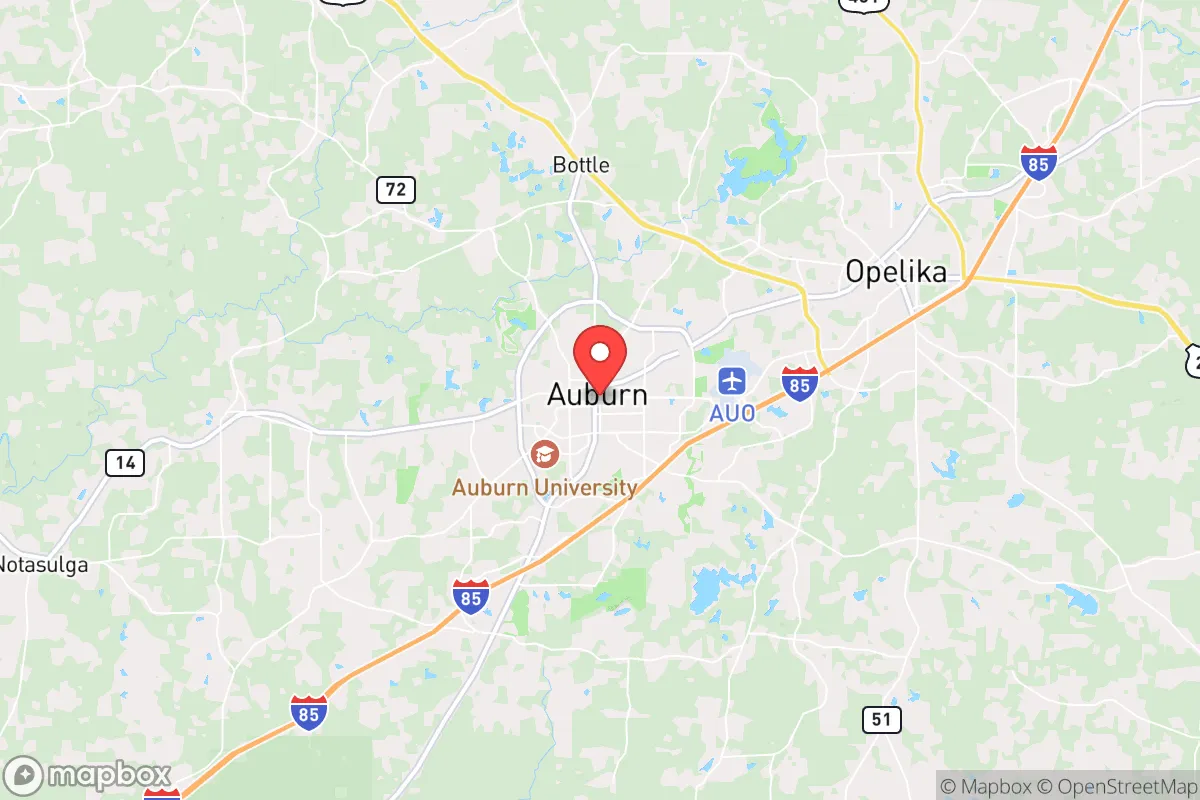
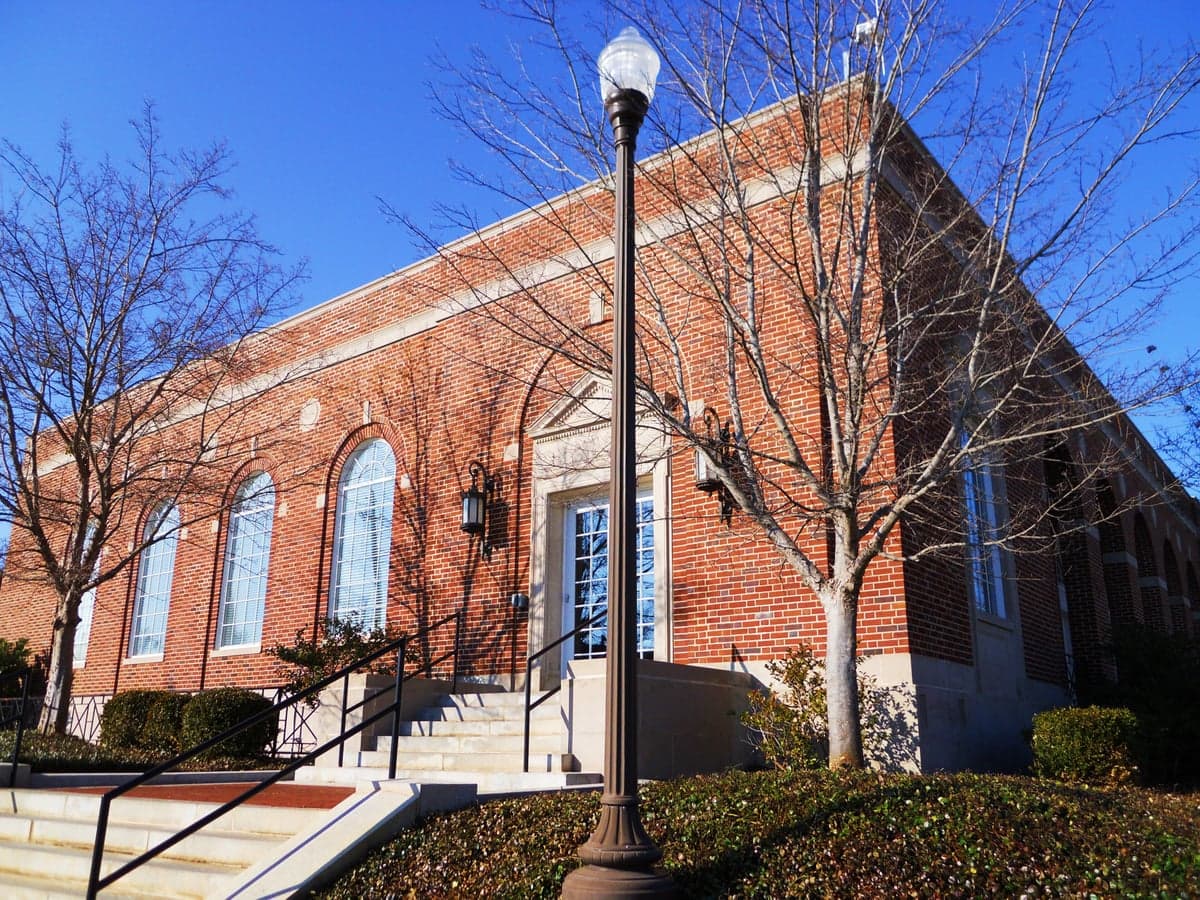
Photo: Wikipedia
Political ClimatePolitical Climate in Auburn, AL
District shown is the primary district for this city’s centroid. Cities may span multiple districts.
Local Political AnalysisPolitical Analysis of Auburn, AL
Auburn, Alabama, sits firmly in deep-red territory, with a Cook Partisan Voting Index of R+23, meaning the area votes about 23 points more Republican than the national average. That number alone tells you the baseline, but the real story is more layered. The city itself is a classic college town, and that university presence—Auburn University with its 30,000-plus students and faculty—creates a noticeable blue island within the surrounding Lee County, which has trended slightly less conservative in recent cycles. Still, the county as a whole hasn't flipped; the rural and suburban precincts outside the city core reliably deliver Republican majorities, and the overall trajectory is stable red, not shifting purple.
How it compares
Compared to the rest of Alabama, Auburn is actually a bit more moderate than the state's deep-rural areas. The state as a whole has no official Cook PVI, but it's widely considered R+15 or so, meaning Auburn's R+23 is significantly more Republican than the state average. That gap comes from the fact that Alabama's urban centers—Birmingham, Montgomery, Mobile—are more Democratic, pulling the state's overall lean leftward. Auburn, by contrast, lacks a large Democratic-voting city within its immediate orbit. The closest contrast is Opelika, just east, which is even more conservative and lacks the university's liberalizing effect. Drive 30 minutes north to Camp Hill or Lafayette, and you're in deep-red rural territory where Trump won by 70-plus points. So Auburn's political climate is a microcosm: a small, educated, slightly more progressive core surrounded by a sea of traditional Alabama conservatism.
What this means for residents
For conservative residents, Auburn is a comfortable place. Local elections are dominated by Republicans, and the city council and county commission rarely see serious Democratic challengers. You'll find plenty of churches, gun-friendly policies, and a general cultural alignment with the state's conservative values. For liberal residents, it's more of a mixed bag. You can find like-minded people in the university community, and the city itself has a tolerant, college-town vibe—there's a decent farmers market, a few progressive-leaning coffee shops, and the university hosts speakers across the political spectrum. But state-level policies—like the near-total abortion ban, permitless carry, and limited LGBTQ+ protections—apply here just as they do in the rest of Alabama. So while your day-to-day life in Auburn might feel more open than in rural Alabama, the legal and political reality is still deeply conservative.
One cultural distinction worth noting: Auburn's identity is heavily tied to the university and its football culture, which tends to unify people across political lines on game days. That shared identity softens some of the partisan edge you'd find in, say, Montgomery or Birmingham. But don't mistake that for political moderation—the area's voting record is clear. Looking ahead, I'd expect Auburn to stay R+20 or so for the foreseeable future. The university's growth brings in more out-of-state students and faculty, which could nudge things slightly left over a decade, but the surrounding county's rural base and the state's gerrymandered districts will keep it solidly red. For anyone moving here, the takeaway is simple: if you're conservative, you'll feel right at home. If you're liberal, you'll find your people, but you'll also be living under a state government that doesn't share your views.

State Political ClimatePolitical Climate in Alabama
State Political AnalysisPolitical Environment in the State
Alabama is one of the most reliably Republican states in the country, with a deep-red lean that has only solidified over the past two decades. The state hasn’t voted for a Democratic presidential candidate since 1976, and in 2024, Donald Trump carried it by over 30 points. The dominant coalition is a blend of rural white evangelicals, suburban conservatives in the Birmingham and Mobile metros, and a growing number of transplants from bluer states drawn by low taxes and a slower pace of life. Over the last 10-20 years, the shift has been away from the old “Yellow Dog Democrat” tradition—especially in north Alabama—toward a near-uniform Republican dominance at every level of state government, with Democrats now confined mostly to the Black Belt counties and a few urban pockets.
Urban vs. rural divide
The political map of Alabama is starkly divided between its few urban centers and the vast rural countryside. Jefferson County (Birmingham) is the state’s most populous county and a Democratic stronghold, driven by a large Black population and a growing number of younger, college-educated white voters. In 2024, Jefferson County went for Kamala Harris by about 15 points. Montgomery and Mobile counties also lean Democratic, though Mobile is more competitive—it flipped to Trump in 2020 and 2024 by narrow margins. The real engine of Republican power is the suburban ring around Birmingham—places like Shelby County, which voted +45 for Trump in 2024—and the fast-growing Madison County (Huntsville). Huntsville’s booming aerospace and tech economy has brought in a mix of conservative engineers and libertarian-leaning professionals, making it a reliably red area but with a more pragmatic, less culture-war-focused flavor. The rural Black Belt, stretching from Selma to Greene County, is overwhelmingly Democratic and heavily Black, but its low population density means it has little statewide sway. The rural white counties in the Wiregrass and along the Tennessee border are among the most Republican in the nation.
Policy environment
Alabama’s policy environment is defined by low taxes, light regulation, and a strong cultural conservatism. There is no state income tax on retirement income, and the state’s combined state and local sales tax rate averages around 9.2%, one of the highest in the country—meaning the tax burden falls heavily on consumption rather than property or income. The state has a right-to-work law and a business-friendly regulatory climate, with no state-level minimum wage above the federal $7.25. Education policy is a flashpoint: Alabama has one of the oldest and largest school choice programs in the South, including the Alabama Accountability Act, which provides tax credits for private school tuition, and a new Education Savings Account (ESA) program passed in 2024 that gives families roughly $7,000 per child for approved educational expenses. Healthcare is a persistent challenge—the state has not expanded Medicaid under the Affordable Care Act, leaving roughly 300,000 residents in the coverage gap. Election laws are among the most restrictive in the nation: voter ID is required, absentee voting requires a notarized application or two witnesses, and straight-ticket voting was eliminated in 2020. The state also has a near-total abortion ban, the Human Life Protection Act, with no exceptions for rape or incest.
Recent policy direction
The last few years have seen Alabama double down on cultural and social conservatism. In 2022, the state passed a law banning transgender girls from participating in female sports, and in 2023, it criminalized gender-affirming care for minors, making it a felony punishable by up to 10 years in prison. On guns, Alabama is a constitutional carry state since 2022—no permit required to carry a concealed firearm—and has a “Stand Your Ground” law with no duty to retreat. Property rights are strongly protected; the state has a homestead exemption that shields up to $15,000 of home value from property taxes, and it is a “buyer beware” state for real estate, meaning sellers have limited disclosure obligations. On privacy and surveillance, Alabama has no state-level data privacy law, and law enforcement can access cell-site location data without a warrant in some cases. Voting access has tightened: the 2024 legislative session saw a ban on curbside voting and restrictions on absentee ballot drop boxes. The state also passed a law requiring all ballots to be hand-counted in certain small precincts, a move that has drawn both praise for security and criticism for inefficiency. On the liberty spectrum, Alabama is clearly oriented toward gun rights, property rights, and parental authority, but with heavy restrictions on bodily autonomy (abortion, transgender care) and limited privacy protections.
Civil unrest & political movements
Alabama has a quieter political landscape than many states, but there are visible flashpoints. The most sustained activism has come from the Poor People’s Campaign and local NAACP chapters, which have organized around Medicaid expansion and voting rights, particularly in the Black Belt. In 2023, a major protest in Montgomery erupted over the removal of a Confederate monument, drawing both pro- and anti-removal groups. Immigration politics are less heated than in border states, but the 2024 legislative session saw a bill requiring local law enforcement to cooperate with ICE, though it stalled. There is no sanctuary city movement of note; Birmingham has a symbolic “Welcoming City” resolution but no binding policy. Election integrity controversies have been relatively muted compared to states like Georgia or Arizona, though the 2022 Secretary of State race saw allegations of voter roll purges. The most visible political movement on the right is the Alabama Citizens for Constitutional Freedom, a group pushing for a state constitutional convention to replace the 1901 constitution, which still contains segregation-era language. On the left, the Alabama Arise coalition continues to push for tax reform and Medicaid expansion, but with limited success.
Projection
Over the next 5-10 years, Alabama is likely to remain deeply Republican, but the nature of that conservatism may shift. The biggest demographic change is the growth of Huntsville, which is adding about 20,000 new residents per year, many from out of state. These newcomers tend to be more libertarian than traditionalist—pro-gun, pro-school choice, but less interested in culture war fights over abortion or transgender issues. This could create a tension within the state GOP between the rural evangelical base and the suburban pragmatists. The Black Belt will continue to lose population, further reducing Democratic electoral strength. The state’s failure to expand Medicaid will likely become a bigger economic drag as rural hospitals close—six have closed since 2010—and this could eventually force a policy shift, though not soon. In-migration from California and the Northeast is accelerating, particularly in the Huntsville and Auburn areas, which may slowly moderate the state’s politics on economic issues while leaving social conservatism intact. A new resident moving in now should expect the political climate to remain reliably red, with a growing emphasis on school choice and economic development, but with persistent battles over healthcare and education funding.
For a new resident, the bottom line is straightforward: if you’re a conservative, you’ll find a state that largely aligns with your values on taxes, guns, and education, with a government that is responsive to those priorities. If you’re a liberal, you’ll be in a clear minority, but you’ll find like-minded communities in Birmingham, Montgomery, and the college towns of Tuscaloosa and Auburn. The practical takeaway is that Alabama’s politics are stable, predictable, and unlikely to surprise you—what you see is what you get, and that’s unlikely to change much in the next decade.
* Values derived from national, state, county, city and local statistics and may differ in a specific area. Last updated: 2026-09-03T05:09:38.000Z
Narrative content on this page is AI-generated and may contain mistakes. Verify any details that matter before acting on them.
ReloMaps may earn a commission from affiliate links at no extra cost to you.

