 Popular
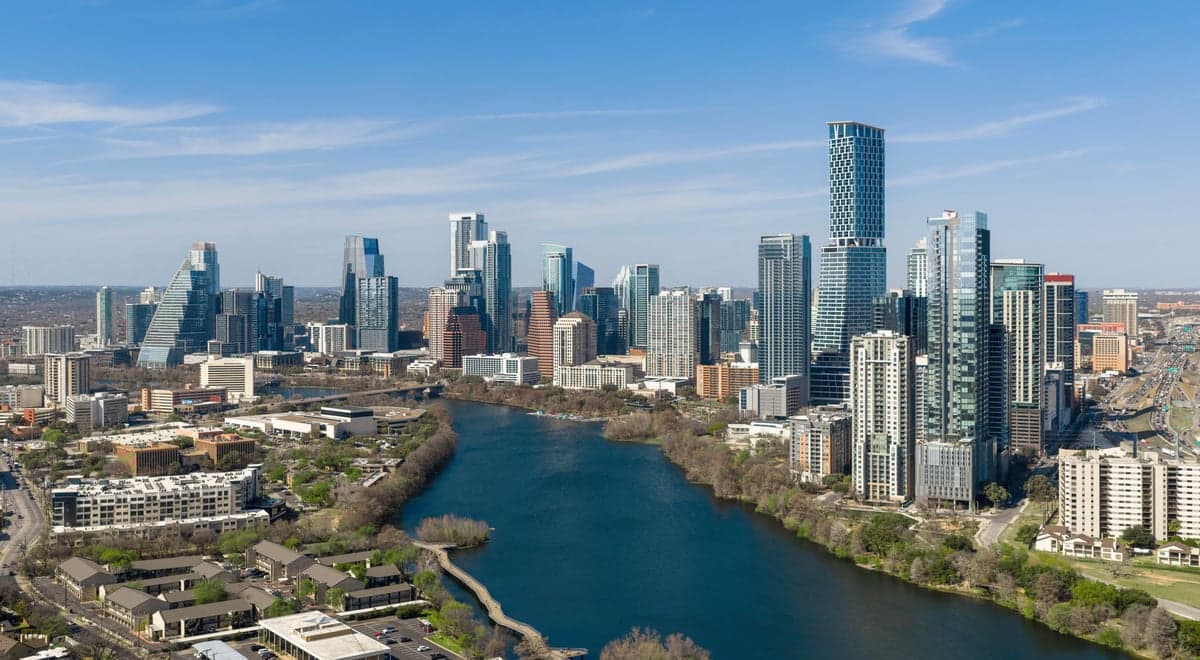
Photo: Wikipedia
Demographics of Austin, TX
Affluence Level in Austin, TX
An upper-middle-class area. Household wealth, education levels, and homeownership run ahead of national benchmarks.
People of Austin, TX
The people of Austin, Texas today form a rapidly growing, highly educated, and increasingly diverse population of 967,862. The city is defined by a stark cultural and economic divide: a majority-white, college-educated professional class (58.2% hold a bachelor's degree or higher) concentrated in the urban core, alongside a large and historically rooted Hispanic community (32.2%) that has shaped the city's character for generations. Smaller but significant Black (7.2%), East/Southeast Asian (4.7%), and Indian-subcontinent (3.8%) communities add further layers, while the foreign-born share sits at 11.1%, lower than many other major Texas cities. This is a city where the tech boom has dramatically reshaped the population, creating a place that is simultaneously a magnet for young, affluent newcomers and a home for long-established working-class families facing displacement.
How the city was settled and grew
Austin's original population was drawn by a political decision: in 1839, the Republic of Texas selected the small village of Waterloo as its new capital, renaming it after Stephen F. Austin. The first wave of settlers were Anglo-American land speculators, government officials, and merchants, who built the city around the Capitol and the Colorado River. The historic Clarksville neighborhood, founded in 1871 by freedman Charles Clark, became a central hub for the city's Black population, who migrated to Austin after the Civil War for work and relative safety. Simultaneously, Mexican and Tejano families settled in East Austin, which became the city's primary Hispanic enclave after a 1928 city plan deliberately segregated non-white populations east of East Avenue (now Interstate 35). The early 20th century saw German and Czech immigrants arrive, adding to the city's white working-class base, while the construction of the University of Texas (founded 1883) and state government offices steadily drew a professional, educated class. By 1950, Austin's population was about 132,000, overwhelmingly white and Black, with a growing Hispanic minority concentrated in East Austin.
Modern era (post-1965)
The post-1965 era transformed Austin's population more than any other period. The 1965 Hart-Cellar Act opened immigration from Asia and Latin America, but Austin's modern boom was driven even more by domestic in-migration. The rise of the University of Texas as a research powerhouse, followed by the arrival of companies like IBM, Texas Instruments, and later Dell and the semiconductor industry, created a massive demand for engineers and tech workers. This drew a wave of white and Asian professionals from California, the Northeast, and the Midwest. The East/Southeast Asian community (4.7%) grew significantly in the 1980s and 1990s, with Vietnamese and Chinese families settling in North Austin and the Lamar Boulevard corridor, where Asian grocery stores and restaurants cluster. The Indian-subcontinent community (3.8%) expanded later, from the 2000s onward, drawn by tech jobs and concentrated in the Domain area and the suburbs of Round Rock and Cedar Park. Meanwhile, the Hispanic population grew from about 20% in 1980 to 32.2% today, fueled by both immigration and higher birth rates, but also experienced displacement from East Austin as rising property values pushed families south and east into Dove Springs and the Colony Park area. The Black population, once 15% in 1970, has declined to 7.2% as gentrification and lack of affordable housing pushed many families to suburbs like Pflugerville and Round Rock.
The future
Austin's population is heading toward greater economic and ethnic stratification. The city is not homogenizing; rather, it is tribalizing into distinct enclaves by income and race. The white, college-educated population continues to grow in the central city and West Austin, while Hispanic and Black populations are increasingly suburbanized in the eastern and southern corridors. The East/Southeast Asian and Indian communities are growing rapidly, but largely in the northern suburbs, not within Austin city limits. The foreign-born share (11.1%) is likely to rise modestly, driven by skilled immigration from India and East Asia for tech jobs, but Austin is not a major gateway for low-skilled immigration. The next 10-20 years will likely see the city become more Asian and Indian, more Hispanic in the suburbs, and whiter and wealthier in the core, while the Black share remains stable or declines slightly. The biggest demographic wildcard is housing affordability: if the city cannot build enough units, the population growth rate will slow, and the city will become even more exclusive to high-income newcomers.
For someone moving to Austin now, the city offers a dynamic, opportunity-rich environment, but it is increasingly a place of winners and losers. The population is young, educated, and ambitious, but the cost of entry is high, and the city's historic diversity is being reshaped by market forces. New arrivals should expect a community that is welcoming but expensive, and one where where you live—and who your neighbors are—is increasingly determined by your profession and income.

* Values derived from national, state, county, city and local statistics and may differ in a specific area. Last updated: 2026-04-22T01:53:59.000Z
Narrative content on this page is AI-generated and may contain mistakes. Verify any details that matter before acting on them.
ReloMaps may earn a commission from affiliate links at no extra cost to you.

