 Popular
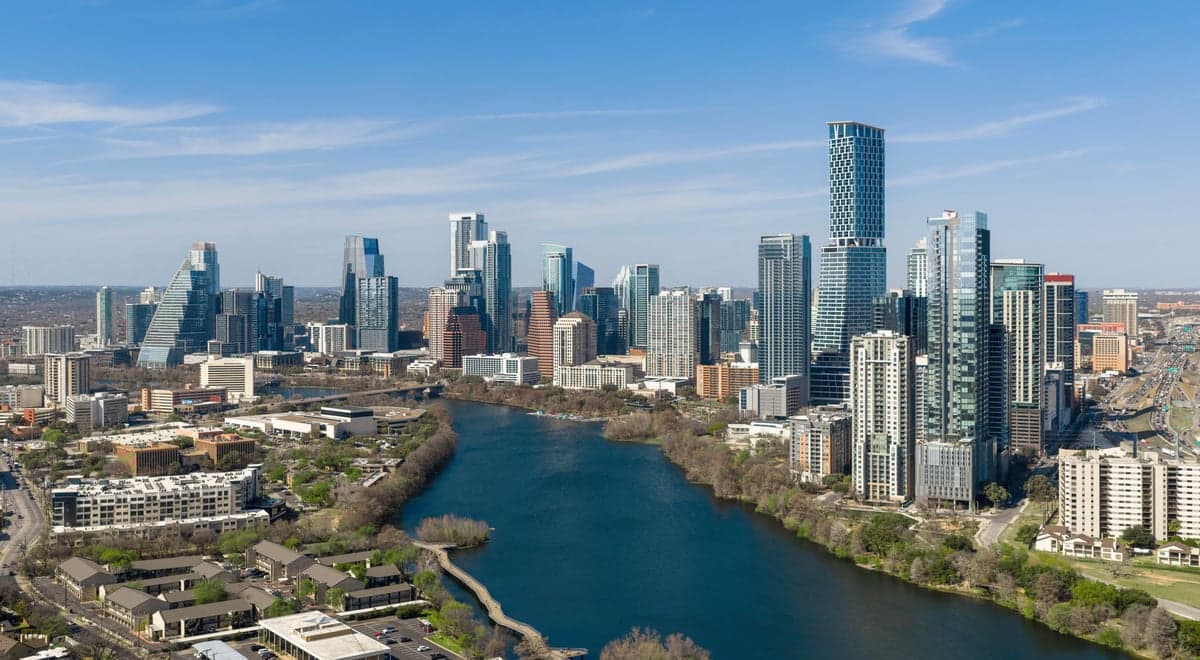
Photo: Wikipedia
Personal Sovereignty in Austin, TX
Strong independent fundamentals that actively favor personal liberty and low regulation.
What does Personal Sovereignty tell us?
Personal Sovereignty measures your capacity for self-reliance and independence with minimal government friction. Higher scores mean fewer barriers between you and the way you want to live... but it assumes you have the space you need and good neighbors.
What does this tell us?
Personal Sovereignty measures your capacity for self-reliance and independence with minimal government friction. Higher scores mean fewer barriers between you and the way you want to live... but it assumes you have the space you need and good neighbors.
State Policy
Energy independence: Net exporter (220% of energy produced in-state)
Personal Liberty
Homesteading

Personal Liberty Analysis
Austin, Texas, presents a deeply contradictory environment for personal sovereignty. While the state of Texas offers a strong legal framework for individual rights—no state income tax, broad gun rights, and a constitutional right to self-defense—the city of Austin itself actively works to erode those freedoms through aggressive local ordinances, high property taxes, and a regulatory culture that favors government control over individual autonomy. For a survivalist or prepper assessing this area, the calculus is clear: the state provides the legal foundation, but the city imposes a heavy, ever-tightening lid on personal liberty. This analysis breaks down where Austin stands on the key pillars of sovereignty: tax burden, self-defense, self-reliance, and personal liberties.
Tax burden and regulatory posture: How local policies erode financial autonomy
Texas’s lack of a state income tax is a major draw for those seeking to keep more of their earnings, but Austin’s local tax burden is among the highest in the state. The combined property tax rate in Travis County typically ranges from 2.0% to 2.5% of assessed home value, which can translate to thousands of dollars annually on a median-priced home. This is compounded by a city that has aggressively raised property taxes to fund expanded government programs, including public transit, affordable housing mandates, and climate initiatives. For a prepper focused on financial self-reliance, this tax burden directly reduces the capital available for land, supplies, and infrastructure. The regulatory posture is equally hostile: Austin’s land development code is notoriously restrictive, with minimum lot sizes, setback requirements, and environmental overlays that make it difficult to build or modify property without extensive permitting. The city’s “CodeNEXT” rewrite, though stalled, signaled a preference for dense, government-planned development over individual property rights. If you value keeping your money and controlling your land, Austin’s local government is an adversary, not an ally.
Self-defense and gun law specifics: What the city does to your Second Amendment rights
Texas state law is among the most permissive in the nation: permitless carry (constitutional carry) for adults 21 and over, no duty to retreat in public spaces (stand your ground), and a strong castle doctrine that presumes a homeowner’s right to use deadly force against intruders. However, Austin’s city council has repeatedly attempted to undermine these rights through local ordinances. In 2021, the city passed a resolution declaring itself a “Second Amendment Sanctuary City” in name only, while simultaneously pushing for a ban on firearms in city-owned buildings and parks—a move that was later struck down by the Texas Attorney General’s office. The practical reality is that while you can legally carry a firearm in most of Austin, you will face a hostile local government that will use every tool at its disposal to restrict where and how you can do so. For example, the city has attempted to ban firearms in public libraries, recreation centers, and even on public transit. If you are a prepper who relies on firearms for self-defense, you must be prepared for a constant legal battle with city hall. The state protects your right, but the city will test it at every turn.
Self-reliance and homesteading viability: Lot sizes, zoning, and off-grid feasibility
Austin’s urban core is a nightmare for anyone seeking self-reliance. The city’s zoning code mandates minimum lot sizes of 5,750 square feet in most single-family zones, but the average lot in central Austin is often smaller, and the city actively encourages high-density development through its “Imagine Austin” comprehensive plan. For a prepper looking to raise chickens, grow a substantial garden, or install solar panels with battery backup, the regulatory hurdles are significant. The city requires permits for most structural changes, and its building codes are strict on electrical and plumbing work, making true off-grid living nearly impossible within city limits. Even rainwater collection, while legal in Texas, is subject to Austin’s water rights and permitting requirements. The best bet for homesteading is to look at the unincorporated areas of Travis County or the surrounding counties—Bastrop, Caldwell, or Hays—where lot sizes can be larger (1-5 acres) and zoning is less restrictive. However, even there, you will face county-level regulations on septic systems, wells, and building setbacks. The bottom line: Austin itself is not a homesteading-friendly environment. If self-reliance is your goal, you need to be outside the city’s jurisdiction.
Personal liberties: Parental rights, medical autonomy, speech, and property
On paper, Texas protects parental rights through state law, including the right to direct a child’s education and medical care. However, Austin’s school district (AISD) has been a battleground for progressive policies, including critical race theory and gender ideology curricula, which many conservative parents view as an infringement on their authority. The city has also been a leader in vaccine mandates for city employees and contractors, and during the COVID-19 pandemic, it imposed some of the strictest mask and business closure orders in the state. Medical autonomy is further constrained by the city’s support for abortion access (though state law now bans it) and its funding of needle exchange programs, which some see as enabling drug use rather than promoting health. Free speech is generally protected under the First Amendment, but Austin has attempted to restrict public protests and demonstrations through permit requirements and noise ordinances. Property rights are under constant assault from the city’s zoning and historic preservation boards, which can delay or deny development projects for years. For a prepper who values the ability to make independent decisions about family, health, and property, Austin’s local government is a persistent obstacle.
In the broader context of Texas, Austin stands out as a city where personal sovereignty is under siege from local government, even as the state provides a strong legal foundation. Compared to other major Texas cities like Houston or San Antonio, Austin’s regulatory environment is more restrictive and its political culture more hostile to individual autonomy. For a survivalist or prepper, the best strategy is to live outside the city limits—in a county like Burnet, Llano, or Bastrop—where you can benefit from Texas’s state-level protections while avoiding Austin’s local overreach. The city itself is a place to work, not to live freely. If you must live in Austin, be prepared for a constant fight to preserve your rights against a government that sees personal sovereignty as a threat to its control.

* Values derived from national, state, county, city and local statistics and may differ in a specific area. Last updated: 2026-04-22T01:53:59.000Z
Narrative content on this page is AI-generated and may contain mistakes. Verify any details that matter before acting on them.
ReloMaps may earn a commission from affiliate links at no extra cost to you.

