 Popular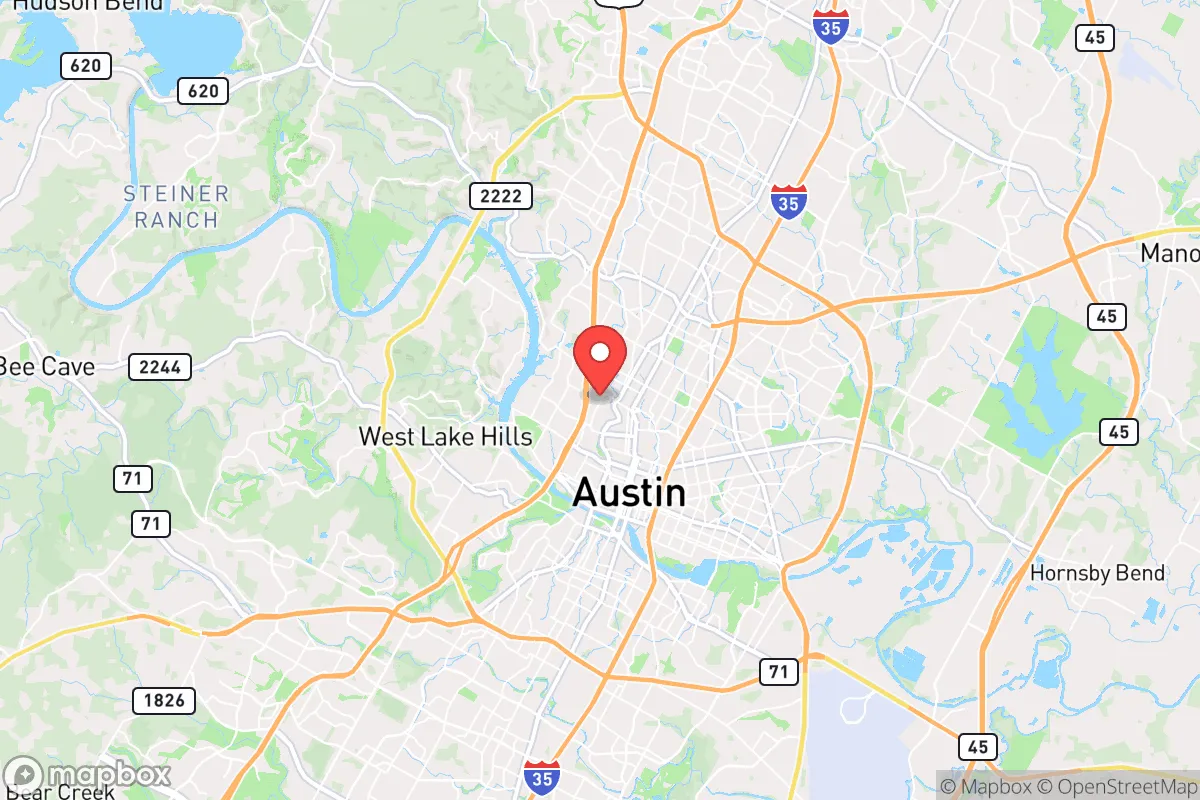
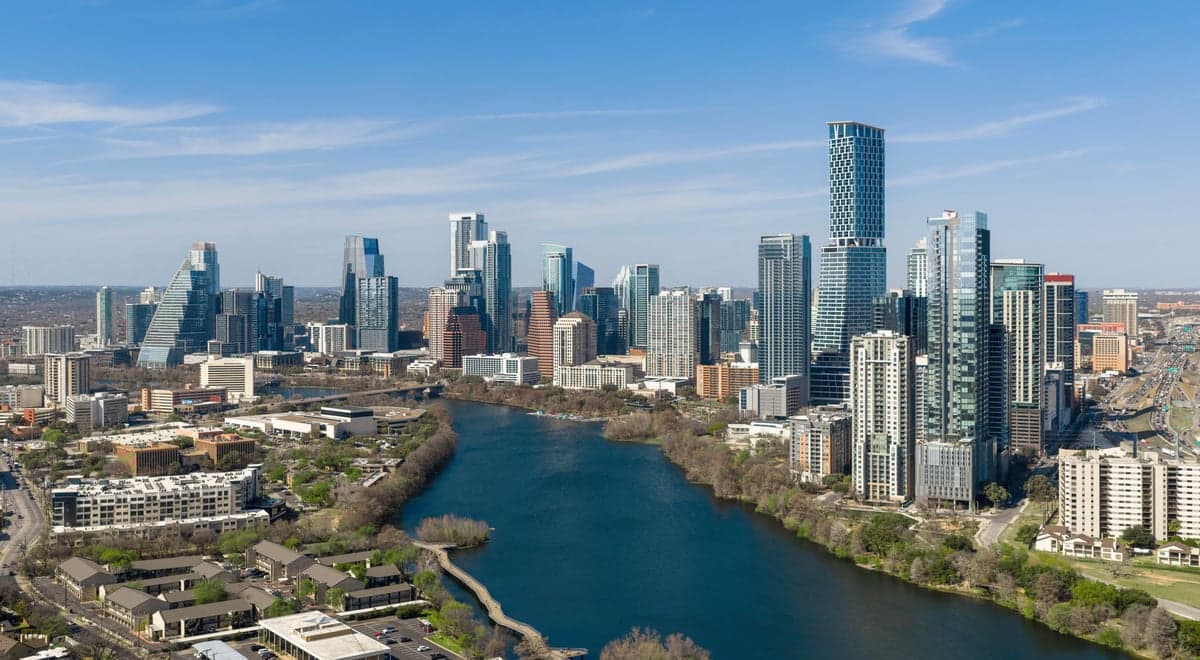
Photo: Wikipedia
Political ClimatePolitical Climate in Austin, TX
District shown is the primary district for this city’s centroid. Cities may span multiple districts.
Local Political AnalysisPolitical Analysis of Austin, TX
Austin’s political climate has shifted dramatically over the past two decades, and if you’re looking at the numbers, the Cook PVI of D+26 tells you everything you need to know about how deep blue this city has become. It wasn’t always this way—Austin used to be a quirky, live-and-let-live kind of place where you could have a beer with a libertarian and a liberal at the same table. Now, the city council and county leadership have embraced a progressive agenda that feels less like community consensus and more like top-down social engineering. The trajectory is clear: Austin is moving further left every election cycle, and the old-school, hands-off spirit that made it famous is getting squeezed out.
How it compares
If you drive just 20 miles outside the city limits, you’ll hit a completely different political reality. Places like Round Rock, Cedar Park, and Kyle still lean conservative, with many residents voting Republican in local and national races. Even Bastrop and Lockhart, just a half-hour southeast, feel like they belong to a different state compared to Austin’s city core. The contrast is stark: while Austin’s leaders push for higher taxes, stricter land-use regulations, and expansive government programs, the surrounding suburbs and rural areas are fighting to keep property rights intact and local control over schools. It’s a tale of two worlds, and the tension between them is only growing as Austin’s policies start to spill over into neighboring counties.
What this means for residents
For the average person living in Austin, the political shift has real consequences on daily life. Property taxes have skyrocketed as the city funds new social programs and infrastructure projects that many residents didn’t vote for. You’ll also see more government involvement in things like housing—mandates for affordable units, restrictions on short-term rentals, and zoning changes that limit what you can do with your own land. Personal freedoms, especially around business operations and property use, are being chipped away in the name of equity and sustainability. If you value the ability to make your own choices without a city council vote, you’ll find that freedom harder to come by here than it was a decade ago.
On the cultural side, Austin still has its music and food scene, but the vibe has changed. The city’s identity used to be “Keep Austin Weird”—a celebration of individuality and small-scale creativity. Now, the dominant culture feels more corporate and politically uniform. Neighborhood associations and local boards are increasingly dominated by progressive activists, and dissenting voices on issues like school curriculum or police funding are often shouted down. Longtime residents I know say it’s become exhausting to speak up if you don’t toe the party line. Looking ahead, unless there’s a serious pushback at the ballot box, I expect Austin to keep doubling down on policies that prioritize government solutions over personal responsibility. If that doesn’t sit right with you, you might want to keep an eye on those suburbs—they’re still holding the line.

State Political ClimatePolitical Climate in Texas
State Political AnalysisPolitical Environment in the State
Texas has been a reliably Republican state for decades, but the political climate is far from monolithic. The dominant coalition is a mix of suburban conservatives, rural traditionalists, and a growing number of business-minded transplants, though the state’s overall partisan lean has shifted from a solid +9-point Republican margin in 2012 to a narrower +5.5 points in 2024. Over the last 10-20 years, the trajectory has been one of slow but steady Democratic gains in fast-growing metros, while the rural and exurban vote has hardened, creating a state that feels more contested than it did in the Bush era.
Urban vs. rural divide
The political map of Texas is a study in contrasts. The major metros—Houston, Dallas-Fort Worth, San Antonio, and Austin—are the engines of Democratic growth. Harris County (Houston) flipped blue in 2018 and has stayed there, while Travis County (Austin) votes Democratic by margins of 40+ points. Meanwhile, the rural and small-town counties that make up the vast majority of the state’s landmass vote Republican by 60-80 point margins. The real battleground is the suburbs: places like Collin County (north of Dallas) and Fort Bend County (southwest of Houston) have seen dramatic shifts. Collin County, once a GOP stronghold, voted for Trump by only 4 points in 2024, down from a 20-point margin in 2012. On the flip side, the Permian Basin (Midland-Odessa) and the Panhandle (Amarillo, Lubbock) remain deeply red, driven by oil and agriculture. The Rio Grande Valley (McAllen, Brownsville) is a wild card—historically Democratic but trending Republican, with Starr County flipping to Trump in 2024 after decades of blue voting.
Policy environment
Texas’s policy environment is defined by a low-tax, low-regulation posture that appeals to conservatives. There is no state income tax, and property taxes are high (averaging 1.6% of home value) but capped by the 2019 property tax reform (SB 2) that limits annual revenue growth for local governments to 3.5% without voter approval. The regulatory climate is business-friendly, with no state-level minimum wage above the federal $7.25 and a right-to-work law that weakens union power. On education, the state passed school choice legislation in 2025 (HB 450), creating education savings accounts for families, though rural districts fought it hard. Healthcare remains a flashpoint: Texas has not expanded Medicaid under the ACA, leaving roughly 1.5 million uninsured, but the state has invested in rural hospital funding. Election laws have tightened—SB 1 (2021) restricted mail-in voting, added ID requirements, and banned drive-through voting, which critics call suppression but supporters call integrity. For a conservative, the policy environment is largely favorable, though the property tax burden is a real pain point.
Trajectory & freedom
On personal liberty, Texas has been a mixed bag. The state expanded gun rights significantly with constitutional carry (HB 1927) in 2021, allowing permitless carry for anyone over 21. That’s a clear win for freedom. Parental rights were strengthened with the Parental Bill of Rights (SB 147) in 2023, giving parents more say in school curriculum and medical decisions. On medical autonomy, Texas banned nearly all abortions in 2021 (SB 8) and passed a law protecting doctors who refuse to perform gender transition procedures on minors (SB 14, 2023). However, there are concerning trends. The state’s COVID-era emergency powers were used to shut down businesses and mandate masks in some counties, though Governor Abbott ended those early. Property rights took a hit with the Texas Railroad Commission’s increased permitting power over mineral rights, which some landowners see as overreach. The biggest freedom concern is the growing use of state preemption to override local ordinances—for example, banning local fracking bans (HB 40, 2015) and preventing cities from defunding police (SB 22, 2021). While this keeps policy uniform, it also limits local control. Overall, Texas is moving in a more free direction on guns and parental rights, but the trend toward centralizing power in Austin is a red flag for those who value local autonomy.
Civil unrest & political movements
Texas has seen its share of political flashpoints. The 2020 Black Lives Matter protests in Austin, Dallas, and Houston were large and occasionally violent, leading to property damage and a lasting tension between police and activists. On the right, the Texas Nationalist Movement (Texit) has gained some traction, with a 2024 poll showing 18% support for secession, though it remains fringe. Immigration politics are a constant: the state launched Operation Lone Star in 2021, deploying state troopers and National Guard to the border, and passed SB 4 (2023) allowing state police to arrest suspected illegal immigrants—a law currently tied up in court. Sanctuary city bans (SB 4, 2017) remain in effect, and the state has bused migrants to New York and Chicago as a protest against federal policy. Election integrity remains a hot button: the 2020 and 2022 elections saw claims of irregularities in Harris County, leading to the 2023 removal of the county elections administrator and a state takeover of election oversight in the county. For a new resident, the most visible flashpoint is likely the border issue, with National Guard checkpoints and increased law enforcement presence in the Rio Grande Valley.
Projection
Over the next 5-10 years, Texas is likely to become more competitive but not flip blue. The key demographic driver is in-migration: roughly 1,000 people move to Texas daily, many from California and the Northeast. These transplants tend to be moderate to conservative on economics but more liberal on social issues, which could soften the state’s hard-right edge. The suburbs of Dallas, Houston, and San Antonio will continue to trend purple, while rural areas will stay deep red. The Rio Grande Valley’s shift toward the GOP could accelerate if Democrats fail to address economic concerns there. On policy, expect continued battles over school choice, property tax reform, and water rights (a growing issue in the drought-prone west). The state’s population is projected to hit 35 million by 2035, and the political center of gravity will shift toward the I-35 corridor from San Antonio to Dallas. For a conservative moving in now, the state will likely remain a safe haven for low taxes and gun rights, but the culture war fights over education and immigration will intensify. The biggest risk is that the state’s growing diversity and urban population could push it toward a more purple status, making future elections less predictable.
For a new resident, the bottom line is this: Texas offers a strong conservative policy foundation—no income tax, constitutional carry, school choice, and a business-friendly environment—but it’s not a libertarian paradise. Property taxes are high, the state government is increasingly assertive over local control, and the urban-rural divide means your experience will vary dramatically depending on where you land. If you move to a suburb like Frisco or Katy, you’ll find a comfortable, conservative-leaning community with good schools. If you land in Austin or Dallas proper, you’ll be in a blue bubble with progressive city policies. The key is to pick your county wisely—your vote and your tax bill will depend on it.
* Values derived from national, state, county, city and local statistics and may differ in a specific area. Last updated: 2026-04-22T01:53:59.000Z
Narrative content on this page is AI-generated and may contain mistakes. Verify any details that matter before acting on them.
ReloMaps may earn a commission from affiliate links at no extra cost to you.

