 Popular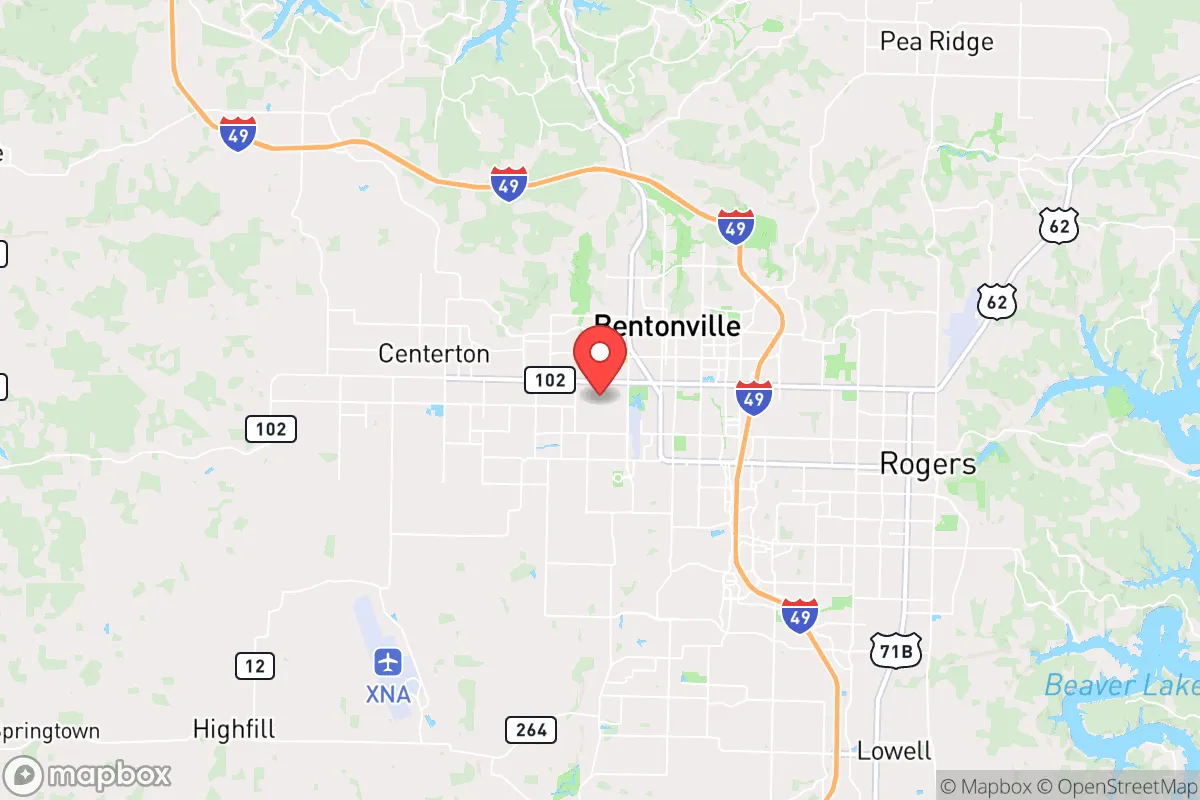
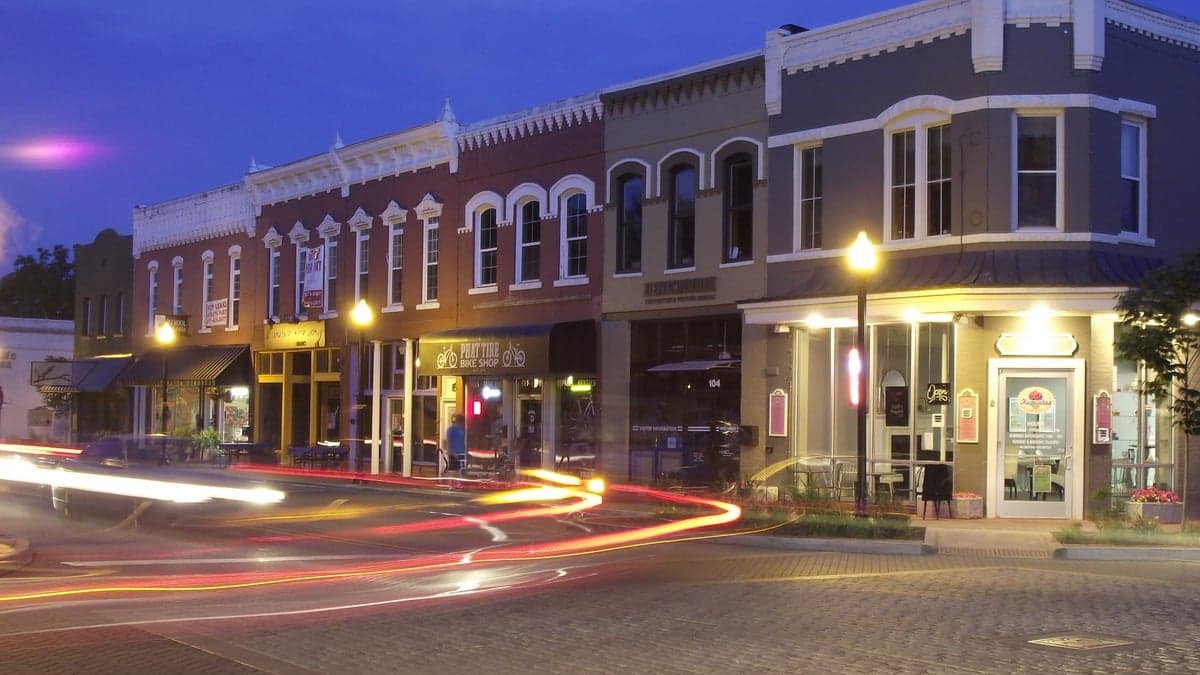
Photo: Wikipedia
Political ClimatePolitical Climate in Bentonville, AR
District shown is the primary district for this city’s centroid. Cities may span multiple districts.
Local Political AnalysisPolitical Analysis of Bentonville, AR
Bentonville, Arkansas, has long been a solidly conservative community, and the numbers back that up with a Cook PVI of R+13. But if you've lived here as long as I have, you know the political climate isn't quite as simple as that single stat suggests. The town's rapid growth, fueled by Walmart's headquarters and the influx of out-of-state transplants, has introduced a noticeable cultural and ideological shift, especially in the last five to ten years. While the county and state remain deeply red, you can feel a subtle tension between the old-guard, limited-government conservatives and a newer, more progressive-leaning crowd that's settling into the downtown lofts and new subdivisions.
How it compares
To really understand Bentonville's politics, you have to look at the surrounding areas. Drive 20 minutes south to Fayetteville, home of the University of Arkansas, and you'll find a reliably blue dot in a red state—a place where you'll see more Harris-Walz yard signs than Trump-Pence ones. That contrast is stark)Skip. Meanwhile, head east to Rogers or west to Bella Vista, and you're back in deep-red territory, where the local chatter is about property rights, school choice, and keeping taxes low. Bentonville sits right in the middle of that spectrum. It's still conservative, but it's become the kind of place where you'll hear debates about bike lanes and public art funding alongside the usual talk of Second Amendment rights and lower regulations. The worry for a lot of us long-timers is that the progressive influence from Fayetteville is creeping north, and with it, a tendency toward government overreach into things like zoning, local business mandates, and even school curriculum.
What this means for residents
For the average resident, this political shift means you have to be more vigilant about local elections than ever before. The city council and school board races here are where the rubber meets the road. In the past, you could pretty much count on a hands-off approach from local government—low taxes, minimal interference in your business or your property. Now, you're seeing proposals for more stringent development regulations, talk of "equity" initiatives in schools, and a general push for the kind of top-down planning that feels more like a coastal city than an Ozark town. If you value personal freedoms—like the right to run your business without a dozen new permits or to decide what your kids learn without a school board micromanaging it—you need to pay attention. The good news is that the county and state governments are still overwhelmingly conservative, which acts as a check on any truly radical local moves. But the trend line is concerning if you believe government's role should be small and local.
What sets Bentonville apart culturally and politically
Culturally, Bentonville is a bit of an odd duck. You've got the Crystal Bridges Museum and a world-class food scene that draws a certain creative class, but you also have a deep-rooted hunting, fishing, and church-going population. Politically, that creates a unique dynamic. The most notable distinction is the strong libertarian streak that runs through a lot of the local conservative base. It's not just about being Republican; it's about a genuine skepticism of any government—local, state, or federal—telling you what to do. You see it in the fierce opposition to mask mandates during the pandemic, the pushback against any form of property tax increases, and the general attitude of "leave us alone." That said, the influx of new residents from blue states is slowly diluting that. The long-term outlook? I'd say Bentonville will remain a conservative town for the foreseeable future, but it's going to be a more moderate, "country club" conservatism, not the rugged, individualistic kind that built this place. If that shift bothers you, you might find yourself more comfortable in the smaller towns just outside the city limits, where the old ways still hold strong.

State Political ClimatePolitical Climate in Arkansas
State Political AnalysisPolitical Environment in the State
Arkansas has been a reliably red state for decades, but its conservatism is of a specific, populist strain — less about libertarian small-government purity and more about cultural traditionalism and a deep suspicion of federal overreach. The state hasn’t voted for a Democratic presidential candidate since Bill Clinton’s 1996 re-election, and the GOP now holds every statewide office, both U.S. Senate seats, and supermajorities in the state legislature. Over the last 10-20 years, the shift has been dramatic: as late as 2010, Democrats still controlled both chambers of the General Assembly. Today, the dominant coalition is a mix of rural evangelicals, suburban fiscal conservatives, and a growing number of transplants from blue states seeking lower taxes and fewer regulations. The 2024 election saw Donald Trump carry Arkansas by over 30 points, with the deepest red counties — like Stone, Searcy, and Van Buren — hitting 85%+ Republican margins.
Urban vs. rural divide
The political map of Arkansas is a classic story of a few blue islands in a deep red sea. Pulaski County, home to Little Rock, is the state’s Democratic stronghold, delivering about 60% for Joe Biden in 2020. But even here, the suburbs tell a different story: Chenal Valley and West Little Rock lean Republican, while the city’s core and the Wrightsville area are heavily Democratic. Washington County (Fayetteville) and Benton County (Bentonville, Rogers) are the other notable blue-trending areas, driven by the University of Arkansas and the corporate transplants at Walmart, Tyson, and J.B. Hunt. However, these counties are not reliably blue — they’ve been trending purple, with Republicans still winning most local races. The real engine of the state’s conservatism is the vast rural expanse: the Arkansas River Valley, the Ozarks, and the Delta. Baxter County (Mountain Home) and Boone County (Harrison) are among the most reliably Republican in the nation, often exceeding 80% for GOP candidates. The Delta region, once a Democratic stronghold due to the Black vote, has seen a sharp rightward shift among white voters, with counties like Mississippi County flipping from blue to red over the past decade.
Policy environment
Arkansas’s policy environment is aggressively conservative, with a strong emphasis on low taxes and limited government. The state has a flat income tax rate of 4.4% (down from 7% in 2015), and the legislature is actively working toward full elimination. Property taxes are among the lowest in the nation, with a median effective rate of 0.62%. Sales tax is high — the state rate is 6.5%, and local add-ons can push it over 10% in places like North Little Rock — but there’s no tax on groceries or prescription drugs. Education policy is a major battleground: the state passed the Arkansas LEARNS Act in 2023, which created universal school choice through Education Freedom Accounts, banned critical race theory and “indoctrination” in classrooms, and raised teacher salaries. Healthcare is more complicated — Arkansas expanded Medicaid under the private option model, but the state has also passed some of the strictest abortion laws in the country, including a near-total ban with no exceptions for rape or incest. Election laws have been tightened: voter ID is required, absentee ballot drop boxes are banned, and early voting hours were standardized. The state also passed a law making it a felony for election officials to send unsolicited mail-in ballot applications.
Trajectory & freedom
On the freedom front, Arkansas has been moving decisively in the direction of expanded personal liberty for conservatives, while tightening restrictions in areas where progressive activism has been most visible. The Arkansas Firearms Freedom Act and subsequent permitless carry law (Act 777 of 2021) mean you can carry a concealed handgun without a license. The state also passed a Second Amendment Sanctuary Act in 2021, prohibiting state resources from being used to enforce federal gun laws that violate the state constitution. Parental rights have been strengthened: the Arkansas Parental Rights Amendment (2023) gives parents explicit authority over their children’s education, medical decisions, and moral upbringing. Medical freedom took a hit with the state’s strict abortion ban, but on the other hand, Arkansas has no vaccine mandates and passed a law prohibiting discrimination against the unvaccinated. Property rights are strong — the state has a robust right-to-farm law and limits on eminent domain. The biggest concern for liberty-minded residents is the state’s heavy reliance on sales tax, which is regressive and can feel like a hidden burden. Still, the overall trajectory is toward more freedom: the state has been cutting taxes, expanding school choice, and pushing back against federal overreach in areas like environmental regulation and gun control.
Civil unrest & political movements
Arkansas has seen relatively little civil unrest compared to other states, but there have been notable flashpoints. The 2020 Black Lives Matter protests in Little Rock were largely peaceful, though there were some instances of property damage and clashes with police. The state’s response was swift: the legislature passed a law increasing penalties for blocking highways during protests and created a new crime of “riot boosting” for encouraging violence. Immigration politics are less heated than in border states, but Springdale and Rogers have seen tensions rise as the Marshallese and Hispanic populations have grown. The state passed a law requiring local law enforcement to cooperate with federal immigration authorities (the Arkansas Truth in Sentencing Act), and there are no sanctuary cities. Election integrity has been a major issue: the 2020 election saw a lawsuit over ballot curing procedures, and the state’s GOP-led legislature has since passed multiple bills to tighten voting rules. The most visible political movement in recent years has been the “Parents’ Bill of Rights” campaign, which mobilized thousands of families to school board meetings and ultimately led to the LEARNS Act. On the far right, there’s a small but vocal constitutional sheriff movement in counties like Cleburne and Faulkner, where sheriffs have publicly stated they will not enforce federal gun laws they deem unconstitutional.
Projection
Over the next 5-10 years, Arkansas is likely to become even more conservative, but with a growing libertarian-populist flavor. The in-migration from California, Illinois, and other blue states — particularly to Bentonville and Rogers — is bringing some cultural diversity, but these newcomers are overwhelmingly conservative-leaning themselves, drawn by low taxes and a business-friendly climate. The biggest demographic shift is the aging of the rural population, which could eventually soften the GOP’s margins in the Delta and Ozarks. However, the state’s growing Hispanic population, concentrated in Springdale and De Queen, is not voting as a monolith — many are socially conservative and could become a reliable GOP constituency. The biggest wildcard is the state’s education system: if the LEARNS Act succeeds in raising outcomeshare, it could cement Arkansas as a national model for school choice and attract more families. If it fails, the backlash could open the door to a more moderate Republican or even a competitive Democrat in a few cycles. Realistically, expect the state to continue cutting taxes, expanding school choice, and passing laws that prioritize parental rights and gun rights. The biggest threat to this trajectory is federal overreach — if a future Democratic administration tries to force progressive policies on education, energy, or healthcare, Arkansas will likely be at the forefront of the resistance.
For a new resident, the bottom line is this: Arkansas offers a high degree of personal freedom, low taxes, and a political culture that respects traditional values. You won’t find the libertarian individualism of New Hampshire or the fiscal conservatism of Texas, but you will find a state that is actively fighting to preserve its way of life against federal encroachment. The biggest practical considerations are the sales tax burden and the quality of healthcare in rural areas — but if you’re looking for a place where your rights are respected, your kids can get a school choice education, and your neighbors share your values, Arkansas is a solid bet. Just be prepared for the humidity and the fact that everyone you meet will want to know what church you go to.
* Values derived from national, state, county, city and local statistics and may differ in a specific area. Last updated: 2026-04-29T02:30:17.000Z
Narrative content on this page is AI-generated and may contain mistakes. Verify any details that matter before acting on them.
ReloMaps may earn a commission from affiliate links at no extra cost to you.

