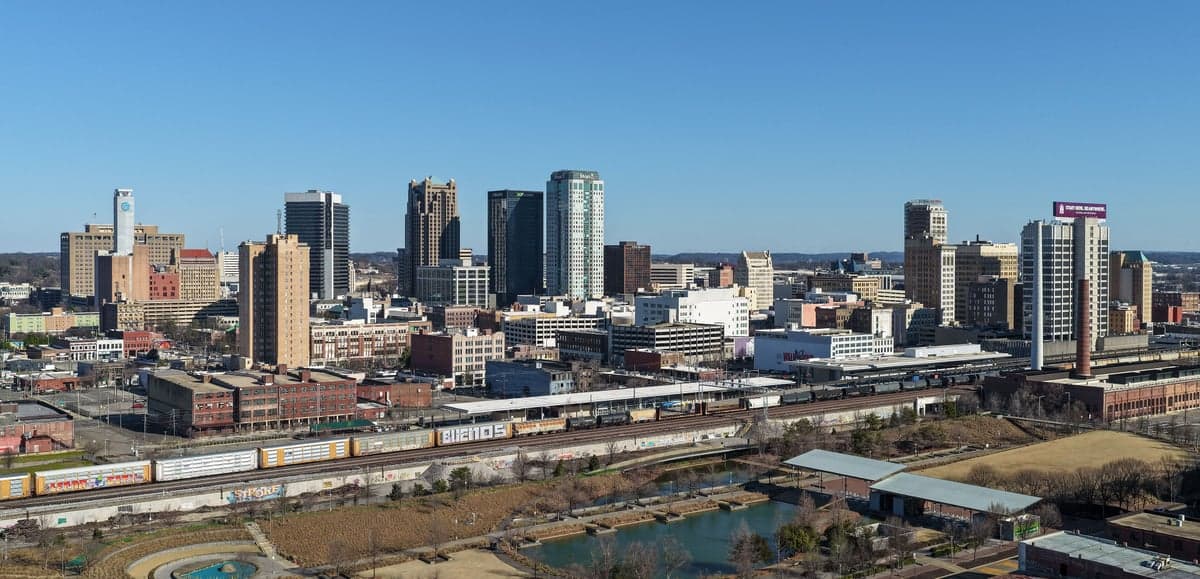
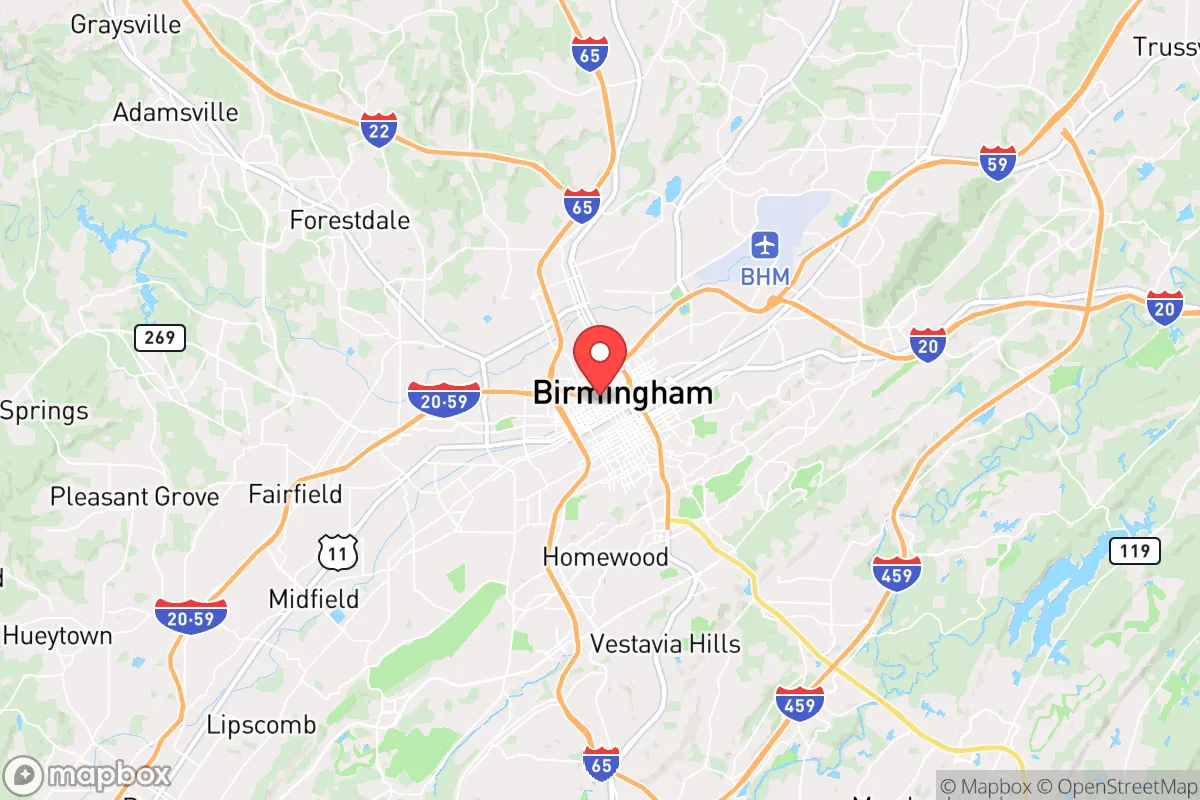
Photo: Wikipedia
Find The Best Places To Live
in Birmingham
PRO TIP! You can paste a Zillow or Redfin link to get info on that property.
What It's Like Living in Birmingham, AL
Living in Birmingham, Alabama, feels like being part of a city that’s constantly rediscovering itself—a place where old steel-mill grit meets new craft breweries and a surprisingly vibrant food scene. It’s not a polished Southern postcard like Charleston or Savannah; it’s a working-class town with a complicated history, a youngish median age of 35.9, and a population of just under 200,000 that gives it a big-small-town feel. You’ll find people here who are fiercely loyal to their neighborhoods, their high school football teams, and their favorite barbecue joint, and they’ll tell you straight up that the city has real problems—but also real soul.
The Daily Rhythm: What People Actually Do
Most weekdays in Birmingham revolve around a short commute—the average is just over 21 minutes, which means you can live in a leafy suburb like Mountain Brook or Homewood and still be downtown in 15 minutes. The city’s economy leans heavily on healthcare (UAB is the largest employer), banking (Regions Financial), and a growing tech scene around the Innovation District. The median household income is $44,376, which is below the national average, but the cost of living index sits at 74—so your dollar stretches further here than in most metro areas. A typical weekend might start with a hike at Red Mountain Park or Oak Mountain State Park (just 20 minutes south), then brunch at a spot like The Essential or Big Bad Breakfast, followed by an afternoon at the Birmingham Zoo or catching a minor-league baseball game at Regions Field. People shop at the Piggly Wiggly for basics, hit the Pepper Place farmers market on Saturday mornings, and gather at places like Avondale Brewing Company or TrimTab Brewing for live music and local beer. It’s a city where you can still buy a home for a median of $138,600—a number that shocks transplants from the coasts—and where a night out won’t break the bank.
Sports, Community, and What Brings People Together
High school football is practically a religion here, especially in the suburbs. Hoover High School’s stadium holds 10,000 people and games are a Friday-night ritual that draws parents, alumni, and neighbors who’ve never set foot in a classroom there. College football is huge too—Alabama and Auburn fans coexist uneasily, and you’ll see flags and car decals year-round. There’s no major pro sports team in Birmingham, but the Birmingham Barons (the White Sox’s Double-A affiliate) draw solid crowds at a beautiful downtown ballpark, and the Birmingham Legion FC (USL soccer) has a passionate, growing fanbase. The city also hosts the Magic City Classic, the annual football game between Alabama A&M and Alabama State that’s as much a cultural festival as a game. For music and festivals, the Sloss Music & Arts Festival and Sidewalk Film Festival punch above the city’s weight, and the historic Alabama Theatre and Lyric Theatre host concerts, movies, and comedy shows. The Birmingham Museum of Art is free and excellent, and the McWane Science Center is a kid magnet. What’s distinctive is that these events feel community-driven, not corporate—people show up because they’re invested, not because it’s the trendy thing to do.
Pros and Cons of Living Here
Let’s be honest about the upsides and downsides. On the plus side: the cost of living is genuinely low, the food scene is nationally underrated (try the fried chicken at Eugene’s Hot Chicken or the oysters at Automatic Seafood), and you’re within a 2-3 hour drive of Atlanta, Nashville, and the Gulf Coast beaches. The weather is mild enough for outdoor activities most of the year, though summers are humid and thunderstorms are common. The downsides are real and not hidden. The violent crime rate is 1,233.9 per 100,000—significantly higher than the national average—and while most violent crime is concentrated in specific neighborhoods, it’s a concern that affects the city’s reputation and residents’ sense of safety. Public schools are a mixed bag; many families with means opt for private schools or move to suburbs with strong districts. Traffic is manageable compared to larger metros, but the highway system (especially I-65 and I-20/59) can get clogged during rush hour. The city’s racial and economic divides are visible and historically entrenched, and while there’s a growing effort to revitalize downtown and the Northside, progress is uneven. Longtime residents love the sense of community and the lack of pretension, but they’ll also tell you that the city’s potential is held back by fragmented leadership and a reluctance to fully reckon with its past.
Who Fits In Here
Birmingham works best for people who value affordability and authenticity over polish. It’s a good fit for young professionals in healthcare, tech, or finance who want a short commute and a lower-stress lifestyle, and for families who are willing to research school options carefully. It’s less suited for someone seeking a 24/7 nightlife scene or a hyper-progressive cultural environment—the city leans moderate to conservative, and the pace is slower. The kind of person who thrives here is someone who doesn’t mind a little grit, who wants to be part of a community rather than just a consumer of amenities, and who can appreciate a city that’s trying hard to improve while still carrying the weight of its history. If you’re looking for a place where you can buy a house for under $150K, grab a beer at a brewery with a view of an old iron furnace, and know your neighbors by name, Birmingham might surprise you.

Similar small cities to Birmingham
* Values derived from national, state, county, city and local statistics and may differ in a specific area. Last updated: 2026-04-19T18:45:00.000Z
Narrative content on this page is AI-generated and may contain mistakes. Verify any details that matter before acting on them.
ReloMaps may earn a commission from affiliate links at no extra cost to you.

