Photo: Wikipedia
Demographics of Boulder, CO
Affluence Level in Boulder, CO
An upper-middle-class area. Household wealth, education levels, and homeownership run ahead of national benchmarks.
People of Boulder, CO
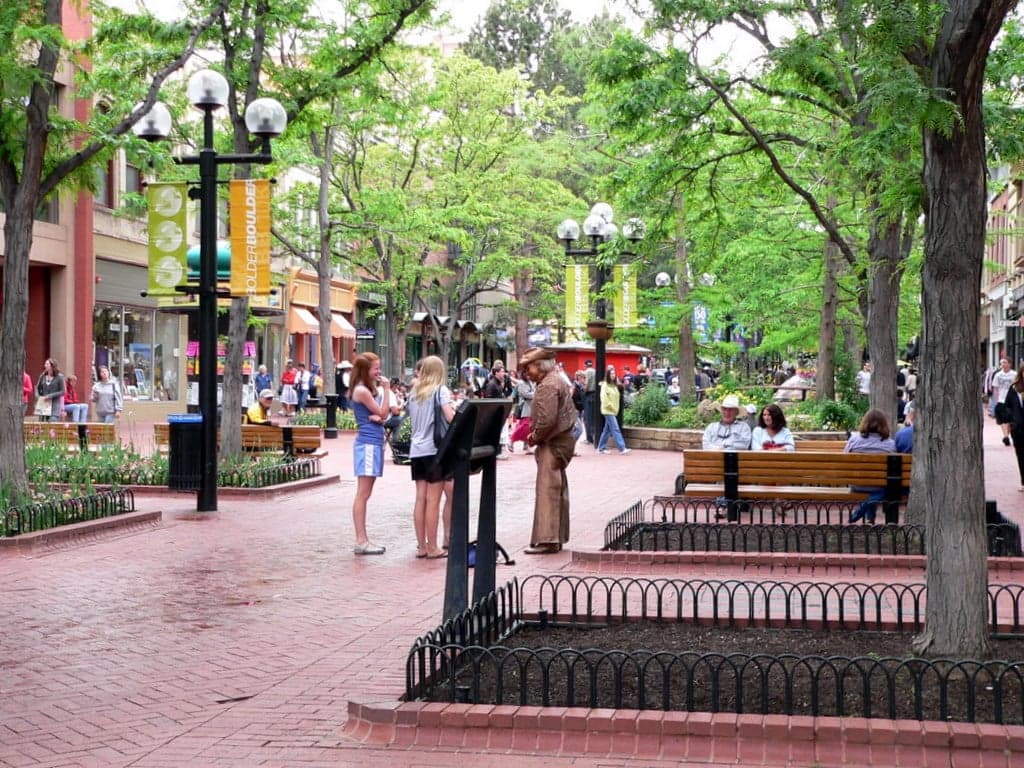
Boulder, Colorado, is a city of 106,274 residents that is notably educated, affluent, and politically progressive, with 76.8% of adults holding a bachelor’s degree or higher. The population is predominantly white (77.7%), with a Hispanic community of 11.2% and smaller East/Southeast Asian (4.2%) and Indian-subcontinent (1.5%) populations. The city’s identity is shaped by the University of Colorado Boulder, a strong outdoor recreation culture, and a tech and research economy, but its high cost of living and housing constraints are driving demographic shifts toward older, wealthier residents.
How the city was settled and grew
Boulder was founded in 1858 during the Colorado Gold Rush, with the first wave of settlers being white prospectors and farmers drawn by mining claims and the promise of agricultural land along Boulder Creek. The city was formally incorporated in 1871, and the arrival of the railroad in 1873 spurred growth, bringing merchants and laborers. The University of Colorado Boulder, established in 1876, became the city’s economic and cultural anchor, attracting faculty and students from across the country. Early neighborhoods like Mapleton Hill and Whittier were built by these white, middle-class families, with Mapleton Hill featuring Victorian homes of university professors and business owners. The Hispanic community has deep roots in Boulder, with families arriving as early as the 1900s to work in agriculture and railroad maintenance, settling in the Goss-Grove neighborhood, which remains a historic Latino enclave. Through the mid-20th century, Boulder’s population grew steadily, reaching about 20,000 by 1950, driven by university expansion and the rise of federal research labs like the National Institute of Standards and Technology (NIST) in 1901 and the National Center for Atmospheric Research (NCAR) in 1960.
Modern era (post-1965)
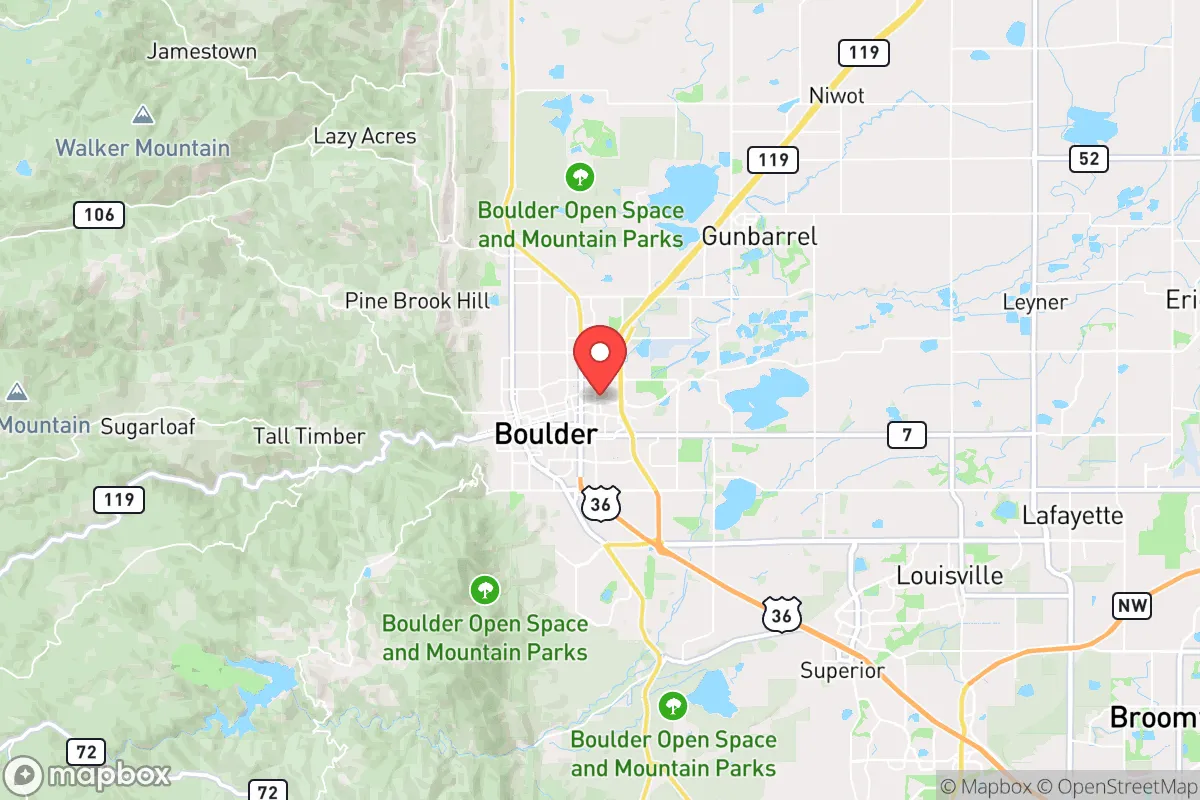
After the 1965 Hart-Cellar Act, Boulder saw limited immigration compared to other U.S. cities, with foreign-born residents making up only 5.5% of the population today. The city’s modern growth has been driven by domestic in-migration of highly educated professionals, particularly from coastal states, attracted by tech companies like IBM (established in Boulder in 1965) and a growing startup scene. This wave settled in newer neighborhoods such as Gunbarrel and North Boulder, which feature larger homes and suburban layouts. The East/Southeast Asian community (4.2%) grew primarily through university-affiliated professionals and graduate students, concentrating near campus in University Hill. The Indian-subcontinent population (1.5%) is similarly tied to tech and academic roles, with no single dominant neighborhood. The Hispanic population, while stable at 11.2%, has faced displacement pressures from rising housing costs, with many families moving to nearby Longmont or Lafayette. The Black population remains very small at 1.0%, reflecting Boulder’s historical lack of industrial job draws that attracted Black migrants in other Colorado cities like Denver. The city’s strict growth management policies, including a 1976 building height limit, have constrained housing supply, pushing out lower-income and younger residents while concentrating wealth.
The future
Boulder’s population is trending older and wealthier, with a median age of 33.6 and a median household income of $86,000 (2023 estimates). The city is homogenizing rather than tribalizing into distinct enclaves, as high housing costs—median home prices exceeding $1 million—filter out all but the affluent. The Hispanic community is plateauing in absolute numbers, with growth shifting to surrounding suburbs. The East/Southeast Asian and Indian-subcontinent populations are likely to grow slowly, tied to university and tech employment, but will remain small shares. The white, college-educated majority is expected to persist, with the city becoming more exclusive demographically. The University of Colorado Boulder continues to attract a transient student population of about 35,000, but many graduates leave due to cost. Over the next 10–20 years, Boulder’s population may stagnate or slightly decline as families are priced out, while the city’s character as a wealthy, progressive, outdoor-oriented enclave solidifies.
For someone moving in now, Boulder offers a high quality of life with strong schools, low crime, and abundant nature, but it is a place where economic barriers are high and demographic diversity is limited. The city is becoming a destination for established professionals and retirees rather than a launching pad for young families or immigrants, making it a stable but exclusive community.

* Values derived from national, state, county, city and local statistics and may differ in a specific area. Last updated: 2026-04-29T01:23:22.000Z
Narrative content on this page is AI-generated and may contain mistakes. Verify any details that matter before acting on them.
ReloMaps may earn a commission from affiliate links at no extra cost to you.

