Photo: Wikipedia
Quality of Life in Boulder, CO
Above-average quality of iife. The area offers a reasonable cost of living, decent mobility, and a mix of neighborhood amenities.
What does Quality of Life tell us?
Quality of Life blends cost of living, nearby amenities, socioeconomic signals, and neighborhood character. City-level scores represent the whole municipality; individual neighborhoods can differ.
What does this tell us?
Quality of Life blends cost of living, nearby amenities, socioeconomic signals, and neighborhood character. City-level scores represent the whole municipality; individual neighborhoods can differ.
Cost of Living
139% above national average
The Real Cost of Living in Boulder, CO for 2026
| Tier | Individual | Family (4) |
|---|---|---|
| Survival | $31k | $58k |
| Comfortable | $151k | $222k |
| Luxury | $156k+ | $242k+ |
| Elite (Top 5%) | $260k+ | $403k+ |
38%
The Area Signal
A metric tracking the socioeconomic signals of the area.
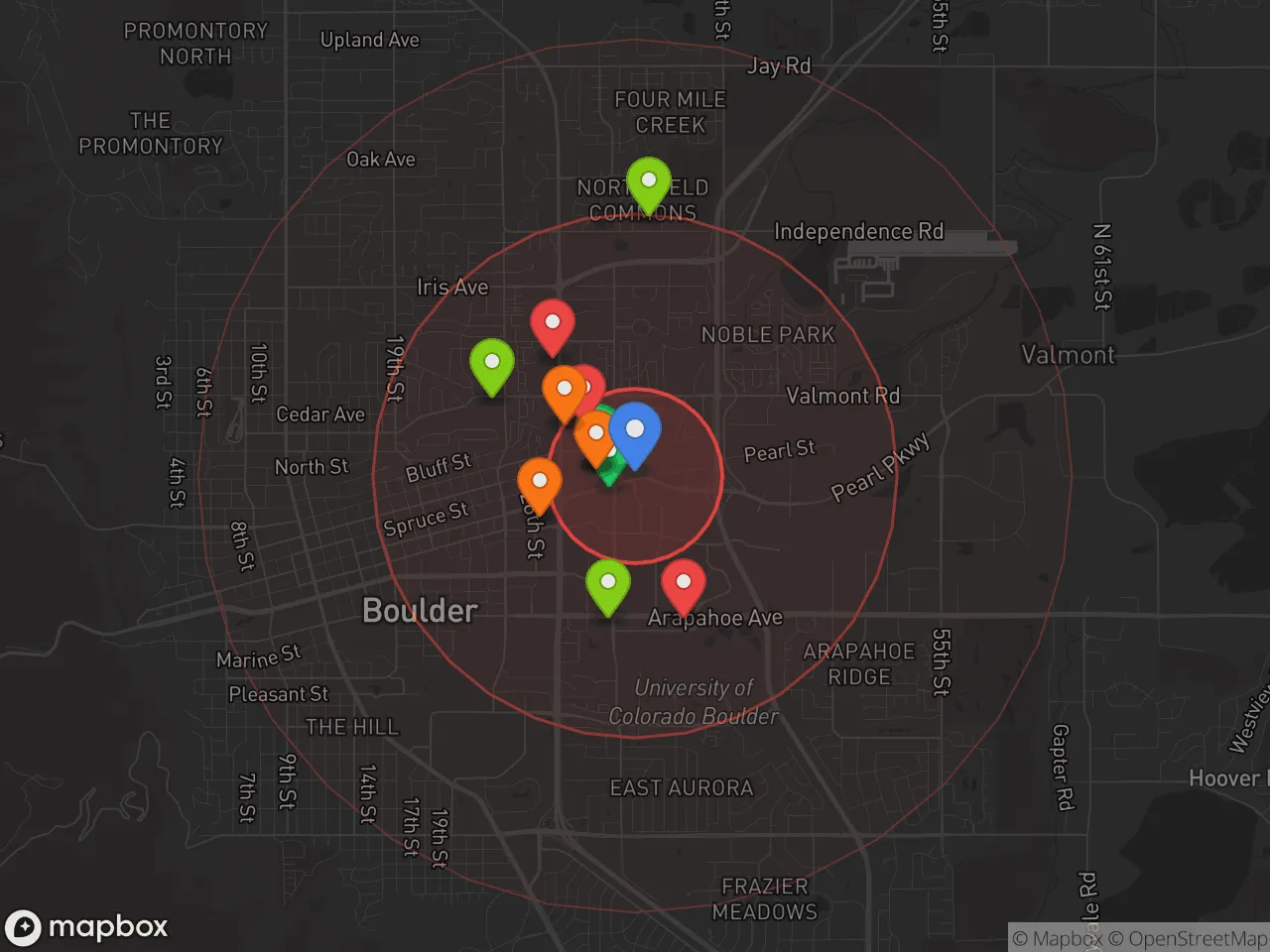
Hobbies
Explore the areaGroceries
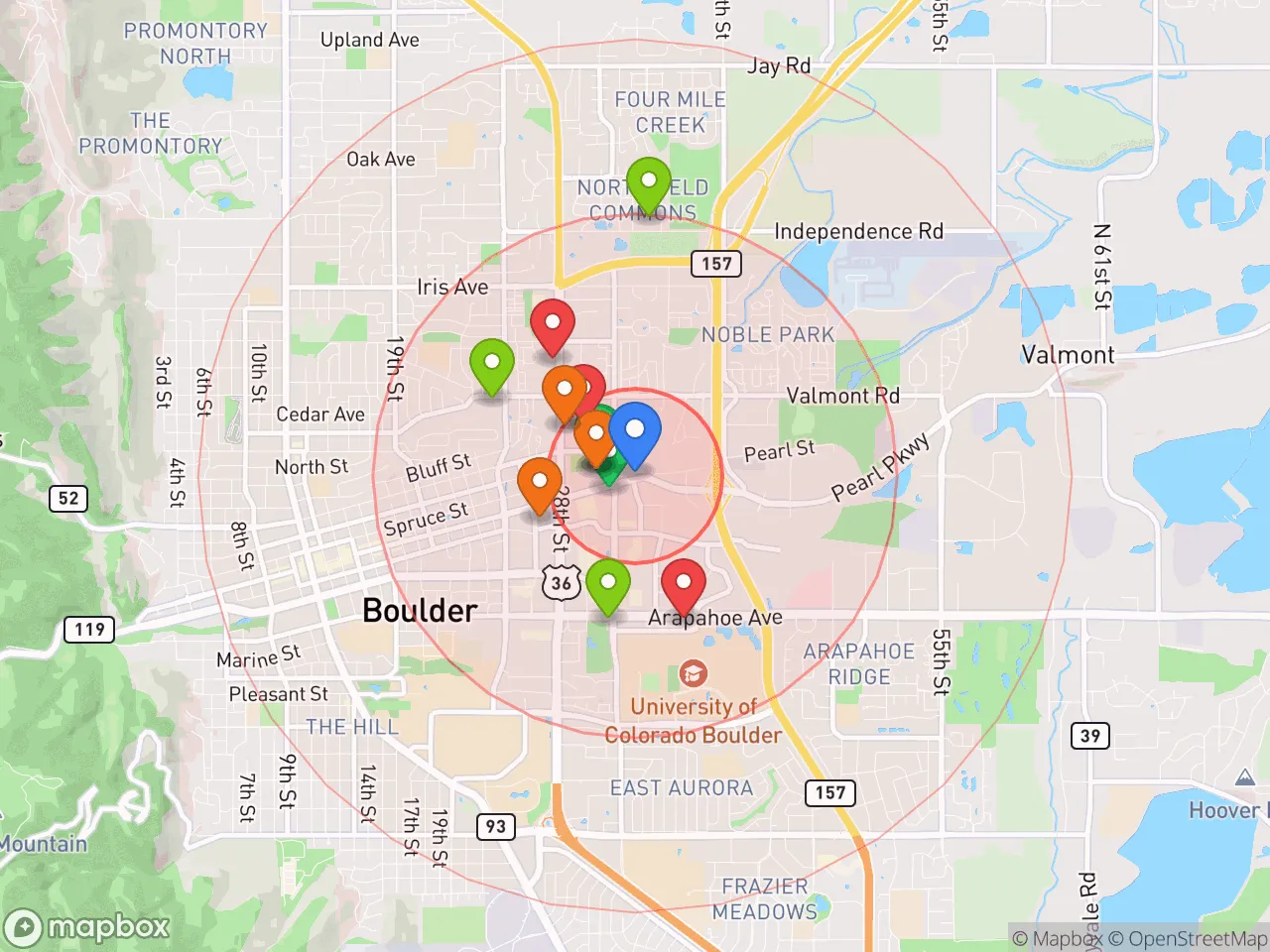
7 within 10 miles
Gas
20 within 10 miles
Hospital
20 within 20 miles
Airport
DEN — Denver International
Post Office
USPS — Boulder, CO
Critical Amenities
Quality-of-Life Analysis
Boulder, Colorado, is one of the most affluent and highly educated cities in the Rocky Mountain region, with a cost-of-living index of 239 (nearly 2.4 times the U.S. average) that reflects its premium on outdoor access, tech-sector employment, and a progressive, health-conscious culture. The city’s population of roughly 108,000 skews young and professional, anchored by the University of Colorado Boulder and a dense cluster of aerospace, biotech, and software firms. Median household income hovers around $77,000, but the high housing costs mean many residents are either long-term homeowners who bought before the boom or high-earning dual-income households.
Cost of living, housing affordability, and how Boulder compares to nearby areas
Boulder’s housing market is among the most expensive in Colorado, with a median home value of $982,600 and a median rent of $1,924 per month. The cost-of-living index of 239 is roughly 40% higher than Denver’s index of 170 and more than double the national baseline. For context, neighboring Longmont (index 145) and Lafayette (index 155) offer significantly lower home prices—median values around $550,000 and $620,000 respectively—while still providing access to Boulder’s job market via a 20- to 30-minute commute. The average commute within Boulder itself is just 19 minutes, one of the shortest among Colorado front-range cities, which reduces transportation costs for those who can afford to live in town. However, the city’s strict growth boundaries and limited new construction keep supply tight, meaning first-time buyers often face bidding wars or must look to nearby communities like Superior or Louisville for more attainable entry points.
What daily life is like for families, outdoor enthusiasts, and professionals
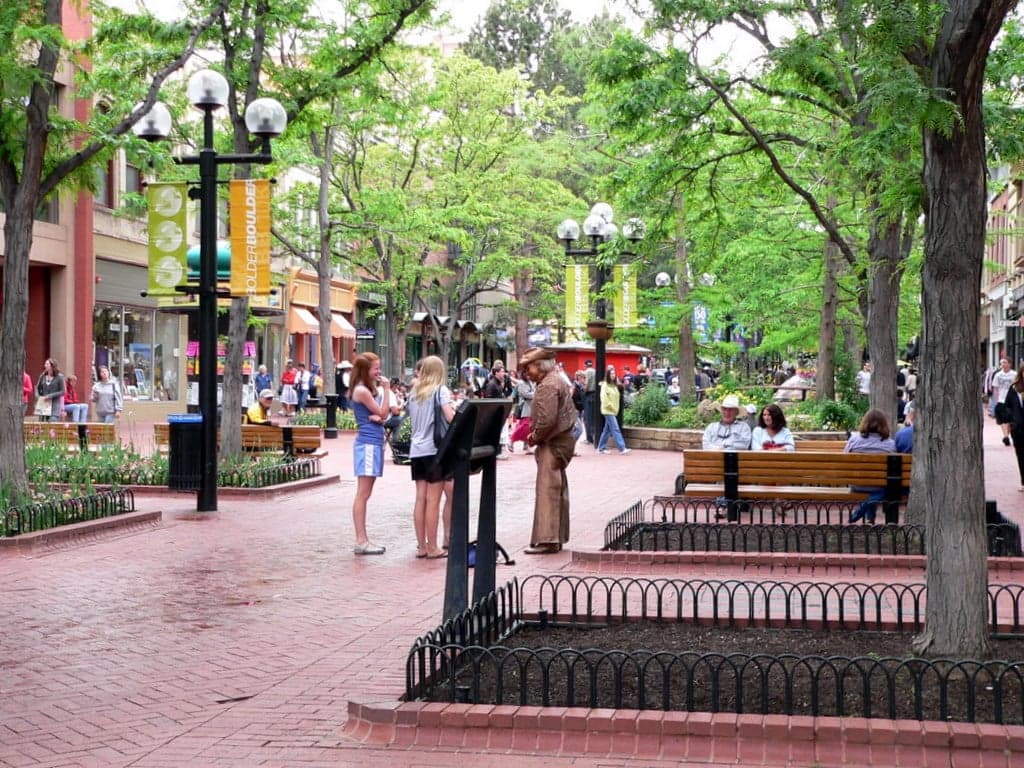
Daily life in Boulder revolves around a blend of academic energy, outdoor recreation, and a robust local food scene. The Boulder Valley School District consistently ranks among the top in Colorado, with schools like Fairview High School and Casey Middle School drawing families who prioritize education. The city’s 300+ days of sunshine and 45,000 acres of open space mean residents routinely bike to work (Boulder has the highest bike-commute rate in the U.S. at roughly 10% of workers), hike the Flatirons, or run along Boulder Creek Path. The Pearl Street Mall serves as the social and commercial hub, hosting farmers’ markets, street performers, and independent retailers. For professionals, the presence of employers like Ball Aerospace, Google’s Boulder office, and the National Center for Atmospheric Research provides stable, high-wage jobs without requiring a daily commute to Denver. Weekend traffic on U.S. 36 can be heavy during ski season, but the city’s compact layout and extensive bus network (the HOP and SKIP routes) make errands and school drop-offs manageable without a car.
Boulder is best suited for individuals and families who prioritize outdoor lifestyle, environmental sustainability, and intellectual community over low housing costs or suburban sprawl. The high cost of living filters for residents who are either financially established or willing to trade square footage for proximity to trails, farmers’ markets, and a walkable downtown. Remote workers earning national-level salaries, academics at CU Boulder, and professionals in the aerospace or clean-tech sectors will find the most natural fit here. Those seeking affordable starter homes, large yards, or a car-dependent routine will likely feel priced out or frustrated by the city’s density and parking challenges. For the right demographic, however, Boulder offers a rare combination of economic opportunity, world-class recreation, and a tight-knit, politically engaged community that few U.S. cities can match.

Crime in Boulder, CO
Crime rates similar to the national median for U.S. locations.
Violent CrimeViolent Crime Analysis
Property CrimeProperty Crime Analysis
Crime Analysis
Boulder, Colorado, presents a safety profile that warrants careful consideration, particularly for those relocating from smaller or more conservative jurisdictions. With a violent crime rate of 353.3 incidents per 100,000 residents and a property crime rate of 2,398.8 per 100,000, the city’s overall crime picture is significantly worse than both the national average and many comparable Colorado communities. The city’s progressive political leadership, including elected district attorneys and judges who prioritize rehabilitation over incarceration, has contributed to a justice environment that critics argue emboldens repeat offenders and undermines public safety.
Crime in context
Boulder’s violent crime rate of 353.3 per 100,000 is roughly 20% higher than the national average of approximately 295 per 100,000, and its property crime rate of 2,398.8 per 100,000 is nearly double the national average of around 1,200 per 100,000. When compared to other Front Range cities with similar populations, Boulder’s property crime rate is notably elevated—for instance, it exceeds that of Fort Collins (roughly 1,900 per 100,000) and Longmont (roughly 2,100 per 100,000). The gap is even starker when measured against smaller, more conservative Colorado towns like Erie or Windsor, where property crime rates hover near 1,000 per 100,000. The disparity is widely attributed to Boulder County’s progressive prosecutorial policies, which frequently result in reduced charges, plea deals, and diversion programs for property and drug-related offenses, leading to higher recidivism and more crimes on the street.
What residents experience
In daily life, Boulder residents face a persistent threat of property crime. Bicycle theft is rampant, with the city routinely ranking among the worst in the nation per capita—over 500 bikes are stolen annually. Vehicle break-ins and catalytic converter thefts are common, especially near trailheads, the University of Colorado campus, and downtown parking garages. Violent crime, while less frequent, is not negligible: aggravated assaults and robberies occur regularly in the Pearl Street Mall area and along the Boulder Creek Path, particularly after dark. The progressive justice system’s focus on “restorative justice” and low bail amounts means that many offenders arrested for these crimes are quickly released, creating a revolving-door effect that frustrates victims and erodes trust in public safety institutions.
Neighborhood-level variation is significant. Areas near the University of Colorado campus and downtown core (e.g., University Hill, Goss-Grove) experience the highest concentrations of both property and violent crime, driven by transient populations and nightlife activity. In contrast, affluent western neighborhoods like Chautauqua and North Boulder report far lower crime rates, though property crime still occurs. The city’s overall safety is thus highly dependent on specific location, with the most desirable areas offering relative peace while the urban core reflects the consequences of permissive criminal justice policies. For families and professionals seeking a secure environment, these neighborhood-level disparities are a critical factor in the relocation decision.
* Values derived from national, state, county, city and local statistics and may differ in a specific area. Last updated: 2026-04-29T01:23:22.000Z
Narrative content on this page is AI-generated and may contain mistakes. Verify any details that matter before acting on them.
ReloMaps may earn a commission from affiliate links at no extra cost to you.

