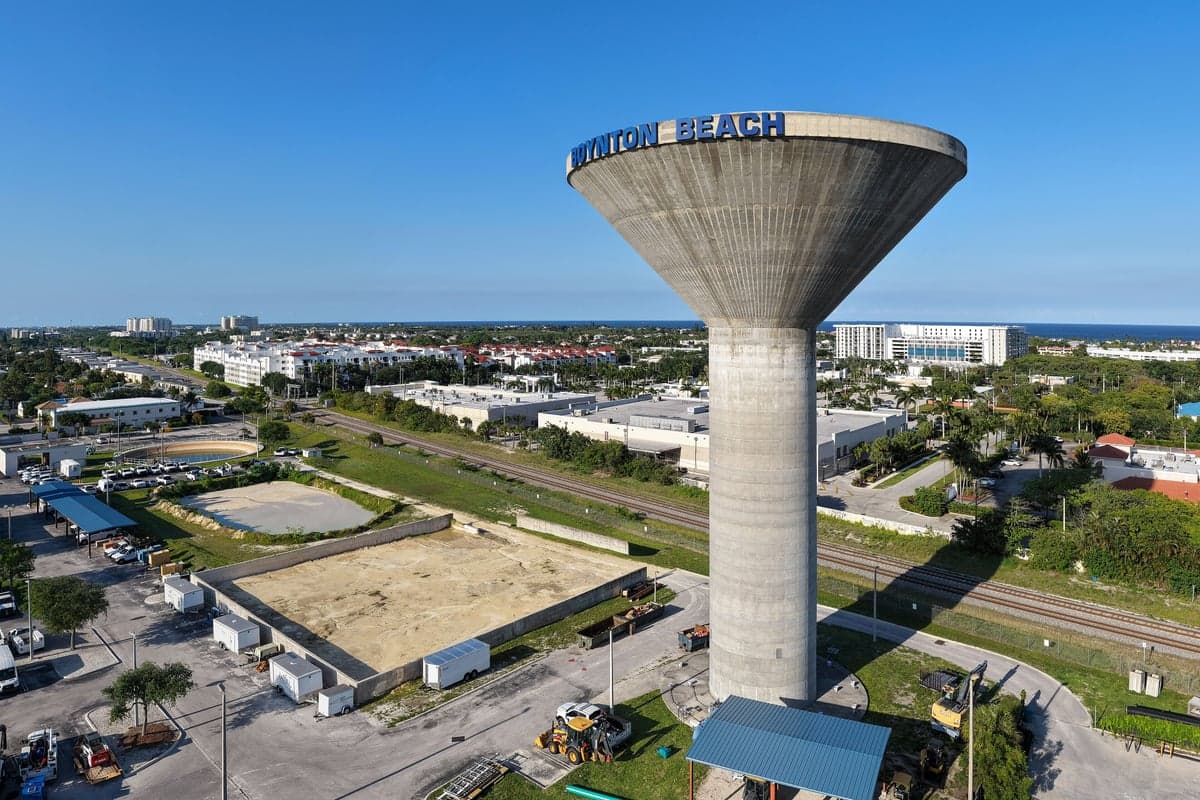
Photo: Wikipedia
Personal Sovereignty in Boynton Beach, FL
Viable for self-reliance. Generally workable, though some barriers may limit total independence.
What does Personal Sovereignty tell us?
Personal Sovereignty measures your capacity for self-reliance and independence with minimal government friction. Higher scores mean fewer barriers between you and the way you want to live... but it assumes you have the space you need and good neighbors.
What does this tell us?
Personal Sovereignty measures your capacity for self-reliance and independence with minimal government friction. Higher scores mean fewer barriers between you and the way you want to live... but it assumes you have the space you need and good neighbors.
State Policy
Energy independence: Importer (10% of energy produced in-state)
Personal Liberty
Homesteading

Personal Liberty Analysis
Boynton Beach offers a mixed bag for those prioritizing personal sovereignty, with Florida’s strong state-level protections for gun rights and tax freedom clashing against local municipal codes that can feel like creeping overreach. While the state constitution and preemption laws provide a solid legal backbone for self-defense and financial autonomy, the city itself operates under a dense web of zoning, noise, and building regulations that can frustrate anyone seeking true self-reliance. For a survivalist or prepper evaluating this area, the key is understanding that your personal sovereignty here is largely defined by how well you can navigate local bureaucracy while leveraging state-level freedoms. The overall autonomy environment is better than deep-blue states, but it’s not the libertarian paradise some might imagine—you’ll need to pick your battles carefully.
Tax burden and regulatory posture in Palm Beach County
Florida’s lack of a state income tax is a major win for personal sovereignty, letting you keep more of what you earn without the state siphoning off your labor. Boynton Beach residents pay a combined sales tax rate of 7% (6% state, 1% county), which is moderate but not negligible. Property taxes in Palm Beach County average around 1.1% of assessed value, slightly above the state median, and the city’s millage rate adds another layer—so a $400,000 home could cost you roughly $4,400 annually in property taxes. The regulatory posture here is where the friction starts: Boynton Beach enforces strict building codes, flood zone restrictions (much of the city lies in FEMA-designated areas), and a lengthy permitting process for any structural changes. For a prepper wanting to add a storm shelter, solar panels, or a rainwater catchment system, expect to deal with city planners who prioritize aesthetics and neighborhood uniformity over your right to harden your property. The county also has a 10-year homestead exemption cap on assessment increases (3% per year), which helps long-term owners but does little for new arrivals facing current market valuations.
Self-defense rights and gun law specifics in Boynton Beach
Florida’s constitutional carry law (effective July 2023) is a cornerstone of personal sovereignty here—you can carry a concealed firearm without a permit, and open carry is legal for hunting, fishing, and camping, though not for general everyday carry. Boynton Beach itself has no local gun ordinances that exceed state preemption, meaning you won’t face city-level magazine bans or waiting periods. However, the city’s police department has a reputation for proactive enforcement of “disturbing the peace” and “brandishing” statutes, so carrying responsibly is non-negotiable. Stand-your-ground laws are fully in effect, giving you the legal right to use deadly force if you reasonably believe it’s necessary to prevent death or great bodily harm—no duty to retreat, even in public. For home defense, Florida’s Castle Doctrine applies, and there are no state-level red flag laws (as of 2026), though some municipalities have attempted to create their own—Boynton Beach has not. The practical reality: you can arm yourself freely, but the city’s dense population and proximity to high-crime areas (like parts of West Palm Beach) mean you’re more likely to face legal scrutiny after a defensive shooting than in a rural county. Range access is decent, with the Palm Beach County Shooting Range in West Palm Beach about 20 minutes north.
Self-reliance and homesteading viability: lot sizes, zoning, and off-grid feasibility
Boynton Beach is a suburban grid, not a homesteader’s haven. Typical residential lot sizes range from 6,000 to 10,000 square feet in older neighborhoods, with newer developments squeezing into 4,000-square-foot parcels. Zoning is strictly enforced: raising chickens is allowed in single-family residential zones but limited to four hens (no roosters), and keeping goats or larger livestock is prohibited in most areas. Off-grid living is effectively illegal—the city requires connection to municipal water and sewer, and solar panels must be grid-tied with net metering approval from Florida Power & Light. Rainwater collection is allowed for irrigation but not for potable use without a complex permitting process. For a prepper wanting to grow food, community gardens exist but are city-managed, and backyard gardening is fine for vegetables, but fruit trees are limited by HOA rules in many subdivisions. The real limitation is space: you cannot realistically achieve food or water independence on a quarter-acre lot with HOA oversight. If self-reliance is your primary goal, look north to rural Palm Beach County (like Loxahatchee or The Acreage) where lot sizes start at 1 acre and zoning allows horses, chickens, and even small-scale farming without city interference. Boynton Beach is better suited for those who want to supplement their preps with suburban convenience rather than go full homestead.
Personal liberties: parental rights, medical autonomy, speech, and property
Florida has been a battleground for parental rights, and Boynton Beach sits in a county that largely supports school choice and parental oversight. The city’s public schools (part of Palm Beach County School District) have faced controversies over curriculum transparency, but state-level laws now require parental notification for any health or wellness surveys and ban classroom instruction on sexual orientation and gender identity in grades K-3. For parents, this means you have more legal backing to opt your child out of objectionable material than in many other states. Medical autonomy is a mixed bag: Florida has no state-level vaccine mandate for adults, and COVID-era restrictions were lifted early, but the state’s medical marijuana program is tightly regulated (no smokable flower initially, though that has loosened). You can grow your own cannabis only if you’re a registered caregiver with a dispensary license—not as a patient. Speech protections are strong under Florida’s constitution, and Boynton Beach has not enacted local hate speech or mask mandates that would chill expression. Property rights are where you’ll feel the squeeze: the city’s code enforcement is aggressive on lawn maintenance, fence heights (max 6 feet in backyards), and even the color of your house paint in historic districts. You own the land, but the city dictates how you use it—a reality that clashes with the survivalist ethos of total control over your domain.
Overall, Boynton Beach offers a decent baseline for personal sovereignty compared to high-tax, high-regulation states like New York or California, but it falls short of the freedom found in Florida’s rural interior or the Panhandle. The state’s tax structure and gun laws give you a solid foundation, but the city’s suburban bureaucracy, small lot sizes, and strict zoning make true self-reliance a challenge. For a single individual or family with a prepper mindset, this area works best as a staging ground—close to supplies, medical facilities, and coastal evacuation routes—but not as a final bug-out location. If you’re willing to trade some autonomy for coastal access and a lower tax burden than the Northeast, Boynton Beach is viable; if you want to live entirely on your own terms, look further inland where the government footprint is lighter and the land is bigger.

* Values derived from national, state, county, city and local statistics and may differ in a specific area. Last updated: 2026-04-24T15:11:04.000Z
Narrative content on this page is AI-generated and may contain mistakes. Verify any details that matter before acting on them.
ReloMaps may earn a commission from affiliate links at no extra cost to you.

