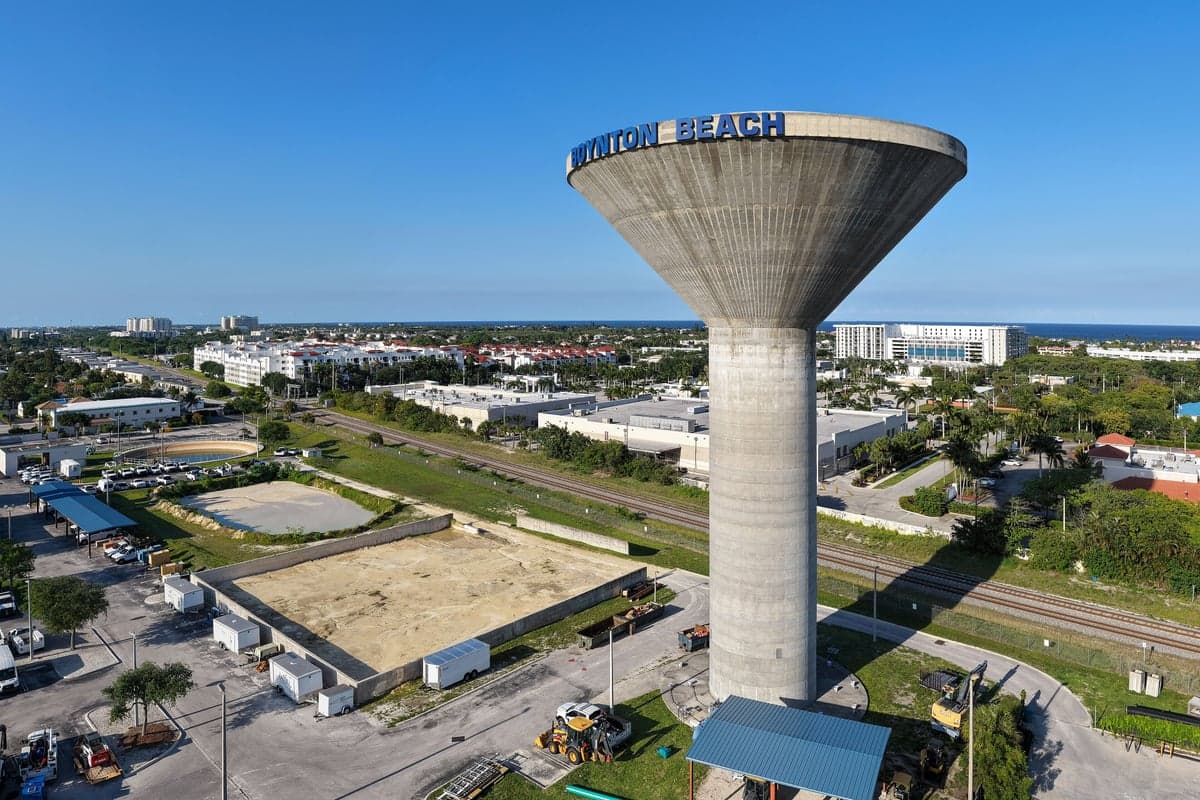
Photo: Wikipedia
Political ClimatePolitical Climate in Boynton Beach, FL
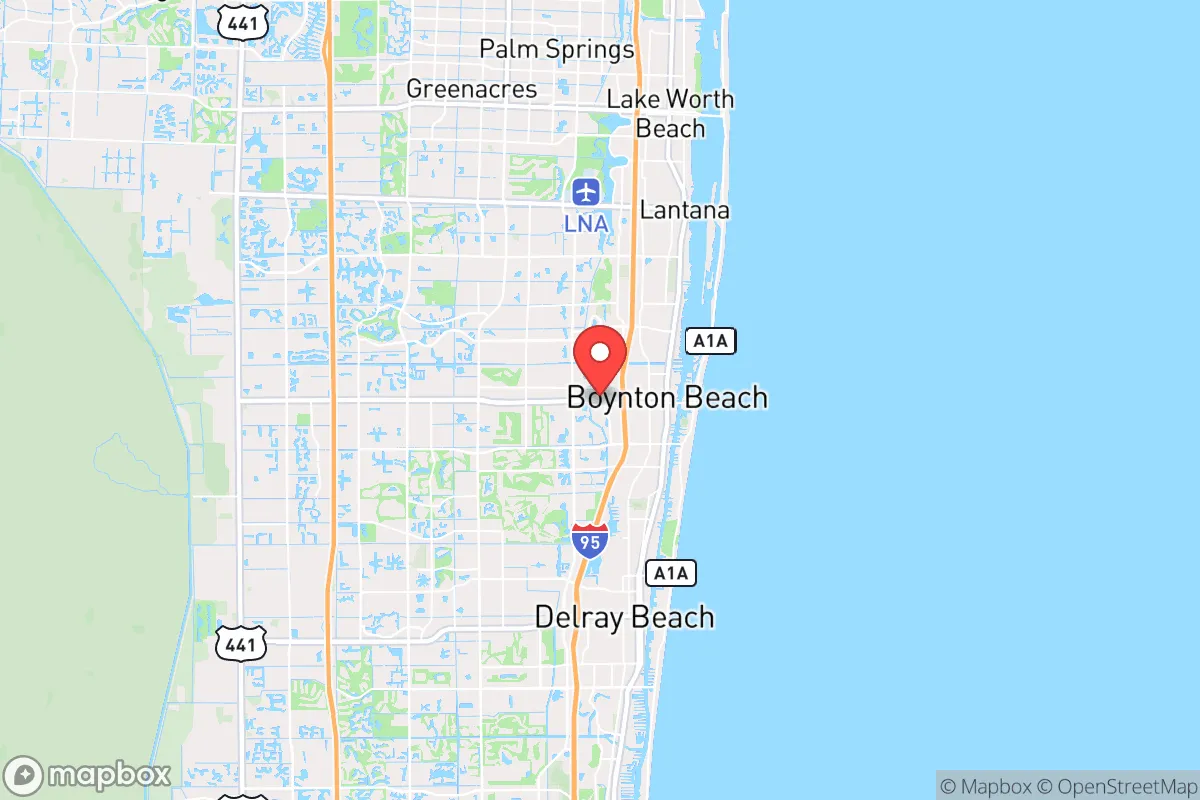
District shown is the primary district for this city’s centroid. Cities may span multiple districts.
Local Political AnalysisPolitical Analysis of Boynton Beach, FL
Boynton Beach leans solidly Democratic, with a Cook PVI of D+4, but the real story is how much further left it's drifted in just the last few years. I've been here long enough to remember when this was a pretty balanced, live-and-let-live kind of place—you'd see as many "Don't Tread on Me" flags as "Coexist" stickers. Now, the city council and local boards are almost entirely controlled by progressive activists, and the voting patterns in the last two cycles show a clear shift away from the center. The 2024 presidential results here were noticeably bluer than the county average, and that's a trend that's accelerating, not slowing down.
How it compares
To really get the picture, you have to look at the towns around us. Drive ten minutes west to Wellington or Lake Worth (the unincorporated parts), and you'll find a much more conservative, family-oriented vibe—more people who just want lower taxes and less government telling them how to run their lives. Head north to Delray Beach, and it's a similar story to Boynton: a progressive city government that's increasingly cozy with state-level fights over things like property rights and school curriculum. The contrast is stark. In Boynton, you've got a city commission that's pushed for things like "sanctuary city" policies and rent control studies, while just a few miles away in Boca Raton, the council is still fighting to keep the streets clean and the crime stats low without wading into every national culture war. It's like two different countries sometimes.
What this means for residents
For folks who value personal freedom—the right to run a small business without a dozen new regulations, or to speak your mind without being labeled—the trend here is genuinely concerning. The local government has gotten more aggressive with code enforcement, especially on things like short-term rentals and home-based businesses, which used to be a non-issue. There's also a growing push to bring "equity" audits into the police department and the school board, which sounds nice in theory but usually means more bureaucracy and less focus on actual safety. I've seen neighbors get nervous about speaking up at city meetings because the online backlash is so intense. The tax burden is also creeping up, as the city adds new programs and staff for social services that many residents never asked for. If you're a conservative or even a moderate, you're starting to feel like your voice doesn't carry the weight it used to.
The cultural shift is the hardest part to watch. Boynton Beach used to have a real "old Florida" feel—retirees, snowbirds, and working families just trying to enjoy the weather and the beach. Now, there's a constant push to rebrand the city as a "progressive hub," with murals and events that feel more like political statements than community gatherings. The local paper and the city's social media are full of language about "inclusivity" and "dismantling systems," but the practical result is that a lot of long-time residents feel like they're being pushed out. The next few election cycles are going to be critical. If the current trend holds, Boynton Beach will become a place where conservative values are not just unpopular, but actively unwelcome. I'm hoping enough people wake up and realize that a healthy community needs room for everyone, not just one side of the aisle.

State Political ClimatePolitical Climate in Florida
State Political AnalysisPolitical Environment in the State
Florida has transformed from a classic swing state into a solidly Republican-leaning powerhouse over the past decade, with a registered Republican voter advantage of over 800,000 as of 2026 and a governor who won re-election by nearly 20 points. The dominant coalition is a mix of conservative-leaning retirees, Hispanic voters in places like Miami-Dade and the I-4 corridor, and a massive influx of domestic migrants from blue states seeking lower taxes and fewer restrictions. The trajectory has been a steady rightward shift since about 2010, accelerating sharply after 2020, when the state became a national symbol of resistance to lockdowns and vaccine mandates.
Urban vs. rural divide
The political map of Florida is a textbook study in contrast. The major urban cores—Miami, Orlando, Tampa, and Jacksonville—are the Democratic strongholds, but even these are shifting. Miami-Dade County, once a Democratic bastion, flipped to Trump in 2020 and has only gotten redder, driven by Cuban-American and Venezuelan voters who associate left-wing policies with the regimes they fled. The I-4 corridor, stretching from Tampa through Orlando to Daytona, is the traditional battleground, but it’s trending right as suburban moms and Hispanic families in places like Kissimmee and Lakeland abandon the Democratic Party over education and crime. Meanwhile, the Panhandle and rural North Florida—think Pensacola, Panama City, and Ocala—are deep red, with some counties voting 80% Republican. The only blue holdouts are college towns like Gainesville (home to UF) and Tallahassee (state capital), plus a few inner-city precincts. The divide isn’t just urban vs. rural; it’s coastal vs. inland, with the Atlantic coast from Palm Beach to Broward still leaning blue, though even that is eroding.
Policy environment
Florida’s policy environment is a deliberate counterweight to states like New York and California. There is no state income tax, which is the single biggest draw for high-earners and retirees. Property taxes are moderate, and the state has a constitutional amendment capping annual assessment increases for homesteaded properties. The regulatory posture is aggressively pro-business: permit approvals are fast, occupational licensing has been slashed, and there’s no state-level minimum wage above the federal floor (though voters passed a $15/hour phase-in, which conservatives view as a rare misstep). On education, Governor DeSantis signed the Parental Rights in Education Act (the “Don’t Say Gay” law) and the Stop WOKE Act, which banned critical race theory and DEI programs in schools and state universities. School choice is expansive, with universal vouchers available to all families regardless of income. Healthcare is a mixed bag: Florida refused Medicaid expansion, keeping the system lean, but insurance premiums are high. Election laws were tightened after 2020, with stricter voter ID, limits on drop boxes, and a ban on ballot harvesting—moves that conservatives see as integrity measures and progressives call suppression. The state also preempted local gun ordinances, ensuring uniform carry laws, and in 2023 passed permitless carry (constitutional carry).
Trajectory & freedom
Florida is unequivocally becoming more free in the classical liberal sense, especially compared to the national trend. The 2023 permitless carry law (HB 543) eliminated the need for a license to carry a concealed firearm, restoring a right many felt was already inherent. The Live Local Act preempted local zoning to allow more housing density, a rare pro-property-rights move that also addresses affordability. The state banned COVID-19 vaccine mandates for private employers and government workers, and prohibited mask mandates in schools—a direct rebuke of federal overreach. On medical autonomy, Florida banned gender transition procedures for minors (SB 254) and restricted puberty blockers, arguing that children shouldn’t make irreversible decisions. Parental rights were codified in the aforementioned education laws, giving parents the ability to review curriculum and opt their kids out of objectionable material. The only area where freedom has contracted is on the local level: the state has preempted city and county authority on everything from rent control to plastic bag bans to short-term rental regulations, which some see as a necessary check on local overreach and others as a power grab. Overall, the trajectory is toward more personal liberty, less government intrusion, and a culture that rewards self-reliance.
Civil unrest & political movements
Florida has seen its share of flashpoints, but they’ve been more contained than in other states. The 2020 George Floyd protests in Miami, Tampa, and Orlando saw some looting and property damage, but the state’s quick response—including the activation of the National Guard and the passage of anti-rioting legislation (HB 1) that stiffened penalties for violent protests—deterred a repeat. The anti-riot law, which creates new felonies for blocking roads and participating in violent assemblies, has been criticized by the left as chilling speech, but it’s popular with conservatives who saw cities like Portland burn. Immigration politics are a constant undercurrent: Florida passed the toughest state-level immigration enforcement law in the country (SB 1718) in 2023, requiring E-Verify for employers, banning local sanctuary policies, and making it a crime to transport undocumented immigrants into the state. This has led to some labor shortages in agriculture and construction, but it’s a clear statement of intent. The most visible political movement is the “Free Florida” coalition—a loose alliance of gun rights groups, parental rights activists, and school choice advocates who have successfully pushed the legislature rightward. On the left, the main organized force is the Florida Democratic Party, which is in disarray, and activist groups like Dream Defenders, who have lost influence. Election integrity remains a hot topic: the state’s 2020 audit found no widespread fraud, but the legislature tightened laws anyway, and there’s ongoing litigation over felon voting rights (Amendment 4). A new resident would notice the absence of the kind of street-level political chaos seen in other states—Florida feels orderly and governed.
Projection
Over the next 5-10 years, Florida will likely continue its rightward drift, but with some caveats. The in-migration from blue states—roughly 1,000 new residents per day—is overwhelmingly conservative-leaning, but it’s not monolithic. The influx of tech workers and remote professionals into Miami, Tampa, and Jacksonville could eventually moderate the politics of those metros, especially if they bring California-style cultural values. However, the state’s political infrastructure is now deeply entrenched: the GOP has a supermajority in both legislative chambers, the governor’s office is a launching pad for national conservatives, and the state party has a massive fundraising advantage. The Hispanic vote, which is now a plurality of the electorate, is trending Republican, especially among Cubans, Venezuelans, and Colombians. The wild card is climate change: rising sea levels and hurricane risk could eventually slow growth in coastal areas like Miami Beach and the Florida Keys, but for now, the state is building seawalls and elevating roads. The biggest threat to the current trajectory is a national Democratic wave that could flip the state back to purple, but that would require a massive shift in voter sentiment that isn’t visible in the data. For someone moving in now, expect a decade of continued conservative governance, low taxes, and a culture that prioritizes individual freedom over collective mandates.
For a new resident, the bottom line is this: Florida offers a rare combination of low taxes, strong property rights, and a government that actively pushes back against federal overreach. You’ll find a state that values personal responsibility, parental control over education, and the right to defend yourself. The politics are visible but not oppressive—you won’t see the kind of street-level activism common in California or New York. If you’re moving here for freedom, you’ll get it, but be prepared for the trade-offs: hot summers, hurricane season, and a housing market that’s been strained by the influx. It’s a state that rewards those who show up ready to work and live by their own rules.
* Values derived from national, state, county, city and local statistics and may differ in a specific area. Last updated: 2026-04-24T15:11:04.000Z
Narrative content on this page is AI-generated and may contain mistakes. Verify any details that matter before acting on them.
ReloMaps may earn a commission from affiliate links at no extra cost to you.

