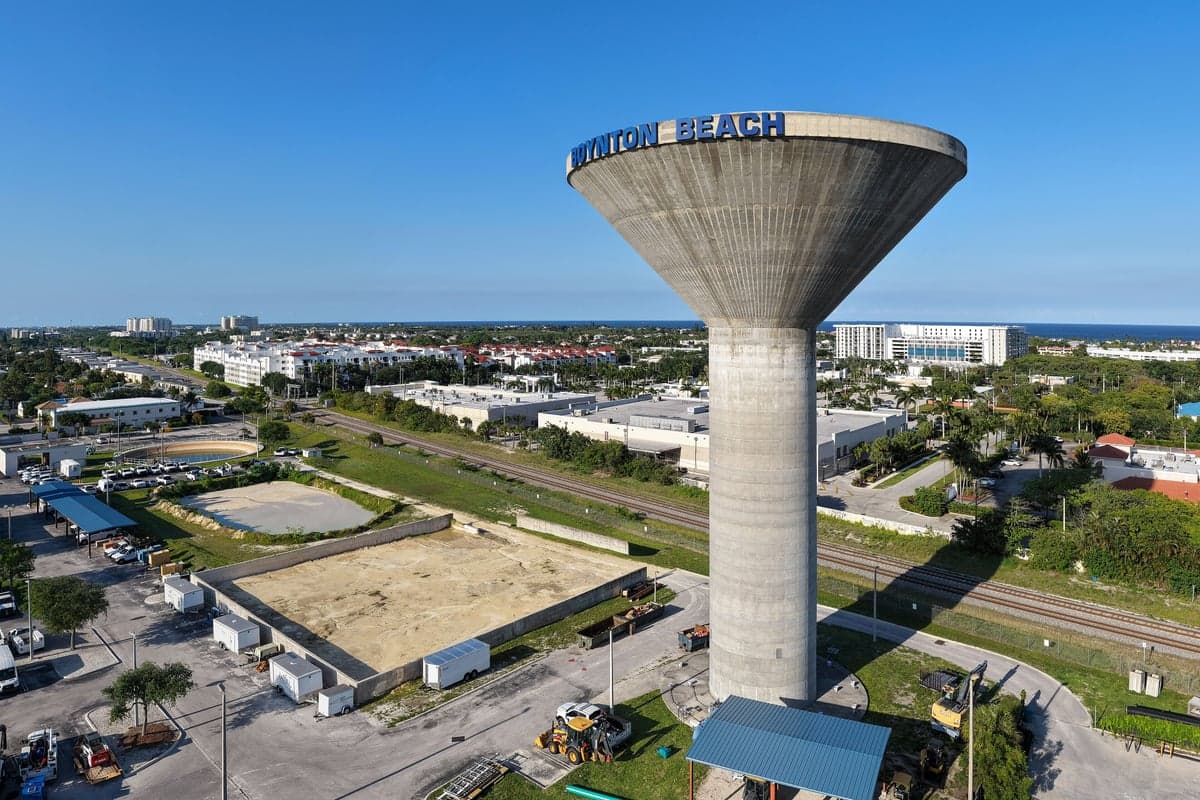
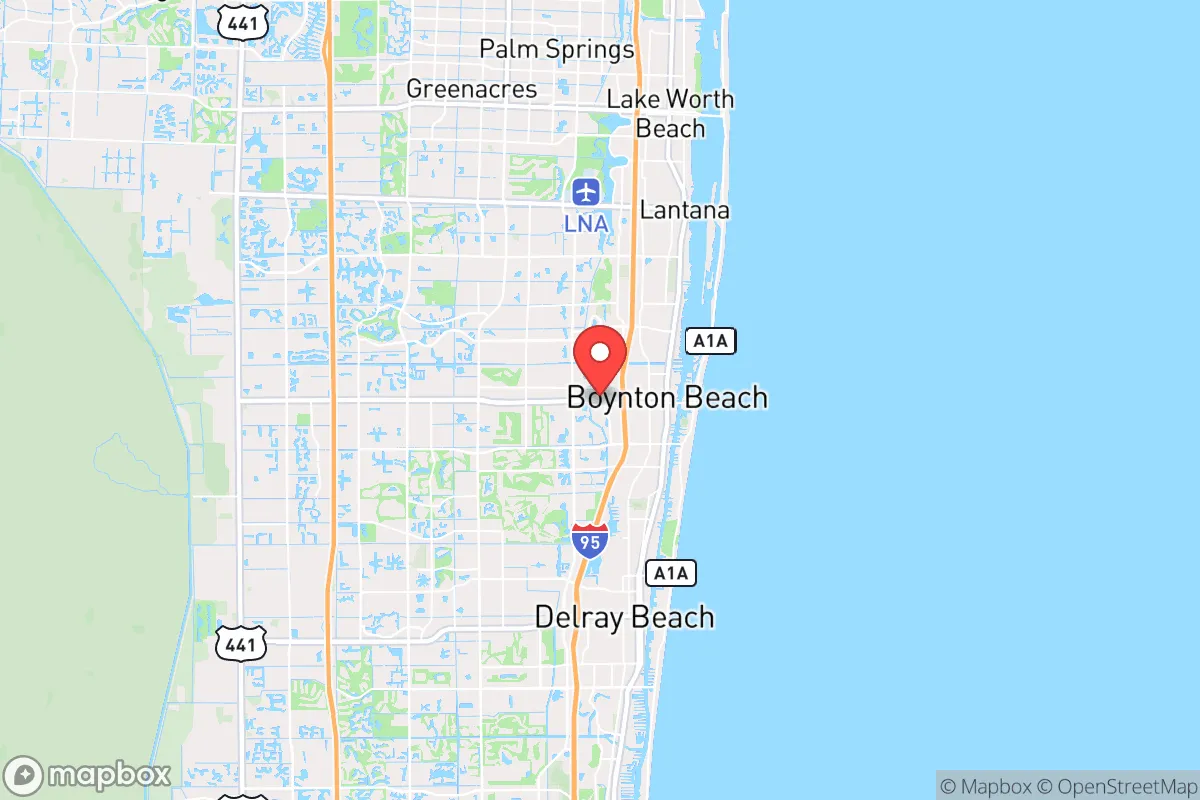
Photo: Wikipedia
Strategic Assessment of Boynton Beach, FL
Meaningful friction. Expect exposure to either population pressure, blast zones, or natural disaster risk. Consider buying a retreat property.
What does the Strategic Assessment tell us?
Our Strategic Assessment grades tactical survivability of an area. Major population centers, military targets, fallout zones, natural disasters, and border exposure all drive risk — lower exposure means a more defensible position in a crisis.
This is heavily inspired by Joel Skousen's Strategic Relocation book. Highly recommended you checkout the book ($)What does this tell us?
Our Strategic Assessment grades tactical survivability of an area. Major population centers, military targets, fallout zones, natural disasters, and border exposure all drive risk — lower exposure means a more defensible position in a crisis.
This is heavily inspired by Joel Skousen's Strategic Relocation book. Highly recommended you checkout the book ($)Strategic Pillars

Key Distances
Regional Safe Places
Below is our recommended "safe zones" in Florida and the surrounding area based on our strategic heuristics. For most people, it's unrealistic to live in a “safe zone” full-time due to work, family or other personal reasons. They tend to be more rural. However, many of these areas are perfect for second homes and retreat properties that double as a vacation home or even a short-term rental.

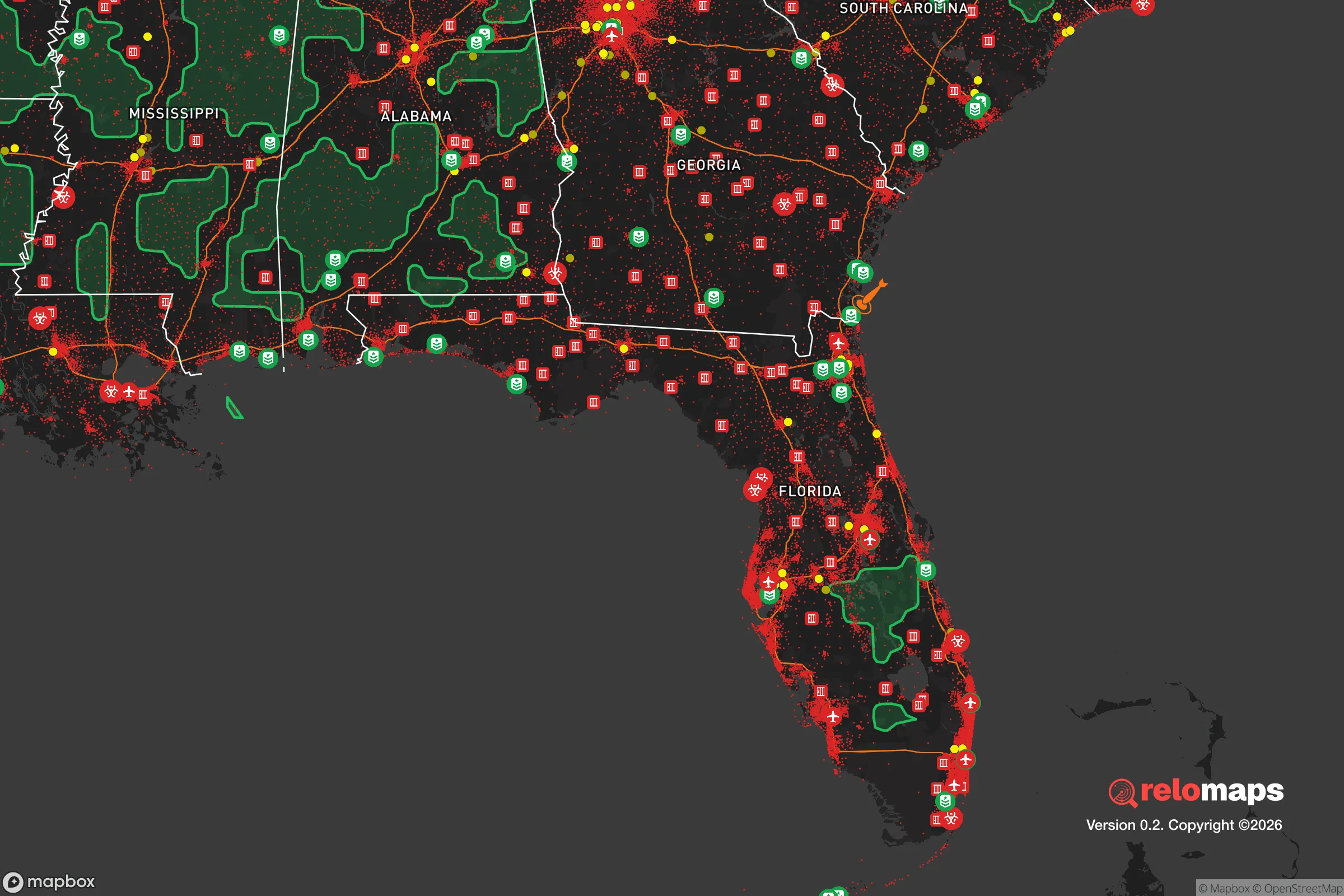


Important Note: For informational purposes only. This does not mean nothing bad ever happens in the green zones. Please use common sense. This is based on public data and modeled with AI. We tried to take a conservative approach but mistakes happen. We update this regularly as new information becomes available.
Solar Generator Recommendations
Backup power matters more here than in safer locations. We've picked three solar generators across budgets and capacity tiers — start with the budget unit if you only need a few essentials, or step up if you want to run a fridge and HVAC for days at a time.

Jackery Portable Power Station Explorer 300
Budget OptionPower on the Go: Weighing only 11 lbs, it's convenient to set up and store with book-sized foldable solar panels

BLUETTI Portable Power Station AC180
Designed for both indoor and outdoor scenarios, AC180 is highly capable as it has a robost capacity and continuous output power.

EF ECOFLOW DELTA Pro Ultra Power Station
Upgraded PickEcoFlow DELTA Pro Ultra is a whole-home energy system designed to grow with your family. Integrated with the Smart Home Panel 2, it scales to meet your evolving energy needs — keeping your home powered, intelligent, and secure through every stage of life.
We earn a commission, at no additional cost to you.
Strategic Assessment Analysis
Boynton Beach sits in a precarious strategic position: close enough to the Miami-Fort Lauderdale-Palm Beach megalopolis to be vulnerable to its cascading failures, yet far enough north to offer a thin buffer against the worst of a coastal collapse. Its location along the I-95 corridor and the Florida Turnpike means it is a natural chokepoint for evacuation and supply routes, but also a target for looting and civil unrest if the grid goes down. For a relocator with a survivalist mindset, Boynton Beach is not a fortress—it is a transitional zone, a place to stage before moving further inland or north, not a final redoubt.
Geographic position and natural advantages for long-term survival
The area’s primary asset is its access to the Atlantic Intracoastal Waterway and the Loxahatchee River basin, which provide alternative transportation routes if roads become impassable. The flat, low-lying terrain offers no natural defensive high ground, but the network of canals and wetlands—like the Arthur R. Marshall Loxahatchee National Wildlife Refuge just west—creates natural barriers that slow foot traffic and vehicle movement. The subtropical climate allows year-round growing seasons, a critical advantage for food security: with proper planning, a household can produce vegetables, citrus, and tropical fruits even on a quarter-acre lot. However, the same climate breeds mosquitoes, alligators, and venomous snakes, which become serious threats when medical infrastructure is compromised. The proximity to the Gulf Stream also means that Boynton Beach is a prime target for hurricane landfalls, with the 2024 season already demonstrating that even Category 2 storms can knock out power for weeks and flood low-lying neighborhoods like those near the Boynton Inlet.
Risks, exposures, and proximity to fallout-relevant landmarks
The single greatest strategic liability is Boynton Beach’s position within the South Florida urban corridor, a 100-mile stretch of nearly continuous development from West Palm Beach to Miami. In a mass casualty event—whether from a pandemic, a dirty bomb, or a coordinated cyberattack on the power grid—this corridor becomes a death funnel. The I-95 and Turnpike interchanges near Boynton Beach Boulevard and Gateway Boulevard will gridlock within hours, trapping residents who try to flee. The area is also within 15 miles of the Port of Palm Beach and Palm Beach International Airport, both of which are high-value targets for state-actor sabotage or terrorist strikes. Further south, the Turkey Point Nuclear Generating Station in Homestead (about 70 miles away) is a known vulnerability: a catastrophic failure there would render Boynton Beach uninhabitable for decades due to prevailing wind patterns. On a smaller scale, the Florida Power & Light substations scattered throughout the county are soft targets for coordinated attacks, as demonstrated by the 2022 North Carolina substation shootings. The local police department, while professional, is understaffed relative to the population—about 1.4 officers per 1,000 residents—meaning that in a widespread crisis, response times will stretch to hours or days.
Practical resilience for a relocator: food, water, energy, and defensibility
Water is the first concern. Boynton Beach’s municipal supply comes from the Biscayne Aquifer, which is shallow and vulnerable to saltwater intrusion as sea levels rise. A prepper should assume that tap water will be undrinkable within 72 hours of a major hurricane or grid failure. The good news is that the high water table means shallow wells can be dug in many neighborhoods, but permits and contamination from septic systems are real issues. Rainwater catchment is viable, with the region averaging 60 inches of rain per year, but storage tanks must be UV-resistant and mosquito-proof. Food-wise, the area has a strong network of local farms—Bedner’s Farm Market and the Palm Beach County Agricultural Reserve are within 20 minutes—but these supply chains will break first in a crisis. A serious relocator should plan to stockpile at least three months of non-perishable food, as the local Publix and Walmart will be stripped bare within hours of a declared emergency. Energy is a mixed bag: solar is excellent here, with an average of 234 sunny days per year, but the same storms that bring sun also bring hurricane-force winds that will shred rooftop panels unless they are impact-rated and bolted to a reinforced roof. A backup generator running on propane or natural gas is essential, but note that natural gas lines have been known to rupture in major hurricanes, as seen during Hurricane Wilma in 2005. Defensibility is poor in the dense suburban grid of Boynton Beach—most homes are on quarter-acre lots with chain-link fences and large windows. The better option is to buy a property west of the Turnpike, near the agricultural reserve, where lots are larger and neighbors are farther apart. Even then, the lack of natural chokepoints means that a determined group can approach from multiple directions. A bug-out location in the interior of the state—say, near Lake Okeechobee or the Ocala National Forest—is a more realistic long-term survival plan than trying to hold a suburban home in Boynton Beach against a determined mob.
The overall strategic picture for Boynton Beach is that of a high-risk, medium-reward staging area. It offers genuine advantages for a relocator who wants to be near the coast for maritime escape routes and who can afford the hurricane insurance premiums (which have risen 400% in the last decade). But the density of the surrounding population, the vulnerability of critical infrastructure, and the lack of defensible terrain make it a poor choice for a permanent survival homestead. For a conservative-leaning individual or family who is serious about preparedness, Boynton Beach is best viewed as a place to build financial resources and network with like-minded people while maintaining a secondary property further inland. The area’s real value lies in its access to the Florida East Coast Railway and the Port of Palm Beach for potential resupply by sea, but those same assets make it a target. In a world where the grid is fragile and the cities are tinderboxes, Boynton Beach is not a safe harbor—it is a place to pass through, not a place to dig in.

* Values derived from national, state, county, city and local statistics and may differ in a specific area. Last updated: 2026-04-24T15:11:04.000Z
Narrative content on this page is AI-generated and may contain mistakes. Verify any details that matter before acting on them.
ReloMaps may earn a commission from affiliate links at no extra cost to you.

