
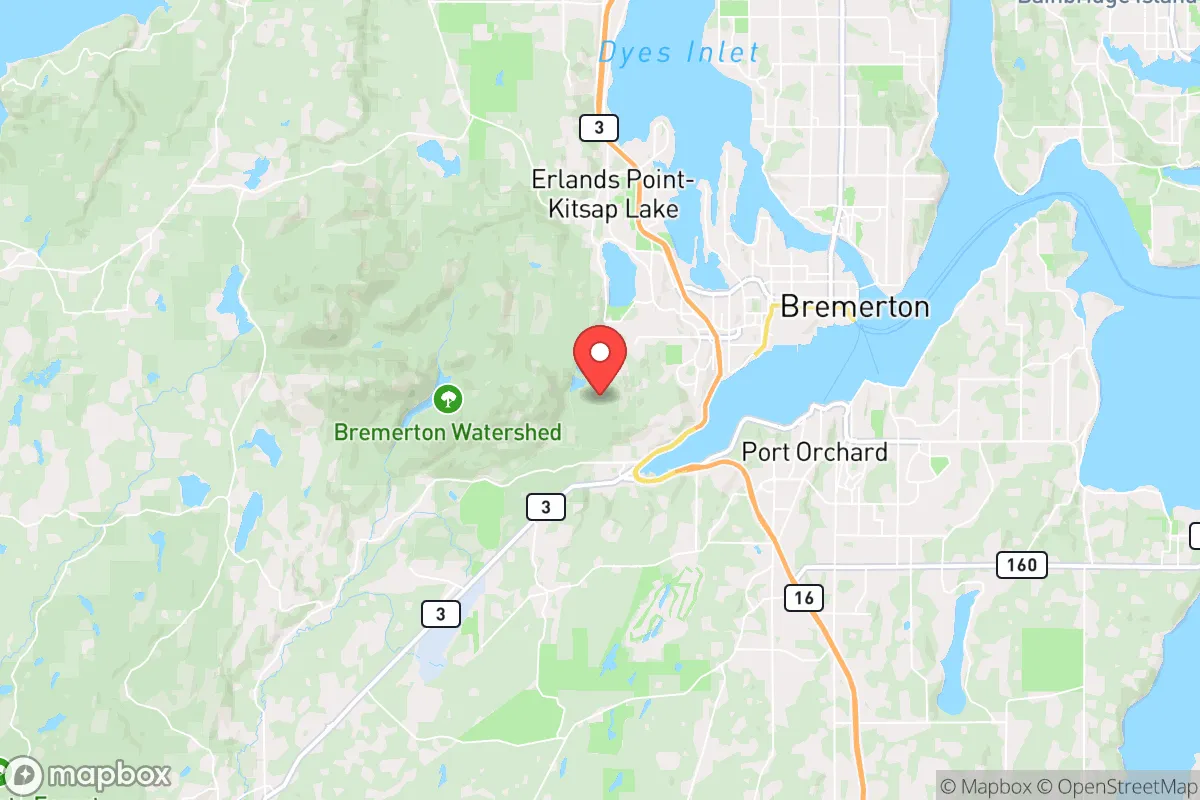
Photo: Wikipedia
Personal Sovereignty in Bremerton, WA
Viable for self-reliance. Generally workable, though some barriers may limit total independence.
What does Personal Sovereignty tell us?
Personal Sovereignty measures your capacity for self-reliance and independence with minimal government friction. Higher scores mean fewer barriers between you and the way you want to live... but it assumes you have the space you need and good neighbors.
What does this tell us?
Personal Sovereignty measures your capacity for self-reliance and independence with minimal government friction. Higher scores mean fewer barriers between you and the way you want to live... but it assumes you have the space you need and good neighbors.
State Policy
Energy independence: Importer (55% of energy produced in-state)
Personal Liberty
Homesteading

Personal Liberty Analysis
Bremerton, Washington, presents a complex picture for those prioritizing personal sovereignty. While the Pacific Northwest is often associated with progressive governance, Kitsap County offers a more moderate environment than Seattle or King County, though it remains firmly under the thumb of a state government that has steadily expanded its reach into personal decisions. For the survivalist or prepper mindset, the key question is whether Bremerton’s relative isolation and lower cost of living can offset the growing regulatory and tax burdens imposed by Olympia. The answer is a cautious maybe—if you are willing to navigate a system that increasingly views self-reliance as a problem to be managed rather than a virtue to be protected.
Tax burden and regulatory posture: how Washington state’s policies affect your wallet and freedom
Washington’s lack of a state income tax is a genuine advantage for those who value keeping more of what they earn. However, this is not a low-tax state. The state’s reliance on a high sales tax (currently 6.5% state rate, plus local additions that push Kitsap County to roughly 8.6%) and steep property taxes means the government takes a significant cut of your consumption and real estate. For a prepper, this tax structure penalizes the purchase of durable goods—tools, supplies, land improvements—which are exactly the things you need to build self-sufficiency. The regulatory posture is even more concerning. Washington has some of the strictest environmental and land-use regulations in the country, which directly impact your ability to develop property, harvest timber, or even collect rainwater without permits. The state’s Growth Management Act forces counties to concentrate development, making it harder to find truly rural parcels where you can operate without constant oversight. While Bremerton itself is a city, the surrounding unincorporated areas of Kitsap County are subject to these same state-level constraints, meaning your dream of a fully autonomous homestead will face bureaucratic hurdles.
Self-defense and gun law specifics: what you can and cannot do in Kitsap County
Washington was once a haven for gun owners, but that has changed dramatically. The state now has a magazine capacity ban (10 rounds for rifles, 15 for handguns), a ban on so-called “assault weapons” (which includes many common semi-automatic rifles), and a 10-day waiting period for all firearm purchases. A red flag law allows authorities to seize firearms based on a complaint, with no criminal charge required. For the self-defense-minded, this is a serious erosion of the right to keep and bear arms. Open carry is legal without a permit, but concealed carry requires a license, and the state has made it more difficult to obtain one in recent years. Kitsap County is generally more gun-friendly than King County, with several local gun shops and ranges, but you are still operating under state laws that treat firearms as a privilege rather than a right. If you are moving from a free state like Idaho or Montana, be prepared for a significant downgrade in your ability to arm yourself and your family without government interference. The sheriff’s office in Kitsap has historically been more supportive of Second Amendment rights than urban departments, but they are bound by state law.
Self-reliance and homesteading viability: lot sizes, zoning, and off-grid feasibility
Bremerton itself is a dense, older city with small lots, typically 5,000 to 10,000 square feet. True homesteading within city limits is nearly impossible due to zoning restrictions on livestock, accessory structures, and water rights. However, the surrounding unincorporated areas of Kitsap County offer more promise. You can find parcels of 1 to 5 acres within a 20-minute drive of Bremerton, particularly toward the Port Orchard and Belfair areas. Zoning in these rural zones allows for chickens, goats, and even a single cow or horse on larger lots, but you will need permits for any significant structures like barns or workshops. Off-grid feasibility is limited. Washington state law requires connection to the power grid if it is available within a certain distance, and rainwater collection for potable use is heavily regulated. Solar panels are allowed but must be permitted, and net metering is available but subject to utility approval. Septic systems are strictly controlled by the county health department. For a serious prepper, the regulatory environment makes true off-grid living a legal gray area. You can be more self-sufficient here than in a suburban subdivision, but you will never be fully free from the state’s oversight of your land and resources.
Personal liberties: parental rights, medical autonomy, speech, and property
Washington state has aggressively expanded its authority over parental rights. The state’s “My Health My Data” act, combined with school policies that allow minors to consent to certain medical treatments without parental notification, is a direct threat to family sovereignty. Parents in Bremerton have limited recourse if they disagree with school curriculum or medical decisions made for their children, as the state preempts local control in these areas. Medical autonomy is similarly constrained. Vaccine mandates for healthcare workers and school attendance were enforced during the pandemic, and the state maintains a centralized immunization registry. Alternative medical treatments are legal but heavily regulated, and naturopathic doctors have a narrower scope of practice than in states like Oregon or Arizona. Free speech is protected under the First Amendment, but Washington has some of the nation’s strictest campaign finance and “hate speech” laws that can chill political expression. Property rights are under constant pressure from environmental regulations, including the Shoreline Management Act and critical areas ordinances that restrict what you can do with your land near water or wetlands. For the conservative individualist, Bremerton offers a relatively tolerant community compared to Seattle, but the state government’s reach into your home, your children, and your property is extensive and growing.
Overall, Bremerton provides a moderate baseline for personal sovereignty compared to the urban core of the state, but it is far from a refuge for those seeking maximum autonomy. If you are coming from a state with even heavier restrictions—like California or New York—you will find some breathing room here. But if you are looking for a place where you can truly live by your own rules, with minimal government interference in your firearms, your land, your family, and your health, you will need to look further east, to Idaho or Montana. Bremerton is a compromise: a place where you can build a more self-reliant life than in a major city, but where you must remain vigilant and engaged to protect the freedoms that remain. For the strategic relocator, it is a viable option only if you are prepared to fight for your rights at the local level and accept that the state will always be a powerful, and often adversarial, presence in your life.

* Values derived from national, state, county, city and local statistics and may differ in a specific area. Last updated: 2026-04-21T11:08:12.000Z
Narrative content on this page is AI-generated and may contain mistakes. Verify any details that matter before acting on them.
ReloMaps may earn a commission from affiliate links at no extra cost to you.

