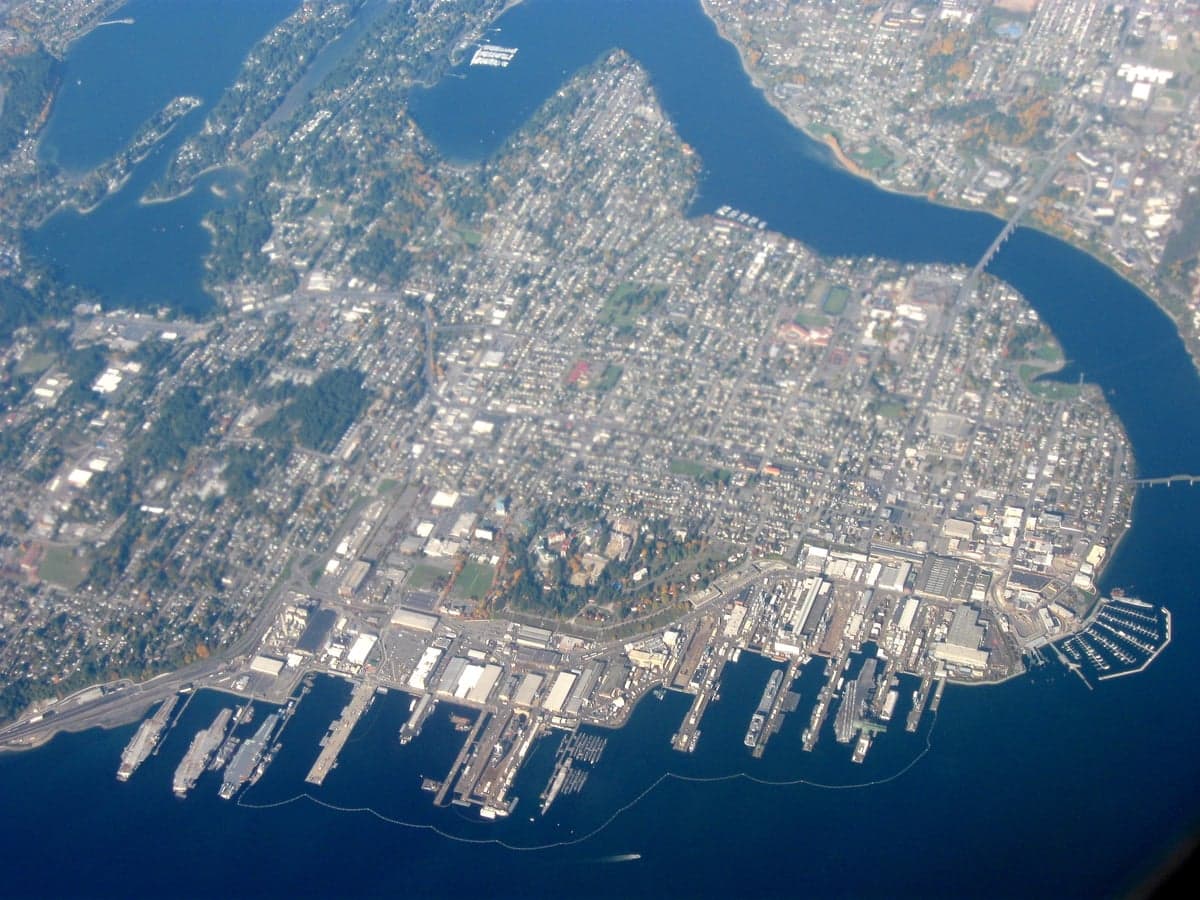
Photo: Wikipedia
Political ClimatePolitical Climate in Bremerton, WA
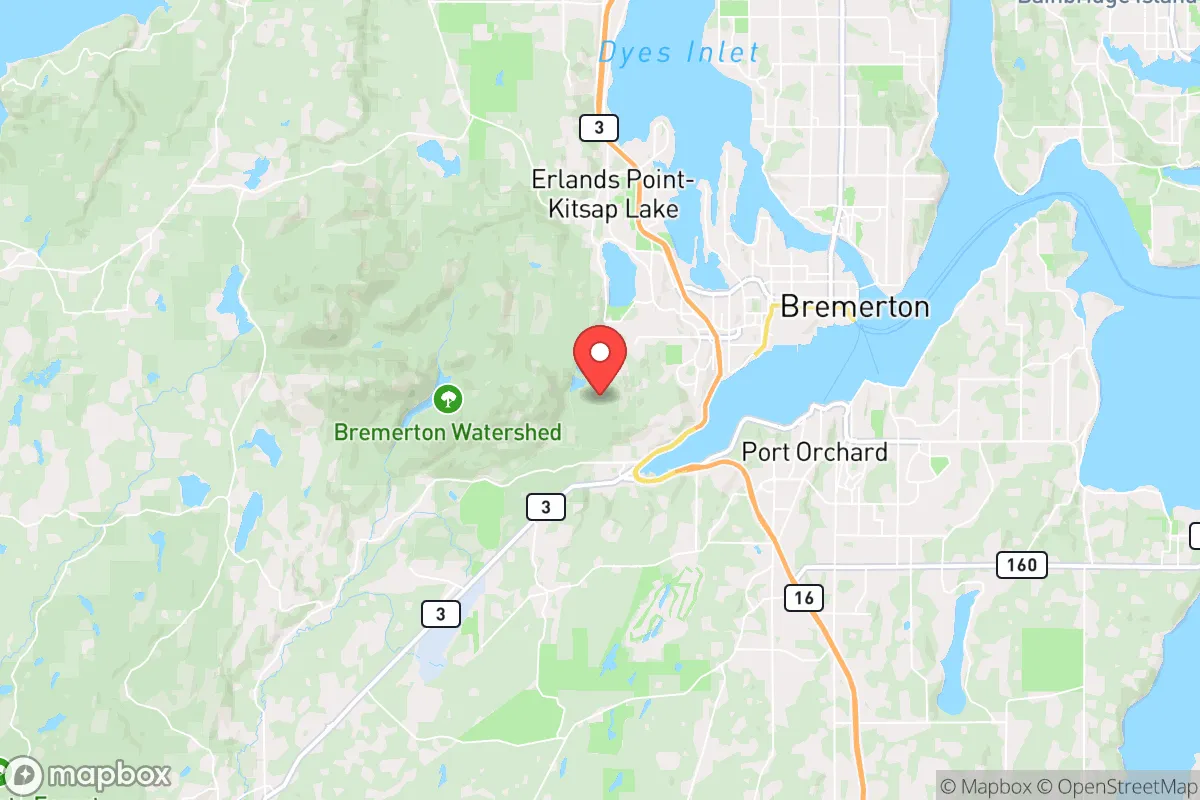
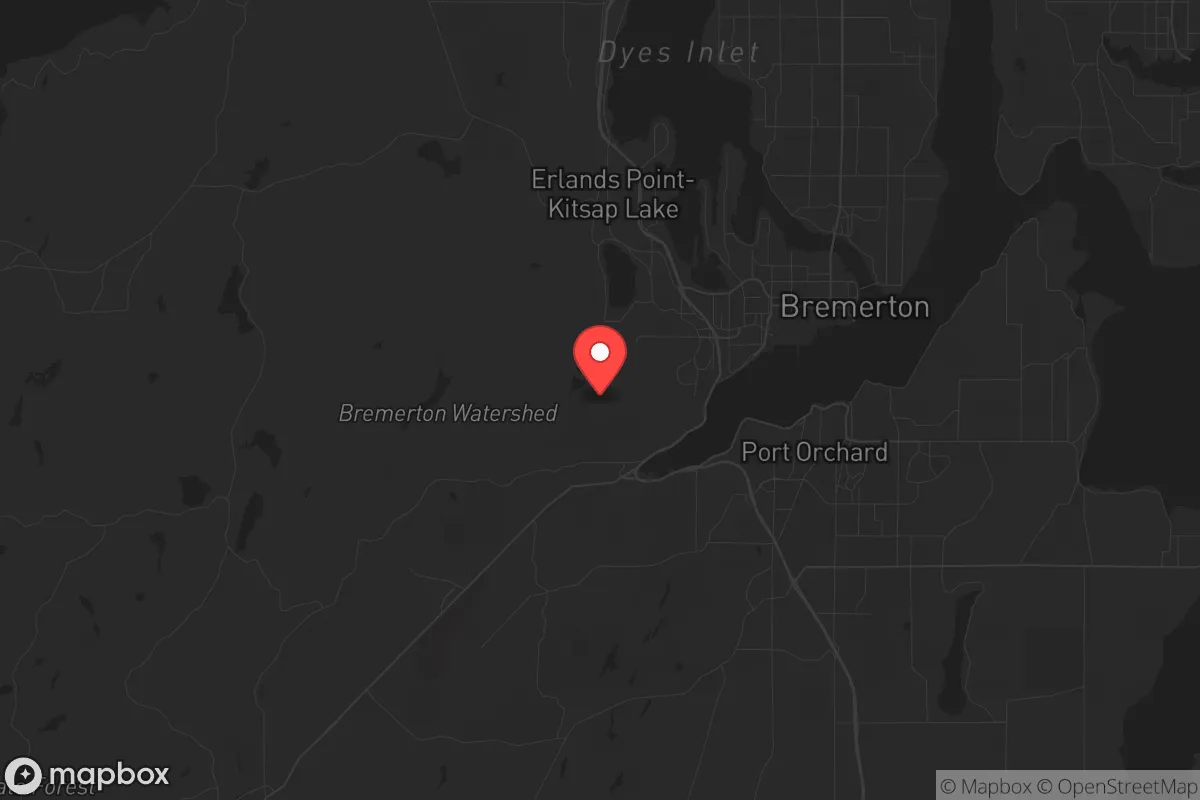
District shown is the primary district for this city’s centroid. Cities may span multiple districts.
Local Political AnalysisPolitical Analysis of Bremerton, WA
Bremerton’s political climate has shifted noticeably leftward over the past decade, and if you’ve lived here as long as I have, you’ve felt it. The Cook PVI sits at D+10, meaning the area votes about 10 points more Democratic than the national average—a far cry from the blue-collar, independent streak this town used to wear on its sleeve. In 2024, Kitsap County went for Biden by a comfortable margin, and local races increasingly favor candidates who push progressive policies on everything from land use to policing. It’s not the Bremerton I remember from the 90s, when the shipyard crowd kept things grounded and the politics were more about practical concerns than ideological experiments.
How it compares
Drive 20 minutes east to Silverdale, and you’ll find a slightly more balanced mix—still blue-leaning, but with a stronger libertarian undercurrent and more pushback on tax hikes and zoning overhauls. Head south to Port Orchard, and the vibe gets noticeably more conservative; that’s where you’ll see Trump signs still up on rural properties and hear folks grumbling about the county commission’s latest environmental mandates. But the real contrast is Poulsbo, just north across the Liberty Bay—it’s become a progressive stronghold, with bike lanes, plastic bag bans, and city council meetings that feel like a college seminar. Bremerton sits in the middle, but it’s drifting toward Poulsbo’s model faster than many of us are comfortable with. The surrounding unincorporated areas of Kitsap County still lean red, but they’re being slowly absorbed into the city’s orbit through annexation and transit planning.
What this means for residents
For those of us who value personal freedom and local control, the trend is concerning. The city council has pushed through stricter rental regulations, noise ordinances that target backyard projects, and a “climate action plan” that effectively limits how you can use your own property. Property taxes have climbed steadily to fund programs that feel more like social engineering than public services. If you own a small business or a home with a workshop, you’ve probably noticed more inspections, more fees, and more hoops to jump through. The school board has also moved left, adopting curriculum changes that prioritize identity politics over core academics—something that’s driving a quiet exodus to private schools or homeschooling co-ops in the surrounding hills. Long-term, if this trajectory holds, Bremerton could become a place where the cost of living—both financial and cultural—pushes out the very working-class families that built this town around the naval shipyard.
One cultural distinction worth noting: Bremerton still has a strong military presence, with Naval Base Kitsap employing thousands, and that community tends to lean more moderate or conservative on fiscal and national security issues. But the civilian leadership in city hall is increasingly at odds with that base, pushing policies that feel disconnected from the realities of a defense-dependent economy. You’ll also see a growing divide between newer transplants—many from Seattle or Portland, fleeing high costs but bringing their politics with them—and longtime residents who remember when Bremerton was a place where you could live your life without a dozen new rules every year. If you’re considering a move here, just know that the political winds are blowing in a direction that might not align with your values, especially if you believe government should stay out of your garage, your backyard, and your kid’s classroom.

State Political ClimatePolitical Climate in Washington
State Political AnalysisPolitical Environment in the State
Washington State has undergone a dramatic political transformation over the past two decades, shifting from a purple battleground with a libertarian streak to a solidly blue state dominated by the Seattle metroplex. The Democratic coalition now controls every statewide office and both chambers of the legislature, with the last Republican governor elected in 2004. While the state’s overall partisan lean is roughly D+8 in presidential elections, that number masks a deep and growing chasm between the urban crescent and the rest of the state—a divide that has real consequences for anyone considering a move here.
Urban vs. rural divide
The political map of Washington is essentially two states. King County, home to Seattle and its suburbs, casts about 30% of the state’s total vote and delivers margins of 70-75% for Democratic candidates. Add in the neighboring urban counties of Snohomish (Everett), Pierce (Tacoma), and Thurston (Olympia), and you’ve got the engine that drives every statewide election. Meanwhile, the eastern half of the state—places like Spokane, the Tri-Cities (Kennewick, Pasco, Richland), and Yakima—votes reliably Republican, often by 60-65% margins. The real story is in the exurban and rural counties that used to be competitive. Clark County (Vancouver) flipped from reliably red to purple and now leans blue, driven by Portland commuters and California transplants. Whatcom County (Bellingham) has shifted hard left as Seattle spillover and Canadian influence reshape its politics. The only reliably red strongholds left are the agricultural counties east of the Cascades and a handful of rural western counties like Lewis and Pacific.
Policy environment
Washington’s policy landscape is a case study in progressive governance with a few libertarian holdovers. The state has no personal income tax—a major selling point for conservatives—but the state sales tax is among the highest in the nation at 6.5% base, with local add-ons pushing it past 10% in many cities. Property taxes are moderate but rising. The regulatory environment is aggressive: Washington has a state-run health insurance exchange, a cap-and-trade carbon market (the Climate Commitment Act), and some of the strictest environmental regulations in the country. Education policy is dominated by the teachers’ unions, with school choice limited to a handful of charter schools that face constant legal challenges. Election laws are among the most liberal: universal mail-in voting, same-day registration, and no voter ID requirement at the polls—a system that conservatives view as ripe for fraud, though no major scandals have emerged. The state also has a “sanctuary” law (the Keep Washington Working Act) that limits local law enforcement cooperation with federal immigration authorities.
Trajectory & freedom
On the freedom front, Washington is a mixed bag trending in the wrong direction. The state has lost its historic libertarian character—the “live and let live” ethos that once made it attractive to both left and right. Recent legislation has expanded government control in several key areas. The 2023 ban on “assault weapons” (HB 1240) and the 2024 magazine capacity limit (HB 1143) have made Washington one of the most restrictive states for gun owners, with no grandfathering of existing magazines. Parental rights have taken hits: the state’s 2023 “shield law” (SB 5599) allows minors to access gender-affirming care without parental consent, and school districts in places like Seattle and Olympia have adopted policies that withhold information about a child’s gender identity from parents. Medical autonomy was further restricted with the 2023 passage of a law requiring COVID-19 vaccine mandates for healthcare workers to be reinstated. Property rights are under pressure from the state’s growth management act and new “middle housing” laws that override local zoning. The only bright spot for conservatives is the lack of a state income tax, but there’s a growing movement for a wealth tax that could change that.
Civil unrest & political movements
Washington has a long history of political activism, but the last five years have seen an escalation. Seattle’s 2020 Capitol Hill Autonomous Zone (CHAZ) was a national flashpoint, a two-week occupation that saw police retreat from a six-block area and resulted in multiple shootings and one death. The city has also seen recurring protests at the Youth Detention Center and around police accountability issues. On the right, the “Three Percenters” and other militia groups have a presence in eastern Washington, particularly around Spokane and the Okanogan County area. The state’s sanctuary policy has made it a destination for illegal border crossers, with busloads arriving in Seattle and Tacoma from southern states. Election integrity remains a hot-button issue: while the state’s mail-in system has been in place for over a decade, conservative activists point to the 2020 gubernatorial race (won by Jay Inslee by 13 points) as an example of a system that lacks transparency. There’s also a small but vocal secession movement in eastern Washington—the “Liberty State” proposal—that gains traction whenever a new progressive law passes.
Projection
Looking ahead 5-10 years, the trends are clear and concerning for conservatives. Demographic shifts are accelerating the state’s leftward drift: the Seattle metro is adding 50,000-60,000 new residents annually, mostly from California and other blue states, while rural counties are losing population. The state’s Democratic supermajority in the legislature is likely to expand, enabling even more aggressive policy—expect a state income tax to be seriously debated, further gun restrictions, and expanded “sanctuary” policies. The one wildcard is the 2024 gubernatorial race, where moderate Democrat Bob Ferguson is favored but could face a credible Republican challenge if the party finds a candidate who can appeal to suburban swing voters. Realistically, Washington will look more like Oregon or California within a decade: high taxes, heavy regulation, and a political culture that is hostile to traditional values. The rural-urban divide will only widen, with eastern Washington becoming more culturally and politically distinct from the western crescent.
For a conservative considering a move to Washington, the bottom line is this: the state offers genuine economic opportunity and natural beauty, but you’ll be living under a government that is increasingly hostile to your values. If you can afford it and are willing to fight for your rights, places like Spokane, the Tri-Cities, or even parts of Clark County offer a better quality of life than the Seattle metro. But don’t expect the state to become more friendly to conservatives anytime soon—the political momentum is all in one direction, and it’s not yours.
* Values derived from national, state, county, city and local statistics and may differ in a specific area. Last updated: 2026-04-21T11:08:12.000Z
Narrative content on this page is AI-generated and may contain mistakes. Verify any details that matter before acting on them.
ReloMaps may earn a commission from affiliate links at no extra cost to you.

