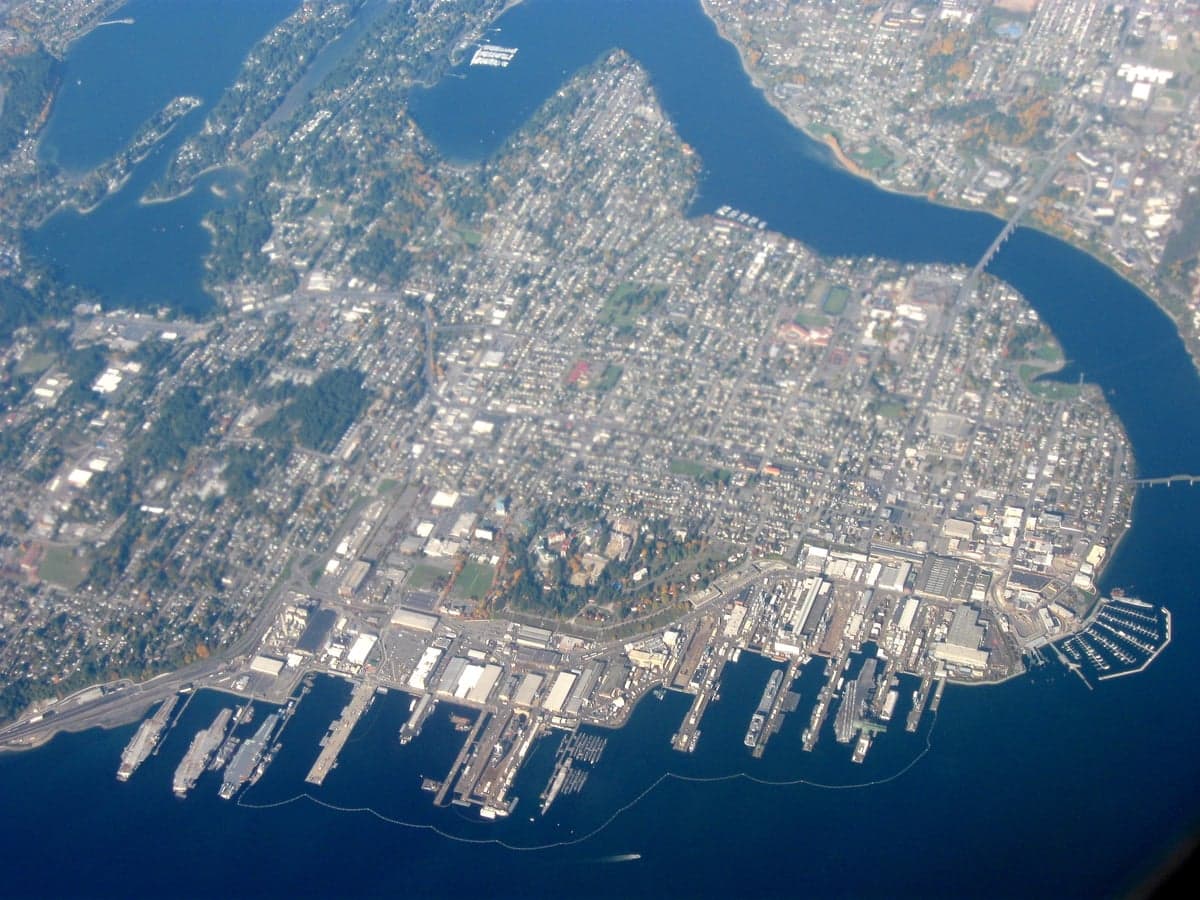
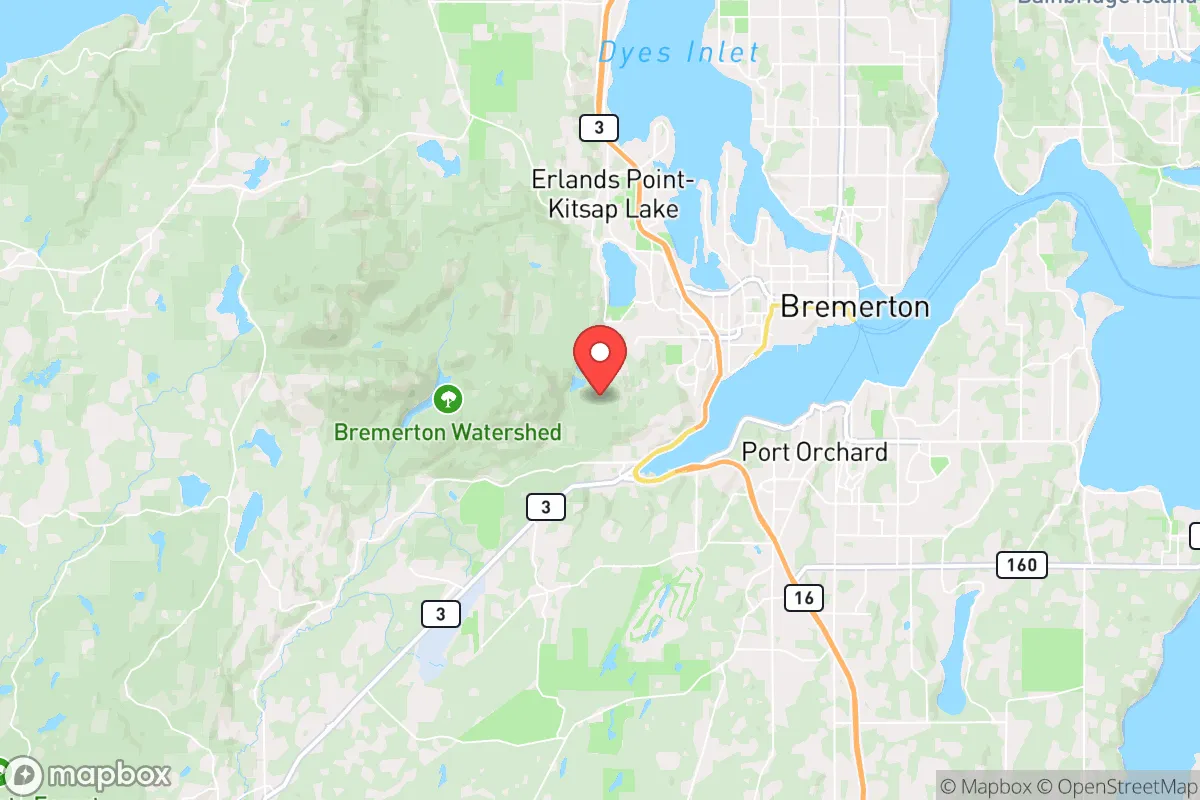
Photo: Wikipedia
Quality of Life in Bremerton, WA
Above-average quality of iife. The area offers a reasonable cost of living, decent mobility, and a mix of neighborhood amenities.
What does Quality of Life tell us?
Quality of Life blends cost of living, nearby amenities, socioeconomic signals, and neighborhood character. City-level scores represent the whole municipality; individual neighborhoods can differ.
What does this tell us?
Quality of Life blends cost of living, nearby amenities, socioeconomic signals, and neighborhood character. City-level scores represent the whole municipality; individual neighborhoods can differ.
Cost of Living
37% above national average
The Real Cost of Living in Bremerton, WA for 2026
| Tier | Individual | Family (4) |
|---|---|---|
| Survival | $24k | $46k |
| Comfortable | $80k | $117k |
| Luxury | $117k+ | $182k+ |
| Elite (Top 5%) | $138k+ | $214k+ |
64%
The Area Signal
A metric tracking the socioeconomic signals of the area.
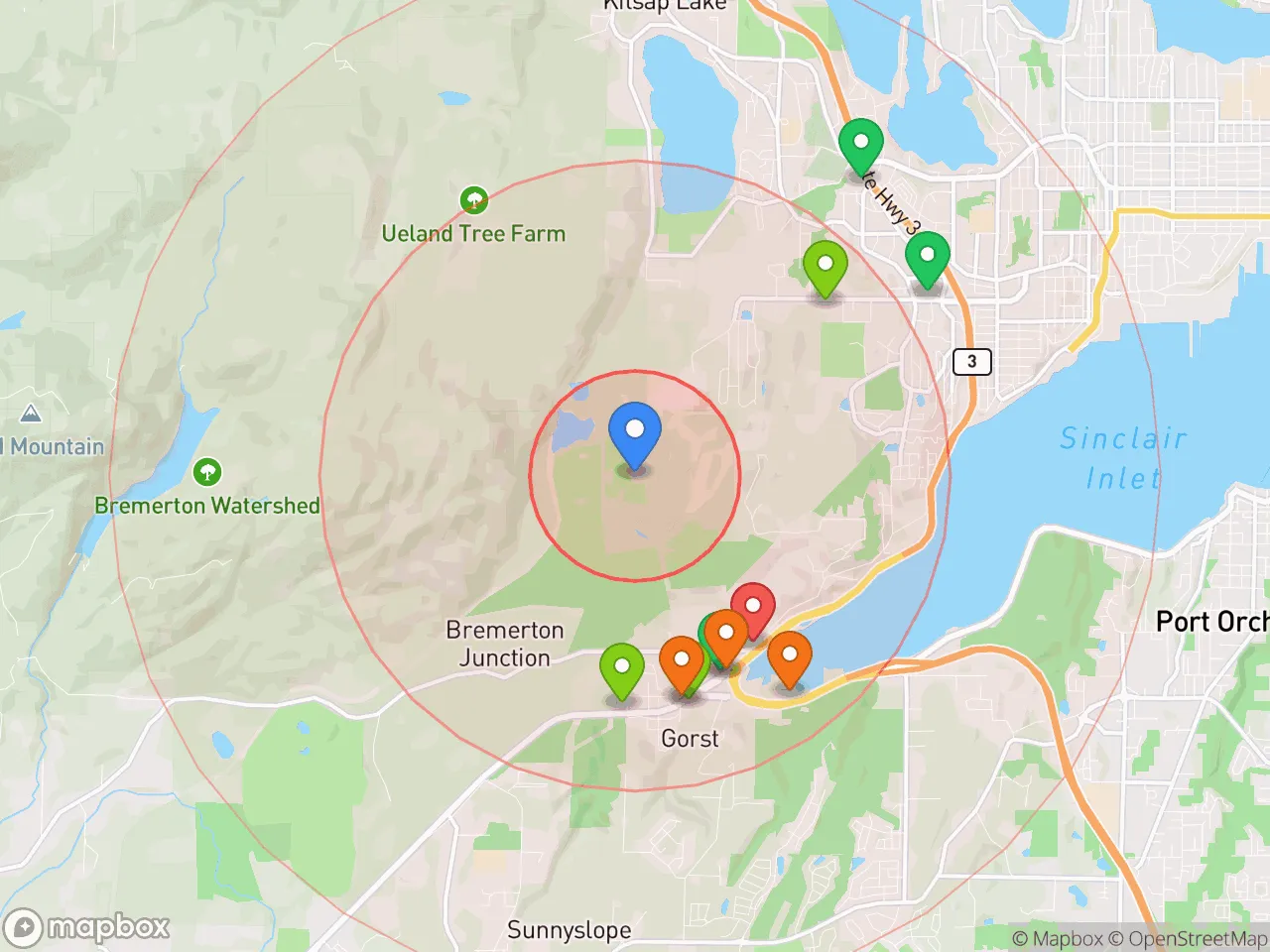
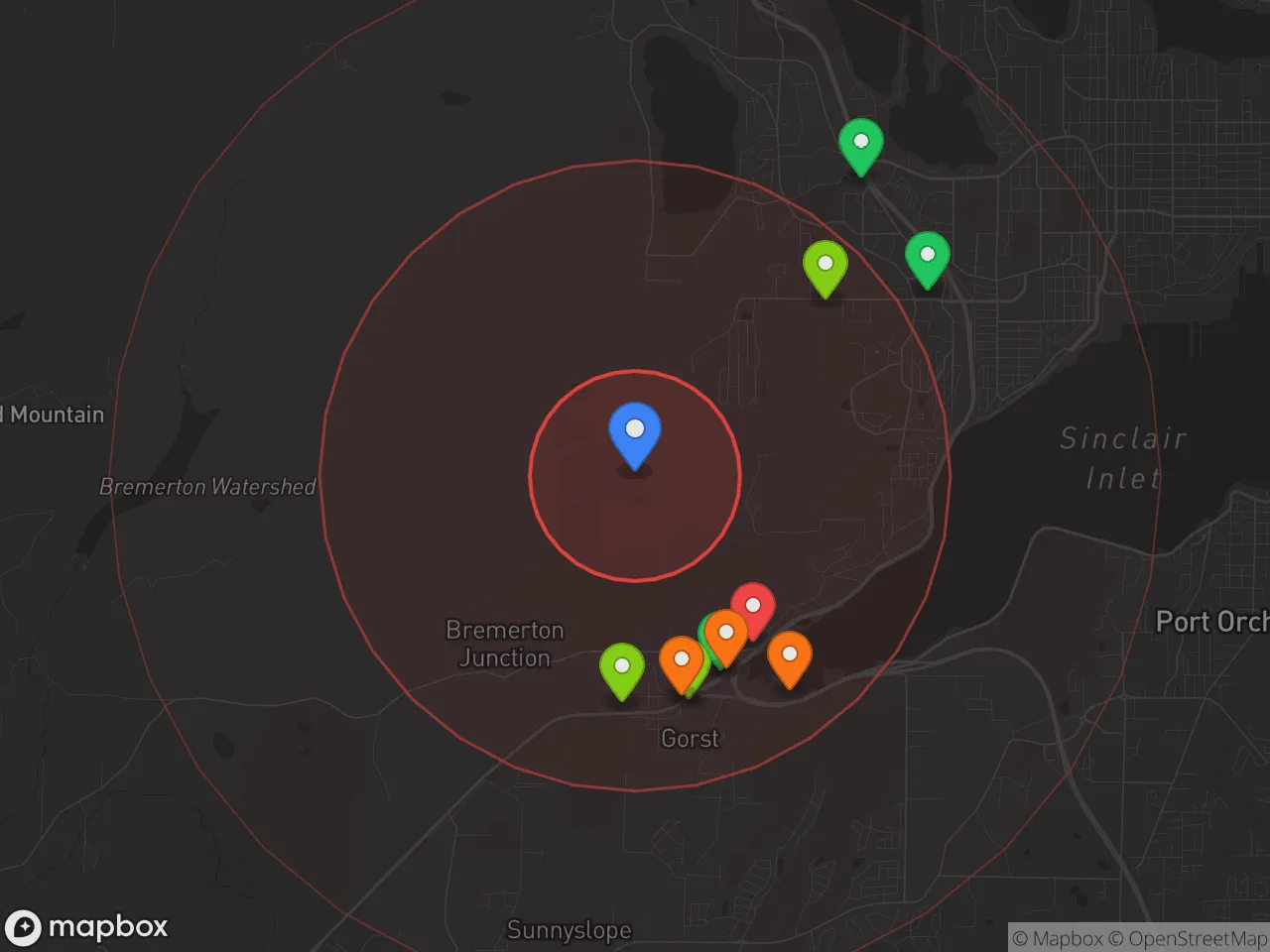
Hobbies
Explore the areaGroceries
6 within 10 miles
Gas
20 within 10 miles
Hospital
16 within 20 miles
Airport
SEA — Seattle–Tacoma International
Post Office
USPS — 200 National Avenue South, Bremerton
Critical Amenities
Quality-of-Life Analysis
Bremerton, Washington, presents a middle-to-upper-middle-class quality of life shaped by its role as a Kitsap County hub and a ferry-linked bedroom community for Seattle. The city’s population skews toward military families (Naval Base Kitsap is the largest employer), long-time Washingtonians, and commuters who trade a longer trip for lower housing costs. With a cost-of-living index of 137 (37% above the U.S. average), Bremerton is more affordable than Seattle (index ~170) but pricier than rural Kitsap County towns like Port Orchard. The median household income hovers around $65,000, supporting a solidly middle-class demographic, though the city also has a notable share of retirees and younger renters drawn by the waterfront and Olympic Mountain views.
Cost of living, housing affordability, and how Bremerton compares to Seattle and Tacoma
Bremerton’s cost of living is significantly lower than Seattle’s, but it still runs well above the national baseline. The median home value sits at $409,500, roughly half the King County median of $850,000, making it one of the most attainable waterfront-adjacent markets in the Puget Sound region. Median rent is $1,535, which undercuts Seattle’s typical $2,100 by about 27%. However, the trade-off is a longer average commute of 28 minutes — a figure that masks the reality for ferry commuters, who often face 60–90 minutes door-to-door to downtown Seattle. Property taxes in Kitsap County are moderate (around 0.9% of assessed value), and Washington’s lack of state income tax helps offset the high sales tax (9.1% in Bremerton). For buyers, the market is competitive but not as cutthroat as Seattle’s; homes often sit for 30–45 days, and prices have risen roughly 8% year-over-year since 2023.
What daily life is like for families: schools, parks, and local amenities
Daily life in Bremerton revolves around a compact downtown core, extensive waterfront parks, and a school system that serves a diverse student body. The Bremerton School District enrolls about 5,000 students, with Olympic High School and Bremerton High School both offering International Baccalaureate programs; the district’s graduation rate is 82%, slightly below the state average of 84%. For younger families, the Kitsap Regional Library system and the new Harborside Fountain Park provide free, walkable recreation. The city’s ferry terminal is the linchpin of daily rhythm — roughly 4,000 passengers ride the Bremerton–Seattle route each weekday, and the 60-minute crossing includes onboard Wi-Fi and food service. Groceries and shopping are concentrated along Wheaton Way and Kitsap Way, with a mix of national chains (Safeway, Walmart) and local spots like the Bremerton Farmers Market (Saturdays, May–October). Healthcare is anchored by St. Michael Medical Center (part of Virginia Mason Franciscan Health), which provides emergency and specialty care. The city also hosts the Bremerton Marina and the USS Turner Joy museum ship, giving residents a tangible maritime identity.
Bremerton is best suited for people who prioritize affordability and access to nature over urban intensity. Military personnel and Department of Defense civilians will find the most seamless fit, given the base’s dominance. Commuters who can tolerate the ferry schedule or remote-work flexibility will enjoy the lower housing costs and quieter evenings. Families seeking a slower pace than Seattle, with decent schools and ample parks, will also thrive here. However, those expecting a vibrant nightlife, high-end dining, or a fast-paced job market outside the military sector may find Bremerton limited. The city’s quality of life is a pragmatic trade-off: you gain space, water views, and a lower mortgage, but you trade the 24/7 energy of a major metro for a small-city rhythm with a strong naval anchor.

Crime in Bremerton, WA
Crime rates similar to the national median for U.S. locations.
Violent CrimeViolent Crime Analysis
Property CrimeProperty Crime Analysis
Crime Analysis
Bremerton, Washington, presents a challenging safety landscape for prospective residents, with crime rates that significantly exceed both state and national averages. The city’s violent crime rate stands at 325.9 incidents per 100,000 residents, while property crime is reported at a notably high 2,447.3 per 100,000. These figures place Bremerton in a category of heightened concern, particularly for those moving from safer suburban or rural areas.
Crime in context
To understand Bremerton’s safety profile, it is essential to compare its rates to broader benchmarks. The national violent crime rate is approximately 380 per 100,000, meaning Bremerton’s 325.9 figure is slightly below the U.S. average but still elevated. However, the property crime rate of 2,447.3 per 100,000 is nearly 50% higher than the national average of roughly 1,950 per 100,000. More critically, both rates are substantially above Washington state averages, which sit around 300 for violent crime and 2,100 for property crime. This disparity is partly attributable to Bremerton’s position as a small city within the Seattle metropolitan area—a region where progressive judicial policies, including lenient sentencing and reduced prosecution for non-violent offenses, have been linked to higher recidivism and a greater number of offenders on the street. The Kitsap County Prosecutor’s Office, like many in the Puget Sound region, has adopted diversion programs and reduced charges for certain theft and drug crimes, which critics argue undermines public safety and victim justice.
What residents experience
For those living in Bremerton, the high property crime rate is the most tangible concern. Vehicle break-ins, package theft, and residential burglaries are common complaints, particularly in areas near the ferry terminal and downtown commercial corridors. Violent crime, while less frequent, includes aggravated assault and robbery, often concentrated in specific neighborhoods. Residents report that police response times can be slow due to staffing shortages, and many feel that the justice system’s focus on rehabilitation over accountability leaves repeat offenders cycling back into the community. The presence of a large naval shipyard (PSNS) brings a transient population and some associated crime, but the broader issue remains the region’s soft-on-crime approach, which prioritizes offender treatment over public protection.
Neighborhood-level variation
Safety in Bremerton is not uniform. West Hills and the Manette neighborhood are generally considered safer, with lower crime densities and stronger community watch programs. In contrast, the downtown core, especially along Callow Avenue and near the transit center, experiences higher rates of both property and violent crime. The East Bremerton area, including Sheridan Park, has mixed safety records, with some blocks seeing frequent police activity. Prospective residents should research specific street-level data and consider that even in “safer” neighborhoods, the city’s overall crime ecosystem—driven by progressive prosecution policies—means that property crime can still occur anywhere. For those prioritizing safety, suburban communities like Poulsbo or Silverdale, which have more conservative local justice practices, may offer a more secure alternative.
* Values derived from national, state, county, city and local statistics and may differ in a specific area. Last updated: 2026-04-21T11:08:12.000Z
Narrative content on this page is AI-generated and may contain mistakes. Verify any details that matter before acting on them.
ReloMaps may earn a commission from affiliate links at no extra cost to you.

