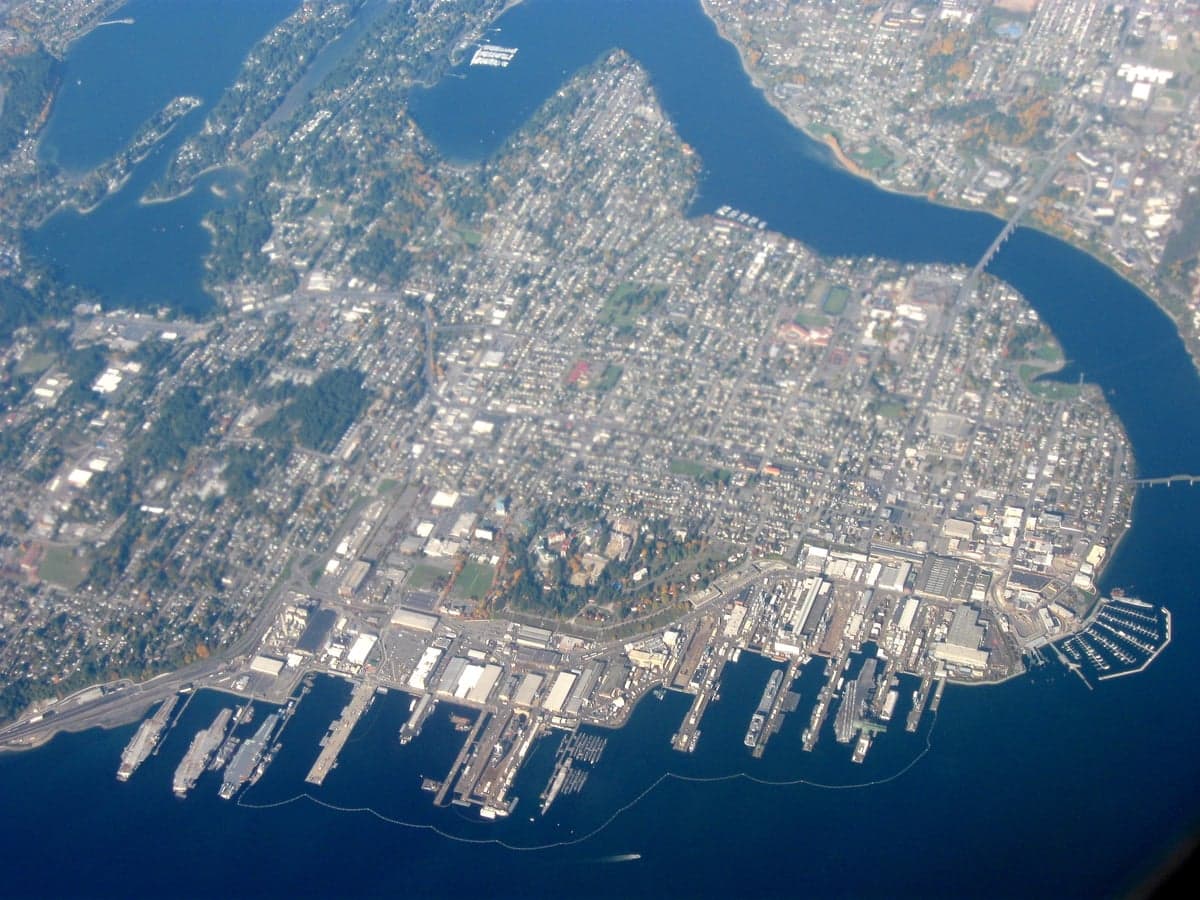
Photo: Wikipedia
Strategic Assessment of Bremerton, WA
Multiple tactical vulnerabilities. Population density, target proximity, or disaster risk are likely compounding. A retreat property and exit planning is required.
What does the Strategic Assessment tell us?
Our Strategic Assessment grades tactical survivability of an area. Major population centers, military targets, fallout zones, natural disasters, and border exposure all drive risk — lower exposure means a more defensible position in a crisis.
This is heavily inspired by Joel Skousen's Strategic Relocation book. Highly recommended you checkout the book ($)What does this tell us?
Our Strategic Assessment grades tactical survivability of an area. Major population centers, military targets, fallout zones, natural disasters, and border exposure all drive risk — lower exposure means a more defensible position in a crisis.
This is heavily inspired by Joel Skousen's Strategic Relocation book. Highly recommended you checkout the book ($)Strategic Pillars

Key Distances
Regional Safe Places
Below is our recommended "safe zones" in Washington and the surrounding area based on our strategic heuristics. For most people, it's unrealistic to live in a “safe zone” full-time due to work, family or other personal reasons. They tend to be more rural. However, many of these areas are perfect for second homes and retreat properties that double as a vacation home or even a short-term rental.
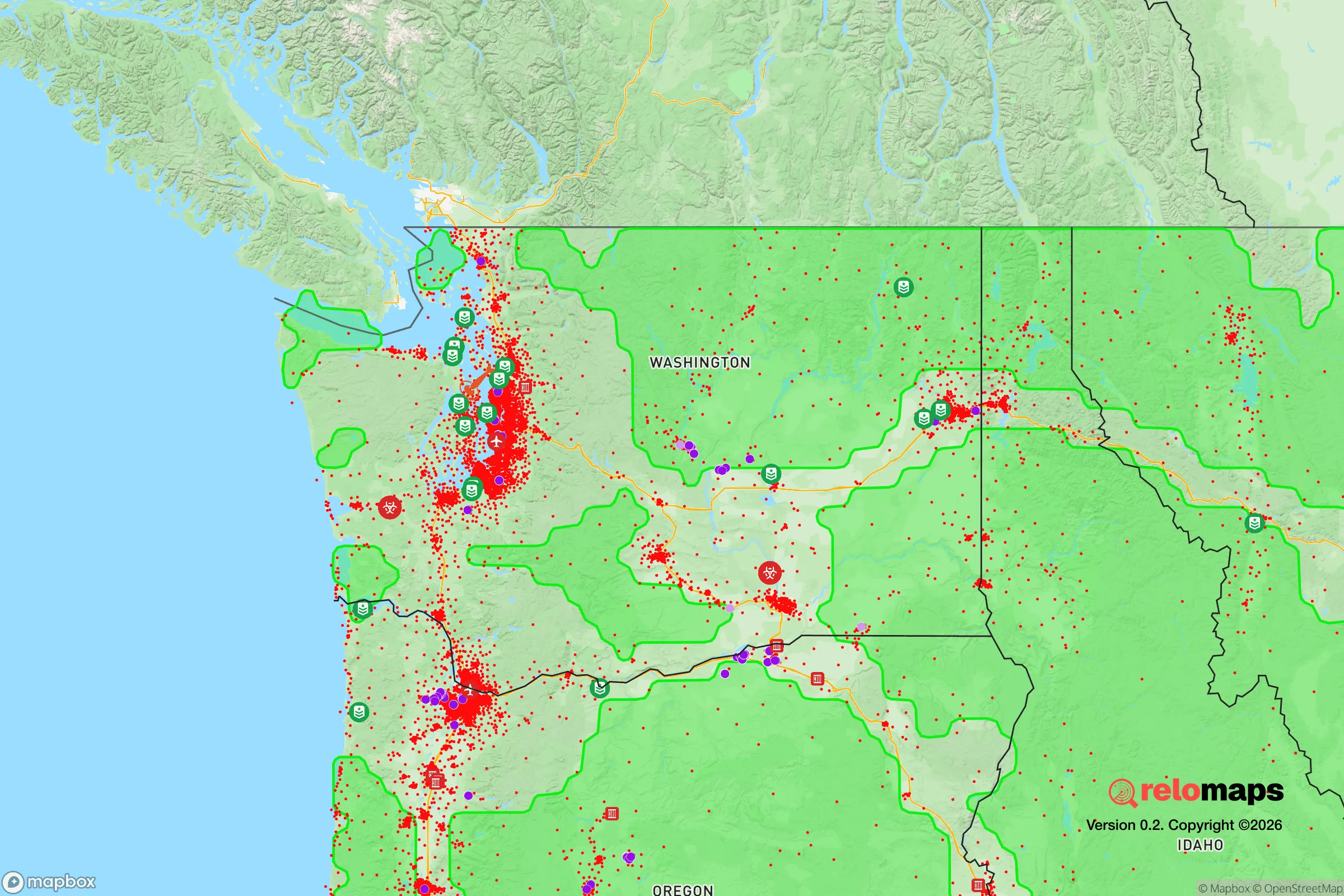
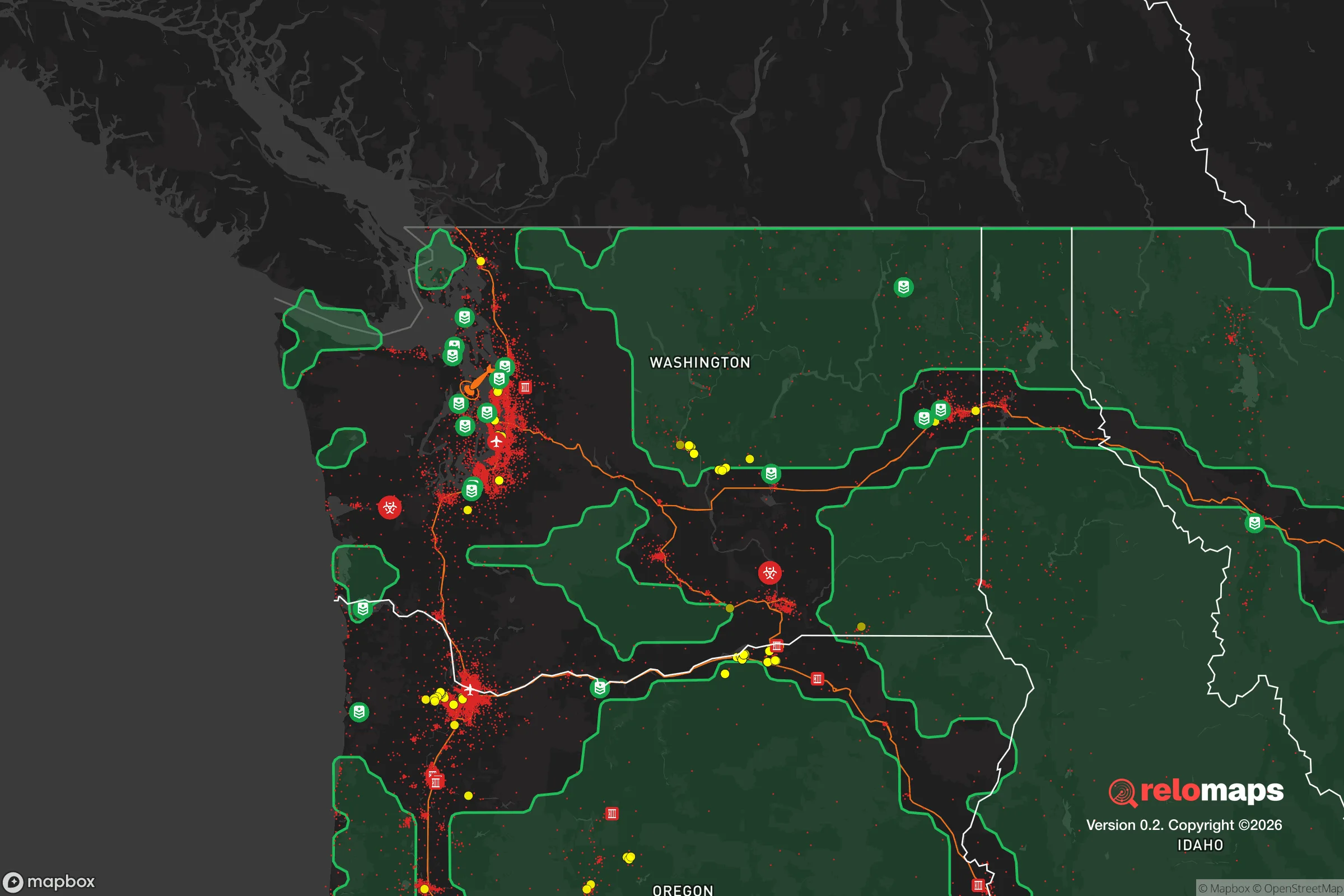


Important Note: For informational purposes only. This does not mean nothing bad ever happens in the green zones. Please use common sense. This is based on public data and modeled with AI. We tried to take a conservative approach but mistakes happen. We update this regularly as new information becomes available.
Solar Generator Recommendations
Backup power matters more here than in safer locations. We've picked three solar generators across budgets and capacity tiers — start with the budget unit if you only need a few essentials, or step up if you want to run a fridge and HVAC for days at a time.

Jackery Portable Power Station Explorer 300
Budget OptionPower on the Go: Weighing only 11 lbs, it's convenient to set up and store with book-sized foldable solar panels

BLUETTI Portable Power Station AC180
Designed for both indoor and outdoor scenarios, AC180 is highly capable as it has a robost capacity and continuous output power.

EF ECOFLOW DELTA Pro Ultra Power Station
Upgraded PickEcoFlow DELTA Pro Ultra is a whole-home energy system designed to grow with your family. Integrated with the Smart Home Panel 2, it scales to meet your evolving energy needs — keeping your home powered, intelligent, and secure through every stage of life.
We earn a commission, at no additional cost to you.
Strategic Assessment Analysis
Bremerton, Washington, presents a complex strategic picture for the conservative prepper or survivalist. While its location on the Kitsap Peninsula offers significant natural buffers and resource access, its proximity to major military and naval assets—specifically the Puget Sound Naval Shipyard and the broader Kitsap Naval Base complex—creates a dual-edged scenario of potential security and extreme risk. For those prioritizing resilience against civic unrest, mass casualty events, and large-scale disasters, Bremerton is not a simple retreat; it is a high-stakes, high-awareness location that demands careful, sober assessment of both its defensive advantages and its undeniable target profile.
Geographic position and natural advantages for long-term survival
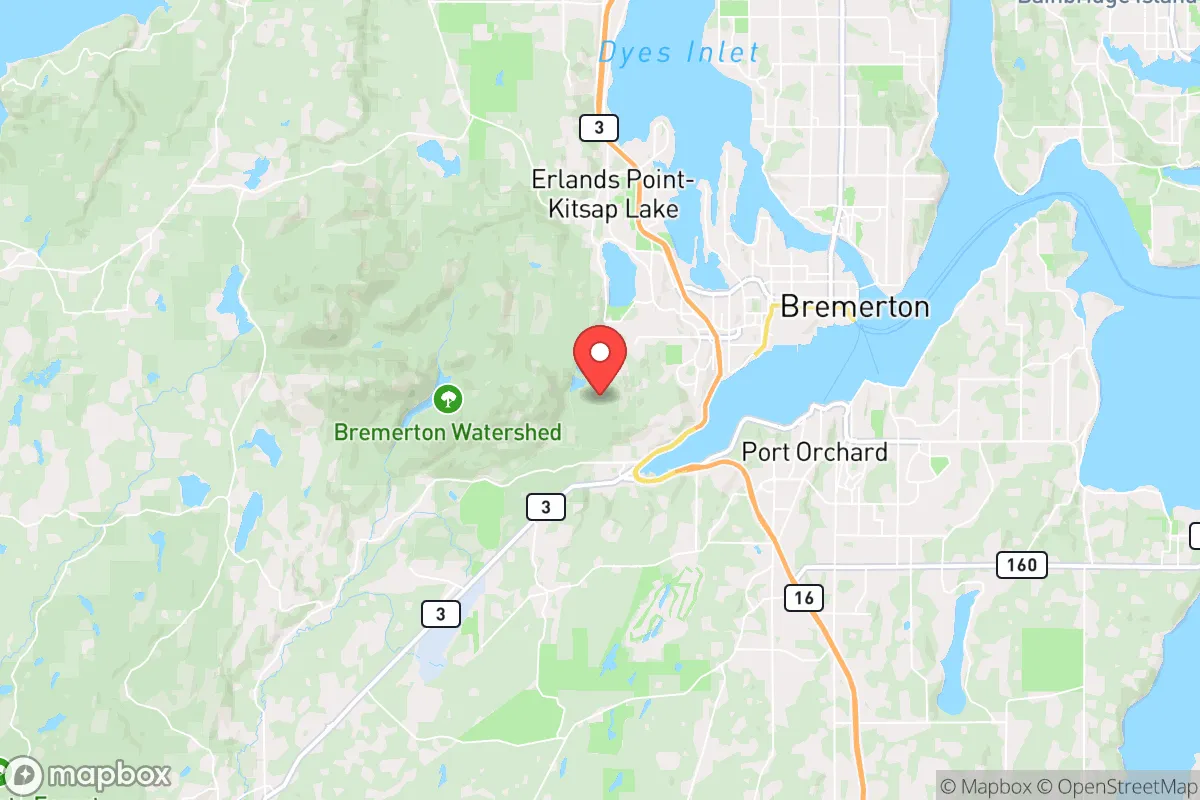
Bremerton’s geography is its strongest card. Situated on the western shore of Puget Sound, it is separated from the dense urban corridors of Seattle and Tacoma by a significant body of water—the Sound itself. This water barrier is a critical defensive feature. In any scenario involving civil unrest, mass migration from cities, or a breakdown of transportation infrastructure, the ferries and bridges become chokepoints. The Bremerton-Seattle ferry crossing is roughly 60 minutes, and the Tacoma Narrows Bridge to the south is a single, easily monitored artery. This natural isolation means that the chaos of a major metropolitan collapse would be delayed and filtered, giving residents precious time to assess and react. The surrounding Kitsap Peninsula is heavily forested with the Olympic National Forest and the Olympic Mountains to the west, providing vast, sparsely populated areas for hunting, foraging, and potential relocation if the immediate area becomes compromised. The region’s temperate marine climate, while damp, means year-round growing seasons are possible with proper planning, and water is abundant from numerous creeks, rivers, and the massive aquifer systems underlying the peninsula. For a relocator, this means defensible terrain, natural resources, and a buffer from the worst of the West Coast’s population centers.
Risks, exposures, and proximity to fallout-relevant landmarks
This is where the analysis turns sobering. Bremerton is not a hidden gem; it is a primary target. The Puget Sound Naval Shipyard (PSNS) and the Kitsap Naval Base are home to the U.S. Navy’s West Coast submarine fleet, including ballistic missile submarines (SSBNs) and the nuclear-powered aircraft carrier USS Nimitz. In any conflict involving peer adversaries—China, Russia, North Korea—this installation is a top-tier strategic target. A single nuclear warhead detonated over the shipyard would produce catastrophic fallout that could blanket the entire Kitsap Peninsula, including Bremerton, within hours. The prevailing winds from the southwest would push radioactive debris directly over the city. Furthermore, the Bangor Annex, located just north of Bremerton, stores a significant portion of the nation’s nuclear warheads. This makes the entire region a high-value, high-risk zone. Beyond nuclear threats, the concentration of military personnel and their families means that any disruption to base operations—whether from a cyberattack, a biological event, or a conventional strike—would instantly ripple through the local economy and social order. The presence of the Bremerton ferry terminal and the nearby Seattle-Tacoma International Airport (SEA) about 30 miles southeast also means that any disease outbreak or biological agent introduced via travel would arrive here quickly. For the prepper, the calculus is stark: you are living next to a primary target, and the fallout zone is your backyard.
Practical resilience for a relocator: food, water, energy, and defensibility
On the practical side, Bremerton offers a mixed bag. Water is abundant. The city draws from the Green Mountain watershed and the Kitsap Peninsula aquifer, which are deep, reliable, and less susceptible to surface contamination than many other sources. A well on a private property is a realistic and highly recommended investment. Food security is moderate. The maritime climate supports robust gardening, but the soil is often acidic and rocky, requiring raised beds and amendments. Local farms are small and scattered; the Bremerton Farmers Market is a good resource for networking with local growers, but it is not a substitute for a personal food supply. The surrounding forests offer blacktail deer, elk, and abundant salmon runs in the fall, but hunting pressure is high. Energy is a vulnerability. The grid is heavily dependent on hydroelectric power from the Columbia River system, which is vulnerable to both earthquake damage and cyberattack. Solar is viable but limited by the region’s frequent cloud cover; a backup generator with a substantial fuel cache is essential. Defensibility is the strongest asset. The terrain is hilly and heavily wooded, with numerous natural chokepoints on the roads leading into the city. A small, well-organized group could effectively control access to a rural property on the outskirts. However, the population density of Bremerton proper (roughly 40,000 people within city limits, with over 250,000 in Kitsap County) means that a collapse scenario would bring significant competition for resources. The best strategy is to secure a property on the western or northern edges of the county, away from the naval bases and closer to the Olympic National Forest, where retreat options are more viable.
The overall strategic picture for Bremerton is one of high risk with high potential reward for the disciplined, well-informed relocator. It is not a safe haven for the unprepared. The presence of the naval shipyard and nuclear storage facilities makes it a likely target in any major conflict, and the fallout risk is real and immediate. However, for those willing to invest in serious preparation—deep water storage, a robust food production system, off-grid energy, and a defensible property—the natural barriers, abundant water, and forested terrain offer a level of resilience that is rare in the Pacific Northwest. The conservative prepper should view Bremerton as a forward operating base, not a final retreat. It is a place to build skills, stockpile supplies, and establish a network, while always maintaining a plan for a secondary relocation deeper into the Olympic Peninsula if the geopolitical situation deteriorates. The key is to be aware, be prepared, and never mistake proximity to military power for personal safety. In a world of increasing instability, Bremerton demands a clear-eyed, strategic approach—not blind optimism.

* Values derived from national, state, county, city and local statistics and may differ in a specific area. Last updated: 2026-04-21T11:08:12.000Z
Narrative content on this page is AI-generated and may contain mistakes. Verify any details that matter before acting on them.
ReloMaps may earn a commission from affiliate links at no extra cost to you.

