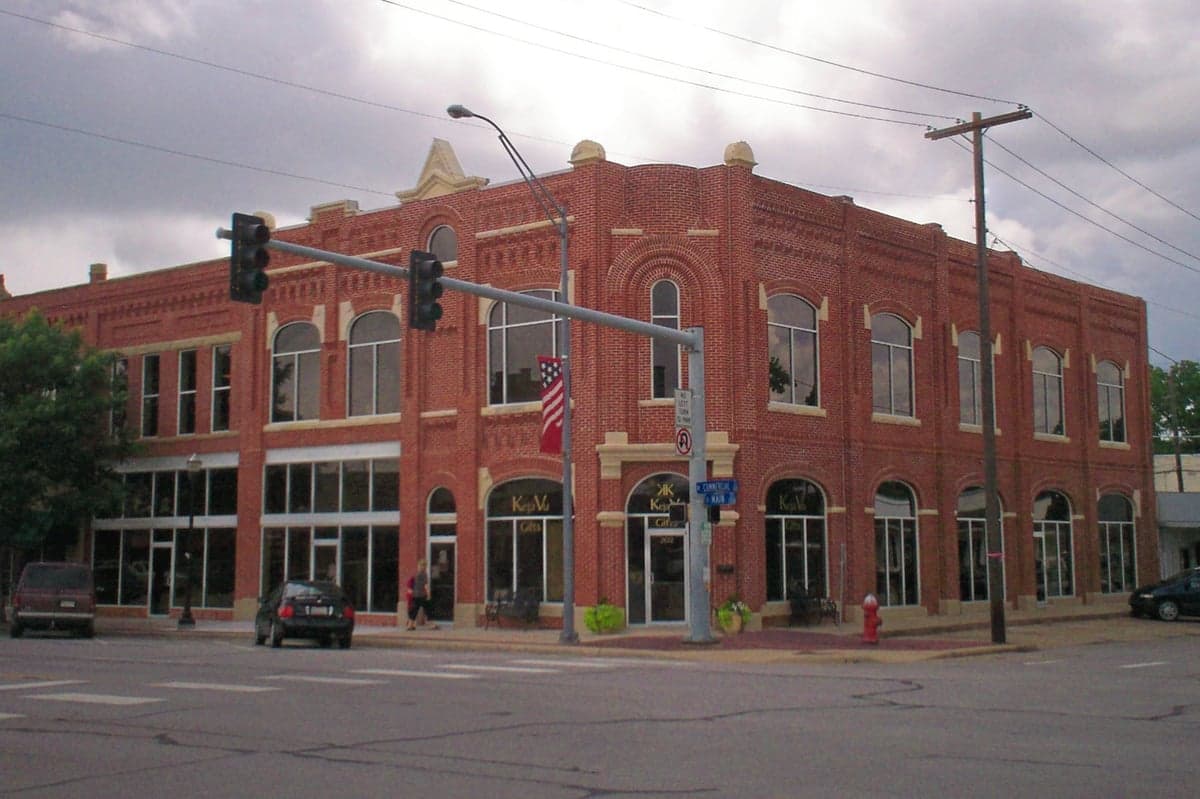
Photo: Wikipedia
Political ClimatePolitical Climate in Broken Arrow, OK
District shown is the primary district for this city’s centroid. Cities may span multiple districts.
Local Political AnalysisPolitical Analysis of Broken Arrow, OK
Broken Arrow has long been a solidly conservative community, and that hasn't changed much despite some national trends. The Cook PVI of R+11 tells you the basics—this is a place where Republican candidates routinely win by double digits, and local elections tend to reflect that same lean. If you’ve lived here a while, you remember when it was even more lopsided, but the core values of limited government, personal responsibility, and a strong sense of local control are still the bedrock. You won’t find many folks here who think the federal government needs a bigger say in their day-to-day lives.
How it compares
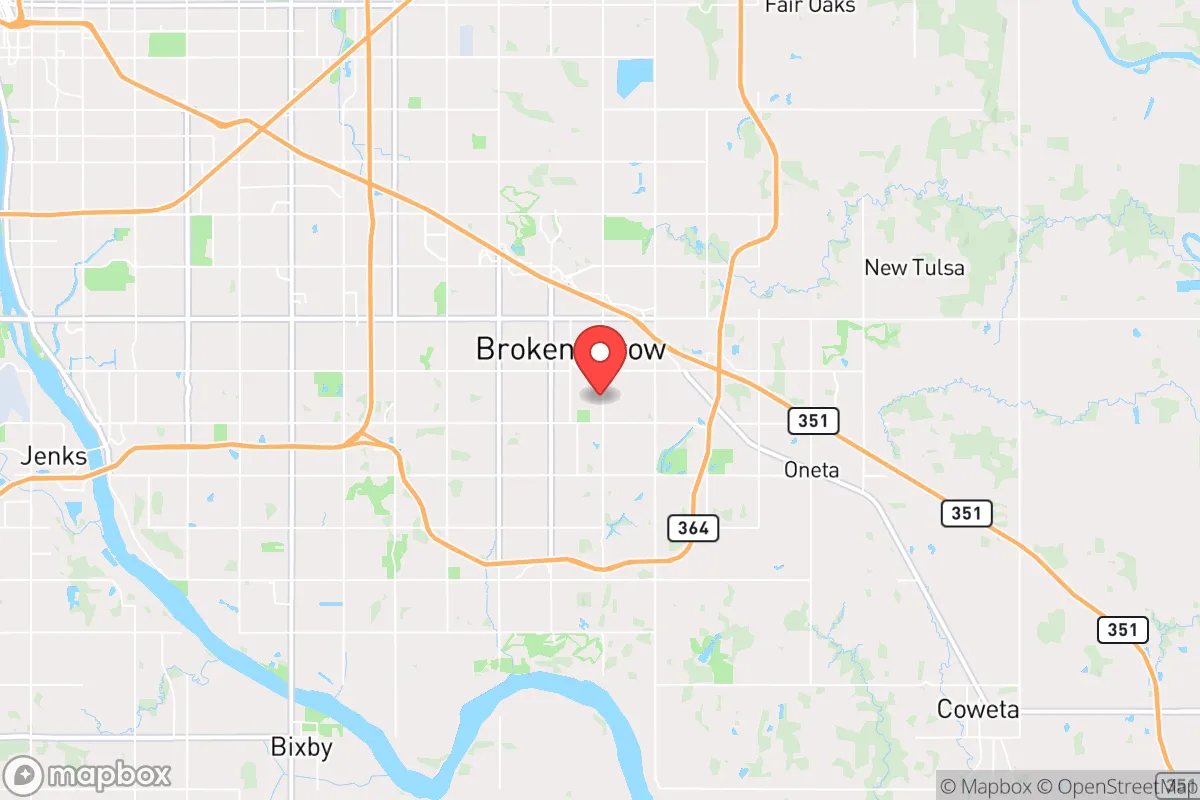
Drive ten miles west into Tulsa, and you’ll feel the difference immediately. Tulsa County as a whole is more purple, with pockets of progressive activism that just don’t take root in Broken Arrow. The contrast is even sharper if you head south to places like Bixby or Jenks, which are also conservative but tend to be a bit more suburban-establishment Republican. Broken Arrow is grittier in its conservatism—more working-class, more skeptical of new taxes, and less willing to tolerate what locals see as government overreach. Compared to the more liberal enclaves in midtown Tulsa or even Norman down south, Broken Arrow feels like a place where the old-school Oklahoma values of minding your own business and keeping the government out of your wallet are still the default.
What this means for residents
For someone moving here, the political climate translates into a few practical realities. You’ll see lower property taxes than in many parts of the country, and the city council tends to resist new regulations that could burden small businesses or homeowners. There’s a strong strain of skepticism toward any new program that smells like a federal mandate—whether it’s zoning changes pushed from above or school curriculum battles. That said, it’s not a free-for-all. The community does rally around things like public safety and infrastructure, but the general attitude is: we’ll handle it locally, thanks. If you’re worried about creeping government control over your property rights, your business, or your family’s choices, Broken Arrow is still a place where that fight is taken seriously.
One cultural distinction worth noting is the city’s relationship with growth. Broken Arrow has been one of the fastest-growing cities in Oklahoma for years, and that’s brought some tension between longtime residents who want to keep things small and newcomers who bring different expectations. So far, the conservative majority has held the line on most big-government proposals, but you do see occasional pushes for more progressive policies—like diversity initiatives in schools or environmental regulations on development. Those are usually met with a healthy dose of skepticism, and they rarely gain much traction. The long-term outlook here is that Broken Arrow will stay conservative, but it’ll have to keep fighting to keep it that way as the metro area expands. If you value personal freedoms and local control, this is still one of the better spots in Oklahoma to put down roots.

State Political ClimatePolitical Climate in Oklahoma
State Political AnalysisPolitical Environment in the State
Oklahoma has long been one of the most reliably conservative states in the nation, with a deep-rooted Republican lean that has only solidified over the past two decades. The state hasn’t voted for a Democratic presidential candidate since 1964, and in 2024, Donald Trump carried it by over 34 points. But the real story is the shift beneath the surface: once a bastion of populist Democrats who voted conservative on social issues, Oklahoma has transformed into a solidly red, culturally conservative stronghold, driven by the exodus of rural Democrats to the GOP and the growth of evangelical and suburban voters in places like Edmond, Broken Arrow, and Norman. The state legislature is now supermajority Republican, and the governor’s mansion has been in GOP hands for over a decade. For a conservative looking to relocate, Oklahoma offers a political climate that is not just friendly but actively aligned with traditional values—though there are growing pains as the state’s urban centers begin to show signs of ideological drift.
Urban vs. rural divide
The political map of Oklahoma is a textbook case of the urban-rural split, but with a twist: even the state’s largest cities are not reliably blue. Oklahoma City and its sprawling suburbs—places like Edmond, Yukon, and Mustang—vote reliably Republican, with the city itself trending purple but still leaning red in most races. Tulsa is similar, with its affluent suburbs like Broken Arrow and Jenks being deeply conservative. The real blue pockets are limited to Norman (home to the University of Oklahoma) and Stillwater (Oklahoma State), where college-town dynamics produce a more progressive tilt, though even these are not as far left as counterparts in Texas or Colorado. The rural counties—like Beaver, Ellis, and Harper in the Panhandle—routinely deliver 85%+ margins for Republicans. The divide is stark: the state’s two major metro areas are conservative-leaning, while the vast rural expanse is deeply red, meaning there is no major urban counterweight pulling the state leftward. This is a key difference from states like Texas, where cities like Austin and Houston create a more competitive dynamic.
Policy environment
Oklahoma’s policy environment is a dream for conservatives who value limited government and traditional values. The state has a flat income tax rate of 4.75% (down from 5% in 2022), with ongoing efforts to phase it out entirely. There is no estate tax, and property taxes are among the lowest in the nation, averaging about 0.9% of home value. The regulatory climate is business-friendly, with a right-to-work law and a tort reform system that has capped non-economic damages in medical malpractice cases. On education, Oklahoma has embraced school choice aggressively: the Oklahoma Parental Choice Tax Credit Act (2023) provides up to $7,500 per student for private school expenses, and the state has one of the most expansive charter school laws in the region. However, there are concerns about government overreach in healthcare: the state expanded Medicaid under the 2020 ballot measure (State Question 802), which some conservatives view as a step toward federal dependency. On election integrity, Oklahoma requires voter ID and has no same-day registration, and the legislature passed SB 440 in 2021 to ban private funding of election administration—a direct response to concerns about Zuckerberg-style interference. For a conservative, the policy environment is largely aligned with personal freedom, but the Medicaid expansion and ongoing debates over marijuana regulation (medical is legal, recreational remains illegal) show that the state is not immune to progressive encroachment.
Trajectory & freedom
Oklahoma has been on a trajectory of expanding personal freedom in key areas, but the picture is mixed. On gun rights, the state is a standout: it passed constitutional carry (permitless carry) in 2019, and in 2024, Governor Kevin Stitt signed HB 3084, which prohibits state and local enforcement of federal gun laws that violate the Second Amendment—a clear assertion of state sovereignty. On parental rights, Oklahoma passed the Parents’ Bill of Rights (SB 1147) in 2022, requiring schools to notify parents of any medical or mental health services offered to their children and to obtain consent before any changes to a child’s gender presentation. This is a major win for family autonomy. On medical freedom, the state banned COVID-19 vaccine mandates for state employees and contractors in 2021 (SB 658), and in 2023, it passed SB 170, which prohibits discrimination based on vaccination status. However, there are warning signs: the state’s Medical Marijuana Authority has been criticized for overregulation, and the legislature has repeatedly attempted to tighten restrictions on dispensaries and growers, which some see as a government overreach into personal choice. On property rights, Oklahoma has strong protections against eminent domain abuse, but the lack of statewide zoning reform in cities like Oklahoma City has led to increasing density restrictions that some conservatives view as a threat to individual property autonomy. Overall, the state is trending more free on guns, education, and medical choice, but the regulatory creep in marijuana and urban planning is a concern.
Civil unrest & political movements
Oklahoma has seen relatively little civil unrest compared to coastal states, but there have been notable flashpoints. The 2020 George Floyd protests in Tulsa and Oklahoma City were largely peaceful, though there were isolated incidents of property damage. The state’s political movements are dominated by grassroots conservative activism: the Oklahoma Second Amendment Association is highly active, and the Oklahoma Parents for Educational Choice group has been instrumental in pushing school choice legislation. On the left, the Oklahoma Policy Institute and Together Oklahoma advocate for progressive tax and healthcare policies, but they have limited influence. Immigration politics are less heated than in border states, but there is a strong undercurrent of concern: in 2024, the legislature passed HB 4156, which requires law enforcement to cooperate with federal immigration authorities and penalizes sanctuary city policies—a direct response to the Biden administration’s border policies. There is no serious secession or nullification movement, though the state’s frequent legal battles with the federal government over tribal jurisdiction (the McGirt v. Oklahoma decision) have created a unique political dynamic, with some conservatives viewing the Supreme Court’s ruling as a federal overreach into state sovereignty. For a new resident, the political climate is stable, but the tribal sovereignty issue is a constant undercurrent that affects everything from criminal jurisdiction to tax policy in eastern Oklahoma.
Projection
Over the next 5-10 years, Oklahoma is likely to remain deeply conservative, but demographic shifts are worth watching. The state is experiencing modest in-migration from California and Texas, particularly to the Oklahoma City metro and the Tulsa suburbs, driven by lower housing costs and a business-friendly environment. These newcomers tend to be more moderate than the native population, which could gradually shift the suburbs toward a more libertarian-leaning conservatism rather than the social conservative strain that dominates rural areas. The urban cores of Norman and Stillwater will likely become more progressive as university populations grow, but they will remain small relative to the state’s overall population. The biggest wildcard is the ongoing tribal sovereignty dispute: if the federal government continues to expand tribal jurisdiction, it could create a patchwork of laws that frustrate conservatives who value uniform state governance. On the positive side, the state’s fiscal conservatism and low tax burden will continue to attract families and businesses, reinforcing the red lean. A conservative moving to Oklahoma today should expect to find a state that is still solidly red in 2035, but with a more suburban, economically focused conservatism rather than the rural populism of the past.
For a conservative individual or family considering relocation, Oklahoma offers a political environment that is overwhelmingly aligned with traditional values, with low taxes, strong gun rights, and a government that is actively pushing back against federal overreach. The key practical takeaway is to choose your location carefully: the suburbs of Edmond, Broken Arrow, and Yukon offer the best mix of conservative governance and quality of life, while the urban cores of Norman and Stillwater may present more ideological friction. The state is not perfect—Medicaid expansion and marijuana regulation are areas of concern—but for a conservative looking for a place where their values are the norm, not the exception, Oklahoma is one of the safest bets in the country.
* Values derived from national, state, county, city and local statistics and may differ in a specific area. Last updated: 2026-04-22T08:40:57.000Z
Narrative content on this page is AI-generated and may contain mistakes. Verify any details that matter before acting on them.
ReloMaps may earn a commission from affiliate links at no extra cost to you.

