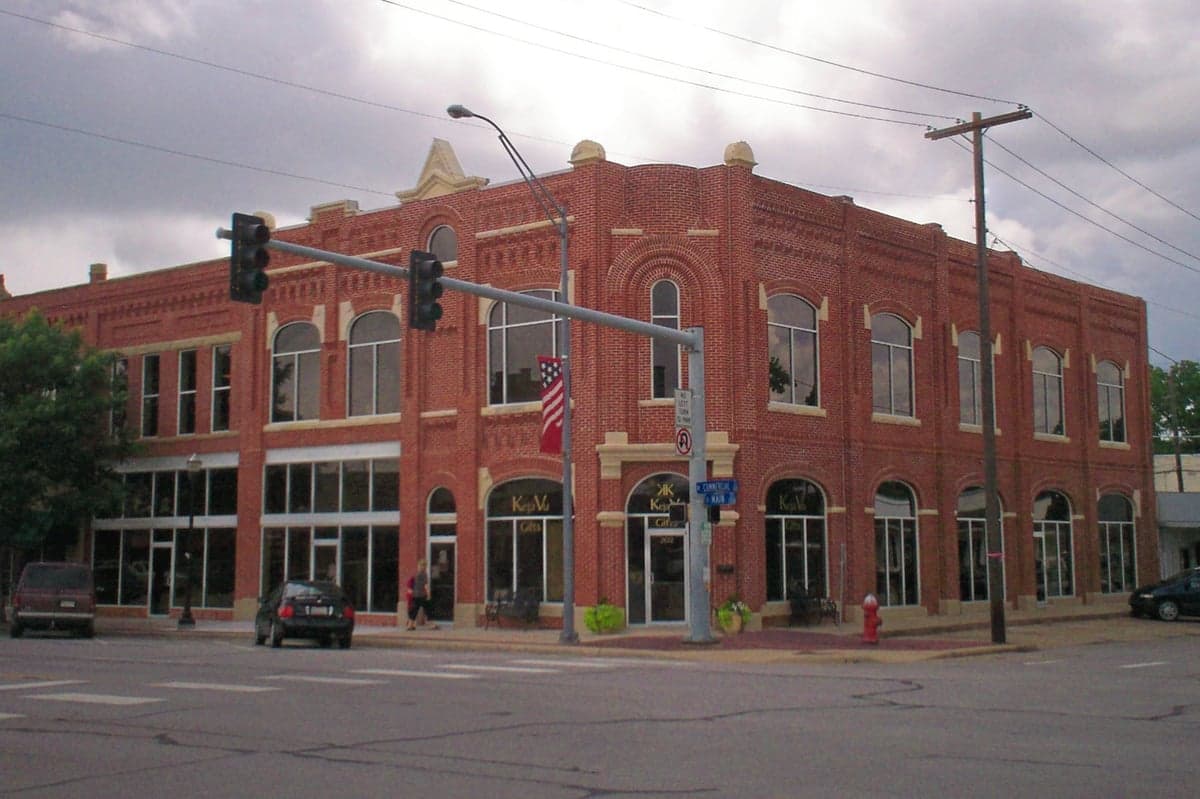
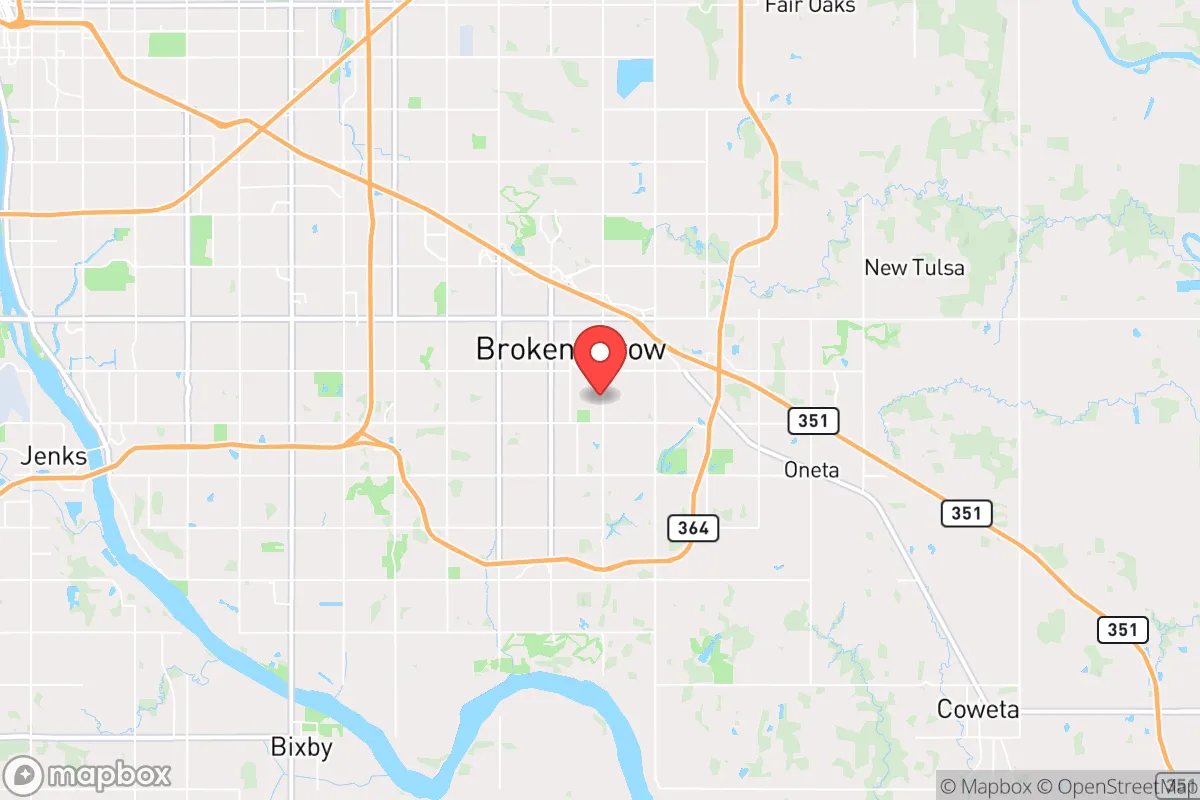
Photo: Wikipedia
Strategic Assessment of Broken Arrow, OK
Meaningful friction. Expect exposure to either population pressure, blast zones, or natural disaster risk. Consider buying a retreat property.
What does the Strategic Assessment tell us?
Our Strategic Assessment grades tactical survivability of an area. Major population centers, military targets, fallout zones, natural disasters, and border exposure all drive risk — lower exposure means a more defensible position in a crisis.
This is heavily inspired by Joel Skousen's Strategic Relocation book. Highly recommended you checkout the book ($)What does this tell us?
Our Strategic Assessment grades tactical survivability of an area. Major population centers, military targets, fallout zones, natural disasters, and border exposure all drive risk — lower exposure means a more defensible position in a crisis.
This is heavily inspired by Joel Skousen's Strategic Relocation book. Highly recommended you checkout the book ($)Strategic Pillars

Key Distances
Regional Safe Places
Below is our recommended "safe zones" in Oklahoma and the surrounding area based on our strategic heuristics. For most people, it's unrealistic to live in a “safe zone” full-time due to work, family or other personal reasons. They tend to be more rural. However, many of these areas are perfect for second homes and retreat properties that double as a vacation home or even a short-term rental.
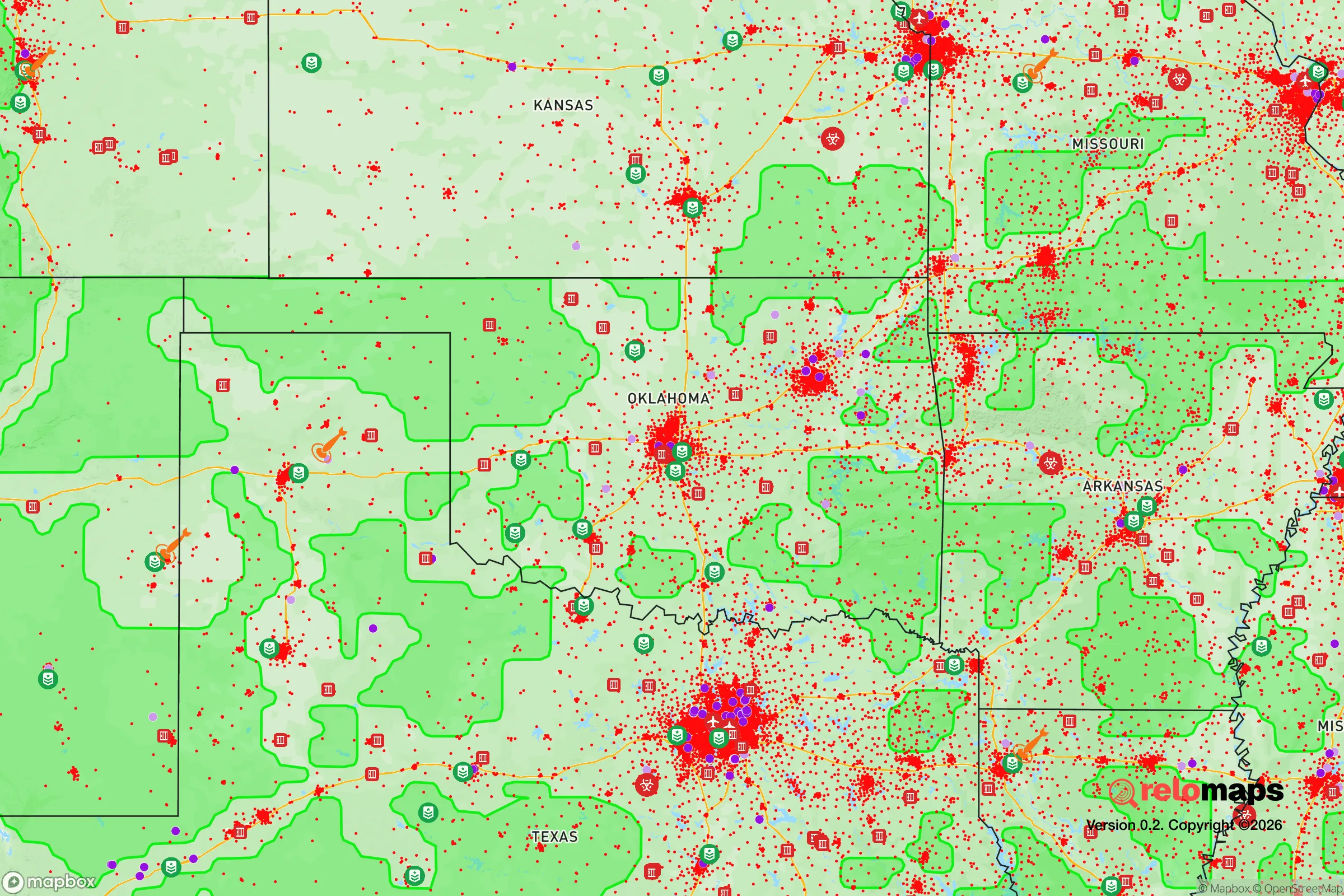
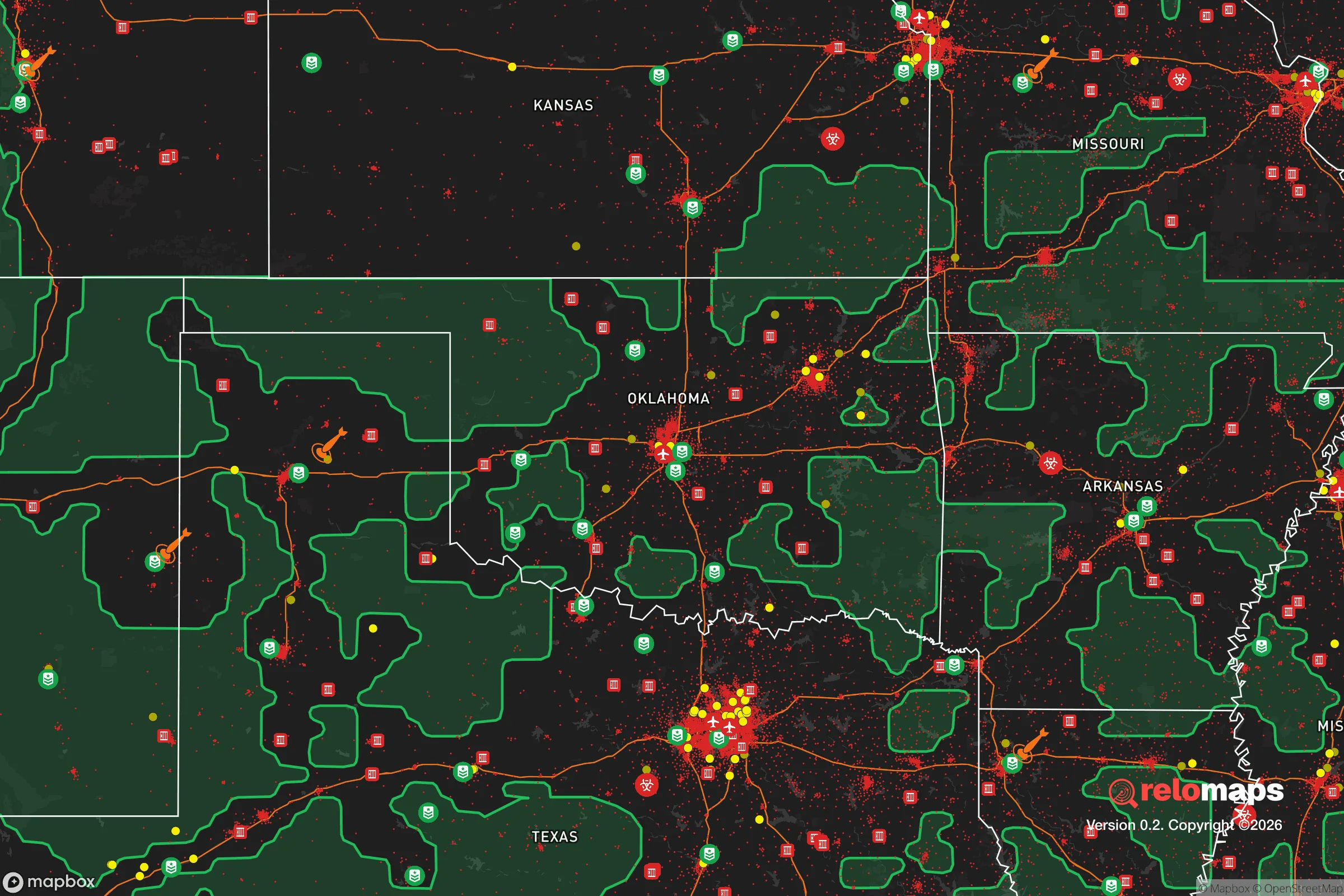


Important Note: For informational purposes only. This does not mean nothing bad ever happens in the green zones. Please use common sense. This is based on public data and modeled with AI. We tried to take a conservative approach but mistakes happen. We update this regularly as new information becomes available.
Solar Generator Recommendations
Backup power matters more here than in safer locations. We've picked three solar generators across budgets and capacity tiers — start with the budget unit if you only need a few essentials, or step up if you want to run a fridge and HVAC for days at a time.

Jackery Portable Power Station Explorer 300
Budget OptionPower on the Go: Weighing only 11 lbs, it's convenient to set up and store with book-sized foldable solar panels

BLUETTI Portable Power Station AC180
Designed for both indoor and outdoor scenarios, AC180 is highly capable as it has a robost capacity and continuous output power.

EF ECOFLOW DELTA Pro Ultra Power Station
Upgraded PickEcoFlow DELTA Pro Ultra is a whole-home energy system designed to grow with your family. Integrated with the Smart Home Panel 2, it scales to meet your evolving energy needs — keeping your home powered, intelligent, and secure through every stage of life.
We earn a commission, at no additional cost to you.
Strategic Assessment Analysis
Broken Arrow, Oklahoma, offers a compelling mix of strategic depth and practical resilience for those looking to weather potential civic unrest or large-scale disruptions. Its location in the Tulsa metropolitan area provides access to infrastructure and resources, but its position on the southern edge of the metro means you're not buried in the urban core. The city’s growth has been steady, and its conservative-leaning population and strong local governance create a social fabric that tends to resist the kind of rapid, destabilizing change seen in more progressive, coastal hubs. For a relocator thinking in terms of decades, not just years, Broken Arrow presents a solid foundation, but it’s not without its own set of proximity-based risks that demand a clear-eyed assessment.
Geographic position and natural advantages for long-term stability
Broken Arrow sits in the heart of Green Country, a region defined by rolling hills, ample water sources, and a climate that supports year-round agriculture. The city is roughly 15 miles southeast of downtown Tulsa, placing it far enough from the urban core to avoid the worst of a potential city-wide collapse, yet close enough to access medical centers, supply chains, and transportation hubs if they remain functional. The Arkansas River and its tributaries run through the area, providing a natural water source, though you’ll want to treat and store your own supply. The terrain is not mountainous, but the wooded hills and creek valleys offer decent cover and defensible chokepoints for a prepared homestead. The region is also well outside the major earthquake zones of the New Madrid Seismic Zone, though minor tremors are possible. The biggest natural advantage here is the abundance of fresh water and arable land—you can realistically grow food, raise livestock, and dig a well without fighting desert conditions or extreme cold. The climate is humid subtropical, with hot summers and cold winters, but it’s manageable with proper shelter and stored supplies.
Risks, exposures, and proximity to fallout-relevant landmarks
The most significant strategic risk for Broken Arrow is its proximity to Tulsa, a city of roughly 400,000 people that hosts major energy infrastructure, including oil refineries and natural gas processing plants. The HollyFrontier Tulsa Refinery is just west of downtown, and a major incident there—whether from accident, sabotage, or civil unrest—could create a toxic plume or a cascading industrial disaster. Additionally, the Keystone Pipeline system runs through the region, and while it’s not directly in Broken Arrow, a rupture or attack could contaminate water sources or trigger evacuations. On the fallout front, the nearest strategic targets would be Tulsa’s airports (Tulsa International and Richard L. Jones Jr. Airport), military installations like the Tulsa Air National Guard Base, and the Port of Catoosa, a major inland port handling hazardous materials. None of these are within immediate blast radius of Broken Arrow, but a nuclear or high-yield conventional strike on Tulsa would produce fallout that could reach the city depending on wind patterns. The prevailing winds are from the south and southwest, meaning fallout from a Tulsa strike would likely blow northeast, away from Broken Arrow—a small but notable advantage. Tornadoes are a real threat here, with the area sitting in the heart of Tornado Alley. A direct hit could level a neighborhood, so a reinforced safe room or basement is non-negotiable for any serious prepper. Flooding along the Arkansas River and its tributaries is also a concern, particularly in low-lying areas near the city’s southern edge.
Practical resilience for a relocator: food, water, energy, and defensibility
For a relocator focused on self-sufficiency, Broken Arrow offers a surprisingly workable environment. The soil is fertile, and the growing season runs from April to October, allowing for two crop cycles of staples like corn, beans, and squash. Local ordinances are generally friendly to backyard chickens and small livestock, though you’ll want to check HOA restrictions if you’re buying in a subdivision. Water is the critical resource: the city draws from Lake Hudson and Spavinaw Creek, but in a grid-down scenario, those municipal supplies could fail. Drilling a private well is feasible in most parts of the area, with depths typically between 100 and 300 feet. Rainwater catchment is also viable, given the average 40 inches of annual precipitation. Energy resilience is solid—the region has a mix of natural gas, coal, and wind power, but the grid is aging and prone to outages during ice storms or heat waves. Solar panels with battery storage are a wise investment, and the state offers net metering policies that make grid-tied systems economical. For defensibility, Broken Arrow’s layout is suburban sprawl with some rural pockets. The southern and eastern edges of the city offer more acreage and privacy, with winding roads and wooded lots that create natural barriers. The local police and sheriff’s departments are well-funded and responsive, but in a prolonged crisis, you’ll want to rely on your own perimeter security, not a 911 call. The community itself is a mixed bag: many residents are church-going, family-oriented, and armed, which can be a stabilizing force, but there are also transient populations and drug-related crime in certain apartment complexes near the highway corridors.
The overall strategic picture for Broken Arrow is one of cautious optimism for a prepared relocator. It’s not a remote bunker location—you’re still within a two-hour drive of Oklahoma City and less than an hour from Tulsa’s potential chaos. But the combination of abundant natural resources, a conservative and self-reliant local culture, and a climate that supports year-round food production makes it a viable base for long-term resilience. The key is to buy land with water access, build a reinforced shelter against tornadoes, and establish a network of like-minded neighbors before the next crisis hits. If you’re looking for a place that balances access to modern amenities with the ability to go dark and self-sufficient, Broken Arrow deserves a serious look—just don’t mistake its suburban calm for complete safety. The risks are real, but they’re manageable with planning, and the rewards of a stable, productive life in a community that values preparedness are substantial.

* Values derived from national, state, county, city and local statistics and may differ in a specific area. Last updated: 2026-04-22T08:40:57.000Z
Narrative content on this page is AI-generated and may contain mistakes. Verify any details that matter before acting on them.
ReloMaps may earn a commission from affiliate links at no extra cost to you.

