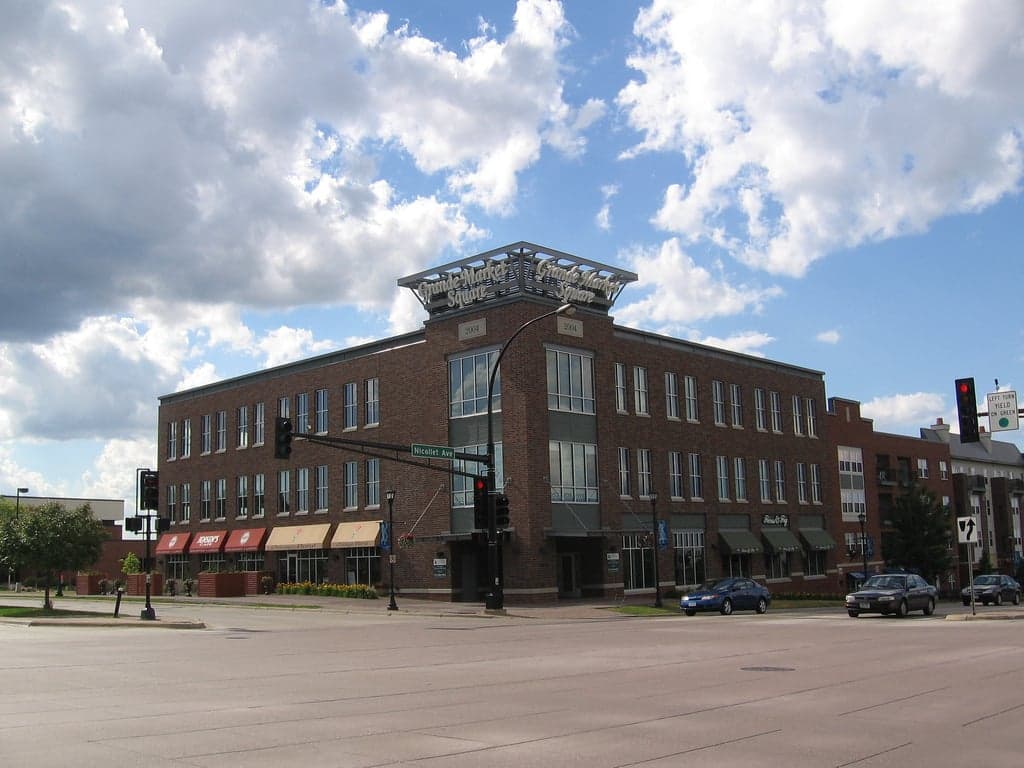
Photo: Wikipedia
Political ClimatePolitical Climate in Burnsville, MN
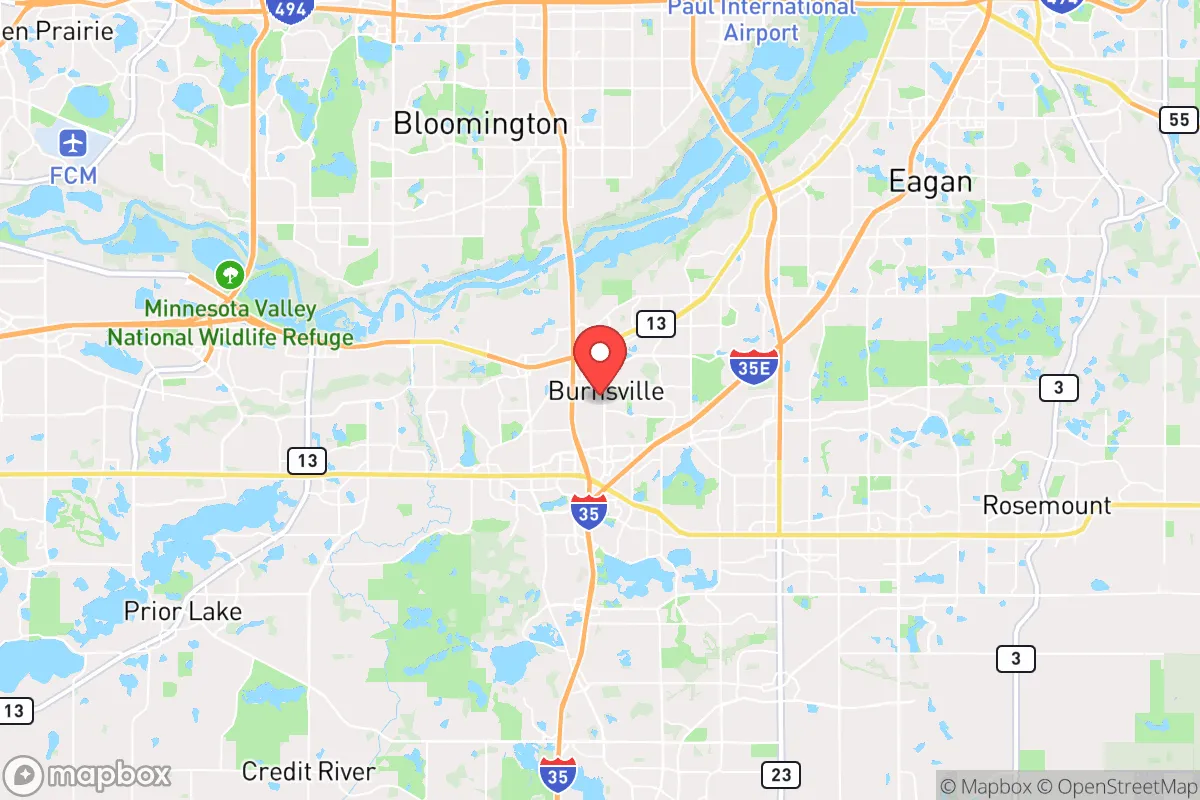
District shown is the primary district for this city’s centroid. Cities may span multiple districts.
Local Political AnalysisPolitical Analysis of Burnsville, MN
Burnsville, Minnesota, sits in a political landscape that’s shifted noticeably over the past decade. The area’s Cook Partisan Voting Index (PVI) of D+3 puts it slightly more Democratic than the state as a whole, which also carries a D+3 ratingched. But if you’ve lived here as long as I have, you know that “D+3” doesn’t tell the whole story. This used to be a reliably moderate, common-sense community where folks voted for the person, not the party. Now, you can feel the progressive tide creeping in, especially in local school board decisions and city council priorities, and it’s raising eyebrows among those of us who value personal freedoms and limited government.
How it compares
Compared to the rest of Minnesota, Burnsville is a bit of a bellwether. The state’s D+3 PVI means it leans blue overall, but Burnsville’s politics are more volatile. Drive ten minutes north to Bloomington, and you’ll find a similar suburban mix, but with a stronger progressive push on issues like housing density and environmental regulations. Head east to Eagan, and you’ll see a more business-friendly, fiscally conservative vibe. The real contrast, though, is with places like Lakeville or Farmington to the south, which are solidly red-leaning. Those communities have pushed back harder on things like mask mandates and curriculum changes. In Burnsville, the city council has been more willing to embrace progressive policies—like the 2021 resolution declaring the city a “welcoming community” for immigrants—which some of us see as a step toward federal overreach at the local level. The shift feels real: in 2020, Burnsville voted for Biden by about 10 points, but that margin has narrowed in subsequent local elections, suggesting a growing unease with the direction of the Democratic agenda.
What this means for residents
For residents, this political drift means you need to stay engaged. Property taxes have risen faster here than in neighboring Lakeville, partly due to new social programs and diversity initiatives that some argue stretch the budget. School board meetings have become battlegrounds over library books and gender identity policies—issues that many of us feel should be left to parents, not bureaucrats. If you value the Second Amendment, you’ll notice that Burnsville’s city council has been more open to discussing “safe storage” ordinances, which can feel like a slippery slope toward more restrictions. The upside? There’s still a strong network of local conservative groups and churches that push back. But if you’re looking for a place where government stays out of your life, the surrounding exurbs offer a more hands-off approach.
Culturally, Burnsville is still a great place to raise a family—good parks, decent schools, and a strong sense of community. But the policy distinctions are real. The city’s embrace of “sanctuary city” rhetoric, even if symbolic, signals a willingness to prioritize progressive ideals over local control. Long-term, I see Burnsville becoming more polarized, with younger, more liberal transplants moving in while longtime residents head to places like Prior Lake or Shakopee. If you’re considering a move here, just know that the political climate is shifting, and it’s worth checking the latest school board and city council candidates before you sign that lease.

State Political ClimatePolitical Climate in Minnesota
State Political AnalysisPolitical Environment in the State
Minnesota has a Cook PVI of D+3, meaning it leans about three points more Democratic than the national average, but that number masks a state that’s been shifting leftward for a decade. The dominant coalition is the DFL (Democratic-Farmer-Labor Party), which has held the governorship since 2019 and both legislative chambers since 2022, giving them a trifecta that’s been used to push a progressive agenda. Over the last 20 years, the state has moved from a purple battleground—where it voted for George W. Bush in 2000 and was decided by less than 1% in 2016—to a solidly blue state, with Joe Biden winning by over 7 points in 2020. That trajectory is driven by the Twin Cities metro area, which now casts about 60% of the state’s votes and has become increasingly Democratic, while rural areas have grown redder but lost population.
Urban vs. rural divide
The political map of Minnesota is a tale of two states. The Twin Cities metro—including Minneapolis, St. Paul, and their inner-ring suburbs like Edina and Bloomington—is the engine of the DFL’s power, delivering margins of 60-70% in most elections. Suburbs that were once swing areas, like Anoka County, have flipped blue in recent cycles; Anoka voted for Trump in 2016 but went for Biden in 2020 by 2 points. Meanwhile, Greater Minnesota is overwhelmingly Republican. Counties like Stearns (St. Cloud), Olmsted (Rochester), and the Iron Range (St. Louis County) are now reliably red, with rural areas like the southwestern farm counties voting 70-80% Republican. The divide is stark: the metro area’s growth—fueled by young professionals and immigrants—is pulling the state left, while the rural exodus is shrinking the GOP’s base. A conservative moving here should know that living outside the I-494/694 loop means your vote counts more, but your voice is drowned out in statewide races.
Policy environment
Minnesota’s policy environment has become aggressively progressive under the DFL trifecta. The state has a progressive income tax with a top rate of 9.85% on income over $200,000 (single filers), one of the highest in the nation, and a state sales tax of 6.875% that local governments can add to. Property taxes are moderate but vary wildly by county—expect higher rates in the metro. In 2023, the legislature passed a slew of new laws: a paid family and medical leave program funded by a payroll tax (starting 2026), a ban on non-compete agreements, and a requirement that all new residential buildings be “electric-ready” (effectively discouraging natural gas). Education policy is dominated by the teachers’ unions, with per-pupil spending among the highest in the U.S. ($16,000+), but school choice is limited—no vouchers and only a handful of charter schools. Election laws are among the most liberal: no voter ID requirement, automatic voter registration, and same-day registration. For a conservative, this environment feels like a slow squeeze on personal freedom through the tax code and regulatory overreach.
Trajectory & freedom
Minnesota is becoming less free by any measure of personal liberty. The 2023 legislative session was a watershed for government expansion. On gun rights, the state passed universal background checks and a “red flag” law (Extreme Risk Protection Order), allowing courts to temporarily seize firearms from individuals deemed a risk—a move that critics argue bypasses due process. On parental rights, the state enacted a law requiring schools to adopt policies that affirm a student’s gender identity without parental notification, effectively overriding parents’ say in their child’s education. Medical autonomy took a hit with the passage of a law codifying abortion access “without interference” up to viability, but also expanding taxpayer-funded abortion coverage. Property rights are under pressure from a new “climate-smart” building code that mandates electric heat pumps in new construction, raising costs. The tax burden is the real kicker: the state’s top marginal income tax rate is now the fourth-highest in the country, and the new paid leave payroll tax adds another 0.7% on wages. For a conservative, the trajectory is clear: more mandates, higher taxes, and less individual choice.
Civil unrest & political movements
Minnesota has been a flashpoint for civil unrest since the 2020 murder of George Floyd in Minneapolis, which sparked riots that caused $500 million in damage and led to a national debate on policing. The aftermath saw the rise of the “Defund the Police” movement, which successfully pushed the Minneapolis City Council to attempt dismantling the police department (later reversed after a public backlash). Conservative activism has grown in response, with groups like the Minnesota Gun Owners Caucus and the Minnesota Family Council organizing against the DFL agenda. Immigration politics are tense: Minnesota is a “sanctuary state” under a 2023 law that limits cooperation with federal immigration enforcement, and the state has seen a surge in Somali and Hmong populations in the metro, creating cultural friction in places like St. Cloud and Willmar. Election integrity remains a hot-button issue—the state’s no-ID voting system and widespread mail-in voting have led to lawsuits and calls for reform, though no major fraud has been proven. A new resident will notice the political polarization in everyday life, from yard signs to local news coverage.
Projection
Over the next 5-10 years, Minnesota is likely to become more progressive due to demographic trends. The Twin Cities metro is growing faster than the rest of the state, attracting young, college-educated voters from other states who lean left. Rural areas will continue to lose population, shrinking the GOP’s electoral map. The DFL trifecta is likely to hold for the foreseeable future, meaning more tax increases, expanded government programs, and tighter regulations on everything from energy to education. In-migration from blue states like California and Illinois will accelerate this shift, as newcomers bring their political preferences with them. However, there are countercurrents: the 2022 gubernatorial election saw the Republican candidate, Scott Jensen, win 44% of the vote, and the state’s independent streak could reassert itself if the DFL overreaches on issues like parental rights or taxes. For someone moving in now, expect a state where your personal freedoms—especially regarding guns, education, and medical choices—will face increasing government control, and your tax bill will rise.
For a conservative considering Minnesota, the bottom line is this: you’ll find a high quality of life in terms of natural beauty, strong schools, and a robust economy, but you’ll pay for it with high taxes and a government that’s increasingly hostile to traditional values. If you’re moving here, choose your location carefully—rural counties like Wright or Sherburne offer more political breathing room than the metro—and be prepared to engage in local politics to protect your rights. The state is not lost, but it’s on a path that requires active citizenship to steer back toward freedom.
* Values derived from national, state, county, city and local statistics and may differ in a specific area. Last updated: 2026-05-04T11:23:12.000Z
Narrative content on this page is AI-generated and may contain mistakes. Verify any details that matter before acting on them.
ReloMaps may earn a commission from affiliate links at no extra cost to you.

