
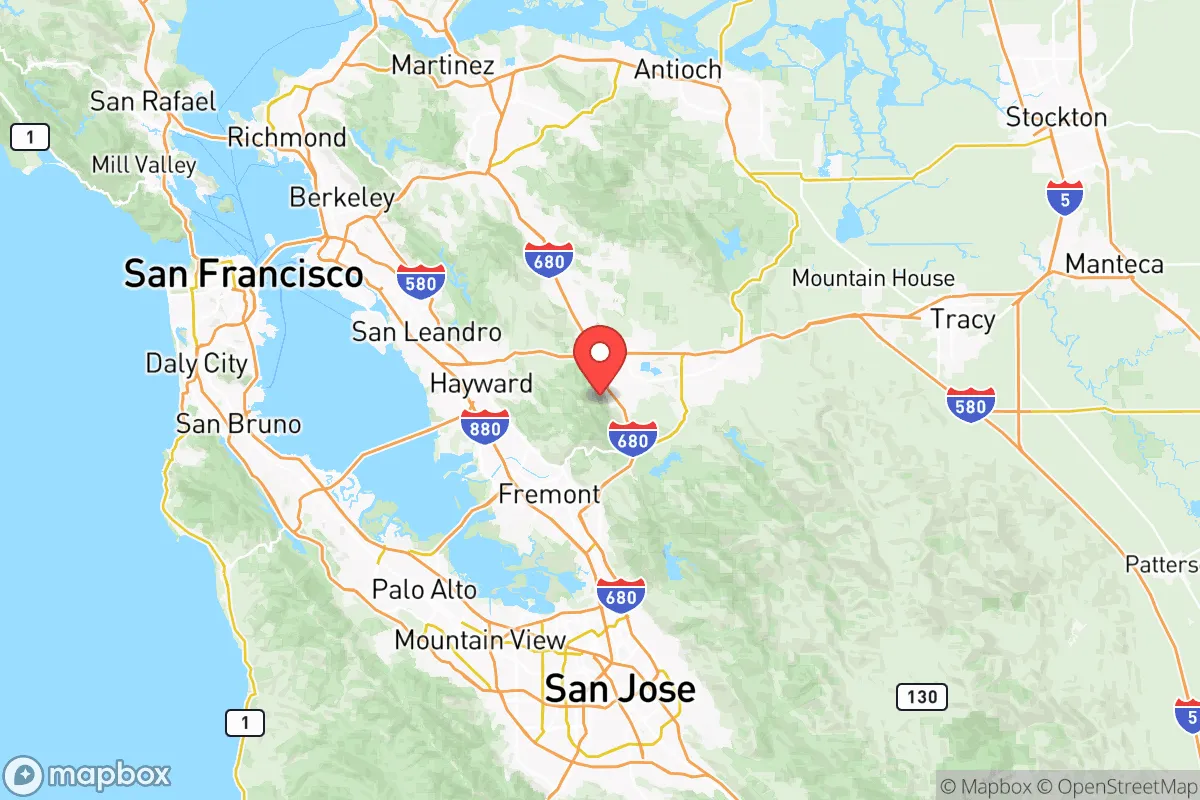
Photo: Wikipedia
Quality of Life in Alameda County
A livable area that tracks near national norms for affordability, walkability, and neighborhood health.
What does Quality of Life tell us?
Quality of Life measures an area by evaluating factors like cost of living, nearby amenities, country club access, airport proximity, socioeconomic signals and neighborhood character. For large states, this is a general average — quality of life can vary dramatically between metro areas, suburbs, and rural communities within the same state.
What does this tell us?
Quality of Life measures an area by evaluating factors like cost of living, nearby amenities, country club access, airport proximity, socioeconomic signals and neighborhood character. For large states, this is a general average — quality of life can vary dramatically between metro areas, suburbs, and rural communities within the same state.
Cost of Living
170% above national average
53%
The Real Cost of Living in Alameda County for 2026
| Tier | Individual | Family (4) |
|---|---|---|
| Survival | $37k | $70k |
| Comfortable | $161k | $237k |
| Luxury | $228k+ | $353k+ |
| Elite (Top 5%) | $278k+ | $431k+ |
Quality-of-Life Analysis
Alameda County offers one of the most dramatic quality-of-life spectrums in the Bay Area, ranging from the dense, transit-rich urban core of Oakland to the pastoral ranchlands of the Livermore Valley and the quiet, unincorporated hillsides of Castro Valley. This diversity means the county attracts everyone from tech commuters and artists to equestrians and agricultural workers, with lifestyle options that shift sharply from one ZIP code to the next. The county’s overall cost of living index sits at 270 (more than 2.5 times the national average), with a median home value of $1,057,400 and median rent of $2,318, but those figures mask enormous variation between its most expensive and most affordable pockets.
Largest town(s) & population centers
Oakland is the county’s largest city and its economic and cultural anchor, home to roughly 440,000 residents. Daily life here is defined by walkable neighborhoods like Rockridge, Temescal, and Jack London Square, a robust BART and bus network, and a deep roster of independent restaurants, art galleries, and live music venues. The city’s median home value is slightly above the county average, but rents in popular districts can exceed $3,000 for a two-bedroom. Fremont, the second-largest city (pop. ~230,000), offers a more suburban, family-oriented experience with top-rated schools in the Mission San Jose district and a large South Asian and East Asian community. Hayward and Berkeley round out the major population centers: Hayward provides more affordable housing stock and a growing downtown, while Berkeley is dominated by the University of California campus, progressive politics, and a dense, bike-friendly layout. The average commute across the county is 31.8 minutes, but residents in these core cities often have shorter trips if they work locally or use BART to reach San Francisco or San Jose.
Smaller towns & rural pockets
Beyond the urban corridor, Alameda County contains several distinct smaller communities. Livermore (pop. ~87,000) is the largest of these, blending a historic downtown wine-tasting scene with the sprawling Lawrence Livermore National Laboratory campus; its eastern edge gives way to vineyards and open space. Dublin and Pleasanton form a contiguous suburban zone along I-580, known for high-performing schools and large corporate campuses (e.g., Workday, Oracle), but they feel more like master-planned suburbs than independent towns. For true rural character, Sunol (pop. ~900) is an unincorporated hamlet in the Sunol Valley, surrounded by cattle ranches and the Sunol Regional Wilderness, with no stoplights and a single general store. Castro Valley and San Lorenzo are unincorporated communities that offer a middle ground: suburban density with lower property taxes than incorporated cities, but fewer municipal services. Fairview, a tiny census-designated place near Hayward, consists mostly of hillside homes on large lots with panoramic bay views.
Cost & lifestyle range
The cost spread across Alameda County is extreme. At the high end, Piedmont (an independent city entirely surrounded by Oakland) has a median home value exceeding $2.5 million, with top-ranked public schools and a quiet, tree-lined atmosphere that feels like a small town within the metro area. Berkeley Hills and Oakland’s Montclair district also command premiums for views and lot size. At the more affordable end, Hayward and San Leandro offer median home values around $800,000–$900,000, with older housing stock and more diverse, working-class populations. Livermore and Dublin sit in the middle, with new construction driving prices upward but still below Piedmont levels. Renters find the best deals in East Oakland and parts of Hayward, where two-bedroom apartments can fall below $2,000, though these areas also have higher crime rates and fewer amenities. Lifestyle follows cost: residents in the hills and eastern suburbs enjoy larger lots, quieter streets, and better school ratings, while those in the urban core trade space for walkability, transit access, and cultural density.
The county’s diversity means no single profile fits all. Families seeking top schools and low crime gravitate to Pleasanton, Dublin, or Piedmont. Commuters who prioritize BART access and urban energy choose Oakland or Berkeley. Those who want acreage and solitude without leaving the Bay Area find it in Sunol or the Livermore Valley. Alameda County’s quality-of-life options are not a single experience but a spectrum, and the key is matching your priorities—commute time, school quality, housing type, or cultural scene—to the specific community that delivers it.

Crime in Alameda County
WARNING: The crime statistics are unreliable for this jurisdiction. Local authorities have either not reported or under reported their data to the FBI. This could be due to bad intentions, incompetence or technical issues. Regardless, we suggest skepticism.
Higher crime rates than 65% of comparable U.S. locations.
Violent CrimeViolent Crime Analysis
Property CrimeProperty Crime Analysis
Crime Analysis
Alameda County’s overall safety picture is mixed, with property crime rates significantly exceeding both state and national averages while violent crime remains slightly below the California norm. The county’s 2024 violent crime rate of 328.5 per 100,000 residents and property crime rate of 1,394.1 per 100,000 reflect a jurisdiction where progressive district attorney policies in Oakland and surrounding cities have drawn sharp criticism for prioritizing offender rehabilitation over public safety. Residents in communities like Dublin and Livermore report markedly different experiences than those in Oakland or Hayward, where property crimes such as auto theft and burglary are routine concerns.
Crime in context
Alameda County’s violent crime rate of 328.5 per 100,000 sits below California’s average of 442 per 100,000 but above the national rate of 380 per 100,000. Property crime, however, tells a more troubling story: at 1,394.1 per 100,000, it exceeds the California average of 1,240 per 100,000 and the national rate of 1,954 per 100,000. The gap is driven largely by Oakland, which accounts for a disproportionate share of countywide incidents—particularly in auto theft, where Oakland’s rate is among the highest in the state. Berkeley and Alameda also report elevated property crime figures, while Fremont and Pleasanton maintain rates closer to the national average. Critics point to the Alameda County District Attorney’s office, under progressive leadership since 2022, for implementing policies that reduce pretrial detention and divert felony property crimes to diversion programs, a approach that has been linked to repeat offending in several high-profile cases.
What residents experience
Daily life for Alameda County residents varies sharply by location. In Oakland, car break-ins and catalytic converter thefts are so common that many residents avoid parking on the street overnight, and retail theft rings have forced stores like In-N-Out and Target to close locations. Hayward and San Leandro report frequent residential burglaries, with police clearance rates below 10% for property crimes. In contrast, Dublin and Livermore see far fewer incidents, though even there, package theft and vehicle break-ins are a persistent nuisance. Violent crime is concentrated in Oakland’s flatlands and parts of Richmond, where gang-related shootings and robberies occur regularly. The county’s progressive justice policies—including cash bail reform and reduced sentencing for drug offenses—have been blamed for a surge in repeat property offenders, with some individuals arrested dozens of times before facing significant consequences. For families, the practical impact means investing in security systems, avoiding certain neighborhoods after dark, and accepting that many property crimes will go unsolved.
Neighborhood-level variation is extreme. Oakland’s Rockridge and Montclair districts report violent crime rates below 200 per 100,000, while the Fruitvale and East Oakland neighborhoods exceed 1,000 per 100,000. Fremont’s Irvington and Mission San Jose areas are among the safest in the county, with property crime rates under 800 per 100,000. Berkeley near the UC campus sees high bicycle theft and street-level drug activity, while the Berkeley Hills remain relatively insulated. Pleasanton and Livermore consistently rank as the safest large communities, with violent crime rates below 150 per 100,000. For prospective residents, the choice of city within Alameda County is the single most important factor in determining daily safety, with the progressive judicial environment in Oakland and Hayward creating a stark contrast to the more conservative policing approaches in the Tri-Valley area.
* Values derived from national, state, county, city and local statistics and may differ in a specific area. Last updated: 2026-05-11T21:35:19.000Z
Narrative content on this page is AI-generated and may contain mistakes. Verify any details that matter before acting on them.
ReloMaps may earn a commission from affiliate links at no extra cost to you.

