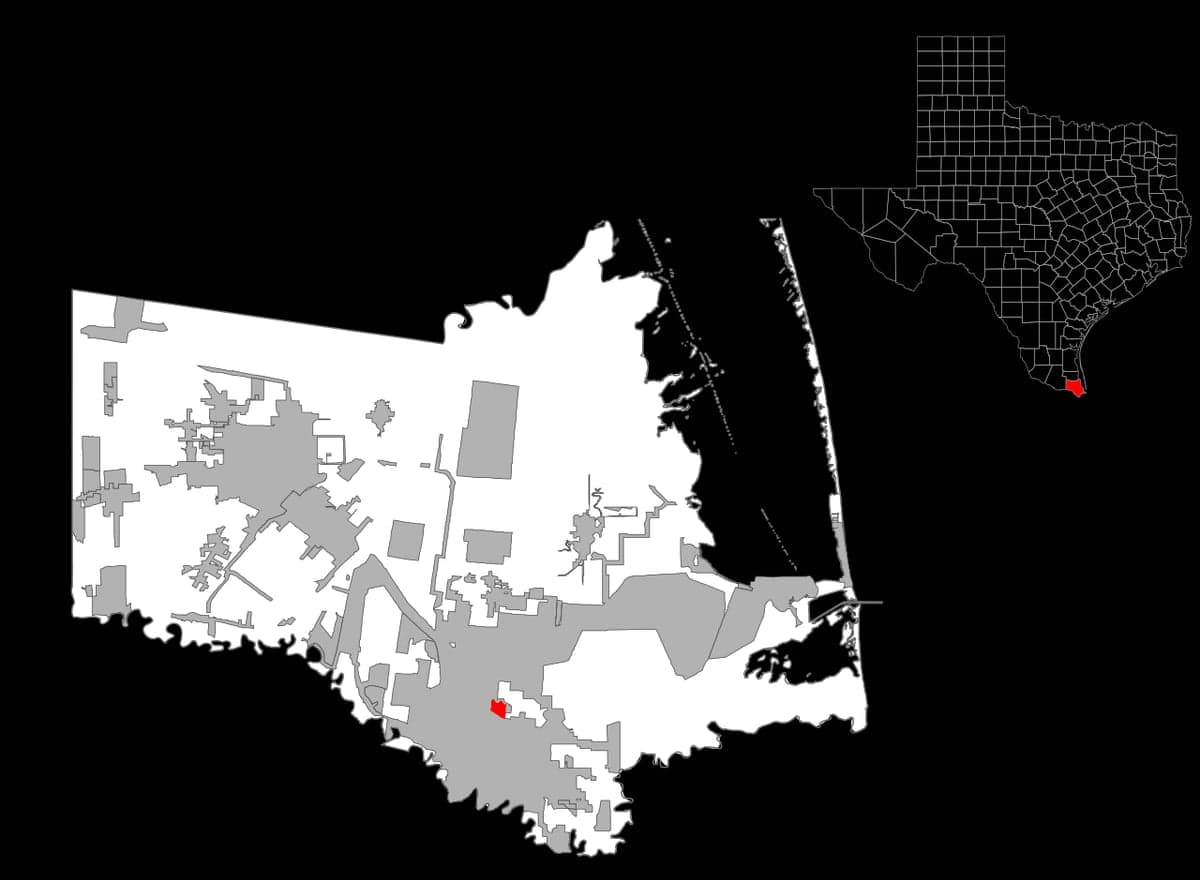
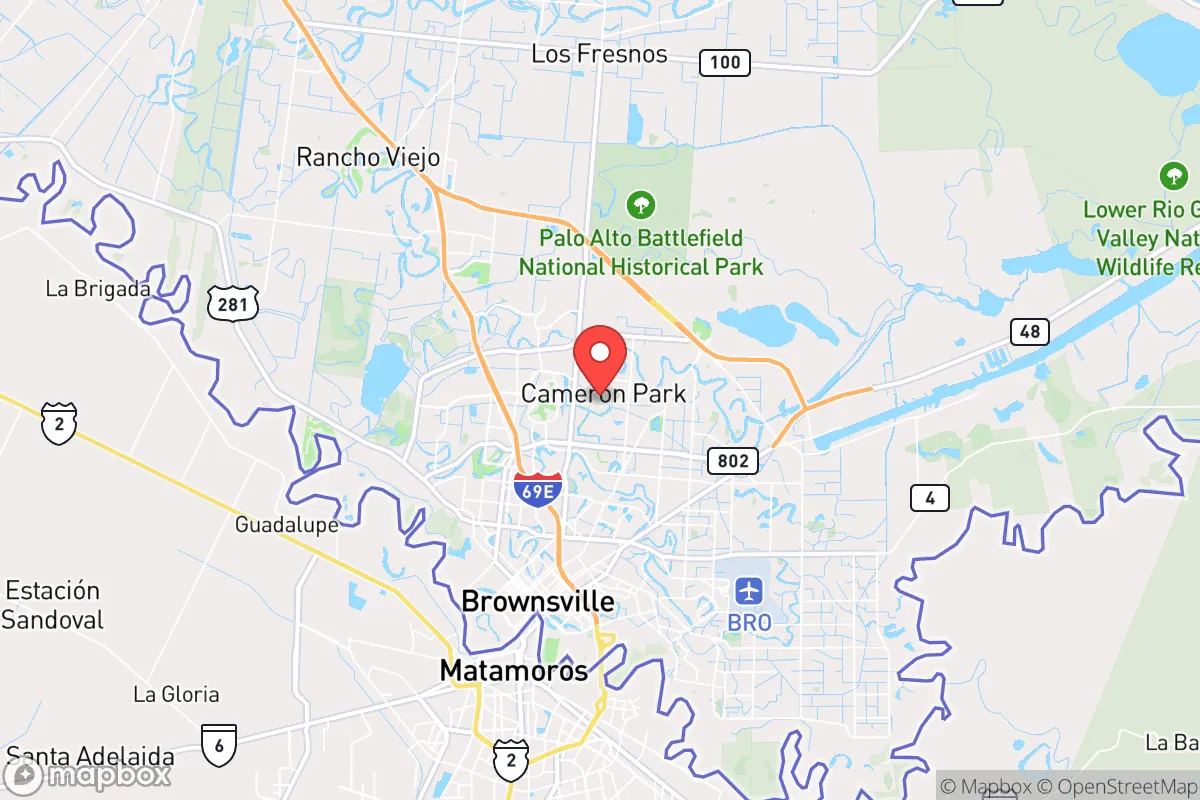
Photo: Wikipedia
Political ClimatePolitical Climate in Cameron Park, TX
District shown is the primary district for this city’s centroid. Cities may span multiple districts.
Local Political AnalysisPolitical Analysis of Cameron Park, TX
Cameron Park sits in a unique political pocket, leaning more centrist than the rest of Texas, with a Cook PVI rating of EVEN. That means it’s a true swing area, not reliably red like the surrounding state, which holds a solid R+4 rating. Over the last decade, I’ve watched this place shift—not dramatically, but enough to notice. It used to be a quiet, conservative-leaning community where folks minded their own business and trusted local leadership to keep government small. Now, there’s a growing undercurrent of progressive influence, especially from younger transplants moving in from nearby Brownsville and Harlingen, which are more Democratic strongholds. If you’re someone who values personal freedoms and limited government, you’ll want to keep an eye on how this balance tips in the next few election cycles.
How it compares
Compared to the rest of Texas, Cameron Park is an outlier. The state as a whole leans Republican by a comfortable margin—R+4 means most counties vote red without much fuss. But here, the political landscape is more fractured. You’ve got a mix of longtime residents who remember when Cameron Park was a sleepy, unincorporated area with minimal government interference, and newer arrivals who bring big-city ideas about expanding public services and regulations. Nearby towns like Los Fresnos and Port Isabel lean more conservative, while Brownsville pulls hard left. That contrast creates a real tension. In Cameron Park, you’ll hear folks at the local diner grumbling about property tax hikes and zoning changes that feel like creeping government overreach. The EVEN rating reflects that split—it’s not a place where one party dominates, and that can be both a blessing and a curse. A blessing because it keeps local leaders accountable; a curse because it opens the door to policies that might not align with traditional Texas values of self-reliance and personal liberty.
What this means for residents
For residents, this political climate means you can’t take anything for granted. Local elections here are tight, and every vote counts. If you’re concerned about government overreach—like new mask mandates, business restrictions, or land-use regulations that tell you what you can do on your own property—you’ll need to stay engaged. I’ve seen proposals for stricter building codes and environmental rules that sound good on paper but end up costing homeowners thousands. The progressive push is subtle but real, often framed as “community improvement” or “safety.” Meanwhile, the conservative base here is strong but aging, and younger families are less likely to show up at town hall meetings. If that trend continues, I worry we’ll see a slow drift toward policies that prioritize government solutions over individual freedoms. For now, it’s still a place where you can live your life without too much hassle, but the trajectory is worth watching.
Culturally, Cameron Park retains a laid-back, border-town vibe that values independence and neighborly trust. You won’t find the same level of political activism as in Austin or Dallas, but the undercurrents are there. One big distinction: property rights are a hot-button issue here, more than in other parts of Texas. People get fired up about anything that feels like a land grab or an unfunded mandate. If you’re moving here, expect to hear a lot of talk about “keeping government out of our backyards.” That’s the core of what makes Cameron Park different—it’s a place where the fight for personal freedom is still very much alive, even if the political winds are shifting.

State Political ClimatePolitical Climate in Texas
State Political AnalysisPolitical Environment in the State
Texas has been a reliably Republican state for decades, with a Cook PVI of R+4, but the coalition holding it together is shifting under your feet. The dominant coalition remains a mix of rural conservatives, suburban moderates, and business-minded libertarians, but the 10-20 year arc shows a slow squeeze: the fast-growing suburbs of Dallas-Fort Worth, Houston, and San Antonio are trending purple, while deep-red rural counties are losing population. The 2022 gubernatorial race saw Greg Abbott win by 11 points, down from 13 in 2018, and down from 20 in 2014 — a clear signal that the state's rightward lock is loosening, even if it hasn't broken.
Urban vs. rural divide
The political map of Texas is a story of three distinct regions. The big blue metros — Austin, El Paso, Dallas, Houston, and San Antonio — vote reliably Democratic, with Austin's Travis County delivering a 50-point margin for Biden in 2020. Meanwhile, the rural and exurban counties that ring these cities — places like Collin County (north of Dallas), Montgomery County (north of Houston), and Comal County (northeast of San Antonio) — are the engine of the state's Republican majority. The Permian Basin counties like Midland and Odessa are among the reddest in the nation, routinely voting 80%+ Republican. What's changing is the suburban middle: Fort Bend County (southwest of Houston) flipped from red to blue between 2012 and 2016, and Tarrant County (Fort Worth) went blue for the first time in decades in 2020. The rural vote still carries the state, but its relative weight is shrinking as people pour into the purple suburbs.
Policy environment
Texas's policy environment remains a draw for conservatives, but it's not without cracks. The state has no personal income tax, a major selling point, and property taxes are high to compensate — averaging around 1.6% of assessed value, among the highest in the nation. The regulatory posture is light-touch: no state-level OSHA, minimal zoning in most cities, and a business-friendly tort system. On education, the state passed a school choice voucher-like program in 2023 (HB 3) that created education savings accounts for special-needs students, but a broader universal voucher bill failed in 2023 and again in 2024, blocked by rural Republicans who fear for their local schools. Healthcare is a mixed bag: Texas has the highest uninsured rate in the country (around 17%), and the state has refused Medicaid expansion under the ACA. Election laws tightened after 2020 with SB 1 (2021), which added ID requirements for mail-in ballots, limited drive-through voting, and banned 24-hour polling places — a move that drew fierce criticism from the left but was defended as an integrity measure. For a conservative, the policy environment is largely friendly, but the property tax burden and the ongoing school funding fight are real pain points.
Trajectory & freedom
On the freedom front, Texas has moved in two directions at once. On the upside for conservatives: permitless carry (HB 1927, 2021) allows any law-abiding adult to carry a handgun without a license; the Texas Heartbeat Act (SB 8, 2021) effectively banned abortion after six weeks and survived legal challenges; and the state has passed multiple laws protecting parental rights in education, including bans on critical race theory and certain library books (HB 3979, 2021, and SB 3, 2023). On the downside, the state has also expanded government power in ways that cut across ideological lines: the 2023 creation of a state-level border security force (Operation Lone Star) has cost billions and raised constitutional questions about federal vs. state authority; and the state's aggressive use of the death penalty and its strict drug laws (simple possession of marijuana is still a criminal offense, though many cities have decriminalized it locally) represent a heavy-handed approach that some libertarian-leaning conservatives find troubling. The net trajectory is toward more state-level control over social issues and border security, but with a corresponding increase in government spending and reach that should give any small-government conservative pause.
Civil unrest & political movements
Texas has seen its share of political flashpoints. The 2020 protests in Austin and Dallas over George Floyd's death were large and occasionally violent, leading to property damage and a lasting tension between city leaders and state Republicans. The "Texit" movement — the idea of Texas seceding from the Union — has gained a small but vocal following on the right, though it remains a fringe position with no serious political path. Immigration politics dominate the border region: the state's busing of migrants to New York City, Chicago, and Denver has been a high-profile tactic, and the 2024 standoff at Eagle Pass (where the state took control of a park and blocked federal Border Patrol access) was a major national story. Election integrity remains a live issue: the 2020 and 2022 cycles saw widespread claims of fraud from the right, though no evidence of systemic problems emerged. A new resident in San Antonio or El Paso will see the border debate up close; in Lubbock or Amarillo, it's more of a distant concern. The overall climate is one of heightened political engagement, with both sides organizing actively, but the state has not seen the kind of sustained civil unrest that has hit Portland or Seattle.
Projection
Looking 5-10 years out, Texas is likely to become more competitive at the statewide level, but not necessarily more liberal. The in-migration from California and other blue states — roughly 1,000 people per day — is often cited as a Democratic trend, but many of those newcomers are conservatives or libertarians fleeing high taxes and regulation in their home states. The real demographic shift is the growth of the Hispanic population, which has historically voted Democratic but has moved rightward in recent cycles — Trump won 38% of the Hispanic vote in Texas in 2020, up from 34% in 2016. The suburbs will continue to be the battleground: if Republicans can hold places like Collin County and Montgomery County while making gains in the Rio Grande Valley, the state will stay red. If the suburbs flip blue, Texas becomes a swing state within a decade. The most likely outcome is a slow drift toward a more competitive R+2 or R+3 environment, with the state remaining Republican but requiring more effort to hold. For a new resident, this means the political culture will remain broadly conservative, but the debates will get louder and the margins tighter.
For someone moving to Texas today, the bottom line is this: you'll find a state that still values low taxes, limited regulation, and personal freedom, but those values are under constant pressure from rapid growth and demographic change. The property tax burden is real, the school funding debate is unresolved, and the border situation is a live political issue that affects daily life in some regions. If you're looking for a place where your vote still counts and your voice can be heard in a conservative environment, Texas is a solid bet — but don't expect it to stay exactly as it is. The Texas of 2035 will look different from the Texas of 2025, and the direction it goes depends on who shows up and who stays engaged.
* Values derived from national, state, county, city and local statistics and may differ in a specific area. Last updated: 2026-05-14T18:46:18.000Z
Narrative content on this page is AI-generated and may contain mistakes. Verify any details that matter before acting on them.
ReloMaps may earn a commission from affiliate links at no extra cost to you.

