Photo: Wikipedia
Demographics of Cape Coral, FL
Affluence Level in Cape Coral, FL
A middle-class area roughly in line with national averages across income, home values, education, and employment.
People of Cape Coral, FL
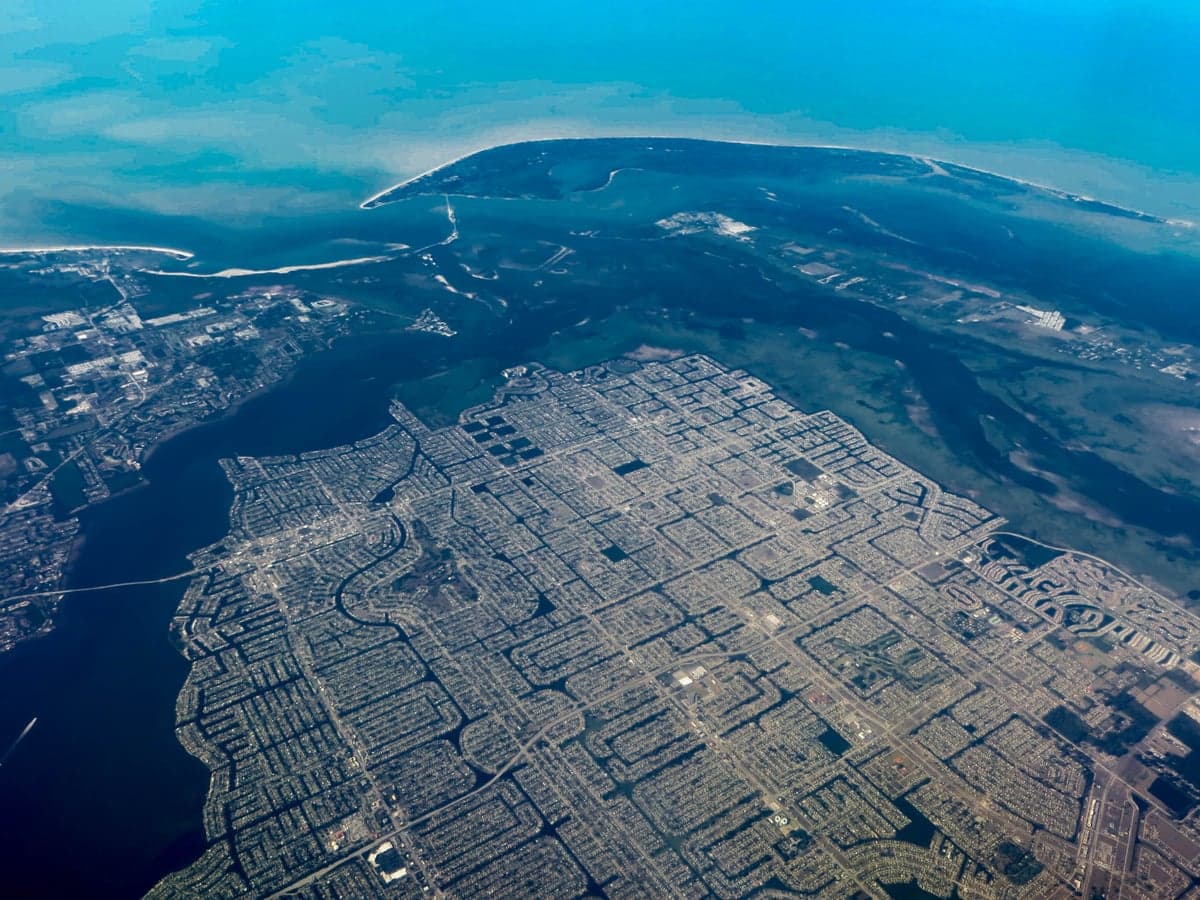
The people of Cape Coral, Florida, today number 206,387, forming a predominantly white (65.8%) and Hispanic (25.0%) community with a notably low foreign-born share of just 6.5%. This is a city of families and retirees, where only 25.7% of adults hold a college degree, reflecting a working- and middle-class character shaped by decades of domestic migration rather than international immigration. The city’s identity is defined by its extensive canal system and planned grid, creating a spread-out, suburban feel where neighborhoods are often divided by waterway access and price point rather than ethnic enclaves.
How the city was settled and grew
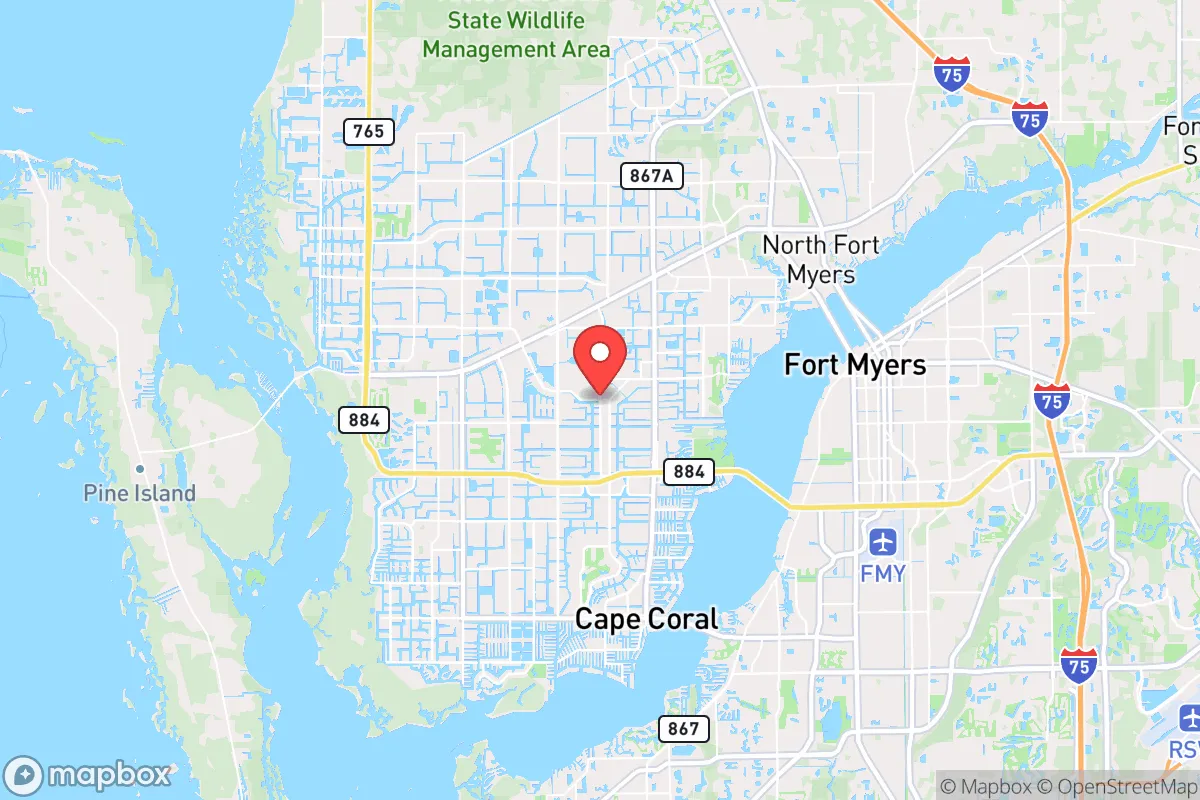
Cape Coral is a genuine post-1900 planned community, with no colonial or 19th-century settlement to speak of. Its human history begins in 1957 when developers Jack and Leonard Rosen acquired the land and began marketing it as a waterfront paradise to Northern retirees and Midwestern families. The original wave of settlers—largely white, middle-class couples from the Rust Belt—arrived in the 1960s and 1970s, drawn by cheap lots and the promise of canals. These early residents concentrated in the Yacht Club and Cape Harbour areas, where the first homes and community amenities were built. The city’s population grew from zero in 1957 to roughly 10,000 by 1970, fueled by aggressive land sales and the construction of the Cape Coral Bridge in 1964, which connected the peninsula to Fort Myers. No significant immigrant or minority groups participated in this founding wave; the city was overwhelmingly white and native-born until the late 20th century.
Modern era (post-1965)
The post-1965 era brought gradual diversification, though Cape Coral remained far more homogeneous than neighboring Fort Myers. The 1980s and 1990s saw an influx of Hispanic families, primarily of Cuban and Puerto Rican descent, who settled in the Santa Barbara and Diplomat neighborhoods, drawn by affordable housing and construction jobs during the city’s second building boom. By 2000, the Hispanic share had risen to roughly 12%, and it has since climbed to 25.0% as of the latest data. The Black population, at 4.2%, remains small and is concentrated in the Pelican area near the city’s eastern edge, a pattern reflecting limited historical migration from the South. East and Southeast Asian communities (1.4%) and Indian-subcontinent residents (0.2%) are tiny and dispersed, with no distinct ethnic enclave. The foreign-born share of 6.5% is low for a Florida city—half the state average—underscoring that Cape Coral’s growth has been driven overwhelmingly by domestic in-migration from the Midwest and Northeast, not international immigration. The Southwest Cape area, with its newer developments and larger lots, has become a magnet for affluent white retirees and remote workers since 2010.
The future
The population is heading toward continued growth and modest diversification, but not rapid ethnic change. Projections from the Lee County government suggest Cape Coral could reach 250,000 by 2035, with the Hispanic share likely rising to 30-32% as younger families move into the North Cape and Burnt Store areas, where new construction is cheapest. The white share will decline gradually but remain the majority. The Black and Asian shares are expected to stay below 6% and 3% respectively, as the city lacks the job base or cultural infrastructure to attract large immigrant communities. The city is not tribalizing into distinct ethnic enclaves; instead, it is homogenizing along economic lines, with canal-front and gulf-access neighborhoods becoming whiter and wealthier, while inland areas grow more Hispanic and working-class. The foreign-born share may rise slightly but will likely remain below 10%, as most new residents continue to come from other U.S. states.
For someone moving in now, Cape Coral is becoming a more stratified but still broadly middle-class suburb. The city offers a safe, family-oriented environment with a low crime rate and good schools in the Mariner and Caloosahatchee zones, but those seeking ethnic diversity or a vibrant immigrant culture will find it lacking. The future points to a whiter, more Hispanic, and more economically segregated community—stable, but with fewer opportunities for the kind of cultural mixing seen in larger Florida metros.

* Values derived from national, state, county, city and local statistics and may differ in a specific area. Last updated: 2026-04-19T06:54:43.000Z
Narrative content on this page is AI-generated and may contain mistakes. Verify any details that matter before acting on them.
ReloMaps may earn a commission from affiliate links at no extra cost to you.

