Photo: Wikipedia
Personal Sovereignty in Cape Coral, FL
Viable for self-reliance. Generally workable, though some barriers may limit total independence.
What does Personal Sovereignty tell us?
Personal Sovereignty measures your capacity for self-reliance and independence with minimal government friction. Higher scores mean fewer barriers between you and the way you want to live... but it assumes you have the space you need and good neighbors.
What does this tell us?
Personal Sovereignty measures your capacity for self-reliance and independence with minimal government friction. Higher scores mean fewer barriers between you and the way you want to live... but it assumes you have the space you need and good neighbors.
State Policy
Energy independence: Importer (10% of energy produced in-state)
Personal Liberty
Homesteading

Personal Liberty Analysis
Cape Coral offers a notably high degree of personal sovereignty compared to many coastal Florida metros, largely because it sits within a state that has aggressively pushed back against federal overreach and local mandates. For the survivalist or prepper-minded individual, the city’s combination of low state income tax, strong preemption laws, and a culture of self-reliance creates a legal environment where you can largely live as you see fit—provided you respect property lines and noise ordinances. The key question isn’t whether the government will leave you alone, but how much of that autonomy you’re willing to actively defend against creeping HOA restrictions and future county-level zoning changes.
Tax burden and regulatory posture for individuals and families
Florida’s lack of a state income tax is the headline, and it directly increases your disposable income for prepping supplies, land, or firearms. Cape Coral residents pay no state tax on wages, and the city’s property tax rate hovers around 0.8% to 1.0% of assessed value, which is moderate for Southwest Florida. More importantly, the state’s regulatory posture is aggressively pro-property-rights: Florida has strong preemption laws that prevent local governments from banning short-term rentals, restricting firearm sales, or imposing their own minimum wage or paid leave mandates. This means Cape Coral’s city council cannot unilaterally create new burdens on your business or lifestyle without state-level pushback. For a prepper, this translates to fewer surprises—no sudden local bans on generators, no new fees on rainwater collection, and no county-level red tape on building a shed or workshop on your lot. The trade-off is that homeowners’ associations (HOAs) are widespread in newer subdivisions, and they can impose restrictions that feel like local government overreach. If you buy in an unincorporated area or an older neighborhood without an HOA, your regulatory burden drops significantly.
Self-defense and gun law specifics in Cape Coral
Florida is a “shall issue” state for concealed carry, and as of 2023, it became a permitless (constitutional) carry state. This means any law-abiding adult 21 or older can carry a concealed firearm without a permit, background check, or training requirement. Cape Coral’s local law enforcement, the Cape Coral Police Department, is generally supportive of Second Amendment rights and does not enforce any local gun restrictions—state preemption prohibits that. For preppers, the practical implications are clear: you can keep firearms in your vehicle, on your person, and in your home without bureaucratic hurdles. Stand-your-ground laws apply statewide, meaning you have no duty to retreat before using deadly force if you are in a place you have a legal right to be and reasonably believe force is necessary to prevent death or great bodily harm. Magazine capacity is not restricted, and there is no state-level registry for long guns or handguns. The only notable limitation is a three-day waiting period on handgun purchases from licensed dealers, though private sales between individuals are unregulated. For those building a serious armory, Cape Coral’s proximity to rural Lee County means you can shoot on private property outside city limits without noise complaints being an issue, provided you are at least 500 feet from an occupied dwelling.
Self-reliance and homesteading viability: lot sizes, zoning, and off-grid feasibility
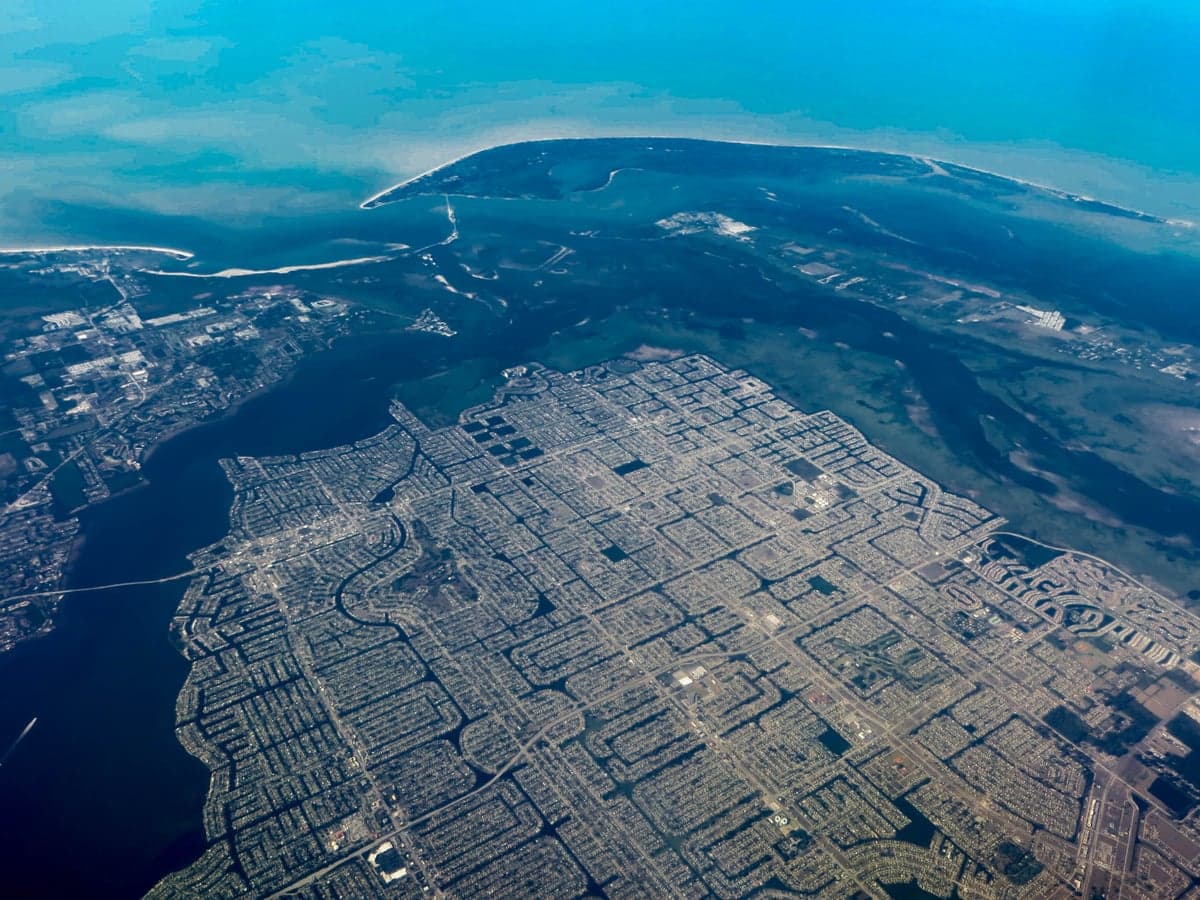
Cape Coral is unique because it was platted with a massive network of canals and relatively large lots—many standard residential lots are 80 feet by 125 feet (10,000 square feet), and some exceed a quarter-acre. This gives you room for a substantial garden, a chicken coop, or even a small workshop without needing a variance. Zoning is generally permissive for accessory structures: you can build a shed up to 200 square feet without a permit, and larger structures require simple permitting rather than a lengthy review. However, off-grid living is legally difficult within city limits. The city requires connection to municipal water and sewer, and solar panels are allowed but must be grid-tied—you cannot legally disconnect from the power grid. Rainwater collection is permitted for irrigation but not for potable use without a complex treatment system. For a serious prepper, this means Cape Coral is better suited for a “grid-down” contingency plan (generators, batteries, stored water) than for full self-sufficiency. The good news is that no city or county ordinance bans backyard chickens, beekeeping, or small livestock on standard residential lots, though roosters are typically prohibited. If you want true off-grid autonomy, you’d need to look at unincorporated Lee County or neighboring rural areas like Alva or Buckingham, where well water and septic systems are standard and solar disconnection is feasible.
Personal liberties: parental rights, medical autonomy, speech, and property
Florida has become a national battleground for parental rights, and Cape Coral sits squarely in that fight. The state’s Parental Bill of Rights (passed in 2021) gives parents explicit authority over their children’s education, healthcare, and upbringing, including the right to opt out of any school curriculum or activity they find objectionable. In practice, this means you can pull your child from sex ed, vaccine mandates, or mask requirements without legal pushback. Medical autonomy is strong but not absolute: Florida banned COVID-19 vaccine mandates for private employers and government entities, and it prohibits mask mandates in schools. However, the state does not have a broad medical freedom law that protects alternative treatments or off-label use of drugs. For preppers, the key is that you can stockpile prescription medications for chronic conditions (with a doctor’s cooperation) and use telemedicine from out-of-state providers without local interference. Free speech is robust—Florida has some of the strongest anti-SLAPP laws in the country, protecting you from lawsuits intended to silence criticism of government or corporate actions. Property rights are similarly protected: eminent domain is rarely used for private development, and the state’s “Property Rights Protection Act” requires government to compensate landowners for any regulatory taking that reduces property value by more than 50%. The practical takeaway is that Cape Coral’s legal climate discourages government overreach into your personal decisions, whether that’s homeschooling, refusing a vaccine, or putting up a political sign in your yard.
Overall, Cape Coral ranks among the top-tier Florida cities for personal sovereignty, especially for those who value low taxes, strong gun rights, and parental control. It is not a libertarian paradise—HOAs, municipal utility requirements, and the risk of future county-level growth management ordinances are real constraints. But compared to states like California, New York, or even Colorado, the regulatory burden is light, and the cultural expectation is that you mind your own business. For a prepper or survivalist, the biggest strategic advantage is that you can legally prepare for most contingencies without fear of government interference, and the biggest risk is that a future state administration could reverse the preemption laws that currently protect your autonomy. If you buy in a non-HOA neighborhood on a larger lot, you can achieve a level of self-reliance that would be illegal in most of the Northeast or West Coast. That alone makes Cape Coral a serious contender for anyone prioritizing personal freedom over urban convenience.

* Values derived from national, state, county, city and local statistics and may differ in a specific area. Last updated: 2026-04-19T06:54:43.000Z
Narrative content on this page is AI-generated and may contain mistakes. Verify any details that matter before acting on them.
ReloMaps may earn a commission from affiliate links at no extra cost to you.

