Photo: Wikipedia
Political ClimatePolitical Climate in Cape Coral, FL
District shown is the primary district for this city’s centroid. Cities may span multiple districts.
Local Political AnalysisPolitical Analysis of Cape Coral, FL
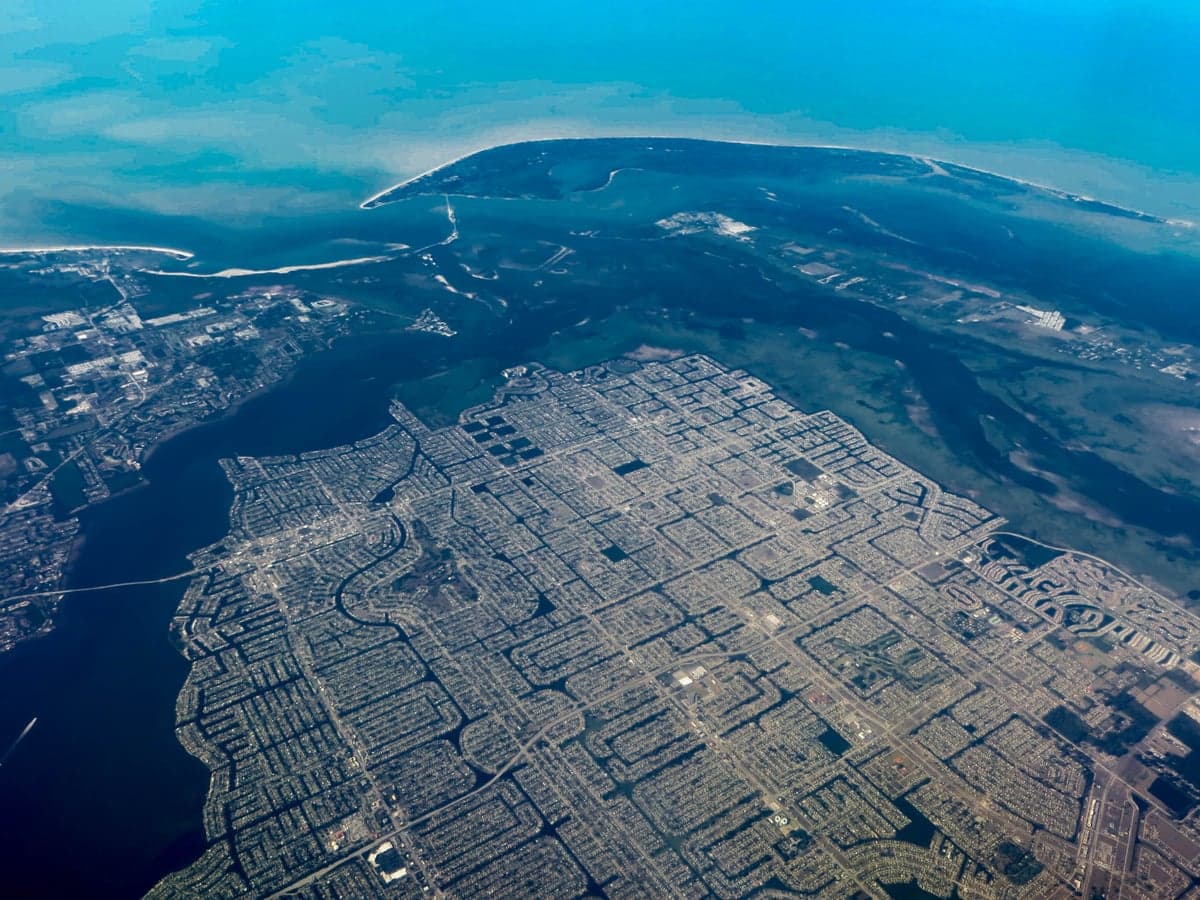
Cape Coral has long been a conservative stronghold, and honestly, that's one of the main reasons a lot of us moved here or stayed. The Cook PVI rating of R+14 isn't just a number—it reflects a deep-rooted, common-sense approach to governance that prioritizes personal responsibility over government handouts. For decades, this city has leaned reliably Republican, and while the broader Lee County has seen some demographic shifts, Cape Coral's core has held firm. You see it in local elections, in the way the city council operates, and in the general attitude of your neighbors: people here value their freedom to live their lives without a bureaucrat in Tallahassee or Washington D.C. telling them how to do it.
How it compares
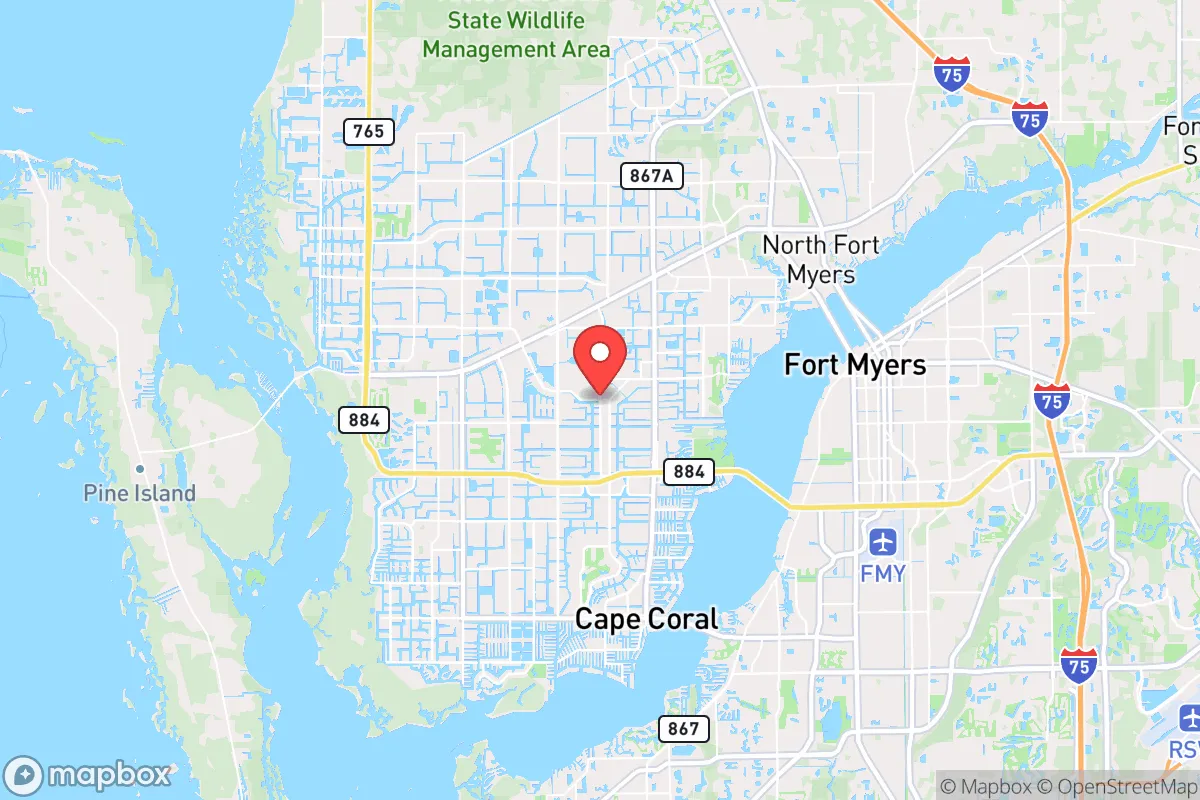
Drive ten miles north to Fort Myers, and you'll feel a different vibe—it's more of a mixed bag politically, with a noticeable progressive tilt in the downtown core and near the river. Head south to Naples, and while it's also conservative, it's a different kind of conservative—more country-club, less blue-collar. Cape Coral is the middle ground: a working-class, family-oriented city where people still believe in the Second Amendment, lower taxes, and keeping government out of your backyard. Compared to the coastal towns like Sanibel or Captiva, which trend more liberal and environmentally activist, Cape Coral feels like a bastion of sanity. We don't have the same level of coastal elitism or the "we know what's best for you" attitude you get in some of those smaller, wealthier enclaves.
What this means for residents
For the average person living here, this political climate means you can breathe a little easier. You're not constantly fighting new zoning laws that restrict what you can do with your own property, or facing heavy-handed mandates from the county. The city council generally takes a hands-off approach to business and personal life, which is why you see so many small contractors, tradespeople, and entrepreneurs thriving. There's a real sense that if you work hard and follow the rules, you'll be left alone. That said, we've seen some concerning trends in the last few years—a push for more bike lanes and "complete streets" projects that sound nice but often come with hidden costs and new regulations. There's also been chatter about more restrictive short-term rental rules, which is a direct attack on property rights. The key is staying vigilant, because once that progressive foot is in the door, it's hard to kick it out.
Cultural and policy distinctions
One thing that sets Cape Coral apart is the sheer number of veterans and retirees who moved here specifically to escape the overreach they saw in states like New York, Illinois, or California. You'll hear that story over and over at the local VFW or the boat ramp. Culturally, it's a place where the American flag flies year-round, not just on holidays. Politically, the city has been proactive in pushing back against state-level mandates that feel like overreach—whether it's mask mandates, vaccine passports, or environmental regulations that would cripple the local construction industry. The long-term trajectory is cautiously optimistic, but there's a real worry that as more people move here from blue states, they'll bring their voting habits with them. If that happens, the R+14 could slip to R+8 or worse, and then you start seeing the same nonsense that drove people away from their old homes. For now, though, Cape Coral remains a place where your personal freedoms are respected, and that's worth fighting for.

State Political ClimatePolitical Climate in Florida
State Political AnalysisPolitical Environment in the State
Florida has transformed from a classic swing state into a solidly Republican-leaning powerhouse over the past decade, with a 2024 presidential margin of roughly +13 points for Donald Trump, a stark shift from the 2000 recount-era nail-biters. The dominant coalition is a blend of conservative retirees, Hispanic voters in places like Miami-Dade and the I-4 corridor, and a surging population of domestic migrants from blue states seeking lower taxes and fewer restrictions. This realignment has been dramatic and sustained, with the GOP now holding a supermajority in the state legislature and every statewide office, a trajectory that shows no signs of reversing.
Urban vs. rural divide
The political map is a textbook study in contrast. The major urban centers—Miami, Orlando, Tampa, and Jacksonville—are the blue islands, but even they have shifted right. Miami-Dade County, once a Democratic stronghold, flipped to Trump in 2020 and 2024, driven by Cuban-American, Venezuelan-American, and Nicaraguan-American voters who are deeply skeptical of socialism and left-wing economic policies. The I-4 corridor, stretching from Tampa through Lakeland to Daytona Beach, remains the ultimate battleground, but it now leans red, with fast-growing suburbs like St. Cloud and Winter Garden trending conservative. The Panhandle, from Pensacola to Tallahassee, is deeply red, with rural counties like Liberty and Lafayette routinely delivering 80%+ margins for Republicans. The only true blue holdouts are Alachua County (Gainesville) and Leon County (Tallahassee), driven by the university and state government workforce, respectively. The divide isn't just urban vs. rural—it's also coastal vs. inland, with the Atlantic coast from Palm Beach County northward showing more purple tendencies than the Gulf Coast.
Policy environment
Florida's policy environment is a conservative's dream, built on a foundation of low taxes and light regulation. There is no state income tax, a massive draw for high-earners and retirees. The corporate tax rate is a flat 5.5%, and the state has a right-to-work law, meaning union membership is optional and union power is limited. Education policy has been a flashpoint: Governor Ron DeSantis signed the Parental Rights in Education Act (HB 1557, dubbed "Don't Say Gay" by critics) in 2022, which restricts classroom instruction on sexual orientation and gender identity in early grades, and the Stop WOKE Act (HB 7) in 2022, which limits how race-related concepts can be taught in schools and workplaces. School choice is robust, with the Family Empowerment Scholarship program providing vouchers for private school tuition. Healthcare is a mixed bag: Florida did not expand Medicaid under the ACA, but it has a competitive private insurance market. Election laws were tightened with SB 90 (2021), which restricted drop boxes, required voter ID for mail-in ballots, and limited third-party ballot collection—moves that critics call voter suppression but supporters say ensure integrity. The state also preempted local gun control ordinances with a 2011 law, ensuring uniform firearm regulations statewide.
Trajectory & freedom
On the freedom scale, Florida is moving decisively in the direction of expanded personal liberty in most domains, though with notable exceptions. The Constitutional Carry law (HB 543), signed in 2023, allows permitless carry of concealed firearms, a major win for gun rights advocates. The Live Local Act (SB 102, 2023) preempts local zoning to encourage affordable housing development, a property rights expansion that limits local government overreach. On medical autonomy, the state banned COVID-19 vaccine mandates for private employers (SB 252, 2023) and prohibited mask mandates in schools (SB 988, 2022). However, the state has also restricted certain freedoms: the 6-week abortion ban (HB 5, 2023) took effect after the Florida Supreme Court upheld it in 2024, sharply limiting reproductive choice. The Social Media Ban for Minors (HB 3, 2024) restricts under-16 access to platforms like TikTok and Instagram, citing mental health concerns—a move that some conservatives see as government overreach into parenting decisions. Overall, the trajectory is toward less government intrusion in economic and educational matters, but more intervention in social and medical issues.
Civil unrest & political movements
Florida has seen its share of political flashpoints, but they've been less violent and more legal/political than in other states. The 2020 protests following George Floyd's death were significant in Miami, Orlando, and Tampa, but largely peaceful compared to Portland or Seattle. The state's response was aggressive: DeSantis created the Office of Election Crimes and Security in 2022 to investigate voter fraud, and the State Guard was activated during the pandemic as an alternative to the National Guard. Immigration politics are front and center: Florida passed SB 1718 (2023), one of the toughest state-level immigration enforcement laws in the country, requiring E-Verify for employers, banning local "sanctuary" policies, and making it a felony to transport undocumented immigrants into the state. This has led to a noticeable exodus of undocumented workers from agriculture and construction, particularly in Immokalee and Homestead. The "Don't Say Gay" law sparked organized protests and walkouts by students and teachers, but the backlash has been mostly performative, with no major electoral consequences. Election integrity remains a hot topic: the 2022 midterms saw record-low voter fraud convictions (20 out of 11 million votes), but the issue continues to animate grassroots conservative activism.
Projection
Looking ahead 5-10 years, Florida is likely to become even more conservative, driven by in-migration from high-tax, high-regulation states like New York, California, and Illinois. These new residents are overwhelmingly Republican-leaning or politically moderate, and they're settling in fast-growing suburbs like The Villages, Pasco County, and St. Johns County. The Hispanic vote will continue to shift right, especially among Venezuelan and Nicaraguan communities who fled socialist regimes. The Democratic Party's base will shrink to the urban cores and college towns, making statewide races increasingly uncompetitive. However, there are risks: climate change and rising insurance costs could slow growth, and a national recession could strain the state's tourism-dependent economy. The biggest wildcard is the state's housing affordability crisis—if home prices and rents continue to outpace wages, the in-migration could stall, and the political coalition could fracture. For now, expect more of the same: lower taxes, expanded school choice, tighter immigration enforcement, and a continued pushback against federal overreach.
For a conservative-leaning individual or family considering relocation, Florida offers a rare combination of low taxes, strong property rights, and a political culture that actively resists progressive overreach. The state is not perfect—property insurance is a nightmare, and the summer heat is oppressive—but the policy environment is aligned with personal freedom and limited government. You'll find like-minded neighbors in the suburbs and exurbs, good schools in the red counties, and a state government that treats parents as the primary decision-makers for their children. Just be prepared for the humidity and the occasional hurricane.
* Values derived from national, state, county, city and local statistics and may differ in a specific area. Last updated: 2026-04-19T06:54:43.000Z
Narrative content on this page is AI-generated and may contain mistakes. Verify any details that matter before acting on them.
ReloMaps may earn a commission from affiliate links at no extra cost to you.

