Photo: Wikipedia
Strategic Assessment of Cape Coral, FL
Meaningful friction. Expect exposure to either population pressure, blast zones, or natural disaster risk. Consider buying a retreat property.
What does the Strategic Assessment tell us?
Our Strategic Assessment grades tactical survivability of an area. Major population centers, military targets, fallout zones, natural disasters, and border exposure all drive risk — lower exposure means a more defensible position in a crisis.
This is heavily inspired by Joel Skousen's Strategic Relocation book. Highly recommended you checkout the book ($)What does this tell us?
Our Strategic Assessment grades tactical survivability of an area. Major population centers, military targets, fallout zones, natural disasters, and border exposure all drive risk — lower exposure means a more defensible position in a crisis.
This is heavily inspired by Joel Skousen's Strategic Relocation book. Highly recommended you checkout the book ($)Strategic Pillars

Key Distances
Regional Safe Places
Below is our recommended "safe zones" in Florida and the surrounding area based on our strategic heuristics. For most people, it's unrealistic to live in a “safe zone” full-time due to work, family or other personal reasons. They tend to be more rural. However, many of these areas are perfect for second homes and retreat properties that double as a vacation home or even a short-term rental.

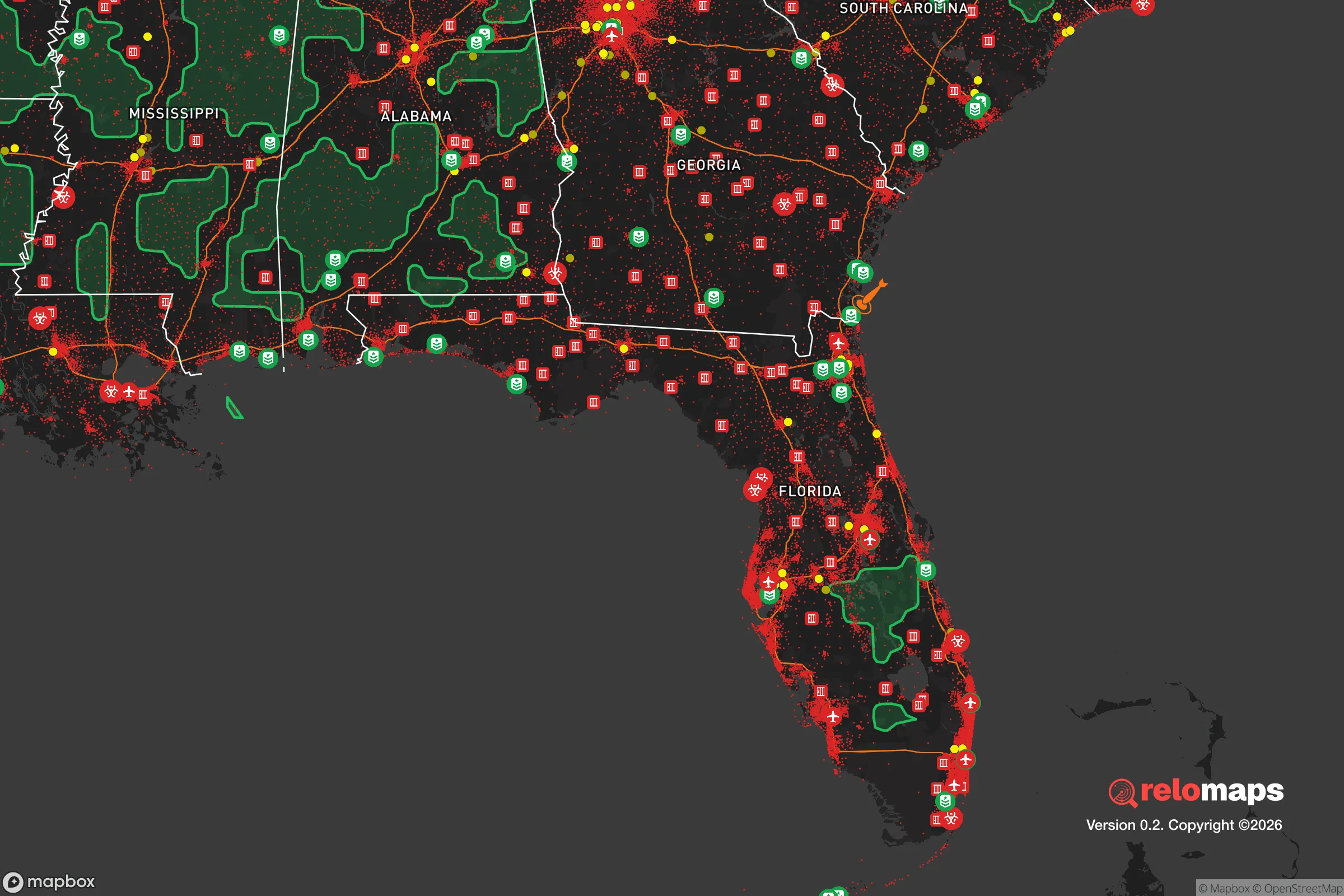


Important Note: For informational purposes only. This does not mean nothing bad ever happens in the green zones. Please use common sense. This is based on public data and modeled with AI. We tried to take a conservative approach but mistakes happen. We update this regularly as new information becomes available.
Solar Generator Recommendations
Backup power matters more here than in safer locations. We've picked three solar generators across budgets and capacity tiers — start with the budget unit if you only need a few essentials, or step up if you want to run a fridge and HVAC for days at a time.

Jackery Portable Power Station Explorer 300
Budget OptionPower on the Go: Weighing only 11 lbs, it's convenient to set up and store with book-sized foldable solar panels

BLUETTI Portable Power Station AC180
Designed for both indoor and outdoor scenarios, AC180 is highly capable as it has a robost capacity and continuous output power.

EF ECOFLOW DELTA Pro Ultra Power Station
Upgraded PickEcoFlow DELTA Pro Ultra is a whole-home energy system designed to grow with your family. Integrated with the Smart Home Panel 2, it scales to meet your evolving energy needs — keeping your home powered, intelligent, and secure through every stage of life.
We earn a commission, at no additional cost to you.
Strategic Assessment Analysis
Cape Coral offers a mixed strategic picture for the conservative prepper. Its canal-heavy geography and rapid growth provide both natural buffers and significant vulnerabilities. While the city sits far enough from major metropolitan cores to avoid the worst of immediate civil unrest, its low elevation, hurricane exposure, and proximity to MacDill Air Force Base and the Port of Tampa create a complex risk profile that demands careful consideration before relocation.
Geographic position and natural advantages for long-term security
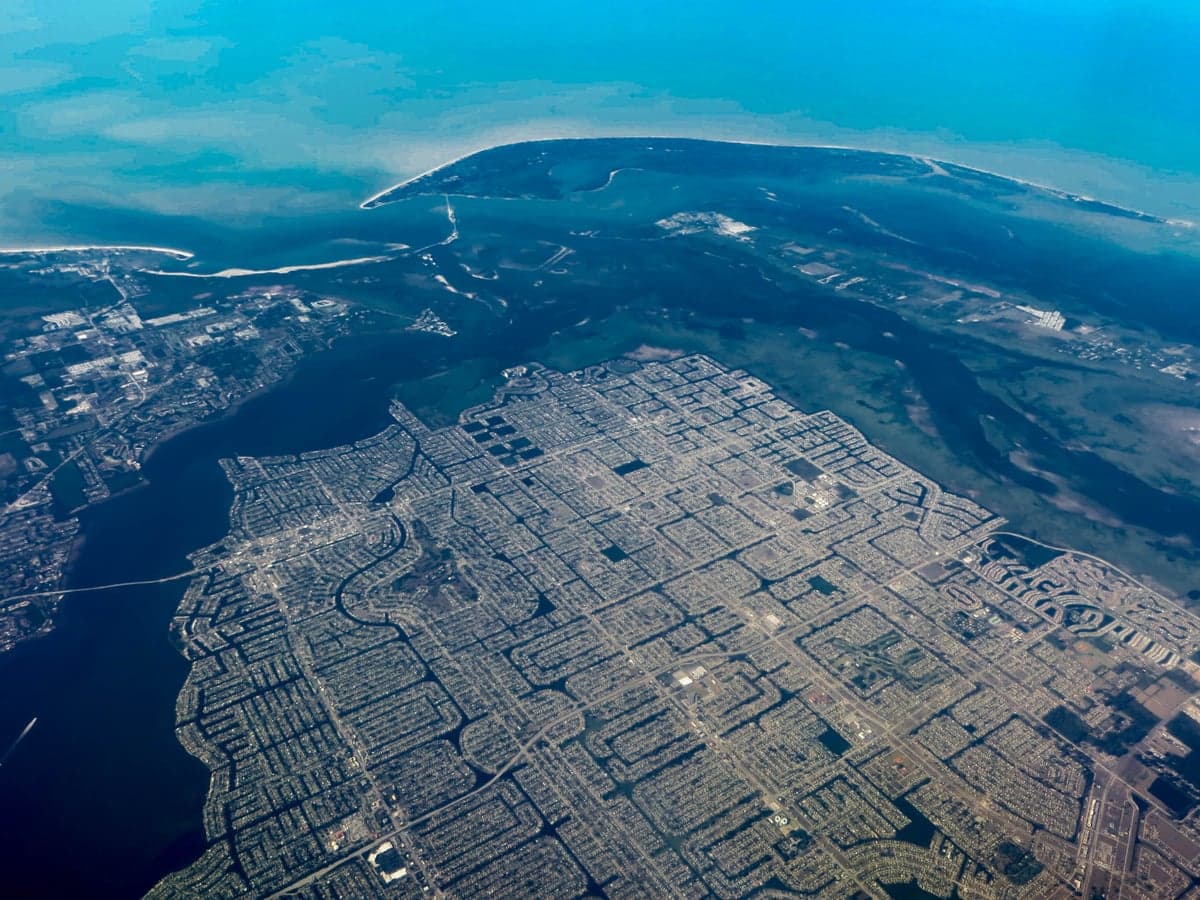
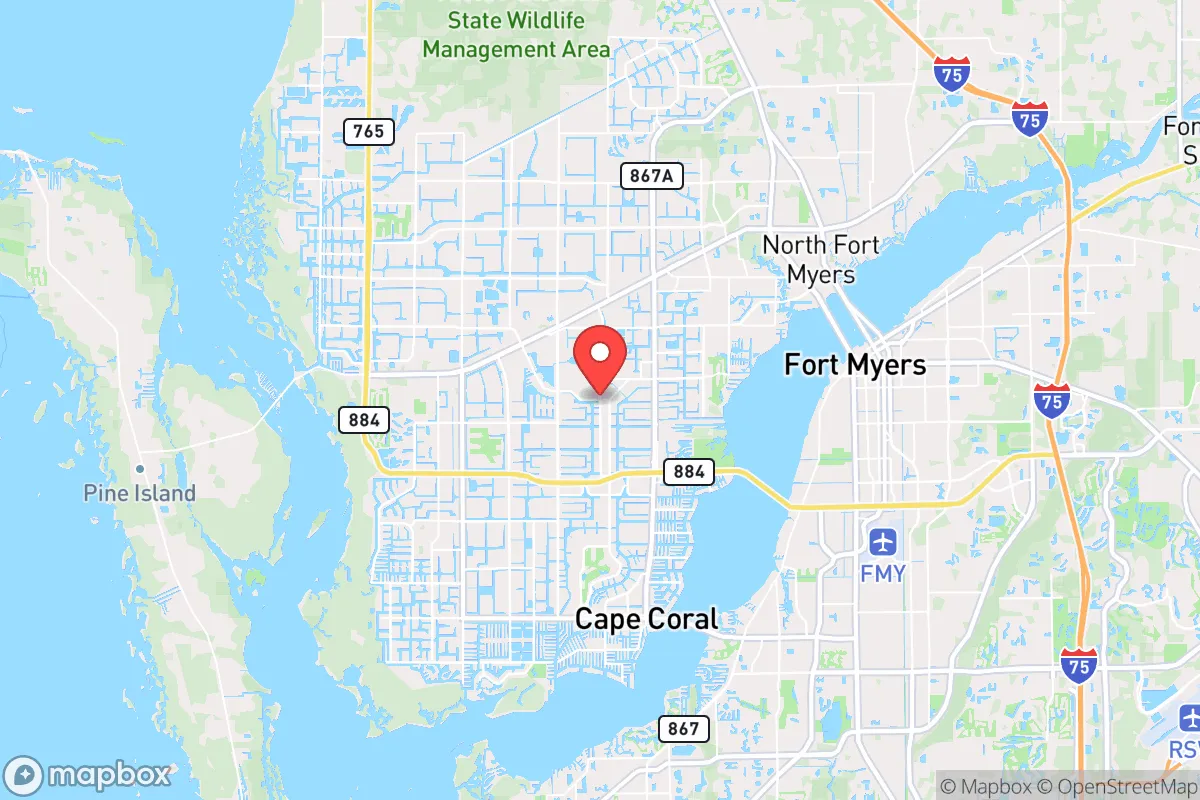
Cape Coral occupies a unique position on the Gulf Coast, roughly 120 miles south of Tampa and 140 miles west of Miami. This distance from the state's largest population centers is a double-edged sword. On one hand, it places the city outside the immediate blast radius of a major terrorist or military strike on Tampa's MacDill Air Force Base — home to U.S. Central Command and U.S. Special Operations Command — or a port-related incident in Tampa Bay. On the other hand, the city's 400 miles of navigable canals create a natural defensive network. Waterways can be used for escape routes, supply movement, or as barriers against ground-based threats. The Caloosahatchee River forms the city's southern boundary, offering a significant natural obstacle that could be leveraged for perimeter security. The area's flat terrain and dense mangrove forests along the coast provide limited cover but also make large-scale military movements difficult without established roads.
Risks, exposures, and proximity to fallout-relevant landmarks
The most pressing risk is hurricane vulnerability. Cape Coral sits in a Category 5 storm surge zone, with the entire city at or near sea level. A direct hit from a major hurricane would flood most residential areas, destroy infrastructure, and create a humanitarian crisis that could last weeks. The city's evacuation routes — primarily I-75 and US-41 — are limited and would become gridlocked during a mandatory evacuation. This is a critical failure point for any prepper: you cannot reliably bug out from Cape Coral during a hurricane. Beyond weather, the city's proximity to MacDill AFB (about 120 miles north) means that a nuclear or conventional strike on that facility could produce fallout patterns that, depending on wind direction, might affect Cape Coral. The Port of Tampa, a major military and commercial shipping hub, is another high-value target. A coordinated attack on Tampa's port and air base could disrupt supply chains for weeks, leaving Cape Coral residents dependent on local resources. The city's own infrastructure — a single water treatment plant, a single major hospital (Cape Coral Hospital), and a power grid that is vulnerable to storm damage — means that a prolonged grid-down scenario would be catastrophic. The city's population of over 200,000, with many retirees and seasonal residents, would create a massive demand for medical care, food, and water that local resources cannot meet.
Practical resilience for a relocator: food, water, energy, and defensibility
For a relocator with a prepper mindset, Cape Coral's practical resilience is mixed. Water is abundant but not potable without treatment. The city's tap water comes from the Caloosahatchee River and is treated at the Cape Coral Water Treatment Plant. In a grid-down scenario, that plant would fail within hours. However, the canal system provides a nearly limitless source of raw water that can be filtered or boiled. Rainwater collection is also viable, with the region averaging 53 inches of rain annually. Food security is a challenge. The city has limited agricultural land; most food is trucked in from outside. Local grocery stores typically hold 3-5 days of supply. A disruption to I-75 or US-41 would cut off resupply. For long-term food production, the sandy soil and high humidity make traditional gardening difficult without raised beds and soil amendments. However, the long growing season (10 months) allows for multiple crop cycles. Fishing in the canals and the Gulf is a reliable protein source, but overfishing would become an issue in a prolonged crisis. Energy resilience is poor. The grid is above-ground and vulnerable to storms. Solar is viable — the area averages 266 sunny days per year — but most homes are not equipped with battery storage. A generator and fuel storage are essential. Defensibility is the weakest point. The city's flat, open layout with few natural chokepoints makes it difficult to secure a perimeter. The canal system, while useful for escape, also provides multiple access points for waterborne threats. The nearest hardened defensive position is the Florida National Guard armory in Fort Myers, about 10 miles away, but that facility would likely be overwhelmed in a major crisis. For a single individual or family, the best strategy is to live in a home with a concrete block construction, a metal roof, and a defensible perimeter — ideally on a cul-de-sac or dead-end street near a canal for escape. Avoid homes in flood zones A and V (check FEMA maps). Stockpile at least 30 days of food, water, and medical supplies. Establish a mutual aid network with like-minded neighbors. The city's large retiree population means that many residents will be dependent on outside help in a crisis, which could create security risks for those who are prepared.
The overall strategic picture for Cape Coral is one of calculated risk. The city offers a buffer from the worst of urban unrest and military target zones, but its hurricane exposure and infrastructure fragility are serious liabilities. For a conservative prepper who values distance from population centers and is willing to invest in hardening a home against storms, Cape Coral can work — but only with a robust plan for self-sufficiency. The city is not a bug-out location; it is a stay-and-defend location that requires preparation, community, and a realistic understanding of its vulnerabilities. If you are looking for a place to ride out the coming storms — both literal and figurative — Cape Coral demands that you bring your own resilience. The canals will not save you. Your stockpile, your skills, and your neighbors will.

* Values derived from national, state, county, city and local statistics and may differ in a specific area. Last updated: 2026-04-19T06:54:43.000Z
Narrative content on this page is AI-generated and may contain mistakes. Verify any details that matter before acting on them.
ReloMaps may earn a commission from affiliate links at no extra cost to you.

