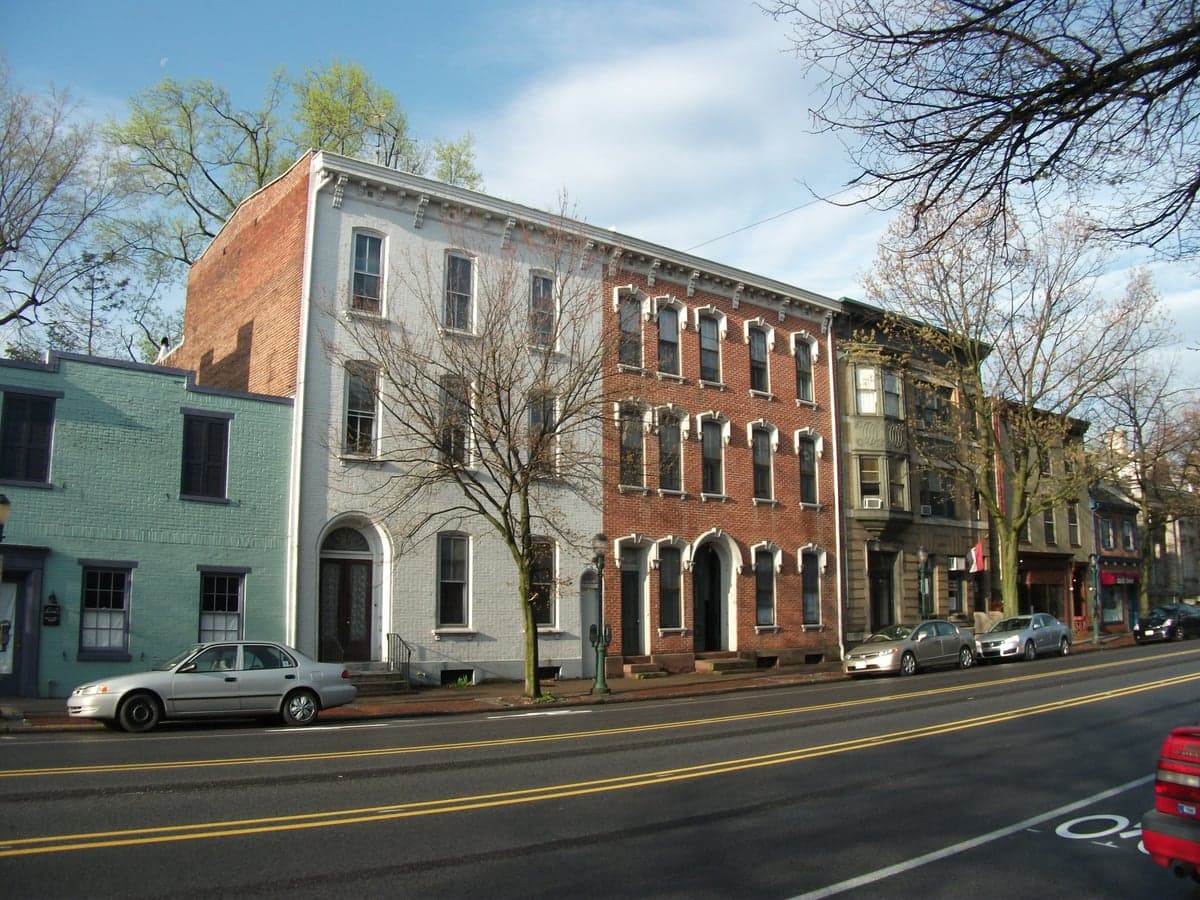
Photo: Wikipedia
Political ClimatePolitical Climate in Carlisle, PA
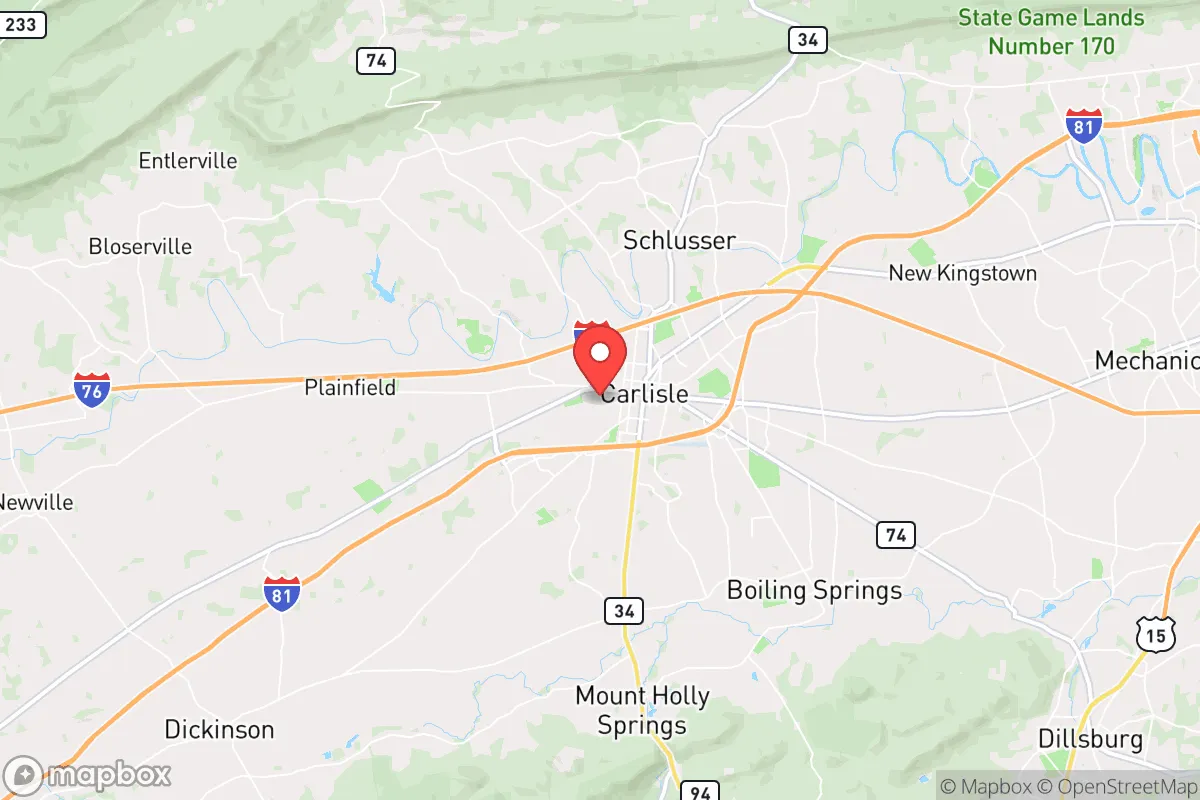
District shown is the primary district for this city’s centroid. Cities may span multiple districts.
Local Political AnalysisPolitical Analysis of Carlisle, PA
Carlisle, Pennsylvania, sits in a bit of a political tug-of-war, and if you've been here a while, you've felt it. The Cook PVI clocks the area at R+3, which means it leans Republican, but not by a landslide—it's a battleground right in the heart of Cumberland County. Historically, this was solid, conservative country, where folks valued self-reliance and didn't appreciate the government poking its nose into local business. But over the last decade or so, you've seen a slow creep of progressive influence, especially as people move up from the D.C. suburbs or over from Harrisburg. The 2020 and 2024 elections showed the county tightening, with Trump still carrying it, but by narrower margins than you'd expect for a place that used to be a lock. The worry now is that the old-school, live-and-let-live conservatism is getting squeezed by a more activist, top-down approach from both parties, but especially from the left's push on things like zoning, school policies, and public health mandates.
How it compares
Drive ten miles east to Harrisburg, and you're in a completely different world—Dauphin County is reliably blue, with a heavy government and union presence that pushes a very different agenda. Head west toward Shippensburg or Chambersburg, and you'll find the kind of deep-red, Second Amendment-friendly communities that Carlisle used to resemble more closely. The contrast is stark: in Carlisle, you get the college town vibe from Dickinson College, which brings in a more liberal, activist crowd that's vocal about climate policy and social justice. That's fine in theory, but it creates a tension when those ideas start getting baked into local ordinances or school board decisions. The surrounding rural townships, like North Middleton or South Middleton, tend to vote much more conservatively, and they're wary of Carlisle's city council drifting toward the kind of progressive overreach you see in places like State College or Philadelphia. It's a microcosm of the national divide, but here, the R+3 rating means every election feels like a coin flip that could tip the whole county.
What this means for residents
For the average person living here, the shifting political climate has real, everyday consequences. You've seen it in the school board meetings, where debates over curriculum and library books have gotten heated, and in the push for more restrictive zoning that some see as a backdoor way to control property rights. The concern is that the government—whether it's the borough council or the county commissioners—is getting too comfortable telling people how to run their lives. There's a growing unease about mandates, whether they're about masks, vaccines, or even energy-efficient building codes that drive up costs for homeowners. The tax burden is another sore spot: as the county grows, there's pressure to fund more public programs, but long-time residents remember when Carlisle was a place where you could fix up your own house without a permit for every lightbulb change. The sense is that personal freedoms are being chipped away, one regulation at a time, and the R+3 lean isn't strong enough to stop it if the progressive faction gets organized.
On the cultural side, Carlisle still holds onto some of its old character. The Army War College brings a steady stream of military families who tend to be more patriotic and skeptical of big government, which balances out the academic influence. You'll still find gun shows at the fairgrounds and plenty of folks who wave the Gadsden flag. But the long-term trend is concerning: if the county keeps trending leftward, you could see the kind of policy shifts that have turned neighboring York County into a battleground over property rights and school choice. For now, it's a place where you can still have a conversation with your neighbor about politics without it turning into a fight, but that's getting harder every year. The bottom line is that Carlisle is at a crossroads, and the next few election cycles will decide whether it stays a haven for conservative values or slides into the kind of progressive experiment that's already failed in bigger cities.

State Political ClimatePolitical Climate in Pennsylvania
State Political AnalysisPolitical Environment in the State
Pennsylvania is a classic battleground state, split almost perfectly down the middle, but the ground is shifting under your feet. For decades, the state was a reliable blue-leaning toss-up, but the 2024 election showed a clear rightward tilt, with Donald Trump winning the state by about 1.5 points after losing it by 1.2 in 2020. The real story is the long-term trajectory: the old Democratic strongholds in the southwest (Pittsburgh) and southeast (Philadelphia) are shrinking in relative power, while the vast, conservative-leaning interior and northern tier are holding steady or growing. This isn't a state that's flipping overnight, but the momentum is undeniably with the right, driven by a backlash against progressive overreach in the cities and a deep-seated cultural conservatism in the suburbs and rural areas.
Urban vs. rural divide
The political map of Pennsylvania is a tale of two states. The Democratic vote is overwhelmingly concentrated in two major metros: Philadelphia and its collar counties (Montgomery, Delaware, Chester) and Pittsburgh (Allegheny County). These two regions alone can deliver 40% of the statewide vote, but they are becoming more Democratic and more isolated. Meanwhile, the rest of the state—the "T"—is deeply red. The I-81 corridor from Harrisburg up to Scranton, the northern tier counties like Tioga, Bradford, and Susquehanna, and the south-central counties like York, Adams, and Franklin are all solidly Republican. The key battlegrounds are the "collar counties" around Philadelphia—Bucks, Chester, Delaware, and Montgomery—which were once swing areas but have shifted left. However, the real story is the Lackawanna County (Scranton) and Erie County flip: these old union, blue-collar Democratic strongholds voted for Trump in 2024, a seismic shift that signals the working-class exodus from the Democratic Party. If you're looking for a conservative enclave, you want to be in the Lancaster or York areas, or the Poconos (Monroe County), which is seeing an influx of conservative-leaning New Yorkers.
Policy environment
Pennsylvania's policy environment is a mixed bag, but the trend is toward more freedom, albeit slowly. The state has a flat income tax rate of 3.07%, which is relatively low and hasn't been raised in years. Property taxes are a major burden, especially in high-cost districts like Lower Merion (Montgomery County), but the state has a homestead exemption that offers some relief. The regulatory posture is moderate: Pennsylvania is not Texas, but it's not California either. The state has no right-to-work law, which keeps union power strong in the public sector and construction trades, but private-sector union membership has been declining. On education, the state has a school choice program (the Educational Improvement Tax Credit, or EITC) that provides scholarships to low- and middle-income families, but it's capped and under constant attack from the teachers' unions. The state's election laws are a flashpoint: no voter ID requirement (a major concern for conservatives), but the state does have no-excuse mail-in voting (Act 77 of 2019), which was a bipartisan compromise but is now deeply controversial. The constitutional carry of firearms is not law—you still need a permit to carry concealed—but the state is a "shall-issue" state, meaning permits are generally easy to obtain. The preemption law prevents cities like Philadelphia from enacting their own gun bans, which is a big win for gun rights.
Trajectory & freedom
Pennsylvania is in a tug-of-war between expanding and contracting freedom, but the recent trend is cautiously positive for conservatives. The biggest win was the passage of Act 192 of 2024, which expanded the state's castle doctrine and stand your ground protections, making it clear that you have no duty to retreat in your home or vehicle. This was a direct response to the Philadelphia DA Larry Krasner's soft-on-crime policies, which have driven a conservative backlash. On parental rights, the state has seen a surge in school board activism, with conservative majorities winning in Central Bucks and Pennridge school districts, pushing back against critical race theory and gender ideology. However, the state's Department of Education under Governor Josh Shapiro has been hostile to these efforts, issuing guidance that effectively mandates transgender policies in schools. On medical autonomy, the state has no COVID-19 vaccine mandate for the general public, but the healthcare system is heavily regulated, and the state expanded Medicaid under the Affordable Care Act. The property rights picture is mixed: the state has strong eminent domain protections, but the Marcellus Shale natural gas boom has been hampered by a severance tax that the industry says is too high, though it's still lower than in New York. The biggest threat to freedom is the state Supreme Court, which has a 5-2 Democratic majority and has been activist on issues like school funding and election law.
Civil unrest & political movements
Pennsylvania has seen its share of political flashpoints, and they're not going away. The 2020 election integrity controversy was a major issue, with the Pennsylvania Supreme Court unilaterally extending the mail-in ballot deadline, leading to widespread distrust. The 2021 audit of the election in York County and the 2022 "audit" by the Republican-controlled Senate Intergovernmental Operations Committee (the "Zimmerman audit") kept the issue alive. On the left, Antifa and BLM protests were significant in Philadelphia and Pittsburgh in 2020, with property damage and looting in Center City Philadelphia that was not adequately addressed by the city's progressive DA. The immigration politics are a growing concern: Philadelphia is a sanctuary city, and the state's Welcoming Pennsylvania initiative under Governor Shapiro actively promotes pro-immigration policies. This has led to tensions in smaller towns like Hazleton and Reading, where rapid demographic change has sparked local political movements. The Second Amendment sanctuary movement has been strong, with over 100 counties and municipalities passing resolutions declaring themselves "sanctuaries" from unconstitutional gun laws. The pro-life movement is also active, with the state's abortion law (24-week ban, with exceptions) under constant threat from the Democratic majority in the state House.
Projection
Over the next 5-10 years, Pennsylvania is likely to become more Republican at the state level, but the path is not smooth. The in-migration from New York and New Jersey is a double-edged sword: many of these newcomers are conservative-leaning (fleeing high taxes and crime), but they also bring a "blue-state" mindset that can clash with local culture. The Poconos and Lehigh Valley (Allentown, Bethlehem, Easton) are the key battlegrounds—these areas are growing fast and are politically volatile. The Democratic Party's reliance on Philadelphia is a structural weakness: as the city's population declines and its crime problems worsen, the party's base shrinks. The state House is currently split 102-101 Republican, and the state Senate is 28-22 Republican, giving the GOP a firewall against the worst progressive policies. However, the state Supreme Court will remain a problem, and the 2026 gubernatorial election will be critical—if a Republican wins, the state could see a wave of conservative reforms, including a voter ID law and a school choice expansion. If a Democrat wins, expect more of the same: gridlock on the big issues, with the courts doing the heavy lifting for the left.
Bottom line for a new resident: Pennsylvania is a state where your freedom depends heavily on where you live. If you settle in a conservative county like York, Lancaster, or Butler, you'll find a welcoming environment with low taxes, good schools, and a strong sense of community. If you end up in Philadelphia or its inner suburbs, you'll be dealing with high taxes, crime, and a progressive government that is hostile to your values. The state is trending in the right direction, but it's a slow grind. You'll need to be politically engaged—voting in every election, attending school board meetings, and supporting conservative candidates—to keep the momentum going. The good news is that you're not alone: there's a growing network of conservative activists, Second Amendment groups, and school choice advocates who are fighting the good fight. Just don't expect the state government to do you any favors—you'll need to be your own advocate.
* Values derived from national, state, county, city and local statistics and may differ in a specific area. Last updated: 2026-05-01T00:36:49.000Z
Narrative content on this page is AI-generated and may contain mistakes. Verify any details that matter before acting on them.
ReloMaps may earn a commission from affiliate links at no extra cost to you.

