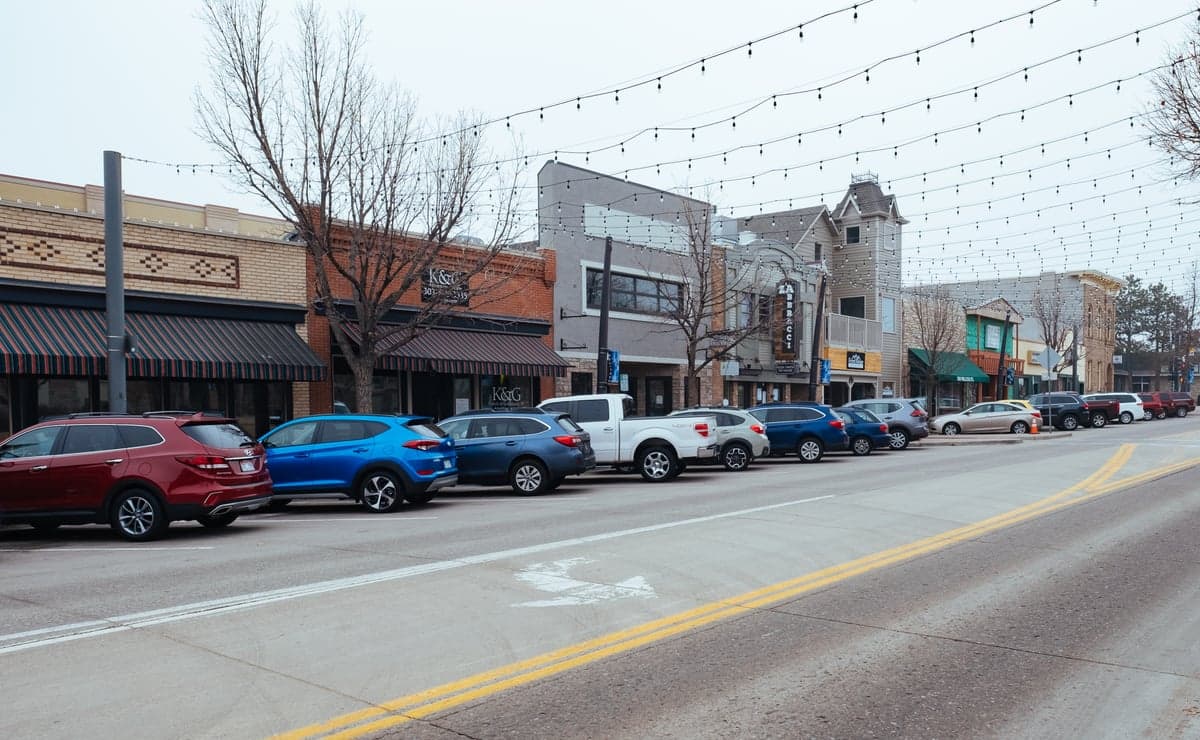
Photo: Wikipedia
Personal Sovereignty in Castle Rock, CO
Viable for self-reliance. Generally workable, though some barriers may limit total independence.
What does Personal Sovereignty tell us?
Personal Sovereignty measures your capacity for self-reliance and independence with minimal government friction. Higher scores mean fewer barriers between you and the way you want to live... but it assumes you have the space you need and good neighbors.
What does this tell us?
Personal Sovereignty measures your capacity for self-reliance and independence with minimal government friction. Higher scores mean fewer barriers between you and the way you want to live... but it assumes you have the space you need and good neighbors.
State Policy
Energy independence: Net exporter (110% of energy produced in-state)
Personal Liberty
Homesteading

Personal Liberty Analysis
Castle Rock, Colorado, offers a notably higher degree of personal sovereignty than many Front Range communities, but it is not a libertarian free zone. The town’s character is shaped by a strong local culture of self-reliance, a county government that is generally skeptical of overreach, and a state-level legal framework that provides a mixed bag for those prioritizing autonomy. For the strategic relocator—especially one with a survivalist or prepper mindset—Castle Rock represents a calculated compromise: you get the buffer of a semi-rural county with the infrastructure of a growing town, but you must navigate Colorado’s increasingly assertive state-level regulations on everything from energy to firearms. The key is understanding where local control ends and state preemption begins.
Tax burden and regulatory posture: How much does the state take and how much does it mandate?
Colorado’s overall tax burden is moderate, but the regulatory climate is tightening, particularly from the state capitol in Denver. For a conservative-leaning individual, the most relevant numbers are the flat state income tax rate of 4.4% (as of 2025, with a potential reduction to 4.25% on the ballot) and a state sales tax of 2.9%. Douglas County, where Castle Rock sits, adds its own sales tax, bringing the combined rate to roughly 7-8% depending on the specific location. The property tax picture is more favorable: Douglas County’s assessment rate for residential property is 6.7% of actual value, and the county’s mill levy is relatively low, meaning annual property taxes on a $600,000 home typically run between $2,500 and $3,500. This is significantly lower than in Boulder or Denver counties. However, the regulatory posture is where the friction lies. Colorado has aggressive renewable energy mandates, a strict state-level building code that is updated frequently, and a growing list of environmental regulations that can complicate new construction or significant property modifications. The Douglas County Commission has pushed back against some state mandates—for example, it has declared itself a "Second Amendment Sanctuary" county and has resisted certain state housing density requirements—but local officials cannot fully shield residents from state-level rules on vehicle emissions, energy standards, or water rights. For the prepper, this means you can own land and build a home with relative ease compared to California or Oregon, but you cannot legally go fully off-grid without navigating state electrical and plumbing codes.
Self-defense and gun law specifics: What can you legally own and where can you carry?
Colorado is a "shall-issue" state for concealed carry permits, and Castle Rock’s Douglas County Sheriff’s Office processes applications efficiently, typically within 90 days. The state does not require a permit to open carry, and there is no state-level ban on standard-capacity magazines (those over 15 rounds) despite repeated attempts by Denver legislators to pass one. However, there are significant restrictions that a freedom-minded individual must accept. Colorado requires a background check for all private firearm sales, including those between individuals at gun shows or online—this is a universal background check law passed in 2013. There is also a "red flag" law (Extreme Risk Protection Order) that allows law enforcement or family members to petition a court to temporarily seize firearms from an individual deemed a risk. Douglas County has declared itself a "Second Amendment Sanctuary," and local sheriffs have stated they will not proactively enforce the red flag law, but the law remains on the books and a judge can still issue an order. For long guns, there are no state-level restrictions on AR-15s or similar platforms. Castle Rock has several gun shops and ranges, including the popular Bristlecone Shooting in nearby Littleton and the Douglas County Shooting Range in the Pike National Forest. The practical reality is that a law-abiding resident can own a wide array of firearms, carry concealed with a permit, and practice shooting without harassment—but the legal framework is more restrictive than in Texas or Wyoming, and the political winds in Denver suggest further restrictions are likely.
Self-reliance and homesteading viability: Lot sizes, zoning, and off-grid feasibility
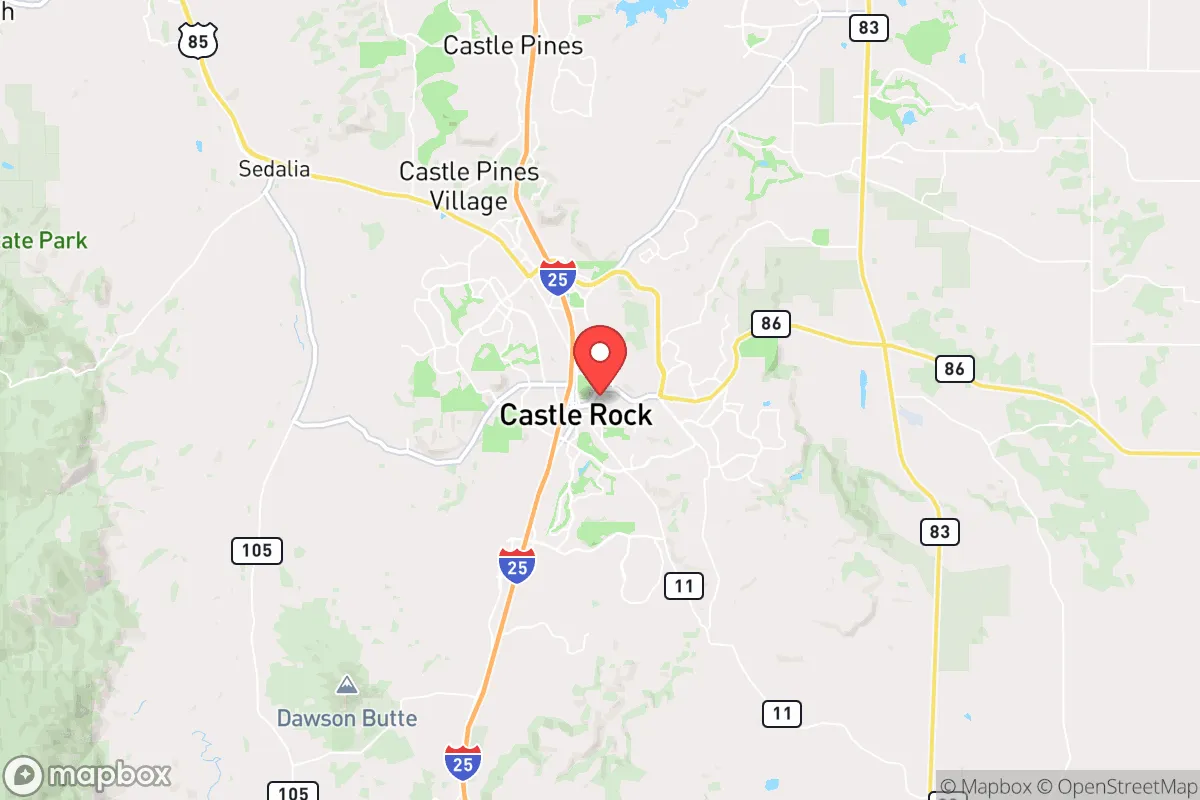
Castle Rock itself is a mix of suburban subdivisions and larger rural parcels, but the real opportunity for self-reliance lies in the unincorporated areas of Douglas County, particularly east of I-25 and south toward the El Paso County line. Minimum lot sizes in the county’s rural zones are typically 2.5 acres for a single-family dwelling, though some areas allow 1-acre lots with a well and septic. For a serious homesteading or prepper setup, you want to look at properties zoned "RR" (Rural Residential) or "A" (Agricultural), which permit livestock, gardens, and outbuildings without excessive permitting. Water rights are the critical constraint: Colorado is a prior-appropriation state, meaning you cannot simply drill a well and use as much water as you want. You must obtain a well permit from the state, and the amount you can pump is limited to domestic use (household, garden, and livestock) unless you have a separate agricultural water right. Off-grid solar is legal and common, but you must connect to the grid or have a battery storage system that meets the state electrical code; completely disconnecting from the utility grid is technically allowed but requires a complex permitting process and is rarely done. Septic systems are standard for rural properties and are regulated by the county health department. For the serious prepper, the best strategy is to buy a 5+ acre parcel in eastern Douglas County, drill a permitted well, install a solar array with battery backup, and build a home that meets state code but is designed for long-term self-sufficiency. The county’s planning department is professional but not hostile to rural development, unlike some counties in the Pacific Northwest.
Personal liberties: Parental rights, medical autonomy, speech, and property
Parental rights in Colorado are under active political contest. The state has a "comprehensive sexuality education" mandate that requires public schools to teach age-appropriate sex ed, and parents cannot opt their children out of all content—only specific lessons. Douglas County School District, however, has a conservative-leaning board that has pushed back, adopting a "parental bill of rights" policy that requires schools to notify parents of any changes to a student’s health or well-being. For families, this means you have more local control than in Denver or Boulder, but the state law still overrides on some curriculum requirements. Medical autonomy is a mixed bag: Colorado has legalized recreational marijuana (which some preppers view as a positive for personal choice, others as a negative for societal stability), but it also has some of the strictest vaccine mandates for schoolchildren in the West, with only medical and religious exemptions (no philosophical exemption). The state also has a "right to try" law for terminally ill patients, but it is rarely used. Speech and assembly are protected under the state constitution, and Castle Rock has no local ordinances restricting political signage or public gatherings. Property rights are generally strong in Douglas County; the county does not have rent control, and there are no inclusionary zoning mandates that force developers to build affordable housing. However, the state’s "just cause" eviction law (passed in 2024) limits a landlord’s ability to evict tenants without a specific legal reason, which some property owners view as an infringement on their rights. Overall, Castle Rock offers a solid foundation for personal liberty, but it is not a haven—you are still in a state where the legislature in Denver is actively expanding government authority over health, education, and housing.
In the broader landscape of the American West, Castle Rock sits in a middle tier of personal sovereignty. It is far freer than California, Oregon, or Washington, but it is not as unregulated as Wyoming, Idaho, or Montana. For the strategic relocator who wants proximity to a major metro area (Denver is 30 minutes north) while maintaining a high degree of self-reliance, Castle Rock is one of the better options in Colorado. The key is to buy land in the county’s rural zones, build with self-sufficiency in mind, and stay engaged with local politics to defend the autonomy that remains. The state-level creep is real, but Douglas County’s culture of independence provides a meaningful buffer—for now.

* Values derived from national, state, county, city and local statistics and may differ in a specific area. Last updated: 2026-04-21T18:57:08.000Z
Narrative content on this page is AI-generated and may contain mistakes. Verify any details that matter before acting on them.
ReloMaps may earn a commission from affiliate links at no extra cost to you.

