Photo: Wikipedia
Political ClimatePolitical Climate in Castle Rock, CO
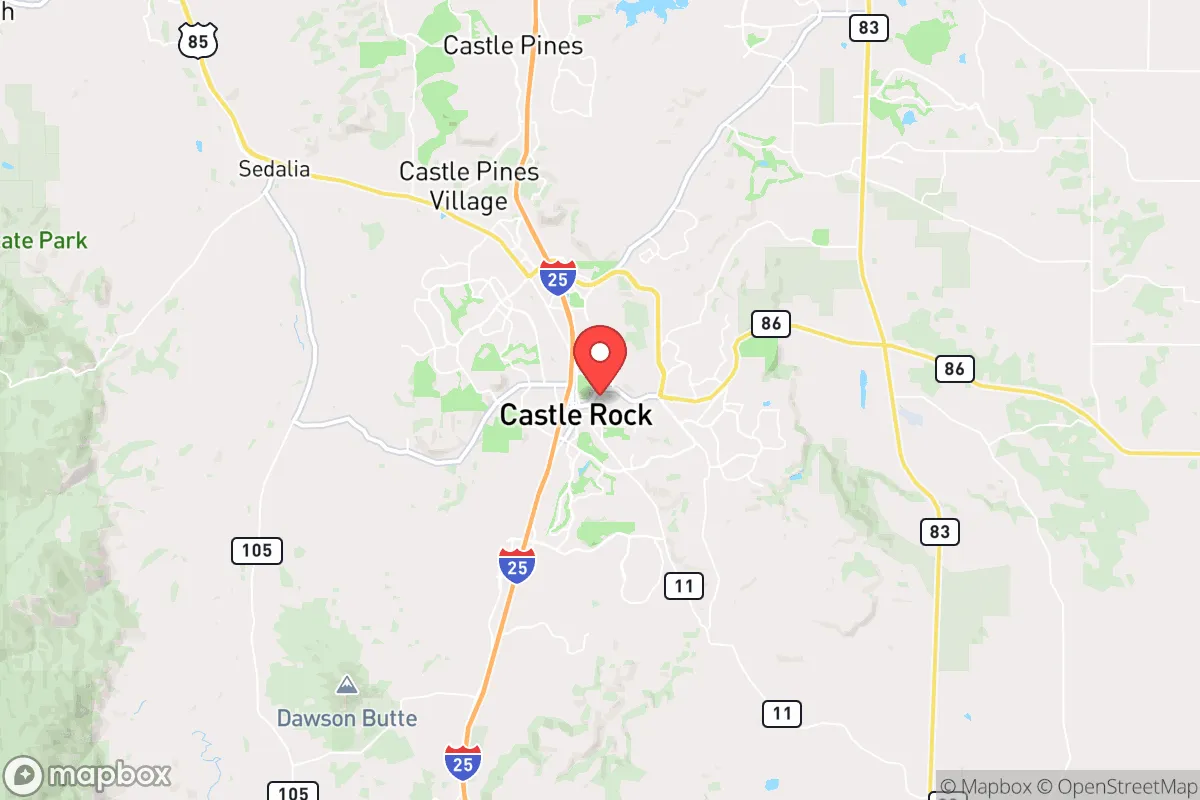
District shown is the primary district for this city’s centroid. Cities may span multiple districts.
Local Political AnalysisPolitical Analysis of Castle Rock, CO
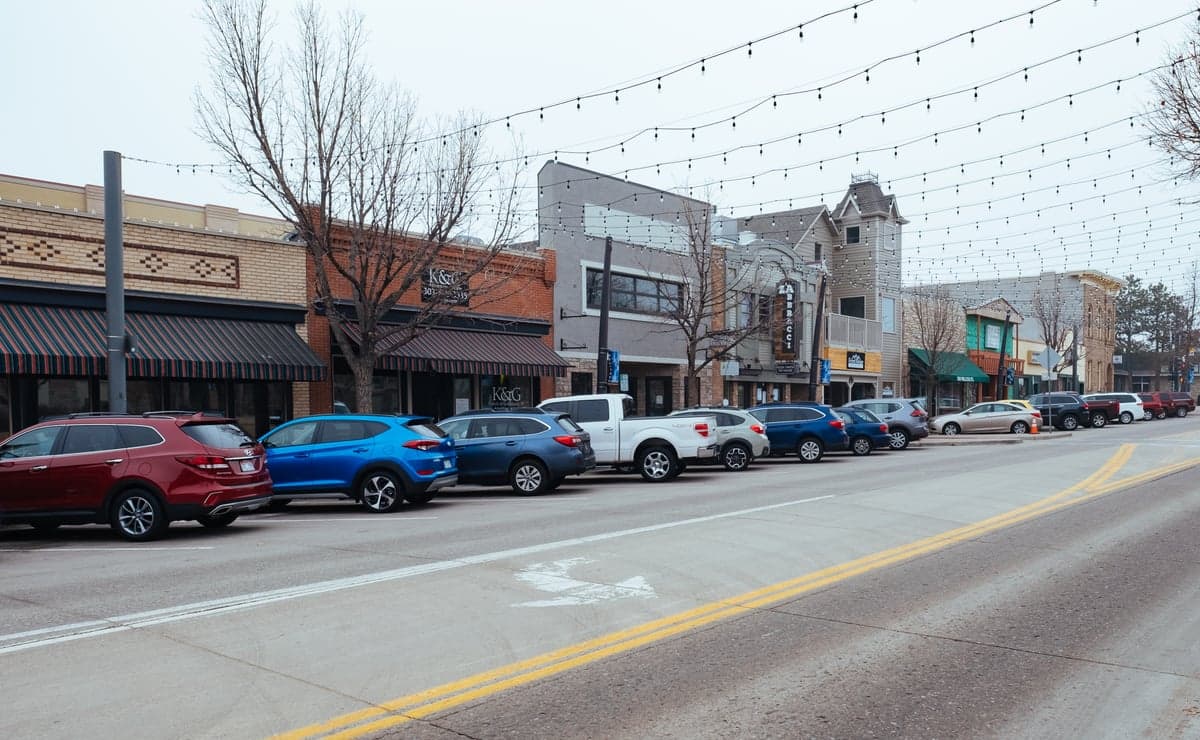
Castle Rock has long been a reliably conservative stronghold, with a Cook PVI of R+9 that reflects its deep-rooted preference for limited government and personal responsibility. But over the last decade, I’ve watched this town shift from a quiet, no-nonsense ranching community into a fast-growing suburb that’s starting to feel the pull of Denver’s progressive influence. The political lean here is still solidly red—Douglas County voted over 60% for Trump in 2020—but the trajectory is what worries me. New arrivals from California and the Front Range are bringing different ideas, and while Castle Rock hasn’t flipped, the cracks are showing in local school board races and zoning debates.
How it compares
If you drive 20 minutes north to Lone Tree or Highlands Ranch, you’ll hit a more moderate, sometimes even purple, vibe—those areas have seen more corporate transplants and younger families who lean left on social issues. Head south to Colorado Springs, and you’re back in deep red territory, where the culture wars are fought openly. Castle Rock sits right in the middle, but it’s the bellwether. We’re seeing the same pressure points: debates over mask mandates in schools, property tax hikes disguised as “infrastructure improvements,” and a growing push for denser housing that feels like a backdoor to government control over how we live. Compared to Parker, which is still pretty traditional, Castle Rock is where the battle lines are drawn—especially on issues like Second Amendment rights and school choice, which used to be non-negotiable here but are now getting challenged in public meetings.
What this means for residents
For folks who value personal freedoms, the biggest red flag is how quickly local government can overreach. The Douglas County School Board, for example, has been a battleground over curriculum transparency and parental rights—things that used to be common sense but now require constant vigilance. If you’re a gun owner, you’ll notice that while state laws get stricter, Castle Rock still respects the Second Amendment, but that could change if the county commission flips. Property taxes are another sore spot: as home values skyrocket, the county has been slow to rein in assessments, which feels like a tax hike without a vote. The silver lining is that Castle Rock’s conservative base is organized—there are active groups like the Douglas County Republicans and grassroots coalitions that keep an eye on zoning and school policies. But you can’t get complacent; every election cycle, there’s a new push for “equity” initiatives or climate mandates that sound harmless but chip away at local control.
Culturally, Castle Rock still holds onto its Western roots—rodeos, 4-H, and church potlucks are the norm—but the influx of tech workers and remote employees is changing the tone. You’ll see more “Keep Castle Rock Weird” bumper stickers next to “Don’t Tread on Me” flags, which tells you the tension is real. Policy-wise, the town has resisted light rail expansion and high-density zoning, but developers keep pushing. The long-term outlook? If we don’t stay engaged, Castle Rock could become another Lone Tree—a place that looks nice on the surface but where your freedoms get nibbled away by well-meaning regulations. For now, it’s still a place where you can raise a family without the government breathing down your neck, but that’s something you have to fight for every election.

State Political ClimatePolitical Climate in Colorado
State Political AnalysisPolitical Environment in the State
Colorado has shifted from a reliably purple swing state to a solidly blue-leaning state over the past two decades, driven by explosive growth in the Denver metro and Front Range corridor. The state’s overall partisan lean now sits roughly D+9, with Democrats controlling the governorship, both chambers of the legislature, and all statewide offices. This wasn’t always the case — as recently as 2004, Colorado voted for George W. Bush, and it had a split legislature as late as 2018. The trajectory is unmistakably leftward, and for a conservative considering relocation, the key question is whether any pockets of resistance remain viable.
Urban vs. rural divide
The political map of Colorado is a textbook case of the urban-rural chasm. The Denver-Boulder-Aurora metroplex, home to nearly 60% of the state’s population, is the engine of Democratic dominance. Denver County itself votes about D+60, while Boulder County is even more lopsided at D+70. The I-25 corridor from Fort Collins down to Colorado Springs is where the battle is fought: Larimer County (Fort Collins) has trended blue, while El Paso County (Colorado Springs) remains a conservative stronghold, voting R+15 in 2024. The Western Slope and Eastern Plains are deeply red — Mesa County (Grand Junction) votes R+30, and rural counties like Yuma and Kit Carson routinely hit R+50 or more. But these areas simply don’t have the population to counterbalance the Front Range. A notable recent flip: Jefferson County, a classic suburban bellwether west of Denver, went from voting for Romney in 2012 to Biden by 9 points in 2020, and has stayed blue since. For a conservative, the practical reality is that state-level politics are controlled by Denver and Boulder, while local control in places like Colorado Springs, Douglas County, and Weld County offers some refuge.
Policy environment
Colorado’s policy environment has become increasingly progressive, with a few notable exceptions. The state has a flat income tax rate of 4.4%, which is relatively low, but property taxes have been rising sharply — a 2024 ballot measure (Proposition HH) attempted to slow them but was rejected by voters. Sales tax rates vary wildly by locality, with Denver hitting 8.81% while rural areas stay near 2.9%. On regulation, Colorado has one of the most aggressive energy transition agendas in the country, with a 2021 law mandating 100% renewable electricity by 2040 and a 2023 law restricting new oil and gas permits near homes. Education policy is a flashpoint: the state’s school choice system is robust, with charter schools and open enrollment widely available, but the Denver Public Schools board has moved left, adopting a “racial equity” policy in 2020 that critics say prioritizes ideology over academics. Healthcare is dominated by the state-run Connect for Health Colorado exchange, and a 2022 law created a public option for health insurance. Election laws have been tightened from a conservative perspective: Colorado was one of the first states to adopt universal mail-in voting (2013), and automatic voter registration is the norm. Voter ID is required, but the accepted forms are broad. The net effect is a state that feels moderately free on taxes and school choice but heavily regulated on energy, land use, and healthcare.
Trajectory & freedom
On the freedom index, Colorado is moving in the wrong direction for conservatives. The most glaring example is gun rights: in 2023, the legislature passed a law raising the minimum age to purchase any firearm to 21, and in 2024 it passed a ban on “ghost guns” and a three-day waiting period for all firearm purchases. A 2024 law also allows local governments to ban firearms in public buildings and parks — a direct erosion of Second Amendment protections. Parental rights took a hit with the 2021 passage of a law requiring schools to adopt “comprehensive sex education” that includes LGBTQ+ content, with no parental opt-out for elementary students. Medical autonomy has expanded in one direction: Colorado legalized assisted suicide in 2016 and has some of the most permissive marijuana laws in the nation, but the state also imposed a strict vaccine mandate for healthcare workers in 2021 that remains in effect. Property rights are under pressure from the aforementioned oil and gas restrictions, which effectively devalue mineral rights in large swaths of the state. On the positive side, Colorado has a strong Taxpayer Bill of Rights (TABOR) that limits state spending growth, though lawmakers have repeatedly found ways to work around it via fees and enterprise funds. The trajectory is clear: each legislative session brings new restrictions on personal liberty, particularly around guns, energy, and education.
Civil unrest & political movements
Colorado has seen its share of political flashpoints. The 2020 protests in Denver were among the largest in the country, with the city’s “autonomous zone” in Capitol Hill lasting several days and resulting in property damage. The state’s sanctuary policies are a major point of contention: Colorado has a 2019 law that limits local law enforcement cooperation with federal immigration authorities, and Denver has been a “sanctuary city” since 2017. This has led to visible tensions, with busloads of migrants being sent to Denver from Texas in 2023-2024, overwhelming the city’s shelter system. On the right, the Colorado Republican Party has fractured between establishment and populist factions, with the 2023 election of Dave Williams as party chair signaling a shift toward more confrontational tactics. The “Colorado Project” — a coordinated effort by left-wing donors to flip the state — has been remarkably successful, and there is no equivalent infrastructure on the right. Election integrity remains a hot-button issue: the 2020 election in Colorado was conducted almost entirely by mail, and while no widespread fraud was found, the process has left many conservatives skeptical. A 2021 audit of Dominion voting machines in Mesa County led to the indictment of the county clerk, Tina Peters, on charges of tampering — a case that has become a national symbol of election security concerns. For a new resident, the most visible sign of political tension is the constant presence of competing protests at the state capitol, particularly during legislative sessions.
Projection
Looking ahead 5-10 years, Colorado is likely to become more, not less, progressive. The demographic trends are relentless: the state is adding about 100,000 new residents per year, with the vast majority settling in the Denver metro area. These newcomers tend to be younger, more educated, and more liberal than the existing population. The rural counties are losing population, which means their political influence will continue to shrink. The only potential brake on this trajectory is a backlash against the state’s high cost of living — housing prices in Denver have doubled since 2019, and the state’s regulatory environment is making it harder to build new housing. If the economy slows, the progressive agenda may face more resistance. But for now, the path is clear: expect more gun control, more energy regulation, more progressive education mandates, and a continued erosion of local control. The one wild card is the possibility of a split legislature — Republicans could theoretically win the state senate in a good year, but the gerrymandered districts and demographic trends make that unlikely before 2030.
For a conservative considering a move to Colorado, the bottom line is this: you can find a comfortable life in places like Colorado Springs, Douglas County, or the Western Slope, where local politics still reflect traditional values. But you will be living in a state where your vote for governor, senator, and statewide offices will be consistently outnumbered. If you value low taxes and school choice, Colorado still offers those — for now. If you value gun rights, parental control over education, or freedom from energy regulation, you will find yourself fighting an uphill battle every legislative session. The state is not yet California, but it is on that trajectory, and the pace is accelerating. Visit the places that still feel like home — Colorado Springs, Grand Junction, Windsor, or even parts of Weld County — and decide if the trade-offs are worth it.
* Values derived from national, state, county, city and local statistics and may differ in a specific area. Last updated: 2026-04-21T18:57:08.000Z
Narrative content on this page is AI-generated and may contain mistakes. Verify any details that matter before acting on them.
ReloMaps may earn a commission from affiliate links at no extra cost to you.

