 Popular
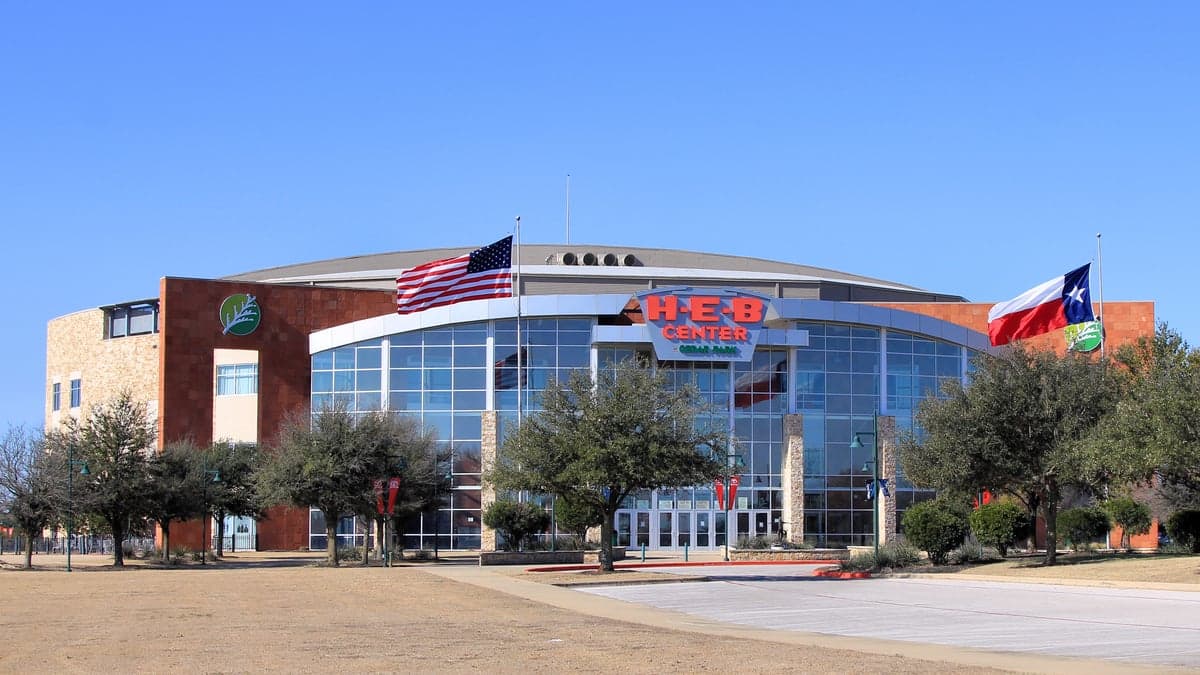
Photo: Wikipedia
Demographics of Cedar Park, TX
Affluence Level in Cedar Park, TX
An upper-middle-class area. Household wealth, education levels, and homeownership run ahead of national benchmarks.
People of Cedar Park, TX
Cedar Park, Texas, is a rapidly growing, predominantly white-collar suburb of Austin with a population of 77,474 that is notably diverse for a Central Texas exurb. The city is characterized by a high concentration of families, a 55.2% college-educated adult population, and a distinctive demographic mix where Indian-subcontinent residents (8.8%) outnumber East/Southeast Asian residents (5.8%), alongside a significant Hispanic community (18.2%). The city’s identity is shaped by its recent, explosive growth—most of its housing stock was built after 1990—and a culture that blends conservative-leaning politics with the professional-class ambitions of tech and healthcare workers.
How the city was settled and grew
Cedar Park was not a 19th-century farming hamlet. Its modern history begins in the 1970s when the area was sparsely populated ranchland, part of the old Buttercup Creek ranch. The first major wave of settlers were white middle-class families moving from Austin proper, drawn by cheap land and the promise of a master-planned suburban lifestyle. The original subdivisions—Buttercup Creek (platted in the 1970s) and Milburn (developed in the 1980s)—were built almost exclusively by and for this demographic. These neighborhoods remain the city’s whitest and most established enclaves, with many original homeowners still in residence. A small but notable Hispanic population, largely of Mexican descent, worked in construction and service roles during this early build-out, settling in older rental pockets near the railroad tracks and along Bell Boulevard.
Modern era (post-1965)
The post-1965 Immigration and Nationality Act had little immediate effect on Cedar Park, which was still a tiny crossroads. The real demographic transformation began after 2000, driven by two forces: the Austin tech boom and the expansion of the 183-A toll road. The first major non-white group to arrive in significant numbers were Indian-subcontinent professionals—engineers, IT managers, and physicians—who bought homes in newer subdivisions like Running Brushy and Park at Brushy Creek. These neighborhoods, built from the late 1990s through the 2010s, now have some of the highest concentrations of Indian-subcontinent residents in the city, often exceeding 15-20% in individual census blocks. East/Southeast Asian families (primarily Vietnamese and Chinese) followed a similar pattern, clustering in the Anderson Mill area (which straddles the Cedar Park-Austin line) and in newer sections of Buttercup Creek. The Hispanic population grew steadily but more diffusely, concentrated in older apartment complexes along Whitestone Boulevard and in the Lakeline district, where many work in retail and hospitality. The Black population remains small (3.2%) and is scattered across the city without a distinct ethnic enclave.
The future
Cedar Park is not homogenizing; it is tribalizing into distinct, income-stratified enclaves. The Indian-subcontinent community is the fastest-growing segment, driven by continued tech hiring and chain migration. This group is highly assimilated in terms of education and income but maintains strong cultural institutions, including multiple Hindu temples and Indian grocery stores along the 183-A corridor. The East/Southeast Asian population is growing more slowly, plateauing as second-generation families move to pricier suburbs like Round Rock. The Hispanic share is stable but aging, with younger Hispanic families increasingly priced out of Cedar Park’s housing market (median home price above $450,000). The white population, while still the majority (58.3%), is declining as a share as older residents age in place and younger white families choose more affordable exurbs like Leander or Liberty Hill. Over the next 10-20 years, Cedar Park will likely become a majority-minority city, with the Indian-subcontinent community approaching 15-20% of the population and the white share falling below 50%. The city will remain a high-opportunity, high-cost suburb where newcomers need strong professional credentials to afford entry.
For a conservative-leaning mover, Cedar Park offers a stable, family-oriented environment with excellent schools and low crime, but it is no longer a homogeneous white suburb. The city is becoming a multi-ethnic, upper-middle-class enclave where Indian-subcontinent professionals are the most visible and fastest-growing group. New arrivals should expect a community that values property rights, fiscal conservatism, and educational achievement, but where the cultural texture is increasingly diverse and the cost of entry is steep.

* Values derived from national, state, county, city and local statistics and may differ in a specific area. Last updated: 2026-04-19T07:21:43.000Z
Narrative content on this page is AI-generated and may contain mistakes. Verify any details that matter before acting on them.
ReloMaps may earn a commission from affiliate links at no extra cost to you.

