 Popular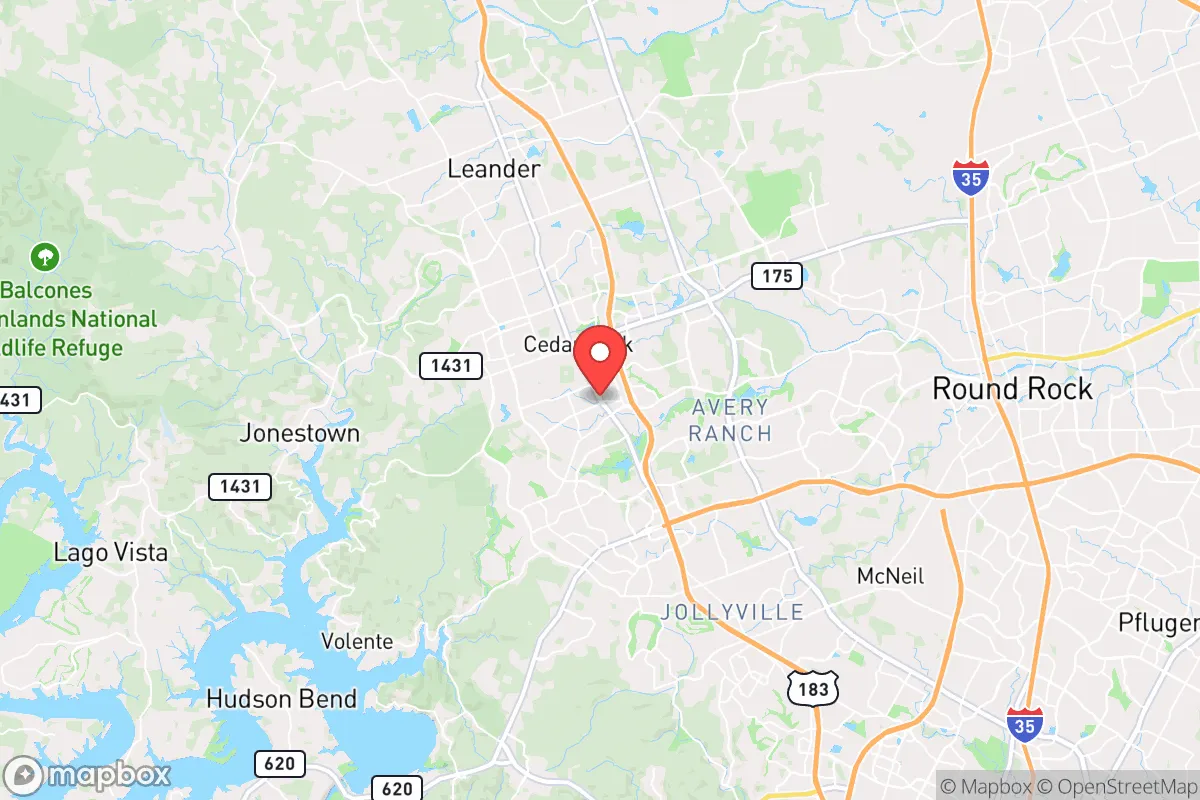
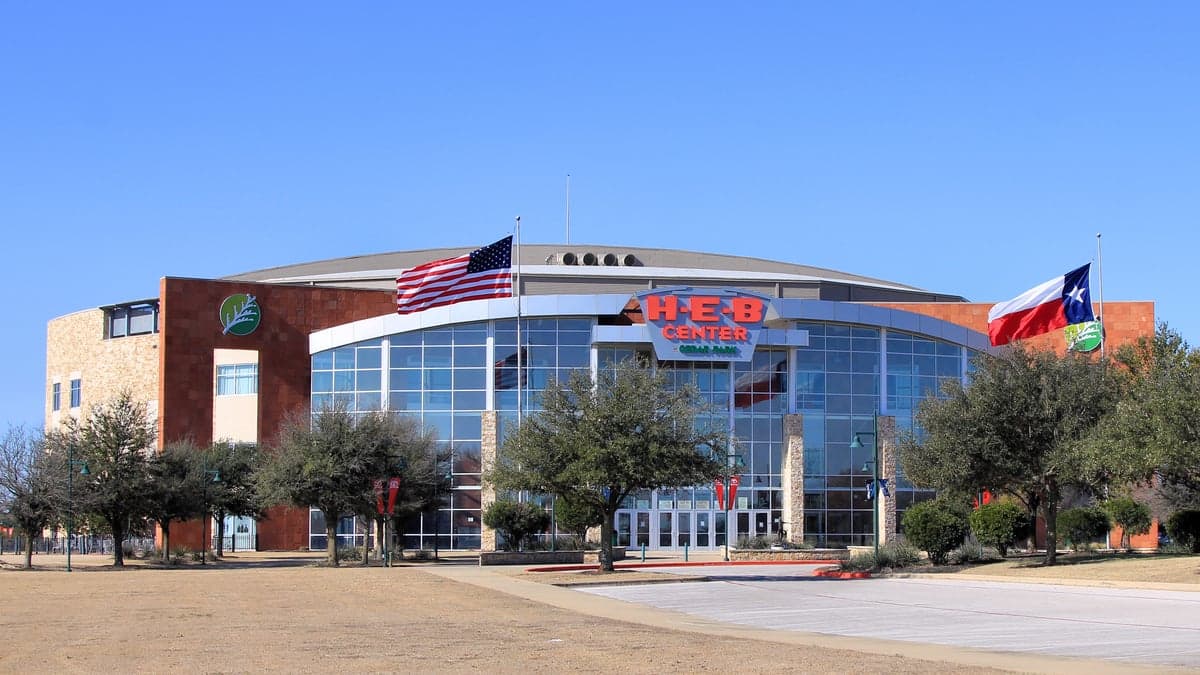
Photo: Wikipedia
Political ClimatePolitical Climate in Cedar Park, TX
District shown is the primary district for this city’s centroid. Cities may span multiple districts.
Local Political AnalysisPolitical Analysis of Cedar Park, TX
Cedar Park leans solidly conservative, with a Cook PVI of R+11 that places it firmly to the right of the national average and even a notch redder than Williamson County as a whole. For a long-time resident like me, that number tells a story of a community that has historically valued limited government and personal responsibility, but it’s a story that’s getting more complicated by the year. The political trajectory here isn’t a sharp left turn, but a slow drift toward the kind of suburban moderation that can feel like a quiet erosion of the principles that made this area attractive in the first place.
How it compares
To really understand Cedar Park’s politics, you have to look at the neighbors. Head south into Austin’s Travis County, and you’re in a deep-blue stronghold where progressive policies on housing, policing, and taxes are the norm—a place where government overreach into personal freedoms, from property rights to business operations, is a daily reality. Drive north to Georgetown or Liberty Hill, and you’ll find a more reliably red, rural-conservative vibe, where the talk is still about low taxes and Second Amendment protections. Cedar Park sits in the middle, but it’s not a static middle. The influx of families from California and the Northeast over the past decade has brought a noticeable shift: more support for bond packages, more chatter about “equity” initiatives in schools, and a growing tolerance for the kind of zoning and regulatory creep that used to be a non-starter here. Compared to Round Rock, which leans R+9, Cedar Park is slightly more conservative on paper, but the cultural feel is converging—both are seeing the same pressures from Austin’s expanding footprint.
What this means for residents
For those of us who moved here to escape the heavy hand of government, the changes are subtle but real. Property taxes remain a sore spot—they’re high by national standards, and while the city council has kept them in check, the school district and county levies keep climbing. The real concern is the long game: as the population diversifies politically, there’s a growing push for things like inclusionary zoning, stricter environmental regulations, and more public spending on transit and social programs. These aren’t bad ideas on their own, but they come with a price tag and a loss of local control. The city’s leadership has so far resisted the most aggressive progressive policies, but the pressure is mounting. For a conservative resident, the key is staying engaged—voting in local primaries, attending council meetings, and keeping an eye on school board races, because that’s where the ideological battles are really fought.
Culturally, Cedar Park still feels like a place where you can raise a family without constant political noise. The big-box stores, the chain restaurants, the well-kept parks—it’s a comfortable, middle-class existence. But there are distinctions worth noting: the city has been slower than Austin to adopt sanctuary city policies or defund police rhetoric, and the local chamber of commerce remains pro-business and pro-growth. The school district, Leander ISD, has seen some heated debates over library books and curriculum transparency, but so far, parental rights have largely been respected. The bottom line? Cedar Park is still a good place for a conservative to live, but it’s no longer a sure thing. The next five to ten years will tell whether it holds the line or slides into the kind of suburban progressivism that has reshaped places like Plano and Frisco. Keep your head up and your vote ready.

State Political ClimatePolitical Climate in Texas
State Political AnalysisPolitical Environment in the State
Texas remains a solidly Republican state at the statewide level, but the coalition that keeps it red is shifting. The GOP hasn’t lost a statewide election since 1994, and Donald Trump carried the state by 5.5 points in 2024. However, the margin has shrunk from 9 points in 2016, driven by explosive growth in the blue-leaning suburbs of Dallas, Houston, Austin, and San Antonio. The real story is a state where rural and exurban voters are doubling down on conservative values while the major metros are trending left — creating a political tension that defines every legislative session.
Urban vs. rural divide
The political map of Texas is a study in contrasts. The vast rural and small-town expanse — places like Lubbock, Midland, and the Piney Woods of East Texas — votes overwhelmingly Republican. In the 2024 election, rural counties like Loving (pop. 64) gave Trump over 90% of the vote. Meanwhile, the state’s four biggest metros tell a more complicated story. Harris County (Houston) and Dallas County have become reliably Democratic, with margins of +15 and +25 points respectively in recent cycles. Bexar County (San Antonio) and Travis County (Austin) are deep blue, with Travis hitting +50 points for Democrats. The suburbs are the battleground: Collin County (north of Dallas) flipped from +27 R in 2012 to +12 R in 2024, while Fort Bend County (southwest of Houston) went from +11 R to +6 D over the same period. El Paso remains a Democratic stronghold, while Corpus Christi and the Rio Grande Valley have shifted right — the Valley went from +34 D in 2012 to +8 D in 2024, a massive realignment driven by working-class Hispanic voters.
Policy environment
Texas’s policy environment is defined by a low-tax, low-regulation posture that has attracted millions of new residents. There is no state income tax — a constitutional prohibition — and property taxes are high (averaging 1.6% of assessed value) but capped by a 3.5% annual appraisal increase for homesteads. The regulatory climate is business-friendly: no state-level minimum wage above the federal $7.25, no state OSHA plan, and a right-to-work law that bans union security agreements. On education, the state funds schools through a Robin Hood system that redistributes property tax revenue from wealthy districts to poor ones, and the 2023 school voucher bill (SB 1) passed after years of resistance, allowing families to use public funds for private school tuition. Healthcare policy is limited: Texas did not expand Medicaid under the ACA, leaving roughly 1.5 million uninsured adults in the coverage gap. Election laws tightened after 2020 with SB 1 (2021), which banned drive-through and 24-hour voting, added ID requirements for mail ballots, and gave partisan poll watchers more access. Abortion is effectively banned under the 2021 trigger law (HB 1280) and the 2021 heartbeat bill (SB 8), which allows private citizens to sue anyone who aids an abortion after six weeks.
Trajectory & freedom
On the freedom front, Texas is a mixed bag trending in opposite directions depending on the issue. Gun rights expanded significantly with the 2021 permitless carry law (HB 1927), allowing most adults to carry a handgun without a license or training. Parental rights were strengthened by the 2023 law (HB 900) requiring age verification for library materials and the 2023 ban on gender transition procedures for minors (SB 14). Property rights got a boost with the 2023 law (HB 2467) limiting eminent domain for private toll roads. But there are concerning trends. The 2023 border security law (SB 4) makes illegal entry a state crime, but it also gives local police broad arrest powers that critics say could lead to racial profiling. Medical freedom took a hit with the 2021 ban on vaccine mandates for private employers (SB 51) — actually a win for bodily autonomy — but the state also imposed strict limits on telehealth prescribing of controlled substances. On speech, the 2023 law (HB 20) requires social media platforms to post content moderation policies and allows users to sue for viewpoint discrimination, which free-speech advocates call a win but tech companies call government overreach. The overall trajectory is toward more personal liberty on guns, family decisions, and property, but with a heavy hand on immigration enforcement and medical regulation.
Civil unrest & political movements
Texas has seen its share of political flashpoints. The 2020 Black Lives Matter protests in Austin, Dallas, and Houston were large but largely peaceful, though Austin saw property damage and a police budget cut that was later partially restored. The 2021 winter storm blackouts sparked protests at the state capitol over grid reliability. Immigration politics are the most visible daily flashpoint: the border city of El Paso has seen migrant surges that overwhelmed shelters, while the state’s busing of migrants to New York, Chicago, and Denver (Operation Lone Star, launched 2021) has been a constant news cycle driver. The 2023 impeachment of Attorney General Ken Paxton — and his subsequent acquittal by the Senate — exposed deep rifts between the establishment and populist wings of the Texas GOP. Secession rhetoric flared after the 2020 election, with the Texas Nationalist Movement pushing for a 2023 primary ballot referendum on secession (which failed to get enough signatures). Election integrity remains a hot-button issue: the 2020 audit of four counties (Harris, Dallas, Tarrant, Collin) found no evidence of widespread fraud, but the 2021 SB 1 law was passed anyway. A new resident would notice the constant presence of border politics in local news, the occasional protest at the capitol, and the strong partisan divide in social circles — especially in the suburbs where neighbors may have very different yard signs.
Projection
Over the next 5-10 years, Texas is likely to become more competitive at the statewide level but remain Republican-leaning. The demographic drivers are clear: the state is adding about 1,000 new residents per day, many from California and the Northeast, and these newcomers tend to be more moderate or left-leaning. The suburbs of Dallas-Fort Worth and Houston will continue to shift left, while the Rio Grande Valley and rural areas will stay red or get redder. The state’s Hispanic population — now 40% of the total — is not monolithic; younger Hispanic voters are trending left, while older and more religious Hispanic voters are trending right. The 2030 redistricting cycle will be critical: if Democrats win control of the state House (currently 86-64 R), they could draw fairer maps that flip several congressional seats. But the GOP’s structural advantages — no state income tax, a business-friendly climate, and a cultural conservatism that resonates with many new arrivals — will keep Texas from turning blue anytime soon. A new resident moving in now should expect to see the political temperature rise, with more competitive elections, more ballot initiatives (if the state ever allows them), and a continued culture war over education, immigration, and medical freedom.
Bottom line for a new resident: Texas offers a high degree of personal freedom on guns, taxes, and family decisions, but you’ll need to navigate a state where local politics vary wildly — from the deep-blue bubble of Austin to the deep-red ranch country of West Texas. If you value low taxes, strong parental rights, and a business-friendly environment, you’ll feel at home. But be prepared for a state that is increasingly polarized, where your neighbors may hold very different views, and where the culture war is fought in every school board meeting and legislative session. The freedom you get is the freedom to choose your community — so choose wisely.
* Values derived from national, state, county, city and local statistics and may differ in a specific area. Last updated: 2026-04-19T07:21:43.000Z
Narrative content on this page is AI-generated and may contain mistakes. Verify any details that matter before acting on them.
ReloMaps may earn a commission from affiliate links at no extra cost to you.

