 Popular
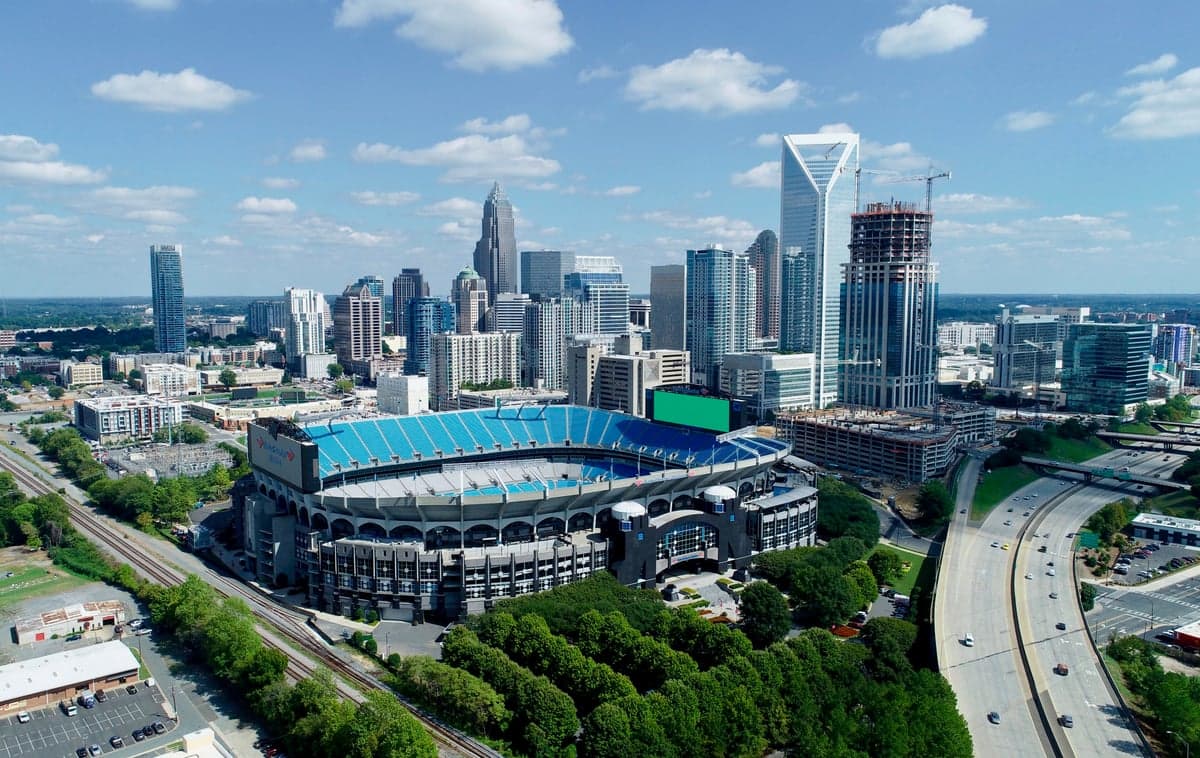
Photo: Wikipedia
Strategic Assessment of Charlotte, NC
Multiple tactical vulnerabilities. Population density, target proximity, or disaster risk are likely compounding. A retreat property and exit planning is required.
What does the Strategic Assessment tell us?
Our Strategic Assessment grades tactical survivability of an area. Major population centers, military targets, fallout zones, natural disasters, and border exposure all drive risk — lower exposure means a more defensible position in a crisis.
This is heavily inspired by Joel Skousen's Strategic Relocation book. Highly recommended you checkout the book ($)What does this tell us?
Our Strategic Assessment grades tactical survivability of an area. Major population centers, military targets, fallout zones, natural disasters, and border exposure all drive risk — lower exposure means a more defensible position in a crisis.
This is heavily inspired by Joel Skousen's Strategic Relocation book. Highly recommended you checkout the book ($)Strategic Pillars

Key Distances
Regional Safe Places
Below is our recommended "safe zones" in North Carolina and the surrounding area based on our strategic heuristics. For most people, it's unrealistic to live in a “safe zone” full-time due to work, family or other personal reasons. They tend to be more rural. However, many of these areas are perfect for second homes and retreat properties that double as a vacation home or even a short-term rental.

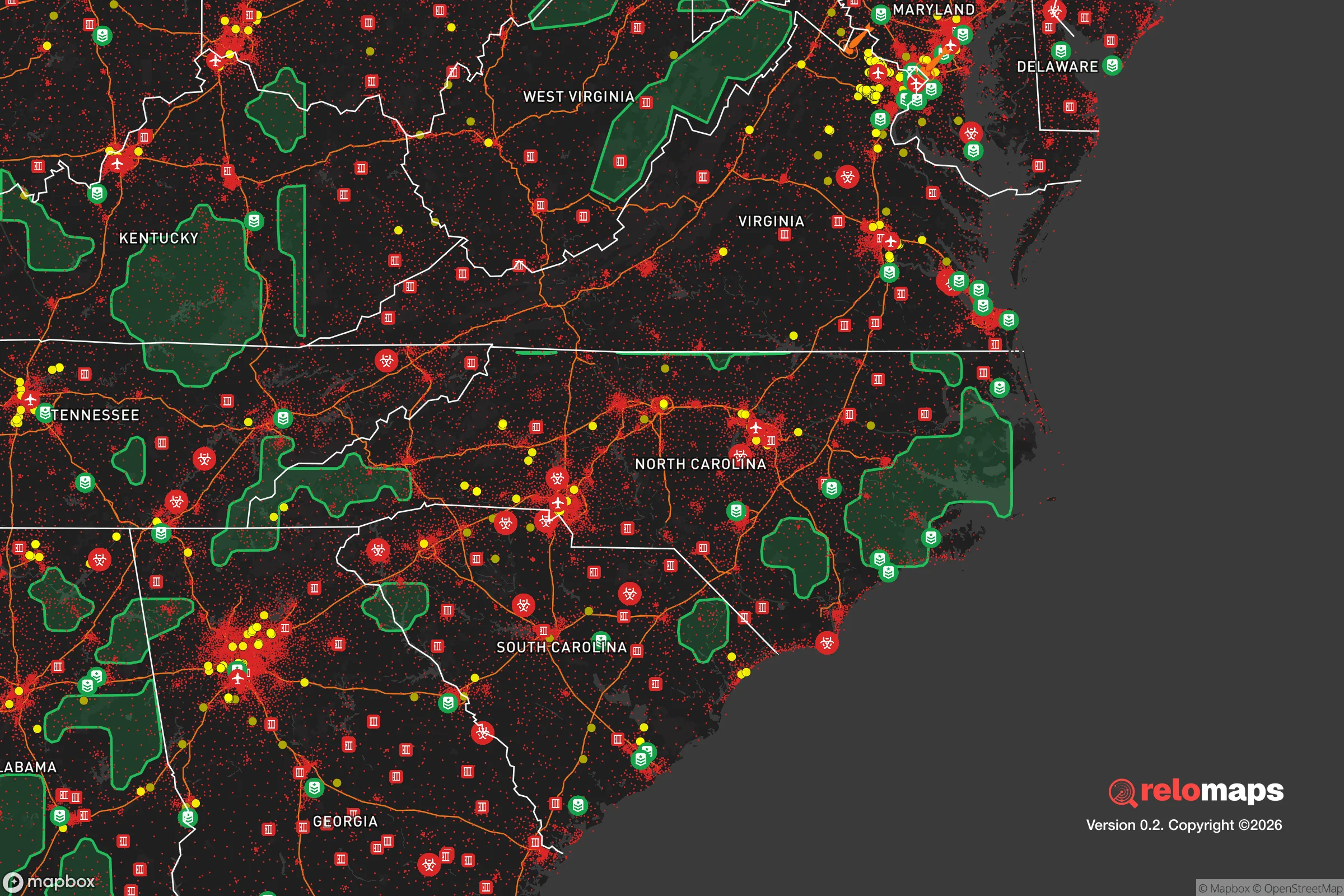


Important Note: For informational purposes only. This does not mean nothing bad ever happens in the green zones. Please use common sense. This is based on public data and modeled with AI. We tried to take a conservative approach but mistakes happen. We update this regularly as new information becomes available.
Solar Generator Recommendations
Backup power matters more here than in safer locations. We've picked three solar generators across budgets and capacity tiers — start with the budget unit if you only need a few essentials, or step up if you want to run a fridge and HVAC for days at a time.

Jackery Portable Power Station Explorer 300
Budget OptionPower on the Go: Weighing only 11 lbs, it's convenient to set up and store with book-sized foldable solar panels

BLUETTI Portable Power Station AC180
Designed for both indoor and outdoor scenarios, AC180 is highly capable as it has a robost capacity and continuous output power.

EF ECOFLOW DELTA Pro Ultra Power Station
Upgraded PickEcoFlow DELTA Pro Ultra is a whole-home energy system designed to grow with your family. Integrated with the Smart Home Panel 2, it scales to meet your evolving energy needs — keeping your home powered, intelligent, and secure through every stage of life.
We earn a commission, at no additional cost to you.
Strategic Assessment Analysis
Charlotte, North Carolina, presents a mixed bag for the strategic relocator operating from a prepper or survivalist mindset. Its economic resilience is undeniable, but its geographic position—deep in the Piedmont region, roughly equidistant from the Appalachian Mountains and the Atlantic coast—creates a unique set of vulnerabilities and advantages that demand careful consideration. While the city itself is a major economic engine, its proximity to critical infrastructure, dense population centers, and potential fallout targets means that a relocation here requires a deliberate, layered approach to security and self-sufficiency, not a blind embrace of its booming job market.
Geographic position and natural advantages for long-term security
Charlotte’s location offers a few genuine strategic pluses. It sits inland, roughly 200 miles from the coast, which provides a meaningful buffer against hurricane storm surge and direct naval threats, though it is not immune to inland flooding or the remnants of tropical systems. The surrounding Piedmont terrain is rolling hills and mixed hardwood forests, offering decent natural cover and numerous small creeks and rivers that could serve as water sources in a grid-down scenario. The region’s moderate climate means winter heating demands are lower than in the Northeast, and the growing season is long enough to support substantial gardening and small-scale agriculture. The presence of the Catawba River system, including Lake Norman and Lake Wylie, provides a significant freshwater reservoir, though access to it will be contested in any prolonged crisis. For a relocator, the key advantage is that Charlotte is not a coastal city, nor is it in a major earthquake or wildfire zone, reducing the likelihood of a single natural disaster wiping out the entire area. However, the city’s explosive growth has consumed much of the surrounding farmland, meaning that true rural buffer zones are now a 45-minute to hour-long drive out, not a quick escape route.
Risks, exposures, and proximity to fallout-relevant landmarks
This is where Charlotte’s strategic picture darkens considerably for the prepper. The city is a major financial hub, home to Bank of America’s headquarters and a massive regional operations center for Wells Fargo, making it a high-value target for any cyber or physical attack aimed at disrupting the U.S. financial system. More concerning is the proximity to McGuire Nuclear Station (about 20 miles northwest of Uptown) and Catawba Nuclear Station (about 20 miles southwest). Both are operational pressurized water reactors. In a major event—whether a terrorist attack, a grid failure leading to a station blackout, or a natural disaster—these plants become immediate fallout risks. The prevailing winds in the region are from the southwest, which would push a plume directly over the city and its northern suburbs. Additionally, Charlotte is a major transportation hub: Charlotte Douglas International Airport is one of the busiest in the world, and the city sits at the intersection of I-85 and I-77, two critical freight corridors. In a mass casualty event or civil unrest scenario, these arteries would become chokepoints for both escape and supply, and the airport itself could be a target or a source of chaos. The city’s dense urban core—Uptown, South End, NoDa—is a liability in any evacuation, with limited egress routes that can gridlock in minutes. For the relocator, living within a 10-mile radius of Uptown or within 5 miles of either nuclear plant is a significant exposure that should be avoided.
Practical resilience for a relocator: food, water, energy, and defensibility
For a single individual or family looking to establish a resilient foothold, Charlotte requires a very specific property strategy. Water security is the first concern. The municipal water supply comes from the Catawba River and is treated at plants that are vulnerable to both cyberattack and contamination. A well on your property is a non-negotiable asset, but many suburban lots in Mecklenburg County lack this. Look to the outer ring counties—Union, Cabarrus, or northern Lancaster County, SC—where well water is more common and lot sizes are larger. Food production is feasible but limited by the region’s clay-heavy soil; raised beds and greenhouse setups are essential for any serious gardening. The local farmers’ markets are good for normal times, but in a crisis, you cannot rely on them. Energy resilience is a mixed picture. Duke Energy’s grid is aging and has experienced notable outages during ice storms and summer thunderstorms. Solar is viable, but the region’s frequent cloud cover reduces its reliability compared to the Southwest. A backup generator with a 250-gallon propane tank is a minimum requirement. Defensibility is the hardest factor. Charlotte’s suburbs are sprawling, with many homes on quarter-acre lots in cul-de-sac developments that offer no natural perimeter security. The ideal property is on a minimum of 5-10 acres, with tree cover, a long driveway, and a clear line of sight to the road. Such properties exist in the Lake Wylie area (south) or near the Uwharrie National Forest (east), but they are increasingly expensive and competitive. The city’s crime rate, while not catastrophic, has seen a rise in property crime and carjackings since 2020, particularly in areas near light rail stations and the central corridor. For the prepper, this means that a suburban home in a “safe” neighborhood is still vulnerable to roving groups during a breakdown of civil order. The best bet is to be far enough out that you are not on the main escape routes from the city, but close enough to still access supplies and medical care during normal times.
Overall, Charlotte is a high-risk, moderate-reward location for the strategic relocator with a survivalist bent. Its economic strength and job market are real, but they come with the baggage of being a prime target for both physical and cyber attacks, a major transportation nexus, and a city surrounded by nuclear power plants. The practical path forward is not to live in Charlotte itself, but to establish a base in the outer ring counties—Union, Cabarrus, or northern Lancaster County, SC—where you can have well water, land, and a degree of separation from the urban core. You must accept that in a major crisis, you will likely need to bug in for the first 72 hours to let the chaos on I-85 and I-77 subside, and you will need to have your own water, power, and food stores to ride out the aftermath. Charlotte is not a retreat; it is a forward operating base with a good economy, but one that requires constant vigilance and a serious investment in self-sufficiency to make it work for a conservative-minded individual or family preparing for the worst.

* Values derived from national, state, county, city and local statistics and may differ in a specific area. Last updated: 2026-04-21T16:24:53.000Z
Narrative content on this page is AI-generated and may contain mistakes. Verify any details that matter before acting on them.
ReloMaps may earn a commission from affiliate links at no extra cost to you.

