 Popular
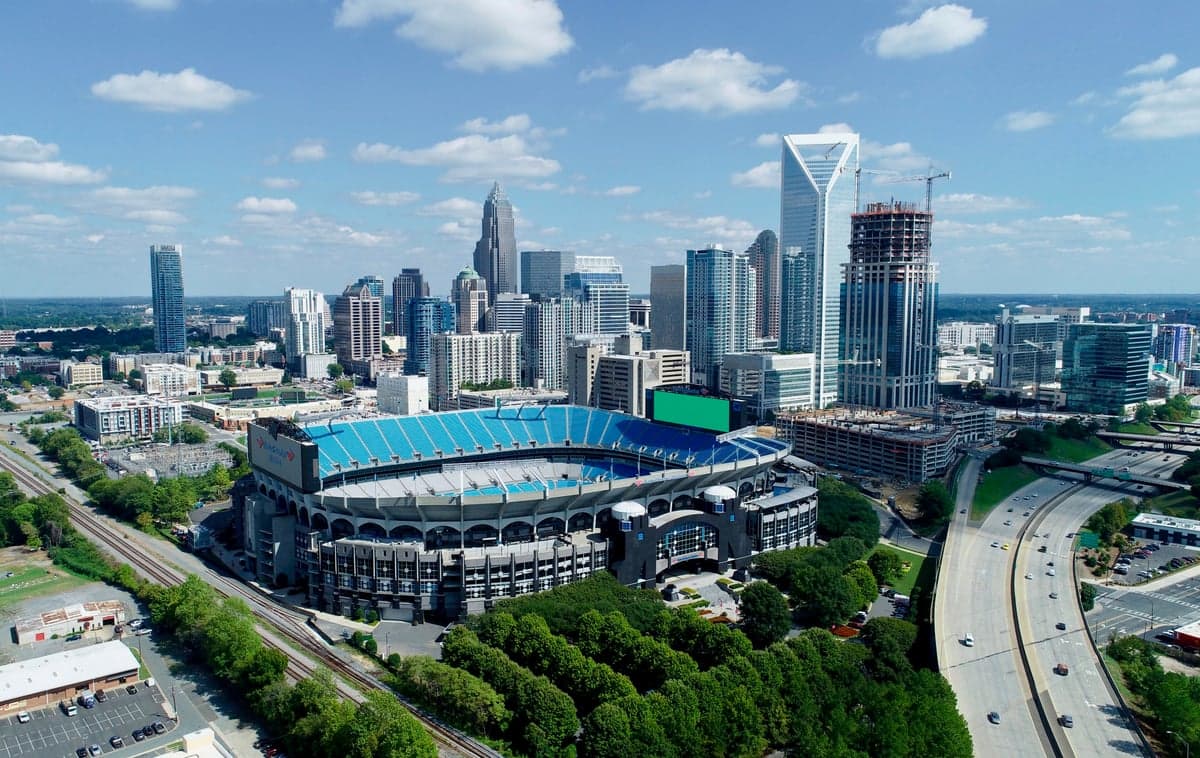
Photo: Wikipedia
Quality of Life in Charlotte, NC
Above-average quality of iife. The area offers a reasonable cost of living, decent mobility, and a mix of neighborhood amenities.
What does Quality of Life tell us?
Quality of Life blends cost of living, nearby amenities, socioeconomic signals, and neighborhood character. City-level scores represent the whole municipality; individual neighborhoods can differ.
What does this tell us?
Quality of Life blends cost of living, nearby amenities, socioeconomic signals, and neighborhood character. City-level scores represent the whole municipality; individual neighborhoods can differ.
Cost of Living
27% above national average
The Real Cost of Living in Charlotte, NC for 2026
| Tier | Individual | Family (4) |
|---|---|---|
| Survival | $24k | $45k |
| Comfortable | $68k | $100k |
| Luxury | $142k+ | $220k+ |
| Elite (Top 5%) | $209k+ | $324k+ |
78%
The Area Signal
A metric tracking the socioeconomic signals of the area.
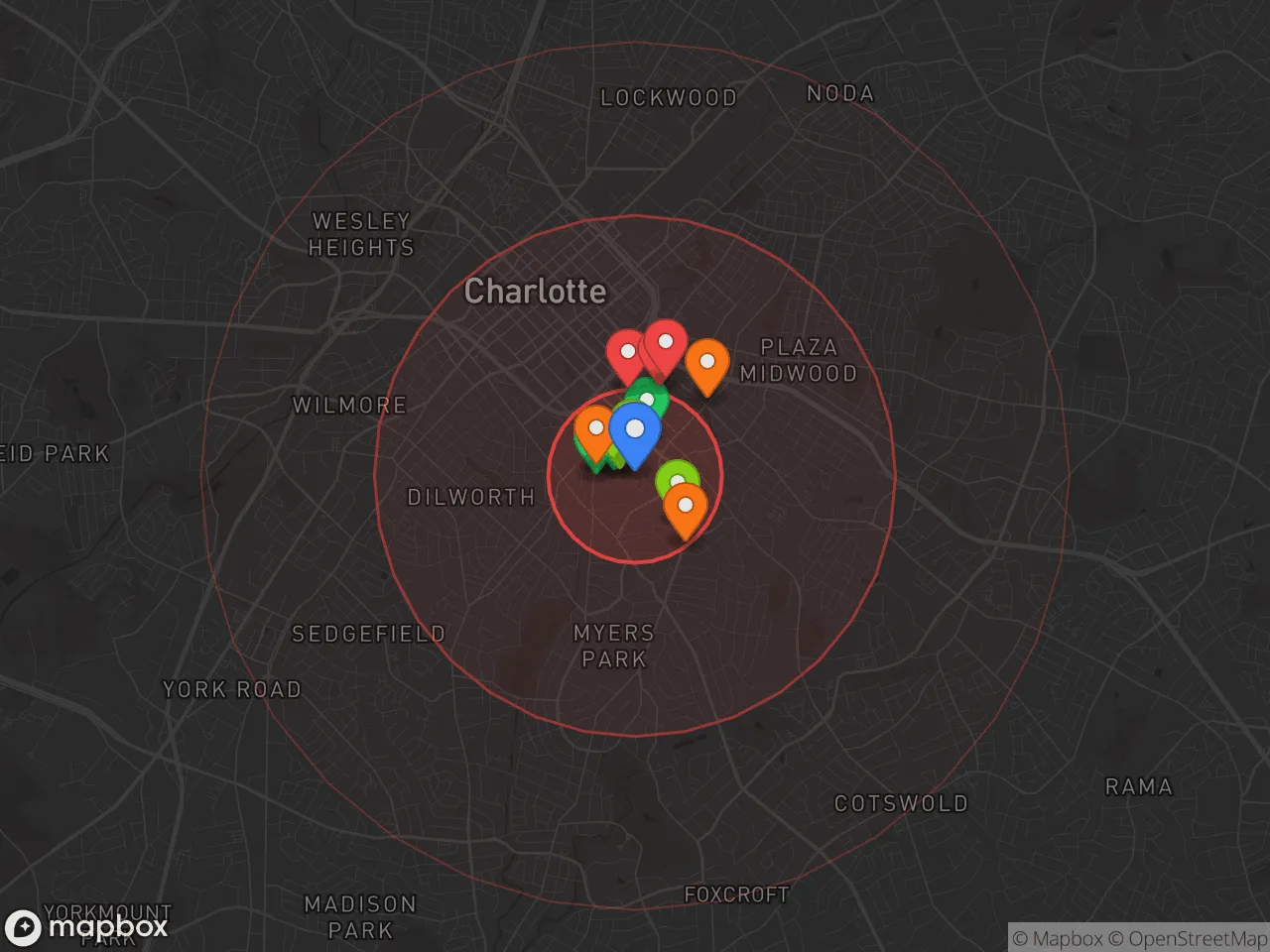
Hobbies
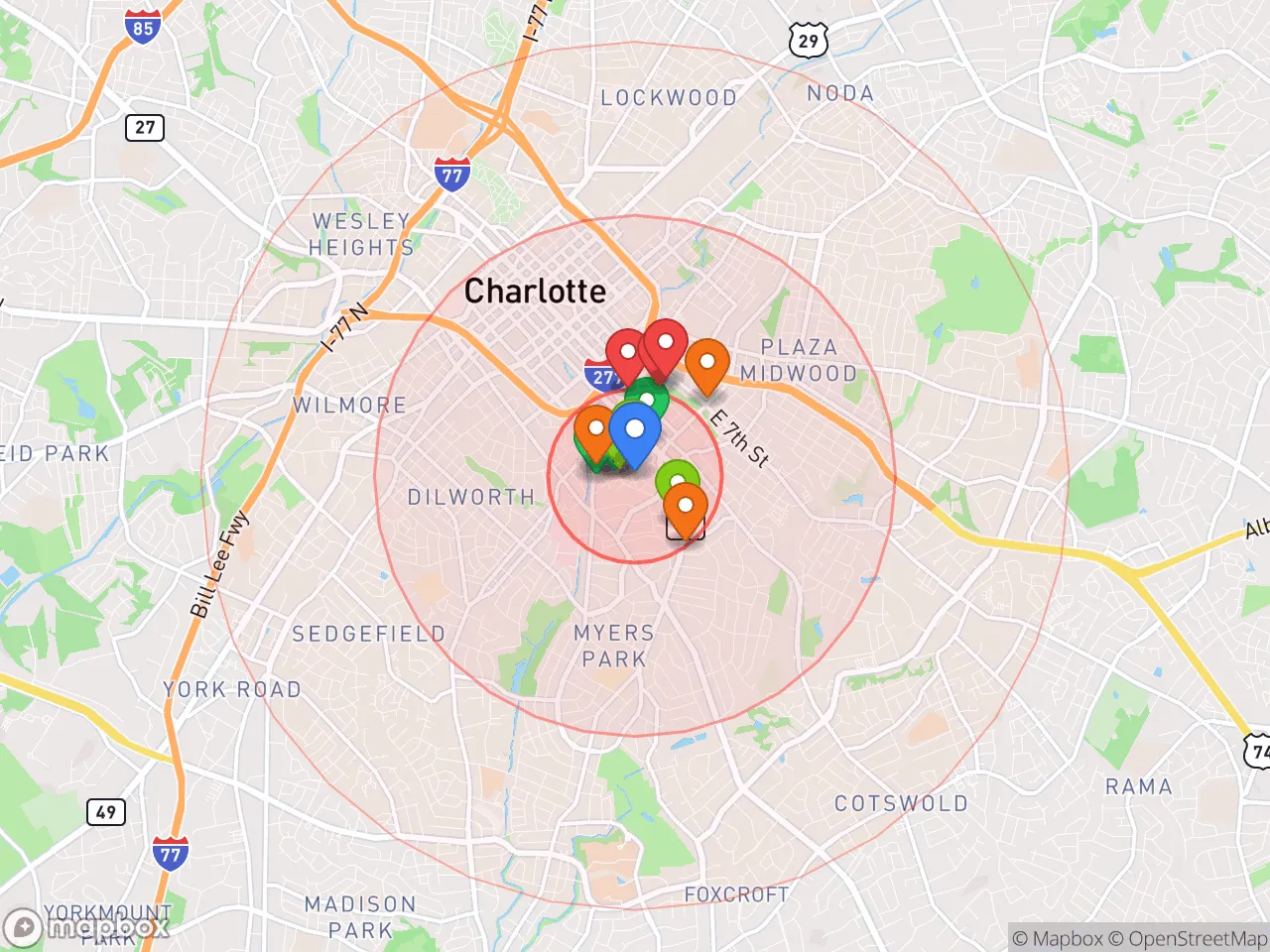
Explore the areaGroceries
7 within 10 miles
Gas
20 within 10 miles
Hospital
20 within 20 miles
Airport
CLT — Charlotte Douglas International
Post Office
USPS — Charlotte, NC
Critical Amenities
Quality-of-Life Analysis
Charlotte, North Carolina, has evolved into a major Sun Belt hub where a blend of banking professionals, young families, and remote workers are drawn to its relatively high affluence and steady job market. With a cost of living index of 127 (where 100 equals the U.S. average), the city is notably more expensive than the national norm but remains a bargain compared to peer metros like Atlanta (index 102) or Nashville (index 106) when factoring in local wage growth. The population skews educated and career-oriented, anchored by Bank of America and Truist Financial headquarters, yet the city also attracts a growing creative class seeking a lower-tax alternative to the Northeast.
Cost of living, housing affordability, and how Charlotte compares to nearby areas
Housing is the primary driver of Charlotte's elevated cost index. The median home value sits at $351,500, which is roughly 18% above the national median but still significantly cheaper than Raleigh ($415,000) or Charleston ($430,000). Renters face a median monthly rent of $1,504, a figure that has climbed 22% since 2020 but remains below the national average for major metros. For context, a comparable apartment in nearby Fort Mill, South Carolina, runs about $1,350, while in the upscale Dilworth neighborhood, rents can exceed $2,200. The average one-way commute of 24.96 minutes is slightly below the national average of 26.4 minutes, though traffic on I-77 and I-485 has worsened since 2022. Property taxes are moderate at roughly 0.85% of assessed value, and North Carolina's flat 4.75% income tax keeps take-home pay competitive for dual-income households.
Amenities, schools, and the daily rhythm of life in Charlotte
Daily life in Charlotte is defined by a strong neighborhood identity and a calendar packed with professional sports and cultural events. The city's public school system, Charlotte-Mecklenburg Schools (CMS), serves over 140,000 students and includes magnet programs like the Northwest School of the Arts and Myers Park High School, which consistently rank among the state's top 20. For families, the suburbs of Matthews and Davidson offer higher-rated schools but longer commutes. Amenities are robust: the U.S. National Whitewater Center draws 1.3 million visitors annually for rafting and mountain biking, while the 98-acre Freedom Park provides green space for runners and dog owners. The food scene has matured rapidly, with the South End district now hosting over 40 breweries and restaurants like Counter- (a James Beard semifinalist). The daily rhythm leans toward early mornings for commuters and active weekends, with the city's 50+ miles of light-rail and greenway trails seeing heavy use.
Charlotte is best suited for professionals and families who prioritize career opportunity and a moderate climate over ultra-low costs or dense urban energy. The city's 2.扣% unemployment rate (as of early 2026) and steady population growth of 1.8% annually suggest a resilient economy, but newcomers should budget carefully for housing and transportation. Those who thrive here tend to value a car-dependent lifestyle with pockets of walkability, a strong sense of community in neighborhoods like Plaza Midwood or NoDa, and access to outdoor recreation within a 20-minute drive. Retirees on fixed incomes may find the cost index challenging, while young renters will appreciate the nightlife and job pipeline from local universities like UNC Charlotte and Johnson & Wales.

Crime in Charlotte, NC
Significantly higher crime rates than 76% of comparable U.S. locations.
Violent CrimeViolent Crime Analysis
Property CrimeProperty Crime Analysis
Crime Analysis
Charlotte’s overall safety picture is mixed, with violent crime rates significantly exceeding national averages while property crime rates present a more nuanced challenge. The city recorded a violent crime rate of 559.2 incidents per 100,000 residents and a property crime rate of 3,419 per 100,000 in the most recent reporting period. These figures place Charlotte well above the national median for violent offenses, a trend that reflects broader challenges seen in many large Southern metropolitan areas.
Crime in context
When compared to state and national benchmarks, Charlotte’s violent crime rate is roughly 44% higher than the national average and about 30% above the North Carolina state average. The property crime rate, while elevated, is closer to the national median for cities of similar size. It is important to note that Mecklenburg County, which encompasses Charlotte, has seen a pattern of progressive prosecutorial policies in recent years. District Attorney Spencer Merriweather, elected as a Democrat, has implemented diversion programs and reduced prosecution of certain low-level offenses. Critics argue these policies, while well-intentioned, have contributed to a perception of reduced accountability, potentially emboldening repeat offenders and undermining public safety. This ideological approach to justice, prioritizing offender rehabilitation over strict enforcement, is a factor residents should weigh carefully when evaluating long-term safety trends.
What residents experience
Daily life for Charlotte residents involves navigating a city where property crime—particularly vehicle break-ins, package theft, and residential burglaries—is the most common safety concern. The property crime rate of 3,419 per 100,000 translates to roughly one property crime for every 29 residents annually. Violent crime, while less frequent, is concentrated in specific areas: homicides and aggravated assaults are disproportionately reported in corridors like Beatties Ford Road, West Boulevard, and parts of the Sugar Creek area. Residents in these neighborhoods often report feeling unsafe after dark, while those in more affluent or suburban pockets—such as Ballantyne, SouthPark, or Davidson—experience significantly lower crime rates. The city’s rapid growth and economic inequality have also strained police resources, with the Charlotte-Mecklenburg Police Department (CMPD) operating at staffing levels below its authorized strength.
Neighborhood-level variation is stark. Uptown Charlotte and the surrounding historic districts (like Dilworth and Plaza Midwood) see moderate property crime but relatively low violent crime, thanks to higher police presence and better lighting. In contrast, areas east of I-77 and north of I-85, including parts of University City and Hidden Valley, report violent crime rates two to three times the city average. Prospective residents should research specific ZIP codes and consult CMPD’s online crime mapping tool before choosing a neighborhood. Overall, Charlotte offers a vibrant economy and cultural amenities, but its crime landscape—shaped in part by lenient justice policies—demands careful, location-specific consideration.
* Values derived from national, state, county, city and local statistics and may differ in a specific area. Last updated: 2026-04-21T16:24:53.000Z
Narrative content on this page is AI-generated and may contain mistakes. Verify any details that matter before acting on them.
ReloMaps may earn a commission from affiliate links at no extra cost to you.

