 Popular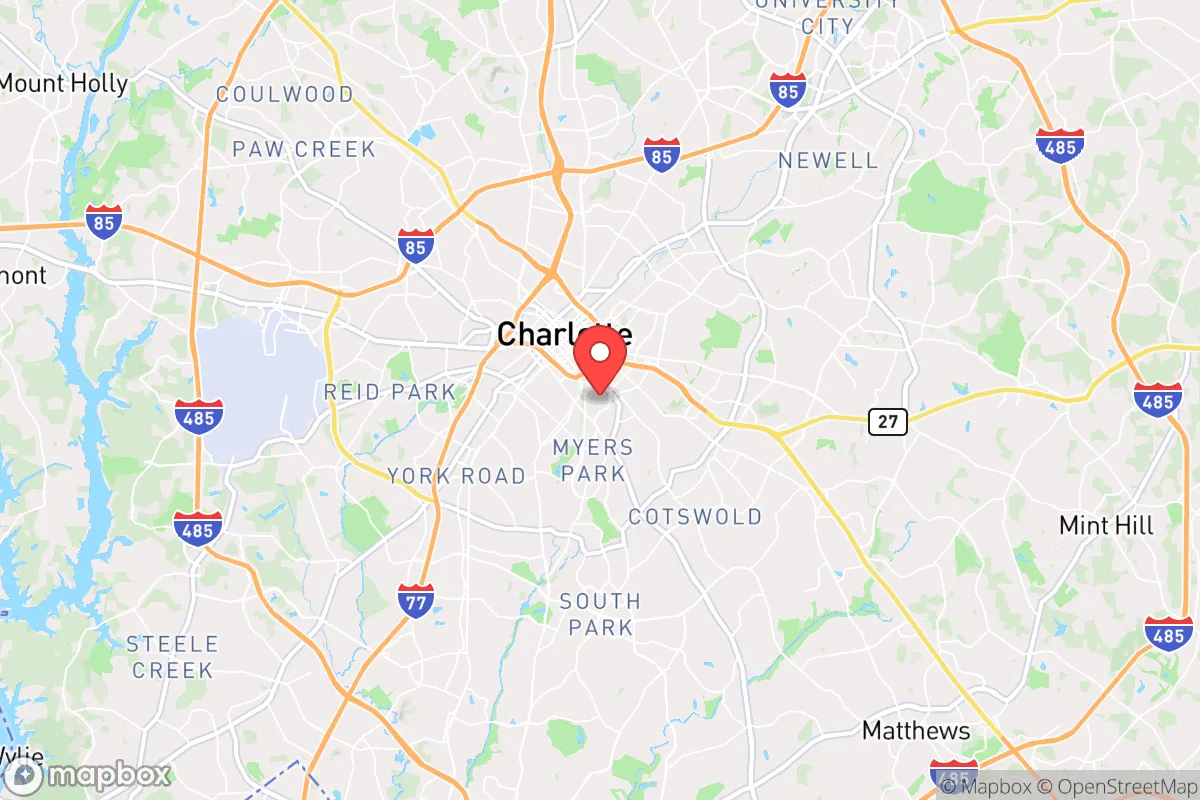
Photo: Wikipedia
Personal Sovereignty in Charlotte, NC
Viable for self-reliance. Generally workable, though some barriers may limit total independence.
What does Personal Sovereignty tell us?
Personal Sovereignty measures your capacity for self-reliance and independence with minimal government friction. Higher scores mean fewer barriers between you and the way you want to live... but it assumes you have the space you need and good neighbors.
What does this tell us?
Personal Sovereignty measures your capacity for self-reliance and independence with minimal government friction. Higher scores mean fewer barriers between you and the way you want to live... but it assumes you have the space you need and good neighbors.
State Policy
Energy independence: Importer (15% of energy produced in-state)
Personal Liberty
Homesteading

Personal Liberty Analysis
Charlotte, North Carolina offers a mixed but generally favorable environment for personal sovereignty, striking a balance between urban opportunity and a state-level legal framework that still prioritizes individual autonomy. While the city itself leans progressive, the surrounding Mecklenburg County and the broader state government provide a buffer against the most aggressive forms of government overreach, making it a viable option for those seeking to maintain control over their lives, property, and families. For the survivalist or prepper, Charlotte is not a libertarian paradise, but it is a pragmatic choice where strategic relocation can yield significant advantages if you know where to look and how to navigate the local landscape.
Tax burden and regulatory posture: How much the state and city take
North Carolina’s tax climate is a clear positive for personal sovereignty, especially when compared to high-tax states like New York or California. The state has a flat income tax rate of 4.5% as of 2026, with ongoing legislative pressure to reduce it further, signaling a pro-taxpayer posture. Property taxes in Mecklenburg County are moderate, averaging around 0.85% of assessed value, which is reasonable for a major metropolitan area. However, Charlotte itself imposes a local sales tax that pushes the combined rate to 8.25%, a notable bite on everyday purchases. The regulatory environment is generally business-friendly, with no state-level rent control and relatively streamlined permitting for home-based businesses. That said, the city’s zoning and building codes are more stringent than rural counties, particularly around environmental regulations and stormwater management. For the prepper, the key takeaway is that the state respects your wallet more than most, but the city will still nickel-and-dime you on permits and fees. The lack of a state income tax on military pensions and a partial exemption for other retirement income is a plus for those planning long-term self-sufficiency.
Self-defense and gun law specifics: What you can carry and where
North Carolina is a shall-issue state for concealed carry, meaning the government must issue a permit if you meet basic criteria—no subjective discretion by local officials. As of 2026, permitless open carry is legal for anyone who can legally possess a firearm, though a concealed carry permit is still required to carry a concealed handgun. Charlotte, however, is not a free-fire zone. The city has a local ordinance banning firearms in city-owned parks and recreation centers, a restriction that has survived legal challenges. Additionally, state law prohibits carry in establishments that serve alcohol (unless you have a permit and the owner allows it), on public school grounds, and in government buildings. Magazine capacity is not restricted at the state level, and there is no state-level red flag law, though local activists have pushed for one. The practical reality for the survivalist: you can legally carry a rifle or shotgun openly in most public spaces, but you must be vigilant about posted signs and local ordinances. The legal landscape is stable and favorable, but Charlotte’s urban environment means you will encounter more restricted zones than in rural counties. Stand-your-ground laws apply statewide, with no duty to retreat in any place you have a legal right to be.
Self-reliance and homesteading viability: Lot sizes, zoning, and off-grid feasibility
Within Charlotte’s city limits, true homesteading is a non-starter for most. Minimum lot sizes in residential zones are typically 0.25 to 0.5 acres, and zoning heavily restricts livestock, with chickens often limited to a small number of hens and no roosters. Urban agriculture is permitted but regulated, with compost piles and beekeeping requiring permits. Off-grid living is effectively illegal within city limits—the city requires connection to municipal water and sewer, and solar panels must be grid-tied with net metering approval. For the serious prepper, the viable strategy is to buy land in the surrounding counties—Cabarrus, Union, or Iredell—where you can find 5- to 20-acre parcels within a 30-minute drive of Charlotte. These areas allow for well water, septic systems, and limited livestock without the city’s interference. The trade-off is that you lose the convenience of urban infrastructureaint, but you gain the ability to store supplies, grow food, and maintain a lower profile. The city’s building codes also require permits for any structural modifications, including sheds over 100 square feet, so even suburban homesteading requires navigating bureaucracy. For those willing to commute, the rural fringe offers a realistic path to self-reliance without abandoning the economic opportunities of Charlotte.
Personal liberties: Parental rights, medical autonomy, speech, and property
North Carolina has a strong track record on parental rights, with state law affirming that parents have the fundamental right to direct the upbringing, education, and healthcare of their children. The state does not have a universal vaccine mandate for schoolchildren, though individual school districts can impose requirements. Medical autonomy is more contested: the state has not passed broad medical freedom legislation, but it also has not imposed strict vaccine passports or forced treatment protocols. The 2023 law banning gender-affirming care for minors reflects a conservative tilt on medical ethics, which aligns with the values of many in this audience. Free speech is protected under the First Amendment, and Charlotte has not enacted the kind of speech-restrictive ordinances seen in some coastal cities, though public demonstrations require permits. Property rights are generally strong, with no statewide rent control and a relatively low rate of eminent domain abuse. However, the city’s historic preservation ordinances and tree protection rules can limit what you do with your own land—cutting down a mature tree often requires a permit and replacement plan. The overall picture is one of reasonable liberty, with the state acting as a check on the city’s more intrusive tendencies. For the survivalist, the biggest concern is the potential for future overreach at the municipal level, particularly around health mandates and land use.
In the broader context of the Southeast, Charlotte offers a solid but not exceptional level of personal sovereignty. It outpaces cities like Atlanta or Richmond in tax burden and gun rights, but it lags behind smaller towns like Greenville, SC, or rural counties in North Carolina’s Piedmont region. The city’s progressive local government is a constant source of friction, but the state legislature’s preemption laws limit how far they can go. For the strategic relocator, the smart play is to live in a surrounding county with a conservative sheriff and a low tax rate, while working or doing business in Charlotte. This gives you the economic engine of a major city without surrendering your autonomy to its politics. If you are willing to drive 20 minutes, you can have a 10-acre homestead, carry a concealed weapon without a permit, and pay lower taxes—all while being 15 minutes from a Costco and a trauma center. That is the real sovereignty advantage of Charlotte: it is a hub that lets you choose your level of engagement with the system, rather than forcing you into one extreme or the other.

* Values derived from national, state, county, city and local statistics and may differ in a specific area. Last updated: 2026-04-21T16:24:53.000Z
Narrative content on this page is AI-generated and may contain mistakes. Verify any details that matter before acting on them.
ReloMaps may earn a commission from affiliate links at no extra cost to you.

